

CTR (Click-Through Rate)

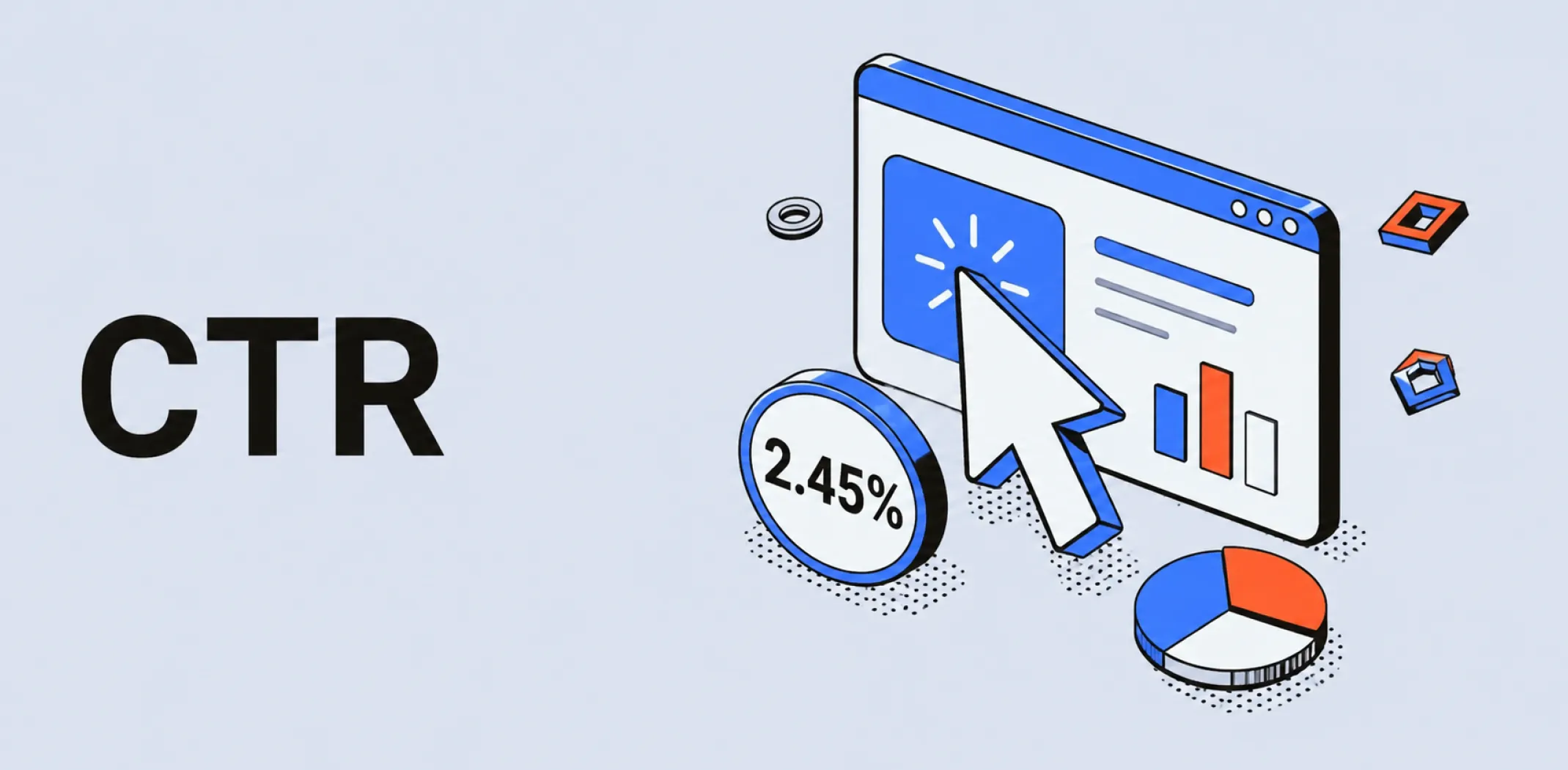
CTR, short for click-through rate, is the percentage of ad impressions that result in a click, calculated by dividing total clicks by total impressions and multiplying the result by 100.
CTR is one of the main signals advertisers and platforms use to judge how relevant or appealing an ad is to the audience seeing it, since a high CTR generally means the ad is capturing attention effectively relative to how often it was shown. On platforms like Google Ads, CTR also factors directly into Quality Score, which can lower the effective CPC an advertiser pays for the same ad position.
CTR varies significantly by format and intent; search ads typically see higher CTR than Display or social feed ads, since search users are already actively looking for something specific rather than passively scrolling. A high CTR alone does not guarantee profitability, since it says nothing about whether clicking visitors go on to convert.
For dropshipping and ecommerce sellers, CTR is commonly used as an early diagnostic signal, helping identify whether an ad’s creative or targeting needs adjustment before assessing later-stage metrics like CPA.
Key characteristics
- Expressed as a percentage: CTR is calculated as clicks divided by impressions, then converted into a percentage figure.
- Varies by format and intent: Search ads commonly see higher CTR than Display or social feed ads, since search reflects active intent rather than passive browsing.
- Influences Quality Score and cost: On platforms like Google Ads, a higher CTR can improve Quality Score, which may reduce effective CPC for the same ad position.
- An early signal, not a final result: CTR reflects ad appeal at the click stage but does not confirm whether visitors went on to convert.
Example
A dropshipping store tests two ad creatives for the same product. Creative A receives 15,000 impressions and 450 clicks, giving it a CTR of 3 percent. Creative B receives the same 15,000 impressions but only 150 clicks, giving it a CTR of 1 percent. Based on CTR alone, Creative A appears to resonate more strongly with the audience, though the store still needs to check conversion data before deciding which creative actually drives more profitable sales.
Related terms
- Clicks – the numerator used to calculate CTR against total impressions.
- Impressions – the denominator used to calculate CTR alongside total clicks.
- CPC – a cost metric that CTR can indirectly influence through Quality Score.
- CPA – a later-stage metric that should be reviewed alongside CTR rather than in isolation.
Frequently asked questions
How is CTR calculated?
CTR is calculated by dividing total clicks by total impressions and multiplying the result by 100 to express it as a percentage. A campaign with 300 clicks out of 15,000 impressions has a CTR of 2 percent.
What is considered a good CTR?
A good CTR varies significantly by platform, ad format, and industry, so there is no single universal benchmark. Search campaigns often see CTR in the 2 to 5 percent range, while Display and social feed campaigns frequently fall well under 1 percent.
Does CTR affect how much an advertiser pays?
On some platforms, yes; a higher CTR can improve a Quality Score or relevance score, which may lower the effective cost per click for the same ad position. This means improving CTR can sometimes reduce cost as well as increase traffic volume.
Can a high CTR still result in poor campaign performance?
Yes, a high CTR only reflects how often an ad gets clicked relative to how often it was shown, not whether those clicks lead to sales. A campaign can have a strong CTR but a poor conversion rate if the landing page or offer fails to follow through on the ad’s promise.
AliDropship is a dropshipping platform that covers store creation, product imports, order automation, and marketing within a single system. It is designed for users with no prior ecommerce experience, though it also supports scaling for more established stores.
🛍️ Free turnkey store
New users receive a free pre-built store – set up, designed, and stocked with products. The store includes a ready-to-use product catalogue and a standard storefront design. It also comes with hosting, a domain, SSL, and payment systems already set up and included.
📦 Products
The platform provides access to a product catalogue covering both trending and niche items, with one-click import to your store. The catalogue is updated regularly to reflect current market availability. Products can be browsed, filtered, and added without leaving the platform.
🚚 Shipping & fulfillment
AliDropship provides access to a vast catalogue of products from global suppliers and handles order fulfillment automatically once a purchase is made. Customers receive tracking information directly, and orders are processed without manual intervention from the store owner.
📣 Marketing & promotion tools
The platform includes built-in marketing tools covering email campaigns, discount management, SEO settings, and social media integration. These are available within the dashboard and do not require third-party subscriptions for basic use.
👌 Ease of use
AliDropship requires no coding knowledge. The dashboard contains all the necessary tools for managing your store, products, and orders in one place. Additional features and products can be added as the store grows without rebuilding the existing setup.
How is CTR calculated?
What is considered a good CTR?
Does CTR affect how much an advertiser pays?
Can a high CTR still result in poor campaign performance?
Why might CTR drop over time on the same ad?
Are you ready to become an owner
of a profitable online business?
Free Dropshipping Guide