

CPA (Cost Per Acquisition)

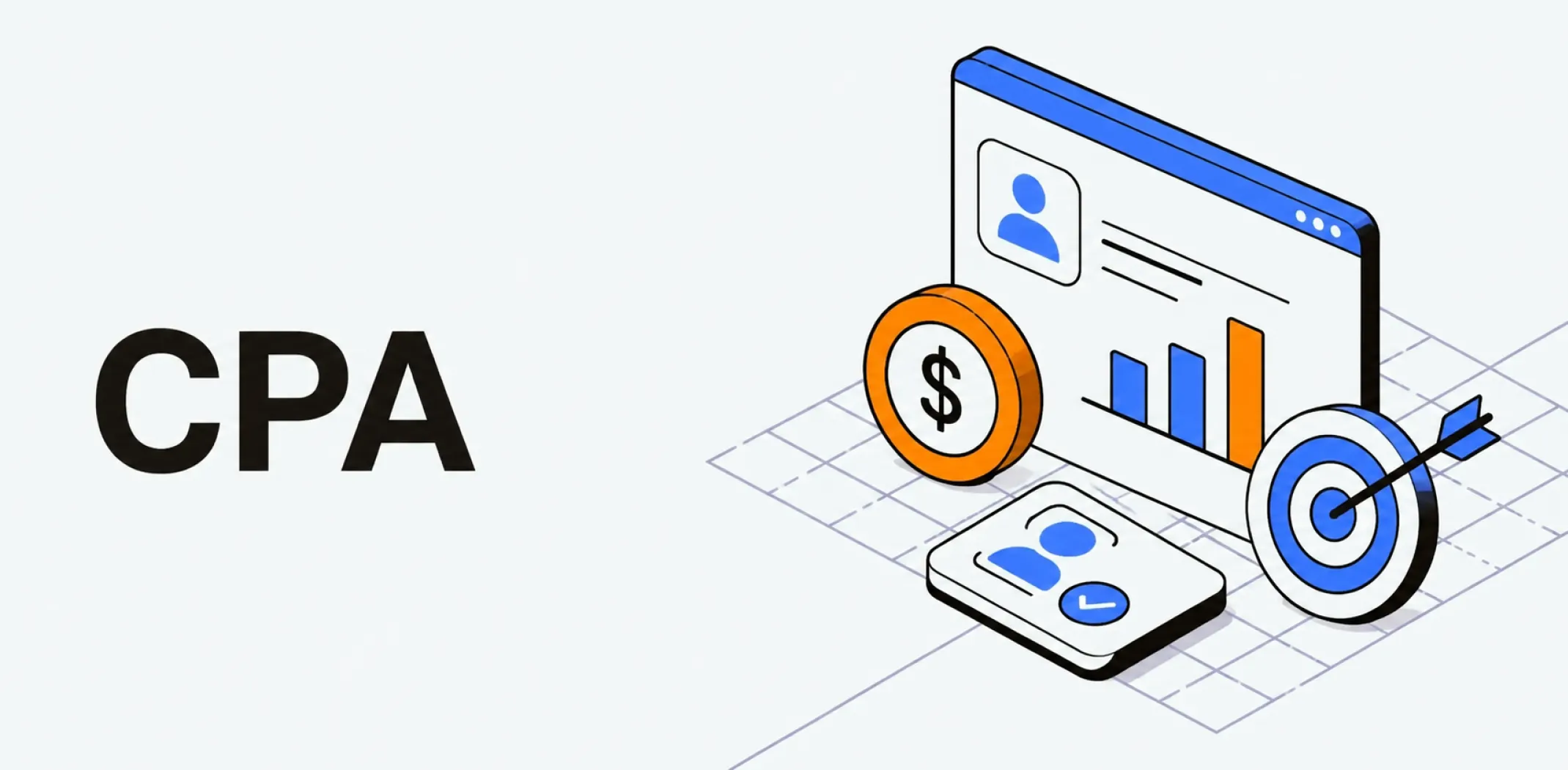
CPA, short for cost per acquisition, is the average amount spent on advertising to generate one conversion, such as a sale, lead, or sign-up, calculated by dividing total ad spend by the total number of conversions generated.
CPA differs from CPC and CPM in what it actually measures. CPC tracks cost per click and CPM tracks cost per 1,000 impressions, but neither confirms whether that click or impression led to an actual sale. CPA instead ties cost directly to the outcome a business cares about most, making it one of the more reliable metrics for judging whether an advertising campaign is actually profitable.
A campaign can have a low CPC but a high CPA if many clicks fail to convert, or a higher CPC but a low CPA if the traffic converts well. For dropshipping and ecommerce sellers, CPA is typically compared against gross profit per order to determine whether a campaign is sustainable.
Platforms such as Google Ads and TikTok Ads allow advertisers to set a target CPA, letting the algorithm optimize bidding toward that specific cost goal rather than toward clicks or impressions alone.
Key characteristics
- Tied to actual conversions: CPA is calculated using completed conversions, such as purchases or sign-ups, rather than clicks or impressions alone.
- Profitability benchmark: CPA is most useful when compared directly against gross profit per order, since a CPA above that figure means a campaign is losing money on each sale.
- Bidding target option: Many ad platforms allow advertisers to set a target CPA, letting automated bidding optimize toward that specific cost rather than toward clicks or reach.
- Requires conversion data to optimize: Algorithms generally need a meaningful number of recorded conversions before target CPA bidding can perform reliably.
Example
A dropshipping store spends 300 dollars on a campaign and generates 15 sales during that period. Dividing the 300 dollar spend by the 15 sales gives a CPA of 20 dollars per sale. If the store’s gross profit on that product is 25 dollars per order, the 20 dollar CPA still leaves 5 dollars of profit per sale after ad spend; if gross profit were only 15 dollars, the same CPA would mean the store loses money on every sale.
Related terms
- CPC – a click-based metric that does not confirm whether a click led to a sale.
- CPM – an impression-based metric that CPA is often compared against for campaign efficiency.
- Gross profit – the profitability figure that CPA must stay under for a campaign to remain sustainable.
- Conversion funnel – the customer journey whose final step determines whether a conversion, and therefore a CPA, is recorded.
Frequently asked questions
How is CPA different from CPC?
CPC measures the cost of a single click, while CPA measures the cost of an actual conversion, such as a completed sale. A campaign can have a low CPC but a high CPA if most clicks do not lead to a purchase.
How is CPA calculated?
CPA is calculated by dividing total ad spend by the total number of conversions generated during the same period. A 500 dollar spend that produces 25 sales results in a CPA of 20 dollars per sale.
What is a good CPA for a dropshipping store?
There is no single good CPA for every store, since the right figure depends on the product’s gross profit and overall pricing strategy. A sustainable CPA is generally one that stays comfortably below the gross profit earned per order.
What is target CPA bidding?
Target CPA bidding lets an advertiser set a desired cost per conversion, and the platform’s algorithm automatically adjusts bids to try to hit that target. This approach generally requires a reasonable volume of past conversion data to work effectively.
AliDropship: An all-in-one platform for starting dropshipping in 2026
AliDropship is a dropshipping platform that covers store creation, product imports, order automation, and marketing within a single system. It is designed for users with no prior ecommerce experience, though it also supports scaling for more established stores.
🛍️ Free turnkey store
New users receive a free pre-built store – set up, designed, and stocked with products. The store includes a ready-to-use product catalogue and a standard storefront design. It also comes with hosting, a domain, SSL, and payment systems already set up and included.
📦 Products
The platform provides access to a product catalogue covering both trending and niche items, with one-click import to your store. The catalogue is updated regularly to reflect current market availability. Products can be browsed, filtered, and added without leaving the platform.
🚚 Shipping & fulfillment
AliDropship provides access to a vast catalogue of products from global suppliers and handles order fulfillment automatically once a purchase is made. Customers receive tracking information directly, and orders are processed without manual intervention from the store owner.
📣 Marketing & promotion tools
The platform includes built-in marketing tools covering email campaigns, discount management, SEO settings, and social media integration. These are available within the dashboard and do not require third-party subscriptions for basic use.
👌 Ease of use
AliDropship requires no coding knowledge. The dashboard contains all the necessary tools for managing your store, products, and orders in one place. Additional features and products can be added as the store grows without rebuilding the existing setup.
How is CPA different from CPC?
How is CPA calculated?
What is a good CPA for a dropshipping store?
What is target CPA bidding?
Can a campaign have a low CPC but a high CPA?
Are you ready to become an owner
of a profitable online business?
Free Dropshipping Guide