

CPC (Cost Per Click)

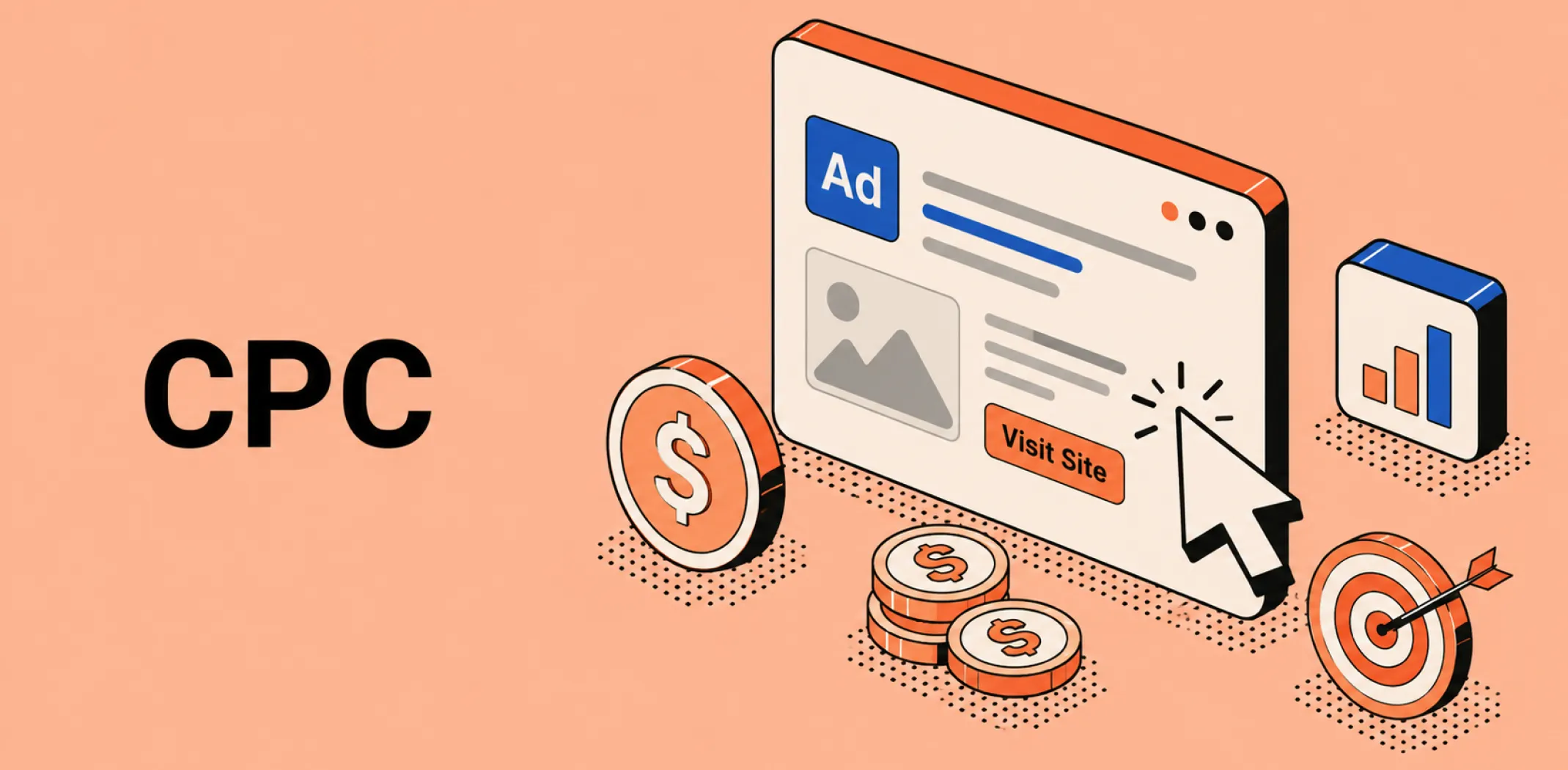
CPC, short for cost per click, is the average amount an advertiser actually pays each time a user clicks their ad, calculated by dividing total ad spend by the total number of clicks received.
CPC is often confused with PPC, but the two describe different things. PPC is the billing model itself, where an advertiser pays only for clicks rather than impressions, while CPC is the actual cost metric produced by that model, expressed as a dollar amount per click.
A campaign can use PPC billing while still reporting a CPC that fluctuates daily based on competition, targeting, and ad quality. CPC varies significantly across platforms such as Google Ads, TikTok Ads, and Pinterest Ads, and even across different product categories within the same platform.
For dropshipping and ecommerce sellers, CPC is one of the key numbers used to judge whether advertising spend is sustainable relative to a product’s profit margin.
Key characteristics
- Calculated from total spend and clicks: CPC is found by dividing total ad spend by the total number of clicks generated during a given period.
- A metric, not a billing model: CPC describes the resulting cost figure, while PPC describes the underlying billing approach that produces it.
- Varies by competition and quality: Actual CPC fluctuates based on auction competition, targeting specificity, and how relevant or high-quality an ad is judged to be.
- Used to evaluate campaign efficiency: A lower CPC for similar traffic quality generally signals a more cost-efficient campaign, though it should be weighed against conversion rate as well.
Example
A dropshipping store spends 100 dollars on a Google Ads campaign over one day and receives 80 clicks to its product page. Dividing the 100 dollar spend by the 80 clicks gives a CPC of 1.25 dollars for that day. If the next day the same 100 dollar budget generates only 50 clicks due to increased competition, the CPC rises to 2 dollars, even though total spend stayed the same.
Related terms
- PPC – the billing model that produces CPC as its resulting cost metric.
- Google Ads – a platform where CPC is a primary reported metric for Search and Shopping campaigns.
- Profit margin – the profitability measure that CPC must be weighed against when evaluating ad spend.
- Conversion funnel – the customer journey that begins once a paid click is received.
Frequently asked questions
How is CPC different from PPC?
PPC is the billing model where an advertiser pays only for clicks, while CPC is the actual cost metric that results from that model, expressed as a dollar amount per click. A campaign uses PPC billing and reports a CPC figure based on its performance.
How is CPC calculated?
CPC is calculated by dividing total ad spend by the total number of clicks received during the same period. A 200 dollar spend that generates 100 clicks produces a CPC of 2 dollars.
Why does CPC change from day to day?
CPC changes day to day mainly due to shifting auction competition, since more advertisers bidding for the same audience tends to raise the price per click. Ad quality, targeting changes, and seasonal demand can also cause CPC to rise or fall.
Is a lower CPC always better for a dropshipping store?
A lower CPC is not always better on its own, since it should be evaluated alongside conversion rate and overall profitability rather than in isolation. A higher CPC that converts well can still be more profitable than a lower CPC that rarely leads to a sale.
AliDropship: An all-in-one platform for starting dropshipping in 2026
AliDropship is a dropshipping platform that covers store creation, product imports, order automation, and marketing within a single system. It is designed for users with no prior ecommerce experience, though it also supports scaling for more established stores.
🛍️ Free turnkey store
New users receive a free pre-built store – set up, designed, and stocked with products. The store includes a ready-to-use product catalogue and a standard storefront design. It also comes with hosting, a domain, SSL, and payment systems already set up and included.
📦 Products
The platform provides access to a product catalogue covering both trending and niche items, with one-click import to your store. The catalogue is updated regularly to reflect current market availability. Products can be browsed, filtered, and added without leaving the platform.
🚚 Shipping & fulfillment
AliDropship provides access to a vast catalogue of products from global suppliers and handles order fulfillment automatically once a purchase is made. Customers receive tracking information directly, and orders are processed without manual intervention from the store owner.
📣 Marketing & promotion tools
The platform includes built-in marketing tools covering email campaigns, discount management, SEO settings, and social media integration. These are available within the dashboard and do not require third-party subscriptions for basic use.
👌 Ease of use
AliDropship requires no coding knowledge. The dashboard contains all the necessary tools for managing your store, products, and orders in one place. Additional features and products can be added as the store grows without rebuilding the existing setup.
How is CPC different from PPC?
How is CPC calculated?
Why does CPC change from day to day?
Is a lower CPC always better for a dropshipping store?
What is considered a good CPC for ecommerce?
Are you ready to become an owner
of a profitable online business?
Free Dropshipping Guide