

Clicks

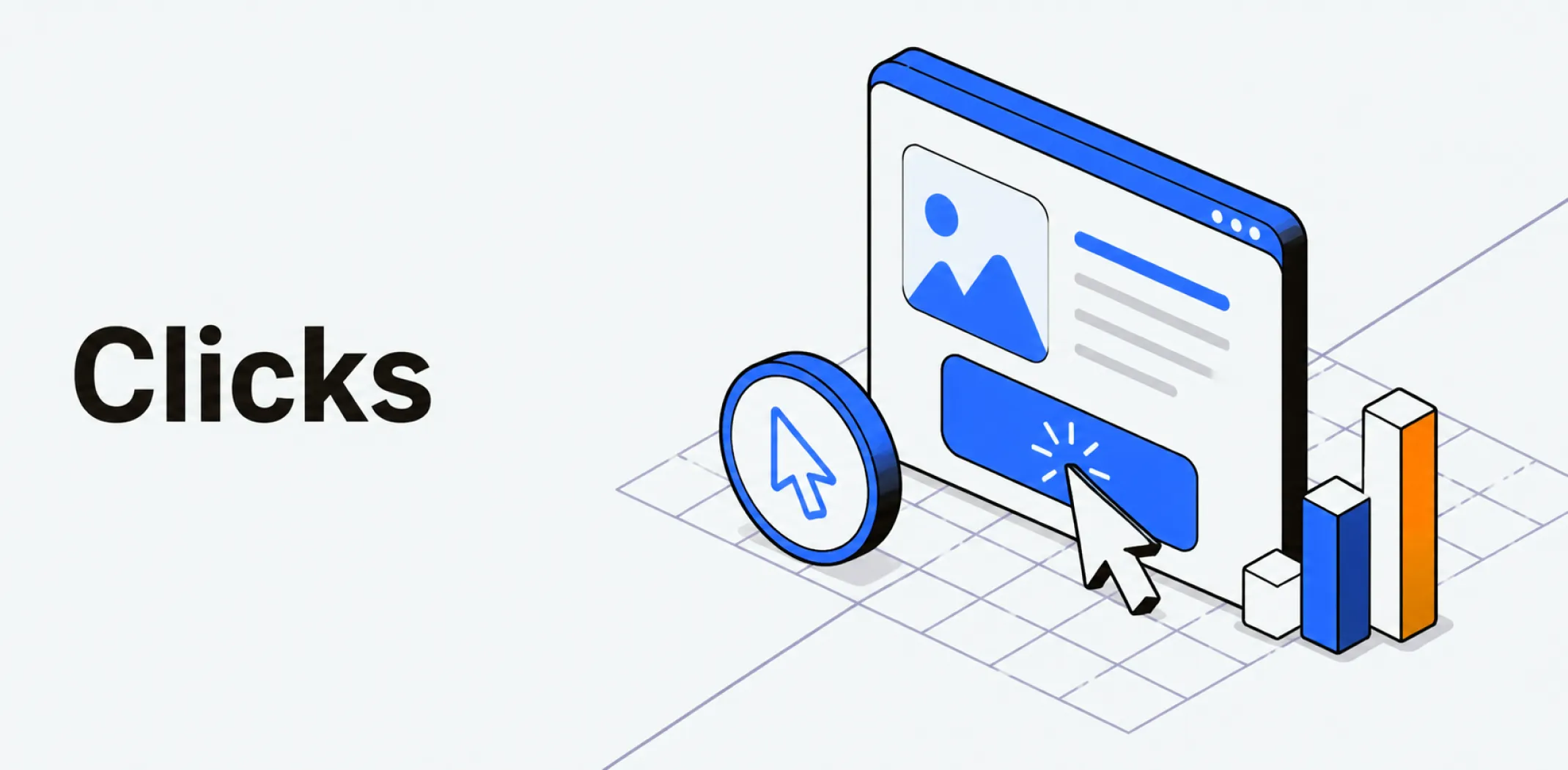
A click is the action a user takes when they select an ad, link, or button, typically resulting in their browser loading the advertised page, counted as a single discrete event each time it happens.
Clicks are the action that PPC billing and the CPC metric are both built around, since advertisers using these models are charged specifically for clicks rather than impressions. The relationship between clicks and impressions is commonly expressed as click-through rate, calculated by dividing total clicks by total impressions and expressing the result as a percentage.
A click on its own does not confirm a sale or any other meaningful outcome, only that a user took the first step of visiting the advertised page; this is the distinction that separates clicks from CPA, which measures cost per completed conversion instead.
For dropshipping and ecommerce sellers, clicks mark the entry point into the conversion funnel, where a portion of clicking visitors go on to convert into actual buyers.
Key characteristics
- Counted per interaction: Each click is recorded as a separate event, even if the same user clicks the same ad more than once.
- Basis for click-through rate: Click-through rate measures clicks as a percentage of impressions, showing how often an ad that was shown actually got clicked.
- Does not confirm conversion: A click only indicates that a user visited the advertised page, not that they completed a purchase or other goal once there.
- Sometimes filtered for quality: Many advertising platforms attempt to detect and exclude invalid or fraudulent clicks before they count toward billing or reporting.
Example
A dropshipping store runs a campaign that generates 10,000 impressions and 250 clicks during one week. Dividing the 250 clicks by the 10,000 impressions gives a click-through rate of 2.5 percent. Of those 250 clicks, only 20 visitors go on to complete a purchase, meaning the store’s conversion rate from click to sale is 8 percent, a separate figure from the click-through rate itself.
Related terms
- Impressions – the display count that clicks are measured against to calculate click-through rate.
- CPC – the cost metric calculated based on the number of clicks an ad receives.
- CPA – a related metric that measures cost per completed conversion rather than per click.
- Conversion funnel – the customer journey that begins once a click brings a visitor to a page.
Frequently asked questions
How is click-through rate calculated?
Click-through rate is calculated by dividing total clicks by total impressions and multiplying by 100 to express it as a percentage. A campaign with 500 clicks out of 20,000 impressions has a click-through rate of 2.5 percent.
Does a click always mean a user is interested in the product?
Not necessarily, since a click only confirms that a user took an initial action, not that they had genuine interest or intent to purchase. Some clicks come from accidental taps, curiosity, or even invalid sources that platforms attempt to filter out.
What is the difference between clicks and conversions?
A click measures that a user visited the advertised page, while a conversion measures that the user completed a specific goal, such as a purchase, once there. Most visitors who click do not go on to convert, which is why conversion rate is tracked as a separate metric.
What is considered a good click-through rate?
A good click-through rate varies by platform, ad format, and industry, so there is no single universal benchmark. Search ads often see higher click-through rates than Display or social feed ads, since search users are already actively looking for something specific.
AliDropship: An all-in-one platform for starting dropshipping in 2026
AliDropship is a dropshipping platform that covers store creation, product imports, order automation, and marketing within a single system. It is designed for users with no prior ecommerce experience, though it also supports scaling for more established stores.
🛍️ Free turnkey store
New users receive a free pre-built store – set up, designed, and stocked with products. The store includes a ready-to-use product catalogue and a standard storefront design. It also comes with hosting, a domain, SSL, and payment systems already set up and included.
📦 Products
The platform provides access to a product catalogue covering both trending and niche items, with one-click import to your store. The catalogue is updated regularly to reflect current market availability. Products can be browsed, filtered, and added without leaving the platform.
🚚 Shipping & fulfillment
AliDropship provides access to a vast catalogue of products from global suppliers and handles order fulfillment automatically once a purchase is made. Customers receive tracking information directly, and orders are processed without manual intervention from the store owner.
📣 Marketing & promotion tools
The platform includes built-in marketing tools covering email campaigns, discount management, SEO settings, and social media integration. These are available within the dashboard and do not require third-party subscriptions for basic use.
👌 Ease of use
AliDropship requires no coding knowledge. The dashboard contains all the necessary tools for managing your store, products, and orders in one place. Additional features and products can be added as the store grows without rebuilding the existing setup.
How is click-through rate calculated?
Does a click always mean a user is interested in the product?
What is the difference between clicks and conversions?
What is considered a good click-through rate?
Can clicks be fraudulent or invalid?
Are you ready to become an owner
of a profitable online business?
Free Dropshipping Guide