

Chargeback

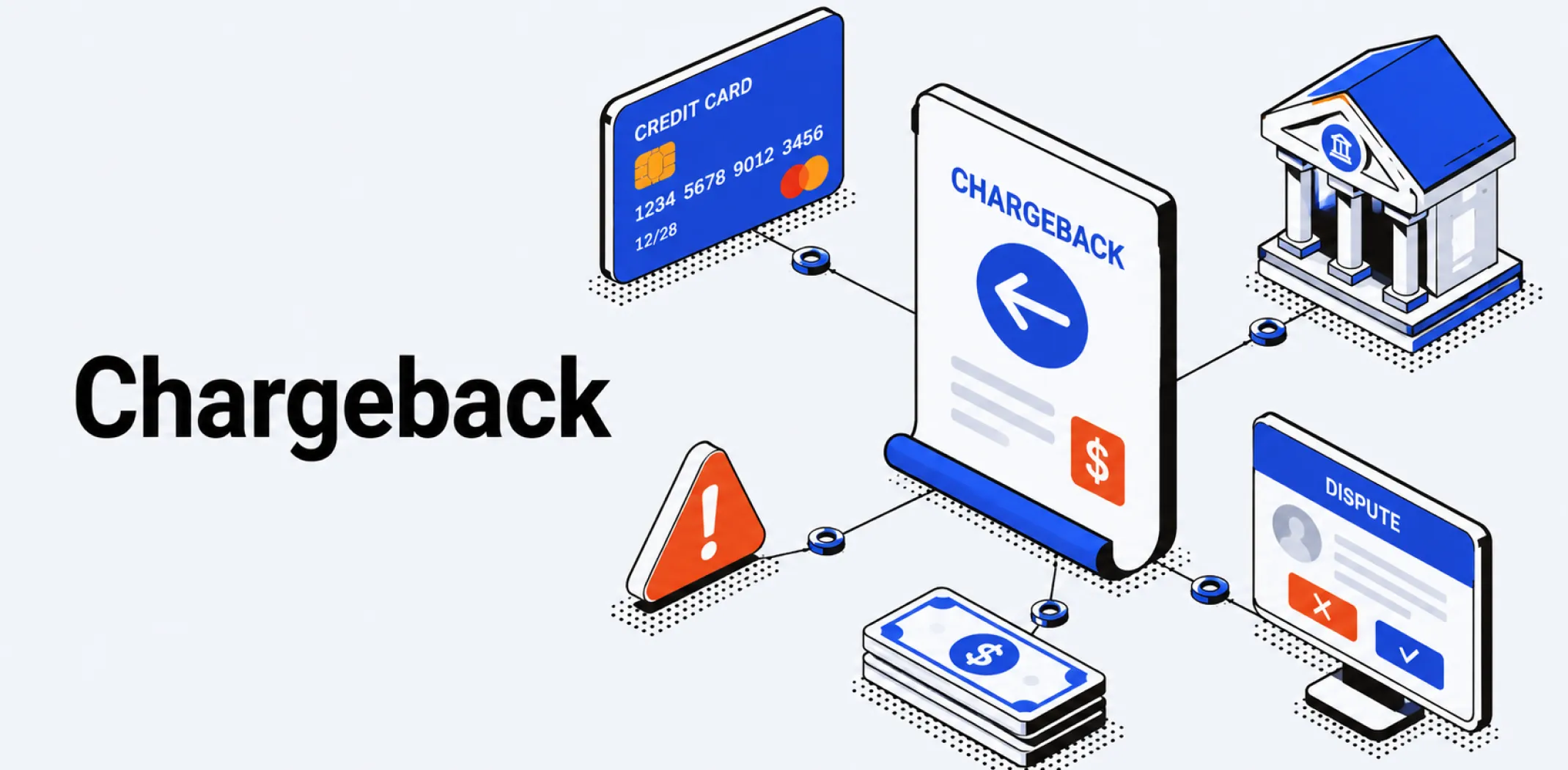
A chargeback is a forced reversal of a card payment, initiated when a customer disputes a charge directly with their card-issuing bank rather than requesting a refund from the merchant, resulting in funds being pulled back from the merchant’s account regardless of the merchant’s own return or refund terms.
A chargeback is not the same as a refund. A refund is a voluntary transaction the merchant initiates and controls; a chargeback is a forced reversal decided by the bank, typically coming with an additional chargeback fee, commonly $15 to $50, charged to the merchant regardless of the eventual outcome.
A significant share of disputes filed as chargebacks involve friendly fraud, where a customer makes a legitimate purchase but disputes the charge with their bank instead of contacting the merchant; industry estimates put friendly fraud’s share of total chargeback losses at around 70 percent, making it the dominant driver of dispute volume rather than genuine card theft.
How it works
The chargeback process moves through several stages.
Dispute filed: the cardholder contacts their issuing bank to dispute a charge, and the bank assigns a reason code identifying the claimed issue, such as item not received, fraud, or product not as described.
Provisional credit and notification: the issuing bank typically refunds the cardholder provisionally while pulling the disputed amount from the merchant’s account, then notifies the merchant through the acquiring bank, generally within 9 to 45 days depending on the card network.
Merchant response: the merchant can accept the chargeback, forfeiting the funds, or contest it through representment, submitting evidence such as delivery confirmation or proof of authorization that directly addresses the reason code.
Issuer decision: the issuing bank reviews the evidence and either reverses the chargeback or upholds it in the customer’s favor.
Arbitration: if either party disputes the outcome, the case can escalate to the card network for a final, binding decision, though this stage is relatively rare.
Example
A customer buys a phone case from a dropshipping store, receives the item, and uses it for several weeks, but later disputes the charge claiming it never arrived. The merchant receives a chargeback notification with an “item not received” reason code, pulls up the tracking number showing successful delivery, and submits that proof through representment within the response window. The issuing bank reviews the evidence and reverses the chargeback, though the merchant still pays the non-refundable chargeback fee regardless of the outcome.
Key characteristics
- Bank-controlled, not merchant-controlled: A chargeback is decided by the issuing bank based on evidence and reason codes, with the merchant losing direct control once a dispute is filed.
- Carries a non-refundable fee: Merchants are typically charged a chargeback fee regardless of the dispute’s outcome, separate from the disputed transaction amount itself.
- Mostly driven by friendly fraud: A large majority of chargeback losses come from legitimate purchases disputed incorrectly or dishonestly rather than genuine unauthorised card use.
- Tight, strict response deadlines: Merchants generally have between roughly 9 and 45 days to respond depending on the card network, and missing the deadline results in an automatic loss.
- Excess disputes risk account penalties: Card networks monitor a merchant’s chargeback ratio, and exceeding a defined threshold, often around 1 percent, can trigger fines or loss of processing privileges.
Related terms
- Refund policy – a store’s published rules for voluntary refunds, distinct from a chargeback, which bypasses the merchant’s own policy entirely.
- Payment processor – the entity that coordinates chargeback notifications and fund reversals between the issuing and acquiring banks during a dispute.
- Credit card processing – the broader transaction system within which a chargeback represents a reversal of an already-settled payment.
- Tracking number – a key piece of evidence merchants commonly submit during representment to dispute an “item not received” chargeback claim.
- Dropship – a fulfillment model in which longer supplier shipping times can increase the likelihood of “item not received” chargebacks if customers grow impatient before delivery.
Frequently asked questions
What is the difference between a chargeback and a refund?
A refund is a voluntary transaction the merchant initiates and controls, typically following its own published refund policy. A chargeback is a forced reversal decided by the customer’s bank, bypassing the merchant’s policy entirely and generally adding a non-refundable fee for the merchant regardless of the outcome.
What is friendly fraud?
Friendly fraud occurs when a customer makes a legitimate purchase but disputes the charge with their bank instead of contacting the merchant, often claiming the item was never received or was not as described. It accounts for the large majority of chargeback losses, making it more common than genuine card theft or unauthorized use.
Can a merchant win a chargeback dispute?
Yes, through a process called representment, in which the merchant submits evidence, such as delivery confirmation or customer communication, that directly addresses the bank’s stated reason code. Win rates vary significantly depending on evidence quality, with automated, well-targeted submissions generally performing far better than generic responses.
What happens if a merchant gets too many chargebacks?
Card networks track each merchant’s chargeback ratio, and exceeding a defined threshold, often cited around 1 percent of total transactions, can trigger increased monitoring, additional fees, higher reserve requirements, or in serious cases the loss of payment processing privileges altogether.
AliDropship: An all-in-one platform for starting dropshipping in 2026
AliDropship is a dropshipping platform that covers store creation, product imports, order automation, and marketing within a single system. It is designed for users with no prior ecommerce experience, though it also supports scaling for more established stores.
🛍️ Free turnkey store
New users receive a free pre-built store – set up, designed, and stocked with products. The store includes a ready-to-use product catalogue and a standard storefront design. It also comes with hosting, a domain, SSL, and payment systems already set up and included.
📦 Products
The platform provides access to a product catalogue covering both trending and niche items, with one-click import to your store. The catalogue is updated regularly to reflect current market availability. Products can be browsed, filtered, and added without leaving the platform.
🚚 Shipping & fulfillment
AliDropship provides access to a vast catalogue of products from global suppliers and handles order fulfillment automatically once a purchase is made. Customers receive tracking information directly, and orders are processed without manual intervention from the store owner.
📣 Marketing & promotion tools
The platform includes built-in marketing tools covering email campaigns, discount management, SEO settings, and social media integration. These are available within the dashboard and do not require third-party subscriptions for basic use.
👌 Ease of use
AliDropship requires no coding knowledge. The dashboard contains all the necessary tools for managing your store, products, and orders in one place. Additional features and products can be added as the store grows without rebuilding the existing setup.
What is the difference between a chargeback and a refund?
What is friendly fraud?
Can a merchant win a chargeback dispute?
What happens if a merchant gets too many chargebacks?
Are you ready to become an owner
of a profitable online business?
Free Dropshipping Guide