


Tracking Number

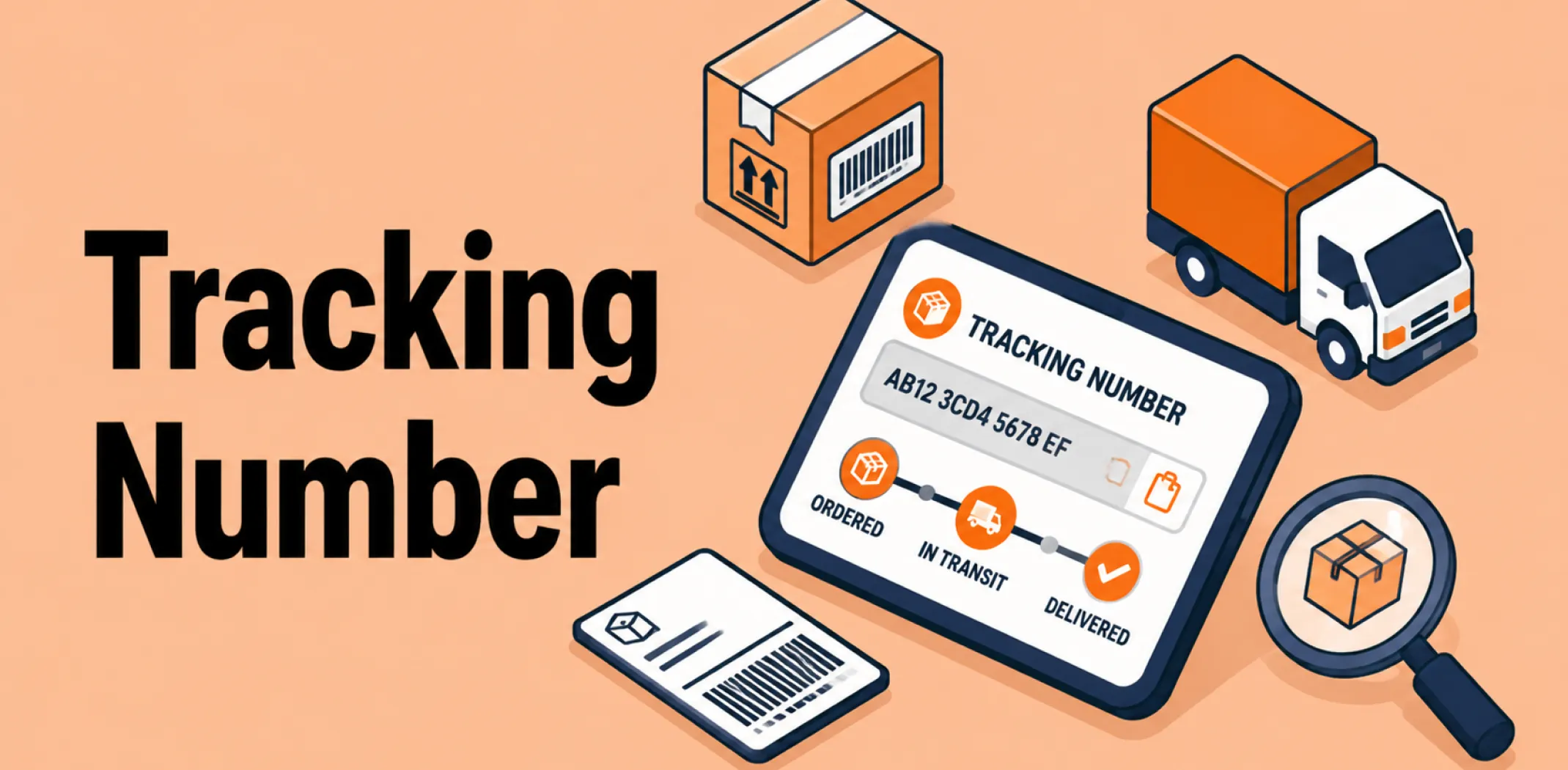
A tracking number is a unique code, made up of letters and numbers, assigned to a package when it ships, allowing both the sender and the customer to monitor its progress as it moves through a shipping carrier’s network from pickup to final delivery.
Each major carrier uses its own distinct format, and the differences are large enough that a tracking number from one carrier generally cannot be looked up on another’s website.
UPS domestic numbers are typically 18 characters, starting with “1Z” followed by a shipper code, a service-level indicator, and a check digit.
FedEx uses different lengths depending on service: 12 digits for Express, 15 for standard Ground, and 20 for Ground Economy, which hands packages to USPS for final-mile delivery.
USPS domestic numbers commonly run 20 to 22 digits, often grouped in sets of four, while international USPS numbers follow the global UPU standard, beginning with two letters, nine digits, and ending in “US.” A tracking number itself encodes only routing information, such as service level and carrier identifiers, not the package’s contents; the order number used to identify what was purchased is a separate identifier entirely.
Regardless of carrier, a shipment’s tracking history generally follows a consistent progression: label created, when the label is generated but the carrier hasn’t yet received the package; picked up or origin scan, when the carrier takes physical possession; in transit, covering scans as the package moves between sorting facilities; out for delivery, when it leaves its final facility that day; and delivered, the final confirmed status.
Updates generally appear only when a package is scanned at a facility rather than through continuous GPS tracking, meaning gaps of a day or more between updates are common and not necessarily a sign of a problem.
Example
A customer places an order and receives a shipping confirmation email containing a 15-digit FedEx Ground tracking number. Over the next several days, they check the carrier’s website periodically, watching the status move from “picked up” to “in transit,” then “arrived at local facility,” and finally “out for delivery” before the package is marked delivered. When the customer briefly sees no update for two days while the package crosses the country, this reflects the normal gap between facility scans rather than a lost shipment.
Key characteristics
- Carrier-specific format: Each carrier uses its own length and structure for tracking numbers, meaning a number generated by one carrier will not return results on a different carrier’s tracking page.
- Encodes routing data, not contents: A tracking number identifies service level and shipment routing information but does not describe what is inside the package, which is identified separately through an order or invoice number.
- Scan-based, not continuous: Status updates occur when a package is physically scanned at a carrier facility, which is why tracking can show gaps of a day or more rather than updating in true real time.
- Universal status progression: Despite differing formats, nearly all carriers follow the same broad sequence of label created, picked up, in transit, out for delivery, and delivered.
- Multi-carrier handoffs are tracked across systems: Services such as FedEx Ground Economy and USPS partnerships mean a single shipment can generate scans from two different carrier systems, sometimes visible on both companies’ tracking pages.
Related terms
- Shipping carrier – the company that generates a tracking number and provides the scan data behind each status update.
- Shipping – the broader process of transporting a product to a customer, of which tracking is a visibility layer running alongside the physical movement of the package.
- Order fulfillment – the process during which a tracking number is generated once a package is picked, packed, and handed to a carrier.
- 3PL – a logistics provider that typically supplies tracking numbers to merchants automatically once an order ships from its fulfillment center.
- Dropship – a fulfillment model in which the tracking number is generated by the supplier rather than the seller, then passed along to the end customer.
Frequently asked questions
Does a tracking number tell you what’s inside a package?
No, a tracking number only encodes routing information such as the carrier, service level, and a unique shipment identifier. The contents of a package are identified separately through an order number or invoice, which the tracking number does not reveal.
Why does my tracking number not work on a different carrier’s website?
Each carrier uses its own distinct tracking number format and only recognizes numbers generated within its own system. A FedEx tracking number, for example, will not return results on UPS or USPS’s tracking pages, even though all use similar-looking strings of letters and numbers.
Why does tracking sometimes show no updates for a day or more?
Tracking updates are generated when a package is physically scanned at a carrier facility, not through continuous real-time location monitoring. Gaps of a day or two between scans, particularly during long-distance transit, are normal and do not necessarily indicate a lost or delayed package.
Can a package have tracking numbers from two different carriers?
Yes, services such as FedEx Ground Economy and certain USPS partnerships involve a handoff between carriers, where one company handles long-distance transport and another completes final-mile delivery. In these cases, scans from both carriers’ systems can sometimes appear, occasionally with separate tracking numbers for each leg.
AliDropship: An all-in-one platform for starting dropshipping in 2026
AliDropship is a dropshipping platform that covers store creation, product imports, order automation, and marketing within a single system. It is designed for users with no prior ecommerce experience, though it also supports scaling for more established stores.
🛍️ Free turnkey store
New users receive a free pre-built store – set up, designed, and stocked with products. The store includes a ready-to-use product catalogue and a standard storefront design. It also comes with hosting, a domain, SSL, and payment systems already set up and included.
📦 Products
The platform provides access to a product catalogue covering both trending and niche items, with one-click import to your store. The catalogue is updated regularly to reflect current market availability. Products can be browsed, filtered, and added without leaving the platform.
🚚 Shipping & fulfillment
AliDropship provides access to a vast catalogue of products from global suppliers and handles order fulfillment automatically once a purchase is made. Customers receive tracking information directly, and orders are processed without manual intervention from the store owner.
📣 Marketing & promotion tools
The platform includes built-in marketing tools covering email campaigns, discount management, SEO settings, and social media integration. These are available within the dashboard and do not require third-party subscriptions for basic use.
👌 Ease of use
AliDropship requires no coding knowledge. The dashboard contains all the necessary tools for managing your store, products, and orders in one place. Additional features and products can be added as the store grows without rebuilding the existing setup.
Does a tracking number tell you what is inside a package?
Why does my tracking number not work on the website of a different carrier?
Why does tracking sometimes show no updates for a day or more?
Can a package have tracking numbers from two different carriers?
Are you ready to become an owner
of a profitable online business?
Free Dropshipping Guide