

Refund Policy

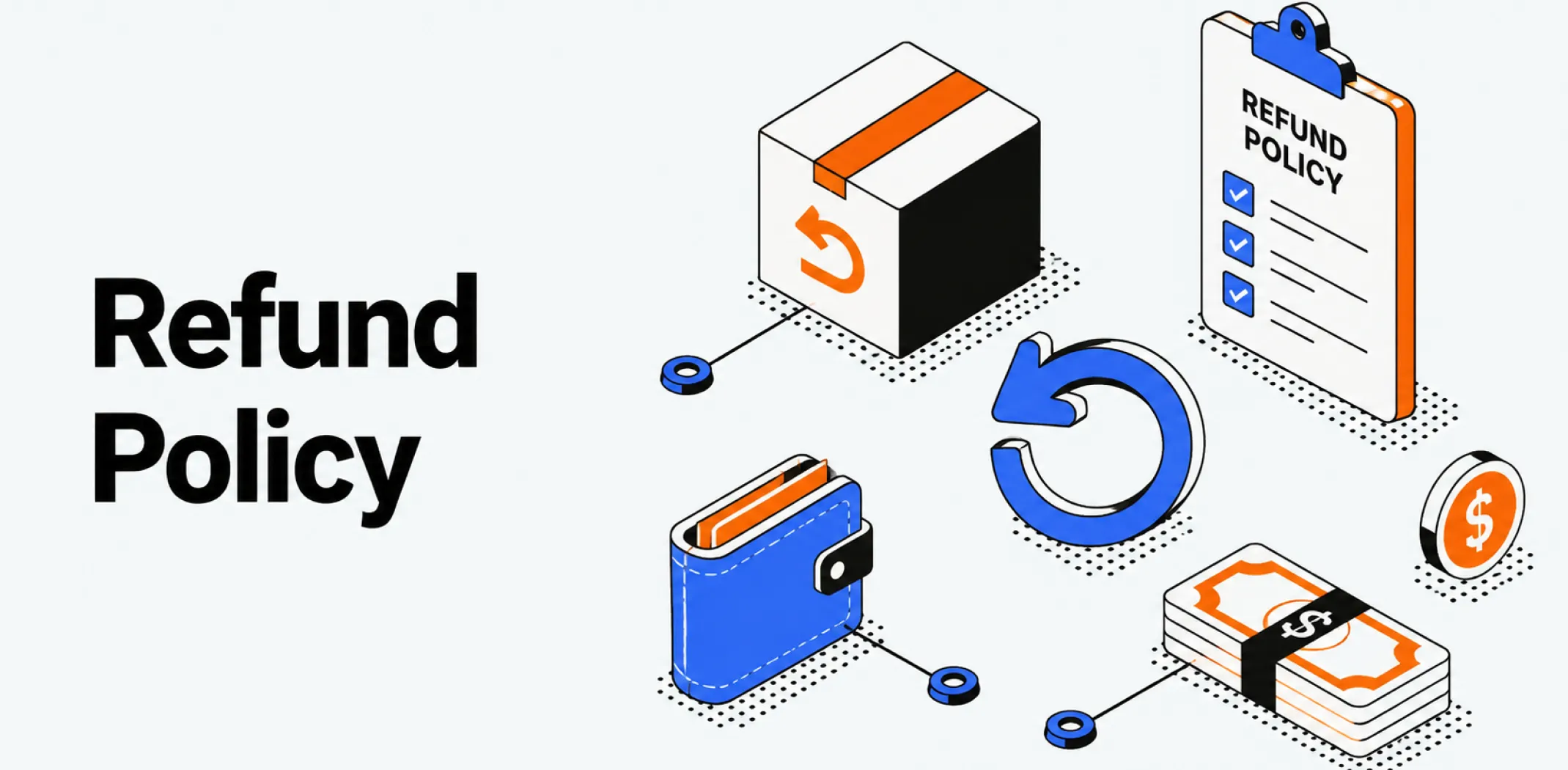
A refund policy is a store’s published set of rules explaining when a customer is entitled to get their money back, how the refund will be issued, and within what timeframe, distinct from a return policy, which covers the conditions under which the product itself can be sent back.
The two are closely related and often combined into a single document, but the distinction matters: a return policy deals with the product coming back, while a refund policy deals with the money going back, which is why a store can accept returns while still limiting cash refunds, offering store credit or an exchange instead.
A clearly written refund policy typically specifies the request window (commonly 7, 14, or 30 days from delivery), product condition requirements, which item categories are excluded entirely (such as final-sale, custom, or digital goods), whether shipping costs are refundable, any restocking fees, and how the refund is issued.
In the United States, there is no single federal law requiring a refund for ordinary change-of-mind returns, but several state-level rules fill that gap, and they vary meaningfully by state. New York’s Department of State requires a store to post its refund policy clearly; without one, the store may be legally required to accept returns within 30 days regardless of its actual practice.
Florida law similarly requires a posted policy or default consumer protections apply. Beyond state law, payment networks such as Visa and Mastercard factor a merchant’s refund policy disclosure into how they evaluate chargeback disputes, since a clearly stated policy gives a customer a resolution path before involving their bank, and its absence can weaken a merchant’s position when contesting an illegitimate dispute.
Example
An online clothing store publishes a refund policy stating that unused items with tags attached can be returned within 30 days for a full refund, while sale items qualify for store credit only and final-sale items cannot be returned at all. When a customer requests a refund for a worn item outside the 30-day window, support points to the clearly posted policy to explain why the request falls outside what was promised, reducing the likelihood the customer escalates into a chargeback.
Key characteristics
- Distinct from a return policy: A return policy governs whether and how a product can be sent back; a refund policy governs whether and how the customer’s money comes back, and the two can differ.
- Varies by product type: Physical goods, digital downloads, subscriptions, and services typically need different refund terms, since considerations like whether a file was downloaded differ substantially.
- Subject to state-level disclosure rules: Several US states legally require a clearly posted refund policy, with some imposing default consumer-friendly terms if no policy is displayed at all.
- A factor in chargeback disputes: Payment networks consider whether a refund policy was clearly disclosed at purchase when evaluating disputes, making visible placement a practical fraud and chargeback defense.
- Should be visible at multiple touchpoints: Best practice places the policy in the footer, checkout flow, product pages, and order confirmation emails, rather than only on one hard-to-find page.
Related terms
- RMA – the operational process and approval step a refund policy’s rules are applied through once a customer actually requests a return or refund.
- Dropship – a fulfillment model in which a seller’s refund policy terms must often be reconciled with a separate, sometimes stricter, supplier-side refund policy.
- Payment gateway – the service through which refunds are typically processed back to a customer’s original payment method.
- Ecommerce – the broader category of online commercial activity in which a clearly disclosed refund policy is linked to both legal compliance and reduced chargeback risk.
- Order fulfillment – the forward delivery process that a refund policy addresses the reverse, post-purchase side of.
Frequently asked questions
What is the difference between a refund policy and a return policy?
A return policy covers whether and how a physical product can be sent back to a seller, including condition requirements and timeframes. A refund policy specifically covers whether and how the customer’s money is returned, which can differ from the return terms, such as offering store credit instead of a cash refund.
Is a business legally required to offer refunds?
There is no single federal US law requiring refunds for ordinary change-of-mind purchases, but several states impose their own rules. Some states require a clearly posted refund policy, and a few apply default consumer-protective terms, such as a mandatory return window, if no policy is displayed at all.
How does a refund policy help with chargebacks?
Payment networks such as Visa and Mastercard consider whether a refund policy was clearly disclosed at the time of purchase when evaluating disputes. A visible, clearly worded policy gives customers a resolution path before contacting their bank and can strengthen a merchant’s position when contesting an illegitimate chargeback.
Should digital products have a different refund policy than physical products?
Yes, digital products, subscriptions, and services typically need different refund terms than physical goods, since considerations such as whether a file has already been downloaded or a service has already begun affect what a fair refund policy looks like for that specific product type.
AliDropship: An all-in-one platform for starting dropshipping in 2026
AliDropship is a dropshipping platform that covers store creation, product imports, order automation, and marketing within a single system. It is designed for users with no prior ecommerce experience, though it also supports scaling for more established stores.
🛍️ Free turnkey store
New users receive a free pre-built store – set up, designed, and stocked with products. The store includes a ready-to-use product catalogue and a standard storefront design. It also comes with hosting, a domain, SSL, and payment systems already set up and included.
📦 Products
The platform provides access to a product catalogue covering both trending and niche items, with one-click import to your store. The catalogue is updated regularly to reflect current market availability. Products can be browsed, filtered, and added without leaving the platform.
🚚 Shipping & fulfillment
AliDropship provides access to a vast catalogue of products from global suppliers and handles order fulfillment automatically once a purchase is made. Customers receive tracking information directly, and orders are processed without manual intervention from the store owner.
📣 Marketing & promotion tools
The platform includes built-in marketing tools covering email campaigns, discount management, SEO settings, and social media integration. These are available within the dashboard and do not require third-party subscriptions for basic use.
👌 Ease of use
AliDropship requires no coding knowledge. The dashboard contains all the necessary tools for managing your store, products, and orders in one place. Additional features and products can be added as the store grows without rebuilding the existing setup.
What is the difference between a refund policy and a return policy?
Is a business legally required to offer refunds?
How does a refund policy help with chargebacks?
Should digital products have a different refund policy than physical products?
Are you ready to become an owner
of a profitable online business?
Free Dropshipping Guide