


Fraud Prevention

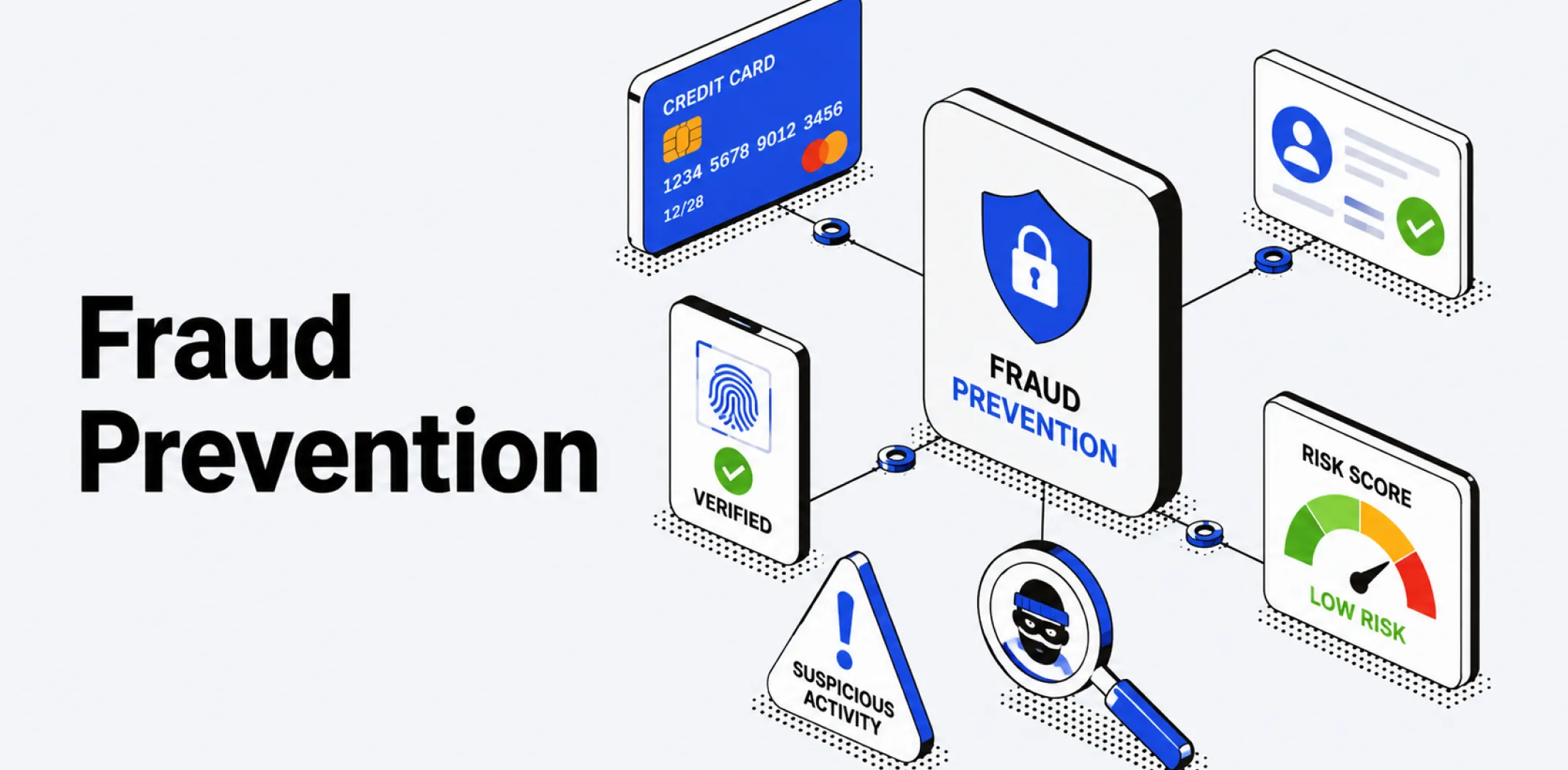
Fraud prevention is the layered set of checks and tools an online store uses to screen transactions for risk before they are approved, aiming to block fraudulent purchases while still letting legitimate customers complete checkout without unnecessary friction.
Card-not-present fraud, the category covering virtually all ecommerce transactions, is projected to exceed $50 billion in global losses by 2027, but the nature of the threat has shifted: friendly fraud, where a legitimate purchase is later disputed dishonestly as a chargeback, has overtaken genuine card theft as the dominant source of dispute losses.
This matters for prevention strategy, since traditional fraud tools are built to catch stolen card numbers and bot-driven attacks, while friendly fraud requires different defenses, such as clear delivery confirmation and a documented customer communication trail, to fight effectively after the fact.
How it works
Most stores apply fraud checks in layers, running multiple signals against each transaction rather than relying on a single test.
Basic verification: the Address Verification System (AVS) cross-checks the billing address entered at checkout against the address on file with the card issuer, while a CVV check confirms the customer physically possesses the card.
Behavioral signals: velocity checks flag an unusual number of transactions from the same card, IP, or email within a short window, a common sign of automated card-testing, while device fingerprinting tracks browser and device characteristics to recognize a returning fraudster even after they switch IP addresses or card numbers.
Step-up authentication: for higher-risk orders, 3D Secure (3DS) adds an extra identity-verification step with the card issuer and shifts chargeback liability for fraud-related disputes onto the issuer when used correctly.
Risk scoring and review: many platforms run each transaction through a machine-learning model combining these signals into a risk score, automatically approving low-risk orders, declining clear high-risk ones, and routing borderline cases to manual review.
Example
A dropshipping store notices a spike in orders from the same IP address using several different card numbers within minutes, a classic card-testing pattern. Its velocity checks flag the activity and block further attempts from that IP, while orders already past initial screening run through 3D Secure for an extra verification step before approval. A handful of borderline orders route to manual review, where staff confirm legitimacy before releasing them for fulfillment.
Key characteristics
- Works best as a layered system: No single check, such as AVS or CVV alone, reliably catches sophisticated fraud; combining multiple signals creates a stronger defense than any individual tool.
- Risk thresholds should scale with order value: A small purchase might only require a basic CVV check, while a high-value order can warrant full 3D Secure verification or manual review before approval.
- False declines carry a real cost: Wrongly blocking a legitimate customer is estimated to cost merchants many times more in lost revenue than the fraud the system was designed to prevent, making over-aggressive rules counterproductive.
- 3D Secure shifts liability for covered fraud: When used correctly, 3DS can shift responsibility for certain fraud-related chargebacks from the merchant to the card issuer, though it is adopted by only a minority of merchants.
- Rules require ongoing tuning: Fraud patterns shift constantly, so decline rates and false-positive rates need regular review to ensure rules that worked months ago are not now blocking legitimate customers.
Related terms
- Chargeback – a forced payment reversal that effective fraud prevention is designed to reduce, particularly for genuinely fraudulent transactions rather than friendly fraud disputes.
- Payment gateway – the technology layer through which many fraud prevention tools, such as AVS and CVV checks, are applied at the point of checkout.
- Payment processor – the entity that evaluates fraud risk as part of authorizing a transaction, often supplying built-in fraud screening tools to merchants.
- SSL certificate – a security certificate that encrypts checkout data, complementing transaction-level fraud checks by protecting payment information in transit.
- Credit card processing – the broader authorization system within which fraud prevention checks are applied before a transaction is approved or declined.
Frequently asked questions
What are the most common fraud prevention tools used by ecommerce stores?
Common tools include the Address Verification System (AVS), CVV checks, velocity checks for unusual transaction patterns, device fingerprinting, and 3D Secure for additional identity verification on higher-risk orders. Most effective fraud prevention combines several of these tools rather than relying on just one.
What is the difference between fraud prevention and chargeback prevention?
Fraud prevention focuses on stopping fraudulent transactions before they are approved, using checks applied at checkout. Chargeback prevention, particularly against friendly fraud, focuses on what happens after a sale, including clear policies, delivery confirmation, and documentation that can be used to dispute illegitimate claims later.
Does fraud prevention slow down checkout for legitimate customers?
It can, which is why most merchants apply stricter checks, such as 3D Secure, only to higher-risk or higher-value transactions rather than every order. A well-tuned, layered system aims to add friction only where risk genuinely warrants it.
What is 3D Secure and why does it matter?
3D Secure is an additional identity-verification step performed with the card issuer during checkout, designed to confirm the cardholder is genuinely authorizing the purchase. When used correctly, it can shift liability for certain fraud-related chargebacks from the merchant to the issuing bank, though adoption remains limited among merchants overall.
AliDropship: An all-in-one platform for starting dropshipping in 2026
AliDropship is a dropshipping platform that covers store creation, product imports, order automation, and marketing within a single system. It is designed for users with no prior ecommerce experience, though it also supports scaling for more established stores.
🛍️ Free turnkey store
New users receive a free pre-built store – set up, designed, and stocked with products. The store includes a ready-to-use product catalogue and a standard storefront design. It also comes with hosting, a domain, SSL, and payment systems already set up and included.
📦 Products
The platform provides access to a product catalogue covering both trending and niche items, with one-click import to your store. The catalogue is updated regularly to reflect current market availability. Products can be browsed, filtered, and added without leaving the platform.
🚚 Shipping & fulfillment
AliDropship provides access to a vast catalogue of products from global suppliers and handles order fulfillment automatically once a purchase is made. Customers receive tracking information directly, and orders are processed without manual intervention from the store owner.
📣 Marketing & promotion tools
The platform includes built-in marketing tools covering email campaigns, discount management, SEO settings, and social media integration. These are available within the dashboard and do not require third-party subscriptions for basic use.
👌 Ease of use
AliDropship requires no coding knowledge. The dashboard contains all the necessary tools for managing your store, products, and orders in one place. Additional features and products can be added as the store grows without rebuilding the existing setup.
What are the most common fraud prevention tools used by ecommerce stores?
What is the difference between fraud prevention and chargeback prevention?
Does fraud prevention slow down checkout for legitimate customers?
What is 3D Secure and why does it matter?
Are you ready to become an owner
of a profitable online business?
Free Dropshipping Guide