Best Dropshipping Products For Vintage Clothing In 2026

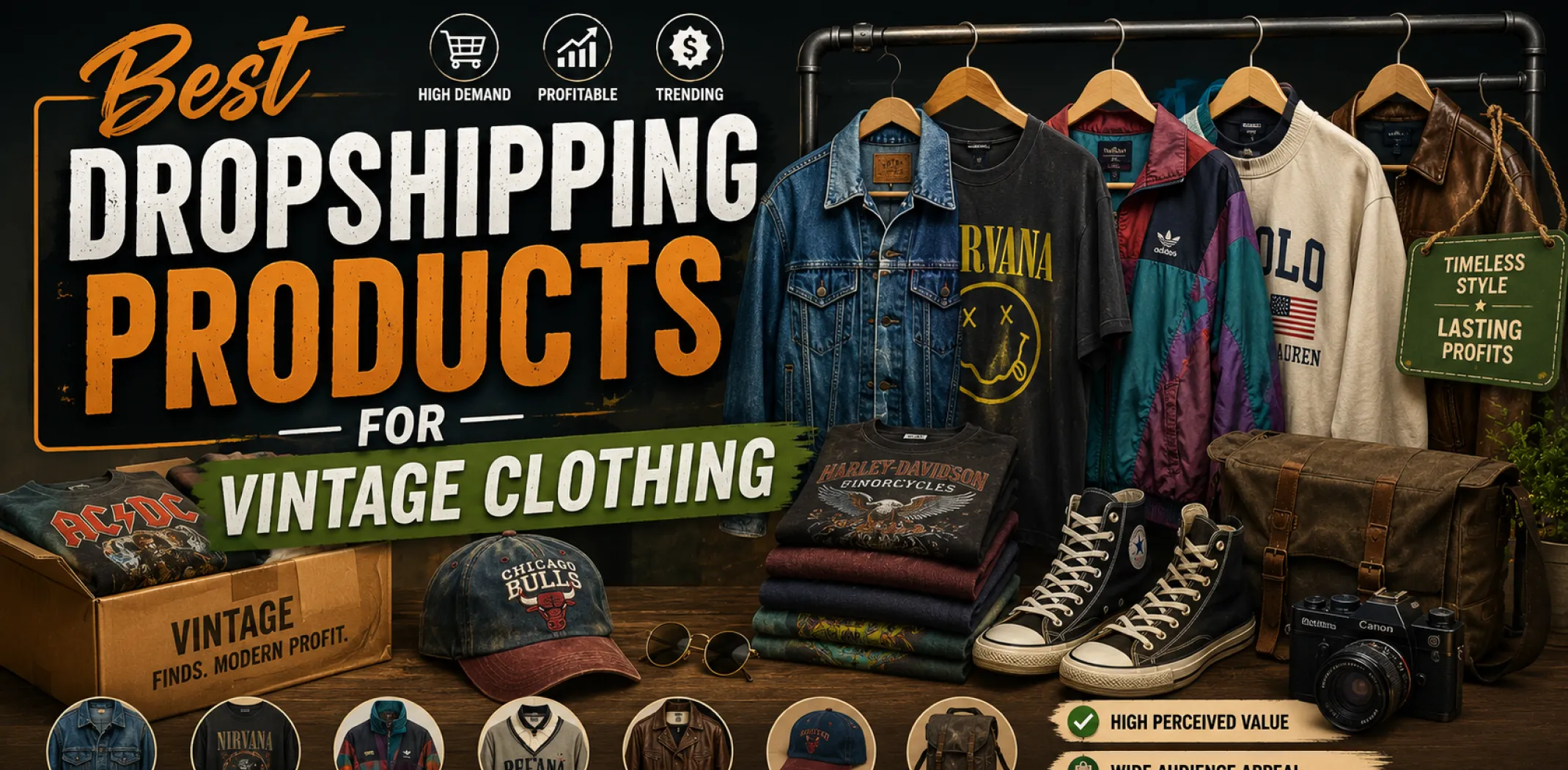
Vintage clothing is one of the fastest-growing niches in ecommerce right now. Global secondhand and vintage fashion was valued at over $43 billion in 2023, and it keeps climbing year after year as sustainability-minded shoppers and trend-driven Gen Z buyers push demand to new highs.
If you are thinking about starting a dropshipping business, this niche gives you something rare: passionate buyers, strong repeat purchase rates, and genuine product variety.
But knowing the niche is hot is only half the job. The real question is which products actually move. Not everything labelled “vintage” converts well in a dropshipping model. You need items with proven demand, manageable return rates, and the right supplier backing. This guide breaks all of that down for you.
Quick Answer: The best dropshipping products for vintage clothing in 2026 include oversized band tees, retro denim jackets, 90s windbreakers, vintage-style corduroy trousers, retro sneakers, and statement accessories like chain belts and bucket hats. These items combine high search volume, strong social proof, and solid supplier availability on platforms like AliExpress.

What is vintage clothing dropshipping?
Vintage clothing dropshipping is a retail model where you sell vintage-style or deadstock-inspired fashion items through your own online store without holding any physical inventory. When a customer places an order, your supplier ships the item directly to them. You keep the margin between your retail price and the supplier’s wholesale cost.
It sits at the intersection of two massive trends: the booming resale and vintage fashion market, and the low-barrier dropshipping model that lets anyone launch an ecommerce store without a warehouse or upfront stock investment. The result is a business model that is genuinely accessible to beginners while offering room to scale.
In 2026, vintage clothing dropshipping works particularly well because AliExpress and similar wholesale platforms now carry a wide range of vintage-inspired apparel – from authentic-looking washed tees to retro outerwear – at price points that leave healthy margins. Suppliers have caught up with the trend, and that means you have real product depth to work with.
Why this works in 2026: Sustainability awareness and nostalgia culture are both peaking simultaneously, making vintage aesthetics one of the most searched fashion categories on TikTok, Pinterest, and Google Shopping.
How much can you realistically earn selling vintage clothing online?
The earning potential in vintage clothing dropshipping varies a lot depending on your traffic strategy, product selection, and how aggressively you test and optimise. Here is an honest breakdown across common approaches:
These figures represent realistic ranges based on consistent effort, not overnight results. SEO-driven stores typically take 60–90 days to see meaningful organic traffic. Social approaches can produce earlier wins if a product goes viral, but that is never guaranteed. Paid ads can scale fast but require budget and testing cycles before profitability kicks in.
One note on the upper figures: The $300+/day range for paid ads reflects stores that have been running for several months with well-optimised product pages and tested creatives. Starting out, expect smaller numbers while you find your winning products.
What sets vintage clothing apart from many other dropshipping niches is the average order value. Fashion accessories and outerwear in this niche regularly retail at $35–$90, which means you do not need enormous order volumes to hit decent daily revenue. A handful of consistent daily sales can build a real supplemental income within a few months of launch.
The best dropshipping products for vintage clothing in 2026
Not every vintage-inspired item works well in a dropshipping setup. The best candidates have reliable supplier availability, strong margins, low return rates, and demonstrable buyer demand. Below, the top-performing categories are grouped by type so you can build a coherent store catalogue rather than a random collection of items.
Vintage tops and tees
This is the backbone of any vintage clothing dropshipping store. T-shirts and tops are high-volume, repeat-purchase items with broad demographic appeal. The key is choosing styles with proven demand rather than generic prints.
Oversized band and graphic tees
Oversized washed graphic tees are the single highest-demand product in vintage clothing right now. Searches for “vintage band tee”, “90s graphic tee”, and “washed oversized t-shirt” are consistently high across Google, Pinterest, and TikTok Shop.
Suppliers on AliExpress carry these at $4–$9 wholesale, and they retail comfortably at $22–$38, giving you a solid margin to work with. Look for listings with acid-wash or distressed finishes, as these photograph well and convert at higher rates.
Earning potential: $18–$29 margin per unit at mid-range retail pricing.
Vintage-style crop tops and baby tees
Crop tops with 70s and 80s-inspired styling have maintained steady demand driven by Pinterest aesthetics and TikTok outfit content. They are particularly strong sellers during spring and summer. Wholesale prices typically sit at $3–$7, with retail prices ranging from $18–$30. Ribbed textures, pastel colourways, and retro logo placements are the styles converting best in 2026.
Earning potential: $15–$23 margin per unit with repeat purchase potential from fashion-forward buyers.
Retro polo shirts
Polo shirts with vintage branding details – embroidered logos, wide collars, and stripe detailing – have crossed from niche to mainstream. They appeal to both men and women and photograph extremely well for social content.
AliExpress suppliers offer these at $6–$12 wholesale, while retail pricing lands comfortably at $28–$45. This is one of the best dropshipping products for vintage clothing if you are targeting a slightly older demographic (25–40) with disposable income.
Earning potential: $22–$33 margin per unit at standard retail pricing.
Vintage outerwear
Outerwear is where your highest average order values live. Jackets and coats carry premium price points, and vintage-inspired styles are among the most gifted, most shared, and most wishlisted items in the fashion niche. They do require slightly more careful supplier vetting for quality, but the margins justify the extra effort.
Retro denim jackets
The retro denim jacket is a perennial bestseller in vintage clothing dropshipping. Styles with distressed finishes, oversized cuts, or patchwork details perform particularly well on TikTok and Instagram. Wholesale cost from verified AliExpress suppliers runs $14–$22, with retail prices between $45–$75. Make sure your product images show the jacket styled – flat lays alone are not enough for fashion conversion rates.
Earning potential: $31–$53 margin per unit – one of the strongest in this niche.
90s windbreakers and track jackets
Windbreakers and track jackets with colour-block panels and retro logo aesthetics have been trending hard since 2022 and show no sign of slowing. They are lightweight, easy to ship, and appeal to both streetwear fans and vintage collectors. Wholesale prices sit at $10–$18, with retail ranging from $35–$60. Bright colourways (royal blue, orange, kelly green) tend to outperform neutrals in this sub-category.
Earning potential: $25–$42 margin per unit, with strong seasonal peaks in spring and autumn.
Vintage varsity and letterman jackets
Varsity jackets occupy a premium tier within vintage clothing dropshipping. Buyers are willing to pay $65–$110 for a well-designed varsity jacket with chenille patches, wool-blend body, and leather sleeves. Wholesale cost at this quality level runs $25–$40. These are your highest-margin single units in the outerwear category. Target this product toward college-aged buyers and nostalgic millennials through paid social.
Earning potential: $40–$70 margin per unit at the upper end of the retail range.
Vintage bottoms and trousers
Bottoms are a natural cross-sell to tops and outerwear. Vintage-inspired trousers and jeans carry strong search volume and loyal buyer communities, particularly around specific silhouettes that cycle back into fashion.
Corduroy trousers and flares
Corduroy has had a full revival in the 2020s. Wide-leg corduroy trousers and flared cuts are among the most searched vintage clothing items on Pinterest and Depop, and that search intent translates directly into dropshipping sales. Wholesale pricing is $9–$16, with retail at $32–$55. Earthy tones – burnt orange, olive, rust, and forest green – consistently outsell neutrals in this category.
Earning potential: $23–$39 margin per unit with strong year-round demand.
Vintage-wash straight-leg jeans
Straight-leg jeans with a vintage acid-wash or light stone-wash finish are a core product for any vintage clothing store. They appeal to the broadest age range in the niche and pair with almost everything else in your catalogue. Look for suppliers offering at least 3–5 wash variants so you can test colourways without committing. Wholesale runs $12–$20, retail $38–$65.
Earning potential: $26–$45 margin per unit, with high potential for bundle upsells with matching tees.
Vintage accessories
Accessories are the smartest category to add to a vintage clothing store because they are lightweight, cheap to ship, and work as both standalone products and impulse add-ons at checkout. They also photograph beautifully, which is crucial for social-driven traffic.
Chain belts and waist accessories
Chain belts, corset belts, and wide vintage-style waist cinchers have been trending since 2021 and remain strong sellers. They are extremely low-cost wholesale ($2–$6) and retail well at $15–$28, giving you some of the best margin percentages in the entire vintage clothing niche. They are a natural add-on to jeans, skirts, and dresses, making them ideal for post-purchase upsells.
Earning potential: $13–$22 margin per unit with volume sales potential.
Retro bucket hats and caps
Bucket hats with vintage branding, tie-dye, or corduroy fabric have a devoted buyer base across Gen Z and millennial demographics. They are year-round sellers with a peak in spring and summer. Wholesale cost is $3–$8, retail is $18–$30. The key differentiator here is embroidery quality – buyers in this niche scrutinise product photos carefully, so choose suppliers whose listings show clean, tight stitch work.
Earning potential: $15–$22 margin per unit with strong social shareability.
Vintage sunglasses
Retro-frame sunglasses – round wire frames, oversized cat-eye styles, and aviators with coloured lenses – are among the most impulse-purchased accessories in vintage fashion. They are very light, cheap to ship internationally, and wholesale at $2–$7 for fashion-grade quality. Retail at $18–$35 comfortably. Pair these with seasonal campaigns around summer and festival season for traffic spikes.
Earning potential: $16–$28 margin per unit, excellent for bundling and upsell sequences.
Vintage footwear
Shoes carry higher wholesale costs but also the highest retail prices in vintage fashion. This category requires more careful supplier selection, but the payoff in average order value makes it worthwhile once your store is established.
Retro sneakers and chunky trainers
Chunky retro trainers and vintage-inspired low-top sneakers have been a mainstay trend since the late 2010s and continue to perform exceptionally well. Wholesale pricing for fashion-grade retro sneakers runs $18–$35, with retail at $55–$90. Focus your product selection on colourways that echo iconic 80s and 90s trainer aesthetics – white with colour-pop accents, suede panels, and gum soles are the strongest performers.
Earning potential: $37–$55 margin per unit – your highest-ticket item in a vintage clothing store.
Platform boots and heels
Platform boots with a 70s aesthetic – block heels, round toes, and patent or suede finishes – have a committed buyer community driven largely by Pinterest and Instagram aesthetics. They are less volume-driven than sneakers but carry very strong average order values. Wholesale runs $20–$38, retail $60–$95. Return rates can be higher with footwear, so look for suppliers who offer size guides and post clear dimension information.
Earning potential: $40–$57 margin per unit, best suited for established stores with solid product content.
Vintage clothing dropshipping: A product comparison
Here is how the core product categories compare across three key performance dimensions – margin, demand consistency, and ease of supplier sourcing – to help you prioritise your initial catalogue.
For beginners, the data points to a clear starting strategy: lead with graphic tees and accessories (low return risk, fast-moving, good margins), add outerwear once you have your first sales and supplier relationships confirmed, and introduce footwear only when your product pages and customer service workflows are solid.
Tips for maximizing your vintage clothing dropshipping revenue
Choosing the right products is only the start. How you present, price, and promote those products determines whether your vintage clothing store earns a few dollars a week or builds into a real ecommerce business. Here are the most impactful things you can do once your catalogue is live.
Nail your product photography and styling
Vintage fashion buyers are visually sophisticated. They browse Pinterest, TikTok, and Instagram daily and can immediately spot generic or low-effort product content. If your supplier images look cheap, your conversion rate will suffer regardless of how good the product actually is.
Wherever possible, invest in styled shots – a model wearing the item in a lifestyle setting will always outperform a flat lay on a white background. If you cannot afford a photoshoot upfront, use supplier images that show the item being worn, and supplement with aesthetic mood-board content on social.
Price for the niche, not just for margin
Vintage clothing buyers expect to pay a fair price for quality, but they are also savvy – they know what things cost on Depop and Vinted. Price your items at a level that feels credible for the quality you are offering. Undercutting too aggressively signals low quality.
Overpricing without strong product content leads to abandoned carts. For most categories in this guide, a keystone markup (2x wholesale cost) is a reasonable starting point, with room to test higher on outerwear and footwear.
Use TikTok and Pinterest for organic traffic
Vintage clothing is one of the most organically shareable fashion niches on social media. TikTok outfit content, “thrift haul” style videos, and Pinterest aesthetic boards all drive high-intent traffic to vintage fashion stores.
You do not need a large following to benefit from this – a single well-framed product video showing the item styled can generate hundreds of visits. Post consistently (3–5 times per week minimum), use trending vintage fashion hashtags, and link directly to your product pages in your bio.
Build product bundles around outfits
One of the strongest revenue accelerators in vintage clothing dropshipping is the outfit bundle. Instead of selling a graphic tee for $28 on its own, bundle it with a chain belt and a bucket hat for $65–$75 as a complete “look”.
Bundle pages typically convert at higher rates because they reduce decision fatigue and increase perceived value. They also raise your average order value without increasing your customer acquisition costs – which is where real profitability comes from.
Follow seasonal and cultural trends closely
Vintage fashion moves in cultural cycles. A film release, a music comeback, or a celebrity wearing a specific era-inspired look can send a product category from steady to explosive within days. Keep an eye on trending sounds on TikTok, Pinterest trend reports, and Google Trends for your product categories.
Having a fast-turnaround process for adding new products to your store (which AliDropship’s one-click import makes simple) means you can capitalise on these moments quickly rather than watching competitors take the traffic.
Legal and ethical considerations for vintage clothing dropshipping
Like any ecommerce business, vintage clothing dropshipping comes with responsibilities. Most are straightforward to handle, but ignoring them creates real risk – both for your store’s reputation and its long-term viability.
Key principle: Transparency with buyers is not just good ethics – it is good business. Stores that are honest about product origins, shipping times, and quality expectations consistently earn better reviews and lower return rates than those that obscure these details.
Here are the main areas to stay on top of:
- Accurate product descriptions: Do not describe supplier-made vintage-inspired items as “authentic vintage” or “deadstock” unless that is genuinely what they are. Buyers in this niche know the difference, and misleading listings generate disputes and chargebacks. Use terms like “vintage-style”, “retro-inspired”, or “90s aesthetic” – these are accurate and still highly compelling.
- Shipping time transparency: International dropshipping from AliExpress suppliers typically takes 10–20 business days. Be upfront about this on your product pages and in your order confirmation emails. Buyers who know what to expect do not leave angry reviews. Buyers who are surprised by a 3-week wait do.
- Trademark and branding: Avoid dropshipping items with counterfeit or unauthorised logos from real brands. Selling items that reproduce real band logos, sports team marks, or designer branding without a licence creates legal liability. Stick to generic retro graphics, abstract vintage prints, and original-design items.
- Return and refund policies: Set clear, fair return policies before you launch. Clothing has higher return rates than most product categories, and having no policy – or a confusing one – will cost you disputes and PayPal/Stripe account flags. A standard 14-day return window for unworn items is a reasonable baseline.
What to avoid absolutely: Fake reviews, incentivised 5-star ratings, and inflated “original price” claims are grey-area tactics that platforms and regulators are increasingly cracking down on. They also destroy trust the moment a buyer notices them. Build your store’s reputation on genuine product quality and honest communication – it compounds over time in a way that shortcuts simply do not.
How to choose your approach based on where you are right now
Vintage clothing dropshipping is not a one-size-fits-all business. The right starting point depends on your budget, your time availability, and your end goal. Here is a practical breakdown by reader profile.
Complete beginner
If you are entirely new to ecommerce, start with the simplest possible setup: a turnkey store loaded with a focused product catalogue in one vintage sub-niche (for example, tees and accessories only). Do not try to cover everything at launch.
Pick 10–15 products, write honest product descriptions, and drive your first traffic through organic TikTok or Pinterest content. Your goal in the first 60 days is learning – understanding which products get clicks, which convert, and which generate questions or returns. That data is more valuable than any immediate revenue.
Intermediate / part-time seller
If you have had some ecommerce experience or already run a side hustle, vintage clothing gives you a real opportunity to build a $30–$80/day income stream within 90–120 days. At this level, invest in better product photography, run small paid social tests with a $5–$10/day budget, and start building a simple email list from day one.
An email list of 500 engaged fashion buyers is an asset that pays dividends every time you run a seasonal campaign or add a new product line.
Advanced / full-time goal
If your goal is a full-time ecommerce income in vintage clothing, the path is clear: start with the organic approach to validate your best-performing products, then reinvest early revenue into paid social ads once you have identified 3–5 proven winners.
At this stage, also look at diversifying into complementary niches (streetwear, Y2K fashion, vintage sportswear) within the same store framework, and explore private label options for your top sellers. A vintage clothing dropshipping store run at full-time effort with a solid paid traffic strategy can realistically reach $100–$300+/day within 6–12 months.
Whichever profile fits you, the most important step is the same: get your store live. Analysis without action does not generate revenue. The vintage fashion market is growing and the window to establish a credible store in this space is still wide open – but it will not stay that way indefinitely.
AliDropship: Your complete all-in-one solution for starting dropshipping in 2026
If you want the simplest possible way to start dropshipping – especially if you’re brand new – AliDropship remains one of the most beginner-friendly tools available in 2026. It brings together store creation, product imports, automation, and marketing into a single streamlined system designed to help you launch quickly and grow confidently.
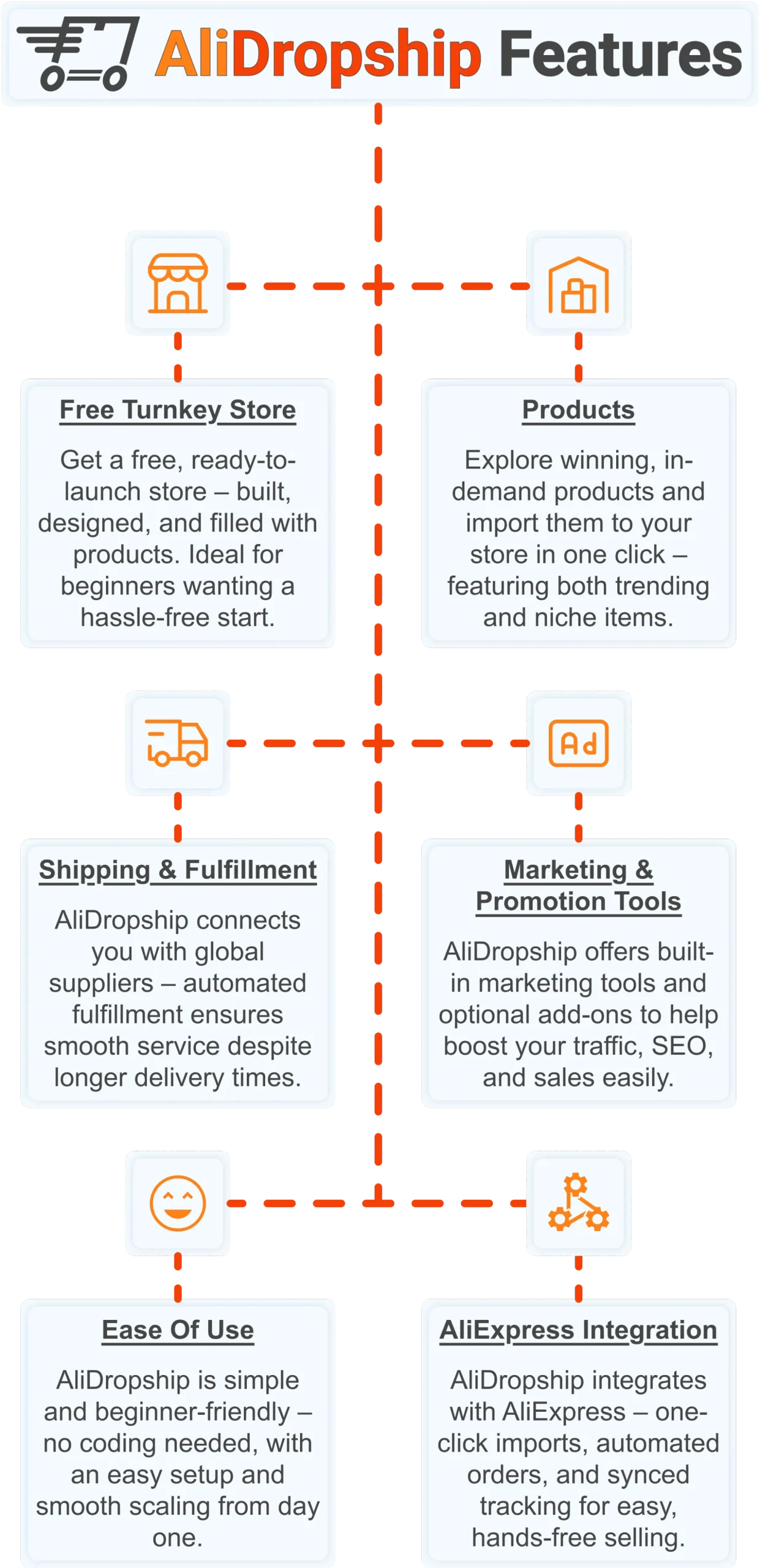
Free turnkey store 🛍️
Get a free turnkey store – built, designed, and filled with products. Ideal for beginners wanting a hassle-free start, the store comes fully optimized to attract customers right away, saving you time on setup. Plus, it includes professional design elements to give your business a polished, trustworthy look from day one. This ready-made foundation makes it easy to move seamlessly into product selection.
Products 📦
Once your store is set up, you can explore winning, in-demand products and import them in one click – featuring both trending and niche items. This wide selection lets you cater to diverse customer interests and test what works best. Regular updates ensure you always have fresh products, keeping your store competitive and relevant. With great products in place, smooth shipping becomes the next essential step.
Shipping & fulfillment 🚚
AliDropship connects you with global suppliers, and automated fulfillment ensures seamless order processing despite international delivery times. Customers receive real-time tracking updates, which builds confidence and trust in your store. Once shipping is handled reliably, you can focus on promoting your store and attracting traffic.
Marketing & promotion tools 📣
To maximize sales, AliDropship offers built-in marketing tools and optional add-ons that help boost traffic, SEO, and conversions. From email campaigns and discounts to social media integration, these tools empower you to reach and retain customers without needing prior marketing experience. With promotion strategies in place, managing your business becomes simpler and more efficient.
Ease of use 👌
AliDropship is beginner-friendly – no coding needed, with an intuitive dashboard that guides you through every step. Easy setup and smooth scaling let you expand your store without stress. As your business grows, adding new features, products, and marketing campaigns remains hassle-free, giving you more time to focus on sales.
AliExpress integration 🛒
Finally, AliDropship integrates seamlessly with AliExpress, enabling one-click imports, automated orders, and synced tracking. Your inventory stays up-to-date with the latest products and prices, while automated order processing frees you from manual tasks. Combined with the turnkey setup, reliable shipping, and built-in marketing tools, this integration ensures your dropshipping business is fully equipped for growth and success.
Vintage clothing is one of the most exciting and fastest-growing dropshipping niches of 2026, and AliDropship gives you everything you need to tap into it from day one. Get your free turnkey store and start selling the best vintage clothing products today.
What are the best dropshipping products for vintage clothing?
Is vintage clothing a good niche for dropshipping in 2026?
Yes, vintage clothing is one of the strongest dropshipping niches in 2026. The global secondhand and vintage fashion market exceeded 43 billion dollars in 2023 and continues to grow as sustainability awareness and nostalgia-driven trends push demand upward. Buyer communities on TikTok, Pinterest, and Instagram create organic traffic opportunities that few other product niches match. Wholesale product availability from AliExpress suppliers has also expanded significantly, giving dropshippers genuine product depth to work with.
How much can I earn dropshipping vintage clothing?
Most beginners running a vintage clothing dropshipping store with organic social traffic earn between 10 and 40 dollars per day within the first 60 to 90 days. Sellers using paid social advertising on Meta or TikTok Ads can reach 80 to 300 dollars per day once their campaigns are optimised, typically after 3 to 6 months of testing. Accessories and tees make up the bulk of volume sales, while outerwear and footwear drive the highest average order values. These figures require consistent effort and are not guaranteed results.
Where do I find suppliers for vintage clothing dropshipping?
The most accessible supplier platform for vintage clothing dropshipping is AliExpress, which carries thousands of vintage-inspired apparel and accessory listings across all major sub-categories. When selecting suppliers, prioritise those with at least 4.5-star ratings, more than 500 orders on the specific listing, and detailed product images showing the item being worn. AliDropship simplifies the sourcing process further by enabling one-click product imports directly from AliExpress into your store. Always order a sample before committing to a supplier for a high-ticket product like outerwear or footwear.
How do I market a vintage clothing dropshipping store?
The most effective marketing channels for a vintage clothing dropshipping store are TikTok and Pinterest, both of which have strong existing communities around vintage fashion, thrifting, and retro aesthetics. Posting 3 to 5 styled outfit videos per week on TikTok with relevant hashtags can drive meaningful organic traffic within 30 to 60 days. Pinterest boards built around specific vintage aesthetics, such as 90s grunge or 70s boho, attract buyers with high purchase intent. For faster results, small paid campaigns on Meta Ads targeting fashion-forward buyers aged 18 to 35 can accelerate your first sales while your organic channels grow.