Best Dropshipping Products For Sustainable Fashion In 2026

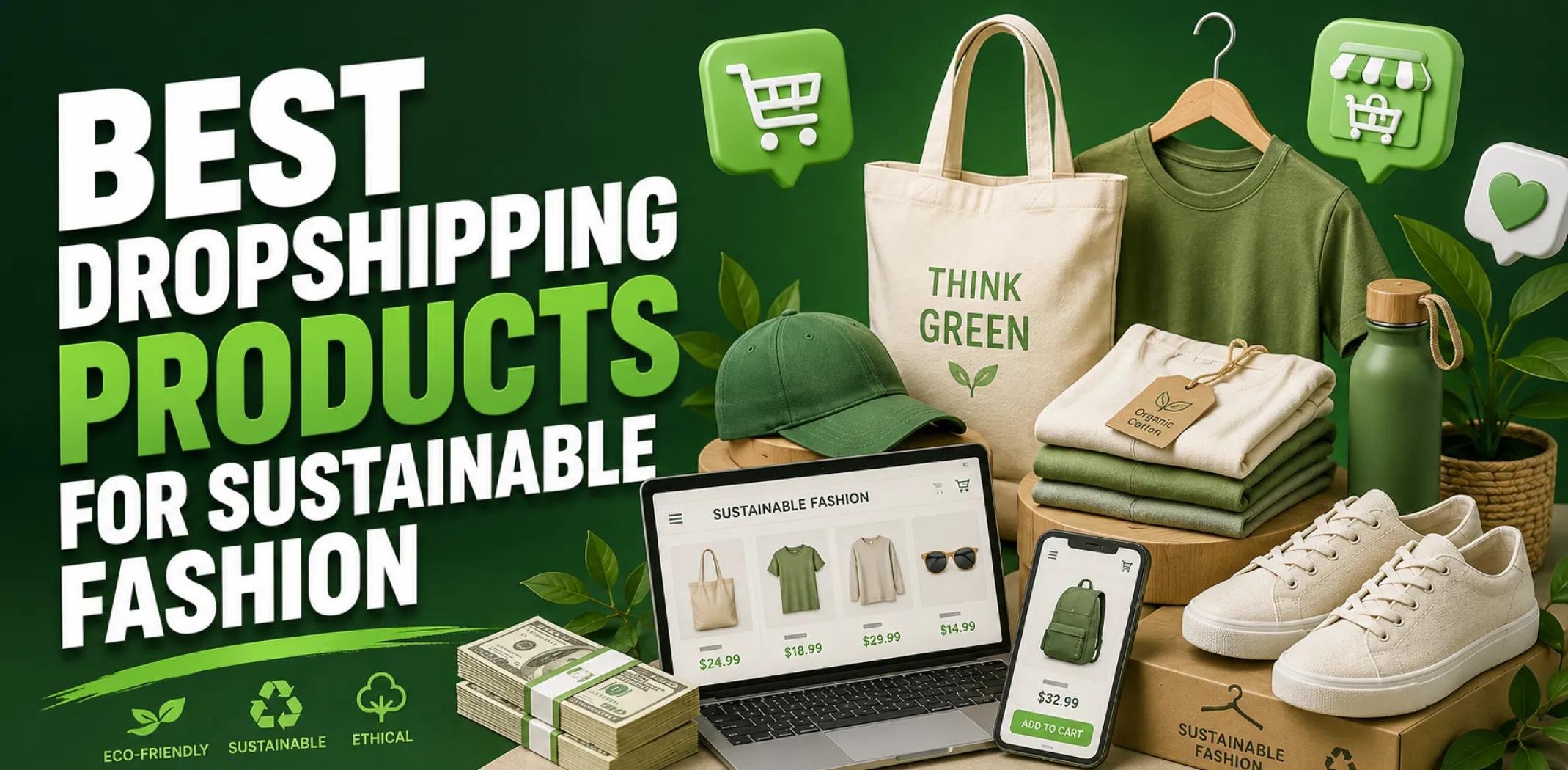
Sustainable fashion is no longer a niche trend – it is one of the fastest-growing product categories in global ecommerce, and the timing for dropshippers has never been better. Searches for eco-friendly clothing and ethical fashion alternatives have climbed sharply since 2023, and consumer spending in this space is projected to keep rising through 2026 and beyond.
If you have been looking for a product category with genuine demand, strong margins, and room to build a brand, sustainable fashion deserves a serious look.
Quick Answer: The best dropshipping products for sustainable fashion in 2026 include organic cotton basics, recycled activewear, bamboo accessories, vegan leather goods, and zero-waste lifestyle items. These categories combine strong search demand with healthy margins and repeat purchase potential – making them well-suited for a dropshipping model.
This guide breaks down the top product types, realistic earning potential, how to source and position them, and what to watch out for when building a sustainable fashion store.

What is sustainable fashion dropshipping?
Sustainable fashion dropshipping means selling clothing, accessories, and lifestyle products that are made with lower environmental impact – without holding any inventory yourself. You list the products in your store, a customer places an order, and your supplier ships directly to them.
The dropshipping model suits this niche particularly well because sustainable products often carry higher price points, which means better margins on each sale even with supplier and shipping costs factored in.
What makes this niche different from general fashion dropshipping is the buyer. Sustainable fashion customers tend to be more intentional, more loyal, and more willing to pay a premium for products that align with their values. A store that communicates its eco-credentials clearly – through product descriptions, imagery, and branding – can build trust faster than a generic fashion store competing on price alone.
In 2026, the supply side has caught up too. AliExpress and global wholesale platforms now carry a wide range of certified organic, recycled, and ethically produced items that can be imported and sold with minimal setup. The barrier to entry is low, but the opportunity for differentiation is real.
How much can you realistically earn from sustainable fashion dropshipping?
Earnings in this niche vary a lot depending on your product selection, traffic strategy, and how well your store is positioned. Here is a realistic breakdown across three approaches:
These figures reflect realistic ranges across active stores in this niche – not ceiling projections. Most beginners see their first consistent sales within 60–90 days of launching, provided the store is optimized and traffic is being driven actively. Full-time income typically requires 6–12 months of focused effort and reinvestment into paid advertising or content creation.
One note on the higher figures: Hitting $300/day consistently requires more than a good product list – it requires a recognizable brand, reliable supplier relationships, and a steady traffic source. For most part-time operators, $30–$80/day is a grounded and achievable target in the sustainable fashion niche.
The upside of this niche specifically is average order value. Sustainable fashion products typically sell for 30–70% more than their conventional equivalents, which means your per-order profit holds up even with thinner volume.
The best dropshipping products for sustainable fashion in 2026
The following categories represent the strongest opportunities for eco-friendly dropshipping right now – based on search trend data, supplier availability, and proven buyer intent. Each section includes notes on positioning, margins, and what to look for when sourcing.
Organic and natural fiber clothing
Organic cotton, linen, and hemp clothing form the backbone of sustainable fashion ecommerce. These are the gateway products most eco-conscious shoppers look for first, and supplier availability on AliExpress has expanded significantly in recent years.
Organic cotton basics (tees, tanks, sweatshirts)
Plain organic cotton basics are one of the most consistent sellers in this niche. They appeal to a wide demographic, have strong repeat purchase rates, and carry enough perceived value to justify $35–$65 retail pricing.
Look for suppliers who specify GOTS (Global Organic Textile Standard) certification in their listings, as this gives you a credible claim to make in your product descriptions. Profit margins typically sit between 35–50% at mid-market price points.
Earning potential: $40–$120/day with consistent traffic and a focused basics range.
Linen and hemp casual wear
Linen and hemp clothing sit at a slightly higher price point and attract a more style-conscious buyer looking for breathable, low-impact alternatives to synthetic fast fashion. Linen trousers, relaxed shirts, and hemp dresses perform particularly well in spring and summer seasons, with strong search volume between March and August. These are excellent anchor products for a store targeting the 28–45 age bracket.
Why this works in 2026: Consumer awareness around synthetic microplastics has increased sharply, pushing linen and hemp searches to multi-year highs on Google Trends and Pinterest.
Bamboo fabric essentials (socks, underwear, loungewear)
Bamboo fabric has become one of the standout materials in sustainable fashion dropshipping because it bridges comfort and eco-credentials in a way that resonates immediately with buyers.
Bamboo socks and underwear in particular have low return rates, high reorder potential, and strong gift appeal – a combination that makes them ideal for a dropshipping catalog. Sourcing these through AliExpress is straightforward, and many suppliers offer bundle-friendly packaging that improves your average order value.
Earning potential: $25–$70/day as a standalone category; higher when bundled with other bamboo lifestyle items.
Recycled and upcycled products
Recycled material products – particularly those made from PET plastic bottles, ocean waste, or reclaimed textiles – have strong storytelling potential, which is a major advantage in ecommerce marketing. Buyers in this segment respond to the “impact” narrative: knowing their purchase diverted X bottles from landfill or ocean is a genuine conversion driver.
Recycled polyester activewear
Activewear made from recycled plastic bottles (rPET) has become one of the fastest-growing segments in ethical fashion dropshipping. Leggings, sports bras, and running tops in this category retail between $40–$90 and carry margins of 40–55% when sourced well.
The activewear buyer is also highly engaged on Instagram and TikTok, making organic content marketing unusually effective for this product type. Look for suppliers who include material certification details – phrases like “made from X recycled bottles” are marketing gold.
Earning potential: $60–$180/day with a focused activewear store and basic social content strategy.
Recycled accessories (bags, belts, wallets)
Accessories made from recycled materials – particularly bags constructed from reclaimed canvas, upcycled denim, or ocean plastic – have strong impulse-purchase characteristics at the $25–$55 price point. They work well as add-ons to a clothing-focused store and can significantly boost your average order value. Cork wallets and belts are another underserved subcategory worth exploring, with limited competition and decent search volume on Google.
Upcycled and vintage-style fashion items
While true vintage cannot be dropshipped, suppliers now offer a wide range of vintage-inspired pieces made from deadstock fabric or repurposed materials. These carry strong brand storytelling potential and appeal to a Gen Z buyer base that values individuality and sustainability in equal measure.
Patchwork jackets, reworked denim, and deadstock fabric garments are all viable and increasingly available through AliExpress suppliers who cater to eco-conscious wholesale buyers.
Vegan and cruelty-free fashion
The vegan fashion segment is one of the most passionate buyer communities in sustainable ecommerce. Customers here are not just looking for a product – they are looking for alignment with their values, and they will pay meaningfully more for products that deliver it clearly and credibly.
Vegan leather bags and wallets
Vegan leather – made from materials like Piñatex (pineapple leaf fiber), cork, apple leather, or PU alternatives – has come a long way in quality and aesthetic. Bags and wallets in this category retail well at $45–$120 and attract a buyer who actively searches for cruelty-free alternatives to traditional leather goods.
The key to success here is specificity in product descriptions: naming the material, its origin, and its environmental credentials converts significantly better than vague “vegan leather” labeling alone.
Earning potential: $50–$150/day for a focused vegan accessories store with solid SEO content.
Vegan shoes and footwear
Vegan footwear is one of the highest-value product categories in this niche, with retail prices ranging from $60 to $200+. Sneakers, sandals, and boots made without animal-derived materials have significant crossover appeal – buyers include vegans, environmentally conscious consumers, and allergy sufferers who avoid leather.
Supplier quality varies widely in this subcategory, so ordering samples before scaling any footwear listing is strongly recommended.
Zero-waste and sustainable lifestyle accessories
Sustainable fashion extends naturally into zero-waste lifestyle products – reusable items that replace single-use alternatives. These complement a fashion-focused store well and can significantly expand your catalog without straying from the brand values you have built.
Reusable tote bags and produce bags
Reusable bags remain one of the most consistent entry-point products in green ecommerce. They are low-cost to source ($2–$6), carry wide margin potential at $15–$28 retail, and have near-universal appeal among eco-conscious buyers.
Organic cotton mesh produce bags and printed canvas totes in particular perform well as bundle items or low-cost add-ons at checkout. They also make excellent promotional items for building email lists and social followings.
Why this works in 2026: Single-use plastic bans have expanded across Europe, the UK, and parts of Asia, pushing reusable alternatives into mainstream shopping behavior for a growing global audience.
Sustainable jewelry and accessories
Jewelry made from recycled metals, natural stones, or sustainably sourced wood has strong gifting appeal and healthy margins at the $20–$60 price range.
These items have low shipping weight, low return rates, and excellent photography potential – all important factors for a dropshipping store where product presentation does a lot of the selling work. Minimalist designs with clear sustainability claims consistently outperform generic fashion jewelry in this buyer segment.
Legal and ethical considerations for sustainable fashion dropshipping
Greenwashing – making environmental claims that are vague, misleading, or unsubstantiated – is not just a reputational risk in 2026, it is an increasingly regulated one. The EU Green Claims Directive and similar legislation in the UK and Australia are tightening standards around what ecommerce sellers can and cannot claim about a product’s sustainability credentials.
Key principle: Only make claims you can verify directly from your supplier – and if you cannot verify a claim, do not make it.
Here is what to avoid absolutely:
- Labeling products “eco-friendly,” “sustainable,” or “green” without a specific, verifiable basis for the claim
- Implying certifications (GOTS, OEKO-TEX, Fair Trade) that your supplier has not confirmed in writing
- Recycling or carbon offset claims without documented evidence from your supply chain
- Using generic stock imagery of nature or forests to imply sustainability without product-level backing
What to do instead:
- Ask suppliers directly for material certifications and save the documentation
- Use specific, factual language: “made from 100% organic cotton” rather than “eco-friendly fabric”
- Highlight what you know with confidence, and leave out claims you cannot support
- Consider adding a brand values page to your store that explains your sourcing approach transparently
Important: Buyers in the sustainable fashion space are more research-savvy than average – vague claims are more likely to damage trust than build it. Specificity is your best asset here.
How to choose the right sustainable fashion products for your store
Not every eco-friendly dropshipping product will suit every store or seller. The best starting point is matching your product focus to your own interests, your target audience, and the traffic sources you plan to use. Here is a breakdown by reader profile:
Complete beginner
If you are brand new to dropshipping and sustainable ecommerce, start with a focused, simple catalog rather than trying to cover every category.
Organic cotton basics, bamboo essentials, and reusable accessories are the most beginner-friendly choices: they are widely available on AliExpress, easy to describe, and have strong organic search demand. A store with 20–40 well-curated products in one clear niche will outperform a sprawling catalog with weak positioning.
Intermediate / part-time seller
If you already have some ecommerce or dropshipping experience, the sustainable fashion niche rewards those who invest in content. A blog, a Pinterest presence, or short-form video content showing real product use cases can drive meaningful organic traffic within 60–90 days.
Consider focusing on a higher-value subcategory – vegan leather accessories or recycled activewear – where average order value supports a longer content investment payoff period.
Advanced / full-time goal
For sellers aiming at full-time income from sustainable fashion dropshipping, the path typically involves building a recognizable brand identity, running paid social ads on Meta or TikTok, and establishing direct supplier relationships for better pricing and exclusivity on products.
The niche’s higher average order values make paid acquisition more viable than in lower-margin categories. A well-optimized sustainable fashion store running targeted ads can realistically reach $200–$500/day within 6–9 months of serious effort.
The sustainable fashion market continues to grow as younger demographics – particularly the 18–35 age group – shift spending away from fast fashion toward brands and products that reflect their values. Ecommerce is where that shift is happening most visibly, and dropshipping gives you a low-risk way to position yourself at the front of it.
AliDropship: Your complete all-in-one solution for starting dropshipping in 2026
If you want the simplest possible way to start dropshipping – especially if you’re brand new – AliDropship remains one of the most beginner-friendly tools available in 2026. It brings together store creation, product imports, automation, and marketing into a single streamlined system designed to help you launch quickly and grow confidently.
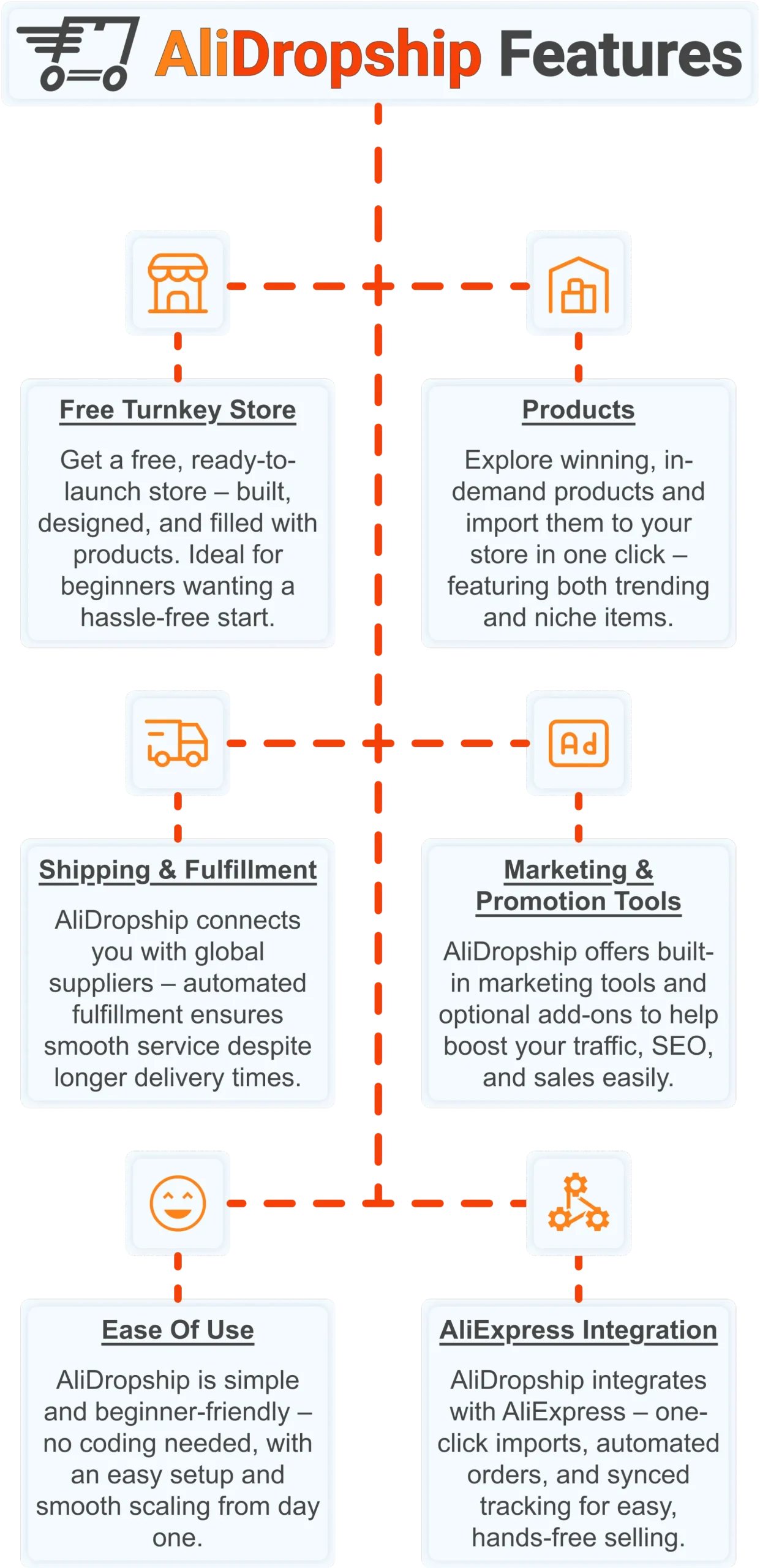
Free turnkey store 🛍️
Get a free turnkey store – built, designed, and filled with products. Ideal for beginners wanting a hassle-free start, the store comes fully optimized to attract customers right away, saving you time on setup. Plus, it includes professional design elements to give your business a polished, trustworthy look from day one. This ready-made foundation makes it easy to move seamlessly into product selection.
Products 📦
Once your store is set up, you can explore winning, in-demand products and import them in one click – featuring both trending and niche items. This wide selection lets you cater to diverse customer interests and test what works best. Regular updates ensure you always have fresh products, keeping your store competitive and relevant. With great products in place, smooth shipping becomes the next essential step.
Shipping & fulfillment 🚚
AliDropship connects you with global suppliers, and automated fulfillment ensures seamless order processing despite international delivery times. Customers receive real-time tracking updates, which builds confidence and trust in your store. Once shipping is handled reliably, you can focus on promoting your store and attracting traffic.
Marketing & promotion tools 📣
To maximize sales, AliDropship offers built-in marketing tools and optional add-ons that help boost traffic, SEO, and conversions. From email campaigns and discounts to social media integration, these tools empower you to reach and retain customers without needing prior marketing experience. With promotion strategies in place, managing your business becomes simpler and more efficient.
Ease of use 👌
AliDropship is beginner-friendly – no coding needed, with an intuitive dashboard that guides you through every step. Easy setup and smooth scaling let you expand your store without stress. As your business grows, adding new features, products, and marketing campaigns remains hassle-free, giving you more time to focus on sales.
AliExpress integration 🛒
Finally, AliDropship integrates seamlessly with AliExpress, enabling one-click imports, automated orders, and synced tracking. Your inventory stays up-to-date with the latest products and prices, while automated order processing frees you from manual tasks. Combined with the turnkey setup, reliable shipping, and built-in marketing tools, this integration ensures your dropshipping business is fully equipped for growth and success.
Sustainable fashion is one of the most in-demand and margin-friendly niches in ecommerce right now, and AliDropship gives you everything you need to enter it without the usual barriers. Get your free turnkey store today and start selling the products that modern buyers actually want.
What are the best dropshipping products for sustainable fashion?
Is eco-friendly dropshipping profitable in 2026?
Eco-friendly dropshipping can be profitable, but it requires realistic expectations about timelines and effort. Most beginners see their first consistent sales within 60 to 90 days, with daily revenues in the 20 to 60 dollar range. Sellers who focus on a specific subcategory, invest in content marketing, and build a credible brand identity typically reach higher earning levels within 3 to 6 months. The niche advantage is average order value – sustainable fashion products often sell for 30 to 70 percent more than conventional equivalents, which supports better per-order margins.
How do I find sustainable fashion suppliers for dropshipping?
The most accessible starting point for sourcing sustainable fashion products is AliExpress, which now carries a wide range of organic, recycled, and ethically produced items from verified suppliers. When searching, filter for suppliers who specify material certifications such as GOTS or OEKO-TEX in their product listings. For higher-volume operations, wholesale platforms like Faire and direct-to-supplier outreach via trade shows or LinkedIn can unlock better pricing and exclusive product access. Always order samples before scaling any product listing to verify quality and delivery times firsthand.
What is greenwashing and how do I avoid it in my store?
Greenwashing means making environmental or sustainability claims that are vague, exaggerated, or impossible to verify. In an ecommerce context, it includes labeling products as eco-friendly without a specific material or certification basis, implying certifications you cannot confirm with suppliers, or using nature imagery to suggest sustainability without product-level evidence. To avoid it, use specific factual language in your product descriptions, request material documentation from suppliers before publishing claims, and only highlight what you can support with evidence. Regulatory scrutiny of green claims is increasing across the EU, UK, and Australia in 2026, so accuracy is both an ethical and a legal priority.
How long does it take to make money with sustainable fashion dropshipping?
Most beginners with a focused sustainable fashion store see their first consistent daily sales within 60 to 90 days of launch, assuming they are actively driving traffic through SEO content or social media. Reaching 50 to 100 dollars per day typically takes 3 to 5 months for part-time operators. Full-time income levels of 200 dollars per day or more generally require 6 to 12 months of sustained effort, paid advertising investment, and ongoing product and store optimization. These timelines vary based on niche focus, traffic strategy, and how effectively the store communicates its sustainability positioning to potential buyers.