Best Dropshipping Products For Home Decor In 2026

The home decor market is one of the most consistently profitable niches in ecommerce – and in 2026, it shows no signs of slowing down. Global home decor revenue is projected to surpass $800 billion by 2027, driven by consumers redecorating more often, buying online in greater numbers, and gravitating toward affordable statement pieces.
For anyone researching the best dropshipping products for home decor, the timing could not be better.
Quick Answer: The best dropshipping products for home decor right now include wall art prints, LED mood lighting, minimalist vases, boho throw pillows, and smart home accessories. These items are lightweight, visually appealing, have strong year-round demand, and sell well across platforms like Shopify, TikTok Shop, and independent stores.
This guide breaks down which home decor categories and specific products are worth your attention in 2026, how much you can realistically earn, and how to start selling without holding any inventory.

What is home decor dropshipping?
Home decor dropshipping is a business model where you sell decorative products through your own online store without physically stocking any inventory. When a customer places an order, your supplier ships the item directly to them. You never touch the product – you just manage the storefront, drive traffic, and pocket the margin between the supplier price and your retail price.
What makes this niche particularly attractive is that home decor products photograph beautifully, share well on social media, and appeal to a broad audience. Whether someone is moving into a new apartment, refreshing a living room, or hunting for a gift, there is always demand. In 2026, that demand is increasingly happening online, which makes the dropshipping home decor niche an excellent entry point for new entrepreneurs.
Unlike electronics or supplements, home decor products also carry relatively low return rates – people tend to know what aesthetic they want before they buy. That translates into fewer headaches for you as the store owner and a more straightforward customer experience overall.
How much can you realistically earn?
Earnings in home decor dropshipping vary significantly based on how much effort you put in, which products you choose, and how effectively you market your store. The table below gives you a realistic picture of what different approaches look like.
These ranges reflect real-world outcomes reported by dropshippers in communities like Reddit’s r/dropshipping and various seller forums. Part-time sellers focusing on a handful of winning products can generate a meaningful side income, while full-time operators running optimized stores with paid ads can push well beyond $5,000 a month.
One note on the upper figures: Reaching $10,000–$15,000/month typically requires 6–12 months of consistent effort, paid advertising spend, and a well-tested product catalog. Most beginners land in the $300–$1,500/month range within their first 60–90 days if they stay consistent and focus on conversion-ready products.
Home decor also benefits from seasonal spikes – think autumn nesting trends, holiday gifting, and the spring refresh cycle. Timing your promotions around these peaks can significantly lift monthly revenue without adding much complexity to your operation.
Best dropshipping products for home decor in 2026
Not every home decor product is equally suited to dropshipping. The best ones tend to be lightweight (reducing shipping costs), visually distinctive (easy to market on social media), and priced in the $20–$80 sweet spot where impulse purchases are common. Below are the top categories and specific products worth building a store around right now.
Wall art and prints
Framed minimalist prints
Minimalist art prints – think abstract line drawings, botanical illustrations, and typographic posters – continue to dominate home decor search trends. They are lightweight, ship flat, and have high perceived value relative to the supplier cost. A framed print that costs $8–$15 from a supplier regularly retails for $35–$65, giving you a healthy margin without aggressive pricing pressure.
Why this works in 2026: Interior design content on TikTok and Pinterest drives enormous discovery traffic for wall art, meaning organic reach is entirely achievable without a big paid ads budget.
Earning potential: $25–$50 per sale with consistent daily orders achievable after 60–90 days of active marketing.
Canvas gallery wraps
Canvas wraps are a step up from flat prints – they carry a premium feel, photograph beautifully, and command higher prices. Landscape photography canvases, abstract art canvases, and motivational quote canvases all perform well. Supplier prices typically range from $12–$25 for a standard 12×16 size, while retail prices of $55–$90 are easily supported.
Important: Stick to evergreen imagery rather than licensed or pop-culture references to avoid intellectual property issues with suppliers.
Personalized map prints
Map prints featuring specific cities, coordinates, or custom text have been a consistent seller for several years. The personalization element adds emotional value and reduces price sensitivity – buyers feel they are getting something made for them rather than a generic product. These are popular as gifts and anniversaries, giving you natural seasonal sales peaks around Valentine’s Day, Mother’s Day, and the Christmas period.
Lighting and ambiance
LED neon signs
Custom-style LED neon signs exploded in popularity from 2022 onwards and remain one of the best dropshipping products for home decor going into 2026. They appeal to a younger demographic decorating dorm rooms, home offices, and bedrooms. Popular phrases, moon shapes, and floral designs are the top sellers. Supplier prices range from $15–$40; retail prices of $60–$120 are common and well-accepted by buyers.
Why this works in 2026: Neon signs are naturally photogenic and generate user content – buyers post their setups on Instagram and TikTok, giving you free word-of-mouth visibility.
Earning potential: $30–$70 per sale, with strong conversion rates from visual advertising.
Boho macrame fairy lights
The boho aesthetic continues to hold strong in 2026, and macrame-wrapped fairy lights sit right at the intersection of that trend and everyday lighting demand. These products are inexpensive from suppliers ($5–$12) and sell consistently at $25–$45 retail. They work equally well as bedroom decor, outdoor patio lighting, and gift items – a broad appeal that helps with ad targeting.
Himalayan salt lamps
Salt lamps have maintained steady demand for years due to the wellness angle – many buyers believe in their air-purifying qualities, and even those who do not still find them visually appealing as ambient lighting. Supplier costs are low relative to retail, and they have excellent repeat purchase potential since buyers often want multiple lamps for different rooms.
Textiles and soft furnishings
Boho throw pillows
Throw pillows are the most common home refresh purchase after wall art. They are low-cost, high-variety, and people buy multiple at once to update a sofa or bed. Trending styles in 2026 include tufted designs, earthy neutrals, and woven textural covers. Supplier costs of $4–$10 per pillow are realistic, with retail prices of $20–$40 per unit. Selling in sets of two or three can significantly lift your average order value.
Earning potential: $12–$25 per unit, with bundle deals pushing average orders to $50–$80.
Woven wall hangings
Macrame and woven wall hangings have been a durable home decor trend, and demand remains solid heading into 2026. The handcrafted appearance commands premium pricing despite being mass-produced – a $10–$18 supplier price translates comfortably to a $45–$75 retail price. These items perform especially well on Pinterest, where the home decor audience is highly purchase-intent driven.
Velvet and linen throw blankets
Throw blankets are a high-volume, repeat-purchase product. They appeal to year-round buyers – in summer as a lightweight sofa accessory, in winter as an essential comfort item. Textured velvet and linen-style blankets in muted tones photograph particularly well and appeal to the dominant aesthetic across home decor social feeds. At $12–$20 from suppliers and $40–$65 retail, margins are reliable.
Vases, planters, and botanicals
Minimalist ceramic vases
Clean-line ceramic vases – particularly in matte white, terracotta, and sage green – are consistent best sellers in the dropshipping home decor niche. They work as standalone decorative objects and as vessels for dried or fresh flowers, which doubles their use case.
A set of three vases in graduated sizes is a popular format and supports higher average order values. Supplier pricing of $6–$14 per piece, retailing at $25–$55, gives you reliable margin.
Why this works in 2026: The wellness and biophilic design trend (bringing nature indoors) continues to grow, and vases are a central part of that movement in everyday homes.
Self-watering hanging planters
Plant parenthood is a firmly established consumer behavior, and accessories that make plant care easier – like self-watering planters – are genuinely sought-after purchases rather than impulse buys. Hanging versions are especially popular for small apartments where floor space is limited. These products also attract a slightly older, higher-spending demographic compared to trend-driven decor items.
Dried and faux botanicals
Dried pampas grass, preserved eucalyptus bundles, and faux floral stems have become staple home decor products over the past three years. They photograph beautifully, require zero maintenance, and offer a high-end look at an accessible price. Because they are a consumable-adjacent product (styles change, arrangements get updated), repeat purchases are common among engaged buyers.
Functional decor and smart home accessories
Aesthetic desk organization sets
With remote work firmly embedded in everyday life, the home office decor category has exploded. Desk organizers, monitor risers, and cable management solutions that look good on camera are selling in massive volumes. Buyers want their workspace to be functional and photogenic – a combination that supports premium pricing. Bamboo, marble-print acrylic, and matte black finishes are the dominant aesthetics right now.
Earning potential: $20–$45 per set, with strong cross-sell potential alongside other desk decor items.
Wireless charging pads with ambient lighting
Where tech meets decor – wireless chargers that double as mood lighting or minimalist desk accessories represent a high-value crossover product. Buyers in this category have above-average spending power and prioritize design alongside functionality. These items retail easily at $35–$80 with supplier costs of $12–$25, making them one of the higher-margin options in this list.
Aroma diffusers with decorative housings
Essential oil diffusers have long been popular, but the new generation of diffusers features designer housings that look like ceramics, wood sculptures, or stone pieces. The wellness angle drives the purchase, but the design element means buyers treat them as decor objects as much as functional devices. These products benefit from strong visual marketing and a dedicated buyer community around aromatherapy and mindful living.
How to evaluate home decor products before you sell them
Not every trending home decor item will be a good dropshipping product. Before adding anything to your store, run it through a quick evaluation based on the following criteria.
Shipping weight and fragility
Home decor products can be bulky, heavy, or breakable – all three of which increase your costs and return rates. Prioritize items under 2kg and packaged to survive standard shipping handling. Ceramic and glass products have higher breakage risk, so look for suppliers who double-box and use reinforced packaging before committing to a product line.
Margin after realistic shipping costs
Always calculate your margin with the actual shipping cost included, not the product price alone. A $10 supplier price with $18 shipping is a very different equation from a $10 product with $4 shipping. For home decor, aim for a minimum 40% margin after all costs, and preferably 50–60% when selling at competitive retail prices.
Search and social demand signals
Before committing to any product, validate demand using Google Trends, AliExpress order counts, and social media hashtag activity. A product with stable or rising search volume over 12 months is much safer than one with a single recent spike. Pinterest Trends is particularly useful for home decor specifically, as it reflects purchase intent rather than just casual browsing.
Supplier reliability and review history
Check supplier ratings, order counts, and recent reviews on AliExpress before importing any product. Look for suppliers with a minimum 4.7-star rating and at least 200 completed orders for the specific product you want to sell. Consistency in packaging and shipping times matters more in home decor than in almost any other category – a damaged vase creates a negative experience that is hard to recover from.
Legal and ethical considerations for home decor dropshipping
Home decor dropshipping is a legitimate and widely practiced business model, but there are a handful of legal and ethical pitfalls worth being clear on before you start selling.
What to avoid
The most common issue in this niche is intellectual property infringement. Many suppliers on AliExpress list products that feature copyrighted artwork, trademarked characters, or licensed designs – particularly in wall art and novelty decor. Selling these items puts you at risk of DMCA takedowns and, in more serious cases, legal action from rights holders.
Key principle: Only sell products you can verify are either original designs or clearly generic – when in doubt, skip the product and find an alternative.
Fake reviews are another area to avoid entirely. Review manipulation is explicitly against the terms of service of every major ecommerce platform and can result in permanent store suspension. Building genuine social proof through follow-up email sequences, post-purchase review requests, and excellent customer service is slower but entirely sustainable.
What to do instead
Focus on building a store around clearly generic or original-design products. Work with suppliers who can provide product authenticity documentation when needed. Use transparent product descriptions that accurately represent what the buyer will receive – including realistic delivery timeframes for international shipping.
If you are selling in markets with consumer protection regulations (EU, UK, Australia), make sure your return and refund policy meets local legal requirements.
Choosing the right home decor products for your situation
The best dropshipping products for your specific store depend on where you are in your business journey. Here is a breakdown by reader profile to help you decide where to focus.
Complete beginner
If you are starting from zero, stick to one sub-niche within home decor rather than trying to cover everything. Wall art or throw pillows are excellent starting points – they have proven demand, manageable shipping weights, and clear marketing angles.
Pick 10–20 products, import them to your store, and learn the basics of product photography, description writing, and social media content before expanding. Expect your first 60 days to be a learning curve with modest sales.
Intermediate / part-time seller
If you already have some ecommerce experience, the home decor niche rewards testing. Run small paid ad campaigns across two or three product categories – wall art, lighting, and planters, for example – and let data tell you which performs best. Once you identify a winning category, double down with more products, more ad budget, and email retargeting. At this stage, $1,000–$3,000/month is a realistic 90-day target with consistent effort.
Advanced / full-time goal
For those targeting serious revenue, home decor is one of the highest-ceiling niches in dropshipping. Full-time operators typically run niche stores with a tight aesthetic identity – a boho-only store, a Scandi minimalist store, or a maximalist eclectic store – that builds a loyal repeat customer base.
Invest in professional product photography, build an email list from day one, and explore wholesale relationships with suppliers once your volume justifies it. Six-figure annual revenue is achievable in this niche with 12–18 months of focused effort.
The home decor ecommerce market continues to grow as more buyers shift their purchasing online, and the best window for establishing a recognized store brand is right now – before competition in specific sub-niches becomes harder to break into.
AliDropship: Your complete all-in-one solution for starting dropshipping in 2026
If you want the simplest possible way to start dropshipping – especially if you’re brand new – AliDropship remains one of the most beginner-friendly tools available in 2026. It brings together store creation, product imports, automation, and marketing into a single streamlined system designed to help you launch quickly and grow confidently.
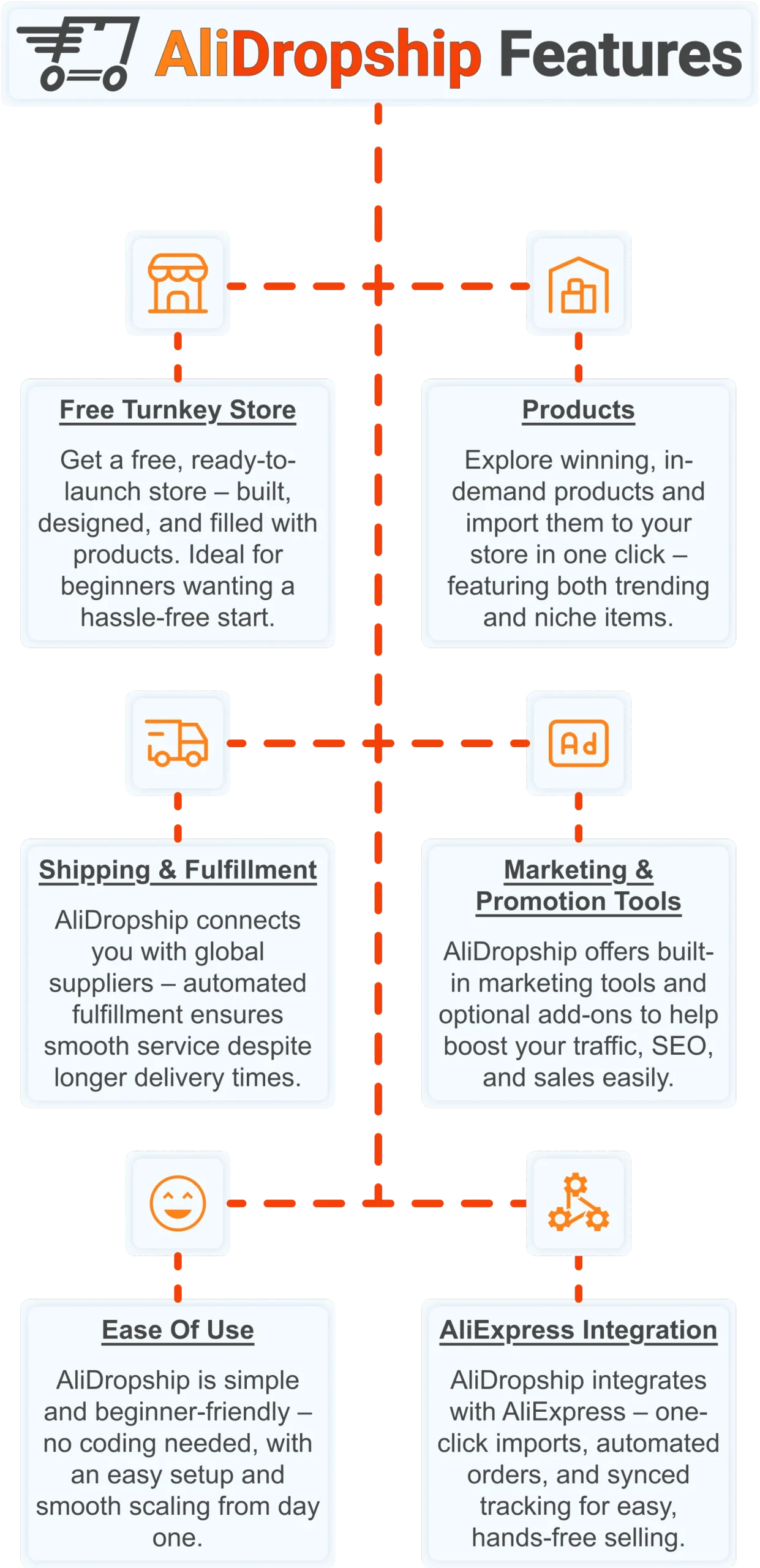
Free turnkey store 🛍️
Get a free turnkey store – built, designed, and filled with products. Ideal for beginners wanting a hassle-free start, the store comes fully optimized to attract customers right away, saving you time on setup. Plus, it includes professional design elements to give your business a polished, trustworthy look from day one. This ready-made foundation makes it easy to move seamlessly into product selection.
Products 📦
Once your store is set up, you can explore winning, in-demand products and import them in one click – featuring both trending and niche items. This wide selection lets you cater to diverse customer interests and test what works best. Regular updates ensure you always have fresh products, keeping your store competitive and relevant. With great products in place, smooth shipping becomes the next essential step.
Shipping & fulfillment 🚚
AliDropship connects you with global suppliers, and automated fulfillment ensures seamless order processing despite international delivery times. Customers receive real-time tracking updates, which builds confidence and trust in your store. Once shipping is handled reliably, you can focus on promoting your store and attracting traffic.
Marketing & promotion tools 📣
To maximize sales, AliDropship offers built-in marketing tools and optional add-ons that help boost traffic, SEO, and conversions. From email campaigns and discounts to social media integration, these tools empower you to reach and retain customers without needing prior marketing experience. With promotion strategies in place, managing your business becomes simpler and more efficient.
Ease of use 👌
AliDropship is beginner-friendly – no coding needed, with an intuitive dashboard that guides you through every step. Easy setup and smooth scaling let you expand your store without stress. As your business grows, adding new features, products, and marketing campaigns remains hassle-free, giving you more time to focus on sales.
AliExpress integration 🛒
Finally, AliDropship integrates seamlessly with AliExpress, enabling one-click imports, automated orders, and synced tracking. Your inventory stays up-to-date with the latest products and prices, while automated order processing frees you from manual tasks. Combined with the turnkey setup, reliable shipping, and built-in marketing tools, this integration ensures your dropshipping business is fully equipped for growth and success.
The home decor niche is one of the most rewarding categories in ecommerce – and with the right store setup, you can start capitalizing on it today. Get your free turnkey home decor store and a $100 welcome gift to kick-start your sales.
What are the best dropshipping products for home decor?
Is home decor a good niche for dropshipping?
Home decor is one of the strongest dropshipping niches available in 2026. The global home decor market is projected to exceed 800 billion dollars by 2027, and online purchasing continues to grow as a share of that total. Products in this niche have strong visual appeal, consistent year-round demand with seasonal spikes, and broad audience reach across age groups and income levels. The niche also supports a wide range of store formats, from broad lifestyle stores to tightly focused sub-niche stores around a single aesthetic like boho or Scandi minimalism.
How much can you make dropshipping home decor products?
Earnings in home decor dropshipping depend heavily on effort and consistency. Part-time sellers working 5 to 10 hours per week can realistically earn 300 to 800 dollars per month. Active sellers putting in 15 to 25 hours per week often reach 1,200 to 3,500 dollars monthly after 60 to 90 days of focused work. Full-time operators with optimized stores and paid advertising budgets can reach 5,000 to 15,000 dollars per month or more, though this level typically requires 6 to 12 months of sustained effort to build.
How do I find reliable home decor dropshipping suppliers?
The most reliable way to find home decor dropshipping suppliers is through AliExpress, where you can filter by supplier rating, order count, and product reviews. Look for suppliers with a minimum 4.7 star rating and at least 200 completed orders on the specific product you want to sell. Check recent reviews for comments on packaging quality and delivery times, as both are especially important for fragile or visually presented decor items. Platforms like AliDropship streamline this process by connecting you directly with vetted suppliers and automating order fulfillment from day one.
What home decor products have the best profit margins for dropshipping?
Among the best-margin home decor products for dropshipping are LED neon signs, canvas wall art, ceramic vase sets, and wireless charging pads with decorative housings. These items typically offer 50 to 65 percent margins after supplier costs and shipping are accounted for. Neon signs in particular have supplier costs of 15 to 40 dollars and retail prices of 60 to 120 dollars, while canvas art prints sourced for 12 to 25 dollars often retail comfortably at 55 to 90 dollars. Bundled product sets, such as groupings of 3 vases or paired throw pillows, can further increase average order value and overall profitability.