Unique products to sell online in 2026: 25 ideas that stand out

Most people starting an online store make the same mistake: they copy what everyone else is already selling. The result?
They compete on price, burn out fast, and wonder why nothing is working. The smarter move is to find unique products to sell – items with real demand but low saturation, where buyers are actively searching and sellers are few.
This guide gives you 25 carefully chosen product ideas to sell in 2026, ranging from trending physical goods to digital products and niche items that punch above their weight.
We will also look at realistic earning ranges, what makes a product worth selling, and how to evaluate new product ideas before you invest a dollar.
Quick Answer: The best unique products to sell online in 2026 combine genuine buyer demand with low competition – think personalized goods, problem-solving tools, and niche items that serve a specific audience. Dropshipping makes it easier than ever to test these without upfront inventory risk.

What does “unique products to sell” actually mean?
A unique product is not necessarily something invented from scratch.
In ecommerce, “unique” usually means one of three things: a product that serves a specific niche audience very well, a mainstream item presented or bundled in a distinctive way, or a product category that is growing fast but has not yet been saturated by big retailers
All three types are genuinely worth pursuing in 2026.
The market has shifted significantly in the past two years. Generalist stores selling random trending items are struggling, while focused stores built around a clear product theme and audience are growing steadily.
Buyers are more skeptical and more discerning than they were in 2020 – they want stores that feel like they understand their specific need, not a warehouse clearance site trying to sell everything to everyone.
This is good news for independent sellers. You do not need a massive catalogue or a huge budget to compete. You need the right product, a clear audience, and a reliable way to source and fulfill orders. That combination is exactly what this guide is designed to help you find.
Why this works in 2026: Niche ecommerce stores consistently outperform generic stores in conversion rate and customer loyalty, because buyers feel the store was built specifically for them.
How much can you realistically earn selling unique products online?
Earnings vary enormously depending on the product category, your traffic source, and how much time you put in. The table below gives you an honest comparison across three common approaches, using dropshipping as the fulfillment model since it removes the barrier of upfront inventory.
Physical niche dropshipping offers the best balance of stability and growth for most sellers. Digital products can scale well passively but require an established audience. Trend chasing can produce spikes but burns sellers who move too slowly.
One note on ceiling figures: The upper ranges in the table above reflect full-time effort, optimized marketing, and a store that has been running for at least 60–90 days. Most new sellers earn in the lower band for the first two months while they learn what works for their specific product and audience. These are realistic ranges, not guarantees.
One of the most important decisions you will make is not which product to sell – it is how you test it. Dropshipping lets you list a product, drive a small amount of traffic to it, and measure real buyer behavior before committing to anything.
That testing loop is what separates sellers who scale from those who get stuck holding inventory they cannot move.
25 unique products to sell online in 2026
The product ideas below are organized by category. Each one has been chosen based on three criteria: it has documented buyer demand, it is not yet dominated by major retail brands, and it is viable for dropshipping or digital delivery without complex logistics.
Personalized and custom goods
Personalization consistently outperforms generic products in both conversion rate and customer satisfaction scores. Buyers pay a premium for something made specifically for them, and the perceived value is far higher than the production cost.
Custom pet portraits
Pet owners are a highly motivated buyer segment. Custom portrait prints – either digital or physical – convert well across Facebook, Pinterest, and Instagram.
The product is giftable, emotionally resonant, and has year-round demand with peaks at Christmas and around pet loss occasions. Suppliers on AliExpress offer print-on-demand fulfillment that removes the need for you to touch the product at all.
Earning potential: $25–$60 per order with typical order values of $35–$55, achievable from the first month with targeted social ads.
Personalized name jewelry
Name necklaces, initial rings, and birthstone pieces are perennial bestsellers that spike reliably around Valentine’s Day, Mother’s Day, and Christmas.
The low base cost from AliExpress suppliers and high perceived value make margins strong. Targeting women aged 25–45 on Meta platforms with lifestyle imagery consistently outperforms broad audience campaigns.
Earning potential: $15–$40 profit per unit, with strong repeat purchase rates from gift buyers.
Custom map prints
Star map prints showing the night sky on a specific date (a wedding anniversary, a birth) and city map art prints are popular as meaningful wall decor gifts.
Print-on-demand fulfillment handles everything after the order is placed. Etsy validates this category, but an independent store gives you full control over pricing and margins without Etsy fees eating into profits.
Earning potential: $20–$50 profit per print, with strong gifting demand in Q4.
Engraved keepsakes
Engraved wallets, keychains, and photo frames sit in the $15–$40 price range – affordable enough for impulse gifting but high enough for real margins.
Suppliers offering laser engraving as part of fulfillment are widely available, and the search intent around “personalized gifts for him/her” carries strong buyer intent year-round.
Earning potential: $10–$30 per order with low return rates due to the personalized nature.
Health, wellness, and self-care
The wellness market continues to grow at a rate that outpaces most other consumer categories. Buyers in this space are educated, motivated, and willing to pay more for products they trust.
The key is specificity – a product that solves one clear problem for one clear audience consistently outperforms a generic “wellness” item.
Posture correctors
Remote work has made posture-related pain one of the most searched health topics of the past four years. Posture corrector braces and back support cushions have consistent organic search demand, and the buyer is motivated by discomfort – which means high conversion intent.
Look for suppliers with CE certification and strong review counts to build trust quickly.
Earning potential: $15–$35 profit per unit at a retail price of $25–$55.
Red light therapy devices
Red light therapy panels and handheld devices have moved from professional clinics to consumer homes at remarkable speed.
Search volume for red light therapy products has grown over 300% since 2021 according to Google Trends data. The products sit in a higher price bracket ($60–$250 retail), which means larger margin per sale even with competitive pricing.
Earning potential: $30–$80 profit per unit with a well-targeted paid or organic traffic strategy.
Scalp massagers
Scalp massagers and hair growth tools are one of the strongest-performing low-cost products of the past two years.
The entry price is low (often under $10 landed cost), the retail price sits at $20–$35, and the product photographs and videos extremely well – crucial for social commerce. TikTok Shop and Instagram Reels have driven enormous organic reach for this category.
Earning potential: $10–$22 profit per unit with potential for high volume at low ad spend.
Acupressure mats
Acupressure mats and pillow sets have strong Pinterest and YouTube presence, which means they benefit from organic traffic in addition to paid.
Buyers are typically dealing with chronic stress or back pain – high motivation, high conversion. The product is compact and lightweight, which keeps shipping costs low and supplier options plentiful.
Earning potential: $20–$45 profit per set, with strong bundle potential (mat + pillow + bag).
Home, kitchen, and lifestyle
Home and kitchen is one of the most durable ecommerce categories because people constantly update their living spaces and look for products that solve everyday friction. The sub-niches below are specifically chosen for low competition relative to their search volume.
Mushroom grow kits
Home growing kits for edible mushrooms – oyster, shiitake, lion’s mane – have seen significant search growth as interest in whole foods and functional nutrition increases.
The product is visually interesting (buyers share progress photos), has repeat purchase potential for substrate refills, and appeals to a health-conscious audience that spends freely on things they value.
Earning potential: $15–$35 profit per kit, with repeat buyer potential for consumable supplies.
Portable blenders
USB-rechargeable portable blenders are compact, practical, and wildly popular as gifts. They photograph and demonstrate well in short video content, which makes them natural for TikTok or Instagram.
The product is relevant year-round with peaks in January (new year fitness goals) and before summer travel season.
Earning potential: $15–$30 profit per unit, high gifting demand across multiple seasonal peaks.
Beeswax wrap sets
Reusable beeswax wraps are an eco-friendly alternative to plastic cling film with a growing audience that is specifically searching to reduce single-use plastic in their kitchen.
The eco-conscious buyer segment is loyal and shares purchases on social media organically, which reduces your long-term acquisition cost. Average order values increase naturally with set bundles.
Earning potential: $12–$25 profit per set, with strong word-of-mouth amplification in eco communities.
Weighted blankets for kids
While adult weighted blankets are saturated, the children’s variant – designed specifically for sensory processing needs – remains a strong niche with passionate, high-intent buyers.
Parents searching for sensory tools for their children are highly motivated buyers who research before purchasing and have a low return rate once they find a product that works.
Earning potential: $25–$55 profit per unit, with loyal repeat customers who also buy related sensory products.
Tech accessories and gadgets
Tech accessories remain one of the most searchable categories in ecommerce. The key is avoiding the core device categories (phone cases, chargers) where margins are crushed, and instead targeting accessories that solve a specific problem for a specific device or workflow.
Laptop stands and desk risers
Ergonomic accessories for home offices continue to grow as remote and hybrid work becomes the norm rather than the exception.
Adjustable laptop stands, monitor risers, and foldable desk organizers are practical purchases with a clear value proposition, and they are frequently bought together – which makes bundling a natural revenue booster.
Earning potential: $20–$45 profit per unit, with bundle upsell potential adding $15–$30 per order.
Blue light blocking glasses
Screen time has increased dramatically since 2020, and blue light glasses have moved from novelty to mainstream.
The category still has room for niche positioning – stylish frames for women, gaming-specific designs, clip-on versions for prescription wearers – that avoids the most saturated middle of the market.
Earning potential: $12–$28 profit per unit, with very low product weight keeping shipping costs minimal.
Magnetic cable organizers
Cable management products are low-cost, high-margin, and appeal to a wide audience from home office workers to van lifers to gamers.
Magnetic cable clips and organizer boxes are easy to photograph, easy to bundle, and solve a frustration that almost everyone with a desk experiences. Search demand is steady year-round with no strong seasonal dependency.
Earning potential: $8–$18 profit per unit, highly suited to multi-pack bundles that raise order value.
Privacy screen protectors
Privacy screen protectors for laptops and phones are a genuine workplace need – not just a perceived one. Corporate buyers, frequent travelers, and anyone working in public spaces are the core audience.
B2B potential (bulk orders for company employees) is a genuine upside that most dropshippers in this category ignore entirely.
Earning potential: $10–$25 profit per unit, with B2B bulk order potential multiplying revenue significantly.
Outdoor, hobby, and specialist niches
Hobby-based products are among the most underrated opportunities in dropshipping. Buyers in hobby communities are passionate, research-driven, and brand loyal once they find a store they trust.
The barrier to entry is slightly higher because you need to understand the audience – but that barrier is exactly what keeps casual competitors out.
Hydroponics starter kits
Indoor growing and hydroponics have exploded beyond their original hobbyist base to reach mainstream home gardeners who want fresh herbs and vegetables year-round.
Starter kits – containing everything a beginner needs – sell extremely well because they remove the friction of figuring out what to buy. The educational content opportunity (how-to videos, care guides) also makes this a strong long-term SEO play.
Earning potential: $25–$60 profit per kit, with ongoing consumable purchases from satisfied customers.
Astronomy accessories
Telescope accessories, star charts, and astrophotography adapters serve a passionate hobby community that is growing thanks to renewed public interest in space.
The audience is educated, attentive to quality, and active in online communities – which makes word-of-mouth and community marketing genuinely effective for stores in this space.
Earning potential: $20–$70 profit per unit depending on the accessory, with strong cross-sell opportunities.
Fishing accessories and tools
Fishing remains one of the largest hobby categories in North America and Europe, and the buyer spends freely on tools that improve their experience.
Specific accessories – fish gripper tools, line cutters, tackle organization systems – sit in the $15–$45 range and are frequently purchased in batches by enthusiasts stocking up for the season.
Earning potential: $12–$35 profit per unit, with strong seasonal peaks in spring and early summer.
Resin art supply kits
Resin art has grown from a niche craft into a mainstream hobby driven heavily by YouTube and TikTok tutorials. Beginner starter kits, mold sets, and pigment collections are all in strong demand.
The buyer is typically a creative hobbyist aged 18–40 who is actively trying to learn, meaning content marketing (tutorials, tips) pairs naturally with the product to drive organic traffic.
Earning potential: $15–$40 profit per kit, with strong upsell potential into molds, pigments, and accessories.
New product ideas in the digital space
Digital products deserve a place in any serious list of new product ideas because they offer something physical goods cannot: zero fulfillment cost and unlimited scalability. Once created or sourced, a digital product can be sold an infinite number of times with no additional overhead.
Notion templates and planners
Notion templates – for project management, content calendars, budget tracking, habit planning – are one of the fastest-growing digital product categories.
Buyers pay $5–$35 for a well-designed template that saves them hours of setup. The market is large but also segmented: a template built specifically for freelancers, or for teachers, or for fitness coaches, will consistently outperform a generic version.
Earning potential: $5–$35 per sale, fully passive once listed, with no inventory, shipping, or returns.
Printable wall art packs
Printable art – instantly downloadable, printable at home or at a local printer – is a low-barrier entry point for digital sellers. Aesthetic styles that are trending on Pinterest (minimalist botanicals, retro typography, abstract color fields) drive strong organic discovery.
Buyers get immediate gratification, which reduces cart abandonment and almost eliminates refund requests.
Earning potential: $3–$20 per download, with volume making up for the lower per-unit price.
Meal plan and recipe bundles
Meal planning PDFs and recipe bundle collections continue to perform well in health-focused communities.
The most successful sellers narrow down aggressively: a 4-week meal plan specifically for people with insulin resistance, or a family-friendly batch cooking guide for under $100 per week. Specificity is what separates a $3 sale from a $27 sale in this category.
Earning potential: $9–$27 per bundle, with strong potential for subscription or upsell into coaching or additional packs.
Canva social media templates
Small business owners and content creators are a massive, underserved market for done-for-you social media templates. Instagram post templates, Pinterest pin designs, and LinkedIn graphics packs sell consistently throughout the year.
Targeting specific niches – real estate agents, personal trainers, wedding photographers – allows you to charge premium prices for templates that feel purpose-built.
Earning potential: $15–$49 per pack, with strong repeat purchase potential as buyers return for seasonal or niche-specific updates.
How to evaluate new product ideas before you commit
Having a list of product ideas is the starting point, not the finish line. Every experienced seller will tell you the same thing: the difference between a product that earns money and one that wastes it is almost always visible before you spend a cent – if you know where to look.
Here is a repeatable framework for evaluating any product idea, whether it comes from this list or your own research:
- Check search demand: Use Google Trends to confirm the product has stable or growing search interest over the past 12 months. A flat trend is acceptable; a declining trend is a warning sign. Seasonal products are fine as long as you understand the off-peak period.
- Assess competition depth: Search the product on Google Shopping. If the first three pages are dominated by Amazon, Walmart, and major retailers with thousands of reviews, the niche is saturated for a new independent seller. If you see smaller stores and mixed results, there is room.
- Check supplier quality: On AliExpress, filter for suppliers with over 500 orders and a 4.7+ rating on the specific product. Read the 3-star reviews – they reveal the most common complaints and help you decide if the product quality is defensible at your target retail price.
- Calculate the margin honestly: Product cost + shipping + platform fees + estimated ad spend per sale = your total cost. If your margin is below 30% after those deductions, the product needs to have either very high volume potential or a strong organic traffic angle to be worth it.
- Validate with real buyer behavior: Look for the product on Reddit, Facebook groups, and Pinterest. Real buyer conversations (not just search volume) tell you whether people are genuinely excited about this product or merely aware it exists.
Pro Tip: Run a small paid traffic test ($20–$40 on Meta or TikTok) before investing in product photography, long-form content, or a full store build around a single product. Real click-through and add-to-cart data is worth more than any amount of pre-launch research.
Legal and ethical considerations when selling unique products
Before you launch any product, there are a handful of legal and ethical areas worth understanding. This is not meant to scare you off – most of these are easy to navigate – but ignoring them can create serious problems that are far harder to fix after the fact.
What to avoid completely
Certain shortcuts are tempting but will damage your business in ways that are difficult to recover from:
- Fake reviews: Purchasing or incentivizing fake reviews violates the terms of service of every major platform and the FTC guidelines in the US. Beyond the legal risk, buyers are increasingly good at spotting inflated review profiles and it destroys trust when they do.
- Counterfeit or branded knock-offs: Selling products that imitate a trademarked brand is illegal in most jurisdictions and will result in your store being shut down by the payment processor or platform, not just a warning. Always confirm your supplier is selling genuinely unbranded or white-label goods.
- Misleading health claims: For any health or wellness product, do not make medical claims the product cannot support. “May help reduce tension” is acceptable; “cures chronic pain” is not – and will attract regulatory attention in several countries.
- Hiding shipping times: If your product ships from overseas with a 15–25 day delivery window, state that clearly. Buyers who feel misled about delivery times generate chargebacks, which cost significantly more than the original sale.
Key principle: Run your store the way you would want to be treated as a buyer – transparent about shipping, honest about what the product does, and responsive when something goes wrong.
What to do instead
The legitimate alternatives to these shortcuts are also the most sustainable long-term strategies. Gather real reviews by following up with buyers after delivery and asking for honest feedback. Source from verified suppliers with documented product certifications.
Use your product descriptions to set accurate expectations about delivery windows. These practices build a store that earns not just the first sale, but the repeat business and referrals that follow.
Which unique product approach fits your situation?
Not every product type suits every seller. The right starting point depends on where you are right now – your budget, your available time, and your appetite for learning.
Complete beginner
If you are brand new to ecommerce, start with a focused dropshipping store in one niche category – ideally one you already understand as a buyer.
Personalized products and wellness accessories are strong starting points because the audiences are well-defined and the buying intent is high. Avoid chasing trends until you understand how your store’s traffic and conversion behave with a stable product.
Intermediate or part-time seller
If you already have some ecommerce experience or are running a store with modest revenue, the priority should be deepening rather than widening.
Pick two or three products from the same niche category, build out your product pages with real content (comparison guides, care instructions, use case articles), and focus on your email list. Repeat buyers are dramatically cheaper to retain than new buyers are to acquire.
Advanced or full-time goal
If your goal is to replace a full-time income within 12 months, the math requires either high-margin products (wellness devices, tech accessories, premium hobby gear) or high volume at moderate margins backed by strong organic SEO.
A store earning $80–$150 per day is achievable in this timeframe with full-time focus, good product selection, and consistent content or paid traffic investment. Build your store around a theme, not just a product, so it grows with you as you add new items.
Passive income seeker
If you want something that runs with minimal daily involvement after setup, digital products are the closest thing to truly passive ecommerce income.
Once your listings are live and you have an established traffic source – Pinterest, a YouTube channel, an email list – digital products sell and deliver without you touching anything. The tradeoff is that building that traffic source takes real time upfront.
Turning product ideas into a real store
Reading about product ideas is useful. Actually building a store around them is what creates income.
The step between “I found a great product” and “I made my first sale” is almost always shorter than new sellers expect – and longer only when the store itself is the bottleneck rather than the product.
A well-built store does three things that product research alone cannot: it gives buyers enough trust to complete a purchase from a seller they have never heard of, it presents the product in a way that answers the buyer’s questions before they ask them, and it delivers the post-purchase experience (confirmation emails, tracking updates) that prevents refund requests and generates positive reviews.
If your store is not doing all three of those things, fixing that is more valuable than finding a new product.
The good news is that you do not have to build that store from scratch. Platforms like AliDropship handle the infrastructure – store design, product import, order automation, and marketing tools – so you spend your time on product selection and driving traffic rather than on technical setup.
AliDropship: Your complete all-in-one solution for starting dropshipping in 2026
If you want the simplest possible way to start dropshipping – especially if you’re brand new – AliDropship remains one of the most beginner-friendly tools available in 2026. It brings together store creation, product imports, automation, and marketing into a single streamlined system designed to help you launch quickly and grow confidently.
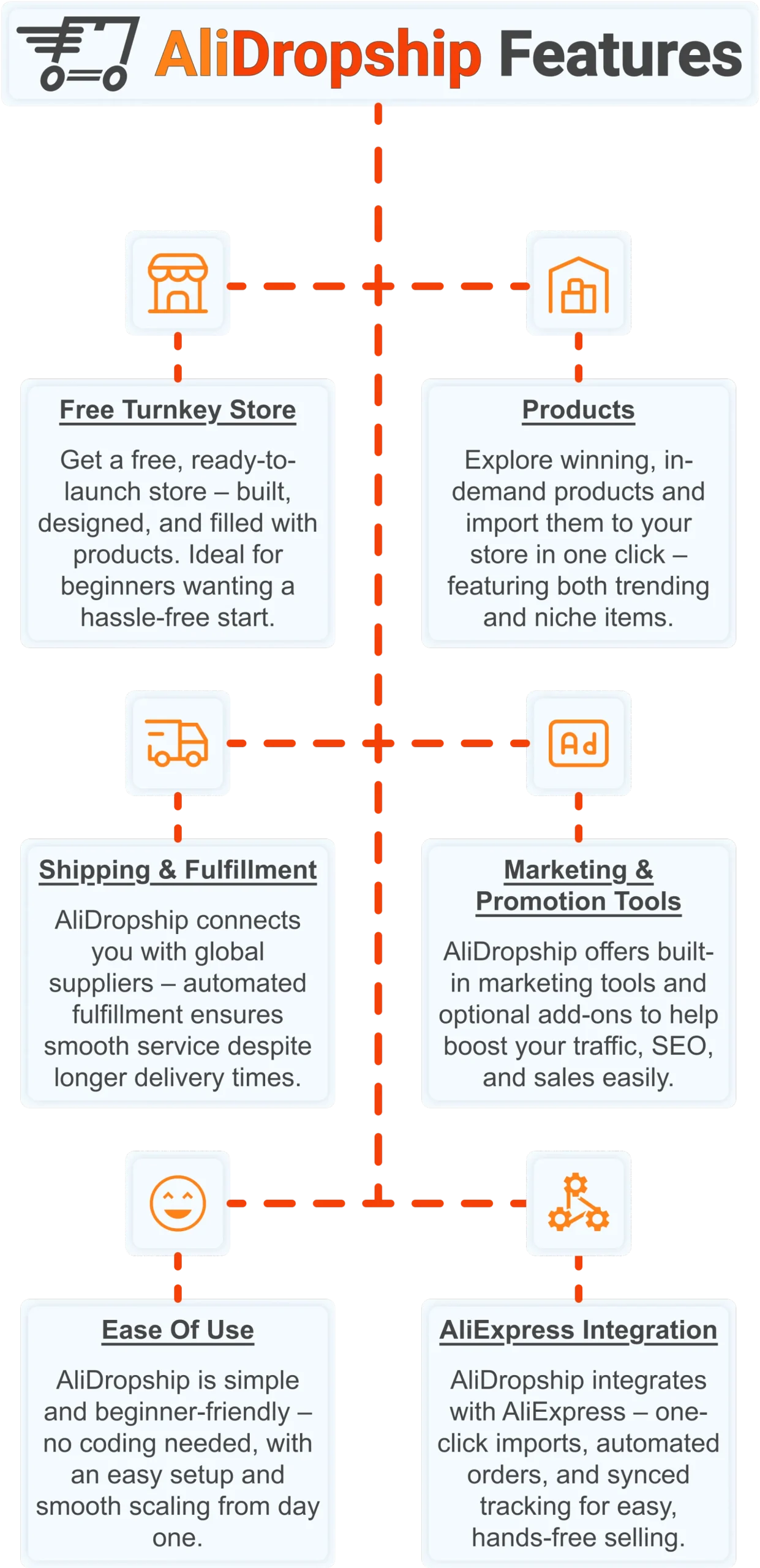
Free turnkey store 🛍️
Get a free turnkey store – built, designed, and filled with products. Ideal for beginners wanting a hassle-free start, the store comes fully optimized to attract customers right away, saving you time on setup.
Plus, it includes professional design elements to give your business a polished, trustworthy look from day one. This ready-made foundation makes it easy to move seamlessly into product selection.
Products 📦
Once your store is set up, you can explore winning, in-demand products and import them in one click – featuring both trending and niche items. This wide selection lets you cater to diverse customer interests and test what works best.
Regular updates ensure you always have fresh products, keeping your store competitive and relevant. With great products in place, smooth shipping becomes the next essential step.
Shipping & fulfillment 🚚
AliDropship connects you with global suppliers, and automated fulfillment ensures seamless order processing despite international delivery times.
Customers receive real-time tracking updates, which builds confidence and trust in your store. Once shipping is handled reliably, you can focus on promoting your store and attracting traffic.
Marketing & promotion tools 📣
To maximize sales, AliDropship offers built-in marketing tools and optional add-ons that help boost traffic, SEO, and conversions.
From email campaigns and discounts to social media integration, these tools empower you to reach and retain customers without needing prior marketing experience. With promotion strategies in place, managing your business becomes simpler and more efficient.
Ease of use 👌
AliDropship is beginner-friendly – no coding needed, with an intuitive dashboard that guides you through every step. Easy setup and smooth scaling let you expand your store without stress.
As your business grows, adding new features, products, and marketing campaigns remains hassle-free, giving you more time to focus on sales.
AliExpress integration 🛒
Finally, AliDropship integrates seamlessly with AliExpress, enabling one-click imports, automated orders, and synced tracking. Your inventory stays up-to-date with the latest products and prices, while automated order processing frees you from manual tasks.
Combined with the turnkey setup, reliable shipping, and built-in marketing tools, this integration ensures your dropshipping business is fully equipped for growth and success.
Every unique product idea on this list can become a real income stream – the missing piece is a store built to sell it. Claim your free turnkey store and start selling the products buyers are already searching for.
What are the most unique products to sell online in 2026?
How do I find new product ideas to sell with low competition?
The most reliable way to find new product ideas with low competition is to start with a hobby or problem you understand well, then cross-reference that interest with Google Trends data and AliExpress order volumes. Look for products where Google Shopping results show smaller independent stores rather than Amazon and Walmart dominating every listing. Facebook and Reddit communities in your target niche also surface real buyer frustrations that point toward underserved product opportunities.
What product ideas to sell work best for beginners?
The best product ideas to sell for beginners are those with clear visual appeal, a defined audience, and straightforward fulfillment. Personalized items like custom name jewelry and map prints are strong starting points because the buyer intent is obvious and the audience is easy to target on social platforms. Wellness accessories such as scalp massagers and posture correctors also work well for beginners because they solve a simple, relatable problem and are easy to photograph and demonstrate in short video content.
How much can I earn selling unique products online?
Most new dropshipping sellers earn between 20 and 80 dollars per day in the first 60 to 90 days with consistent effort and a focused product niche. Sellers who reach full-time effort levels – meaning daily work on traffic, product optimization, and content – can scale to 100 to 200 dollars per day within 6 months on the right product. Digital products typically earn less per sale but scale more passively, averaging 10 to 50 dollars per day once a reliable traffic source is established.
Do I need inventory to sell unique products online?
No, you do not need to hold any inventory when you use a dropshipping model. With dropshipping, your supplier stores, packs, and ships the product directly to your customer after each order is placed. You only pay for the product after you have already collected payment from the buyer, which means there is no upfront stock purchase and no warehouse cost. This model is the primary reason dropshipping is one of the most accessible ways to start selling unique products online with minimal startup capital.