
Top 10 Dropshipping Niches In 2026: Best Niches List Overview


In the world of ecommerce, dropshipping has emerged as a go-to business model for entrepreneurs looking to launch a store with minimal upfront investment. Your role is to market and sell products through your online store, taking a cut of the profits while suppliers handle inventory and shipping.
However, the dropshipping landscape in 2026 is more competitive than ever, and not all niches are created equal. Choosing the right niche can make the difference between a thriving business and a failed venture. With evolving consumer behaviors, emerging technologies, and shifting market dynamics, understanding which niches will dominate in 2026 is critical to your success.
In this comprehensive guide, we’ll explore the top 10 dropshipping niches for 2026, providing data-driven insights, proven marketing strategies, and expert analysis to help you succeed in this dynamic market.
Introduction to dropshipping
Imagine you want to start a business selling products, but you don’t have the money or space to keep a lot of inventory. That’s where dropshipping comes in! It’s a retail method that allows you to sell items without actually storing them yourself.
Here’s how it works: when you partner with a supplier, they handle all the inventory and shipping for you. So, when a customer buys something from your online store, you simply send the order details to the supplier. They then ship the product directly to the customer. This means you don’t have to worry about buying stock upfront, which can save you a lot of money and reduce risk.
One of the great things about dropshipping is that it’s accessible to almost anyone with an internet connection. You can run your business from anywhere and easily pivot to different products based on market demand and emerging trends. That’s why selecting the right niche is a critical factor in the success of a dropshipping business. Remember, it can make all the difference in turning your entrepreneurial dreams into reality.
Why choosing the right niche matters in 2026
Selecting the right niche is more crucial than ever in 2026 for several compelling reasons.
First, targeted marketing delivers better ROI. A well-defined niche helps you target a specific audience, making your marketing efforts significantly more effective. Niche markets are typically more passionate and engaged, leading to higher conversion rates, stronger customer loyalty, and better return on advertising spend.
Second, strategic positioning reduces competition. While dropshipping has become increasingly popular, a carefully chosen niche with specific focus areas can give you a competitive advantage in a crowded marketplace. Instead of competing with Amazon and major retailers on generic products, you can dominate specialized segments where you can become the go-to authority.
Third, expertise builds sustainable brands. Focusing on a niche enables you to build genuine expertise and authority in that space, which can be leveraged to create a strong brand identity and cultivate a loyal customer base. In 2026, consumers are more skeptical than ever – they want to buy from brands they trust and that demonstrate real knowledge.
Fourth, algorithmic advantages favor specialists. Social media algorithms and search engines in 2026 increasingly favor content from specialized, authoritative sources. A focused niche strategy helps you build topical authority that improves your organic reach and reduces customer acquisition costs.
Finally, market volatility demands adaptability. The right niche selection provides flexibility to adapt to economic changes, supply chain disruptions, and shifting consumer preferences – all critical considerations in the post-pandemic ecommerce landscape of 2026.
How to find a profitable dropshipping niche in 2026
Finding a profitable dropshipping niche requires a combination of data analysis, market research, trend monitoring, and deep understanding of your target audience. Here’s a detailed, actionable guide to help you identify a lucrative niche for 2026:
Market research & trend analysis
Use Google Trends to identify steady or growing trends in potential niches. Look for sustained upward momentum over 12-24 months rather than temporary spikes. Pay special attention to searches that have grown consistently since 2024.
Check marketplace best-sellers on Amazon, eBay, Etsy, and AliExpress for popular and high-demand products. Filter by “New Releases” and “Movers & Shakers” to spot emerging trends before they become saturated.
Explore social media platforms like Instagram, TikTok, Pinterest, and Facebook to identify trending products and user-generated content. Use hashtag analysis tools to measure engagement levels and identify micro-trends within broader categories.
Analyze product reviews on Amazon and eBay to understand what features customers value most and what pain points remain unsolved. Look for products with 4+ star ratings but with recurring complaints in reviews – these represent improvement opportunities.
Competitor analysis
Identify key competitors using Google searches, social media exploration, and marketplace research. Create a spreadsheet tracking 10-15 competitors in your potential niche.
Study top performers on Amazon, eBay, Shopify stores, and Etsy. Check their best sellers, pricing strategies, and unique value propositions. Use tools like SimilarWeb or Semrush to estimate their traffic and revenue.
Analyze their websites to understand design approaches, user experience optimization, and marketing strategies. Sign up for their email lists to study their customer journey and retention tactics.
Read customer reviews across competitor stores to identify gaps in the market, common complaints, and unmet needs that your store could address.
Profit margin calculation
Calculate total costs including product cost from supplier, shipping fees (domestic and international), payment processing fees (typically 2.9% + $0.30), platform fees (Shopify, WooCommerce), and advertising costs (15-30% of revenue for paid ads).
Set competitive yet profitable prices by researching market pricing, understanding perceived value, and ensuring your margins can sustain long-term growth. Aim for minimum 40% profit margins after all costs.
Focus on higher-margin products but balance with market demand. A $100 product with 50% margin is better than a $20 product with 60% margin due to same advertising costs.
Test pricing strategies starting with a small selection of products. Use A/B testing to find optimal price points. Gather customer feedback and refine your offerings based on sales data and profit analysis.
Validation through data
Before committing fully to a niche, validate your choice through small-scale testing. Launch with 5-10 products, run targeted ad campaigns with a modest budget ($500-1000), and analyze results over 30-60 days.
Use analytics tools to track conversion rates, average order values, customer acquisition costs, and return on ad spend (ROAS). A healthy dropshipping business should achieve minimum 2.5-3x ROAS after optimization.
Our methodology: How we identified top niches for 2026
Choosing the right dropshipping niche can make or break your business, which is why we took a data-driven approach to identifying the top opportunities for 2026. Our selection process was rigorous and comprehensive, combining multiple data sources to ensure accuracy and reliability.
Here’s exactly how we determined these top 10 niches:
Market data analysis: We analyzed over 18 months of sales data from the AliDropship platform (January 2024 – June 2025), examining transaction volumes, average order values, and repeat purchase rates across thousands of active stores. This gave us real-world insight into what’s actually selling, not just what’s trending.
Google Trends research: We tracked search volume trends for hundreds of product categories over the past 24 months, identifying niches with consistent or growing interest. We specifically looked for niches showing upward momentum heading into 2026, rather than fleeting fads.
Social media monitoring: Our team monitored engagement metrics across Instagram, TikTok, Pinterest, and Facebook throughout 2024-2025, analyzing hashtag performance, influencer content, and user-generated posts to gauge consumer interest and identify emerging micro-trends within broader categories.
Competitive landscape assessment: We evaluated market saturation levels as of late 2025, analyzing the number of active sellers, pricing strategies, and differentiation opportunities in each niche to ensure there’s room for new entrants to succeed in 2026.
Profit margin evaluation: We calculated average profit margins by factoring in product costs, shipping fees, advertising expenses, and typical retail pricing to ensure each recommended niche offers viable profitability for 2026.
Market research validation: We cross-referenced our findings with the latest industry reports from leading research firms including Statista, Grand View Research, and Allied Market Research to validate market size projections and growth trajectories for 2026 and beyond.
Consumer behavior analysis: We studied shifting consumer preferences emerging from 2024-2025, including increased demand for sustainability, smart technology integration, mental wellness products, and the continued impact of hybrid work models.
This multi-layered approach ensures that the niches we recommend aren’t just popular – they’re profitable, sustainable, and backed by solid data. These are opportunities positioned for growth in 2026’s evolving ecommerce landscape. Let’s dive into our top 10 picks for 2026.
Top dropshipping niches for 2026
Here are our top 10 dropshipping niches for 2026.
1. Kitchen gadgets & cooking tools
📊 Data snapshot
Market size: The global kitchen appliances market is projected to reach $377.70 billion by 2032, with small kitchen gadgets showing exceptional growth
2026 growth rate: 8.4% year-over-year
High-demand keywords:
- “air fryer accessories” (avg. 412K monthly searches)
- “meal prep containers glass” (avg. 289K monthly searches)
- “kitchen gadgets unique” (avg. 334K monthly searches)
- “vegetable chopper” (avg. 267K monthly searches)
- “spice organizer drawer” (avg. 178K monthly searches)
Average profit margin: 50-70%
Kitchen gadgets and cooking tools represent one of the most dynamic and profitable niches for 2026. With home cooking remaining popular post-pandemic and social media platforms like TikTok and Instagram fueling viral kitchen trends, this niche offers incredible potential.
The market is driven by several key factors: consumers seeking time-saving solutions, the rise of health-conscious cooking, and the desire for Instagram-worthy kitchen aesthetics. From innovative vegetable spiralizers to multi-functional air fryer accessories, the variety is endless.
What makes this niche particularly attractive is its viral potential. A single TikTok video showcasing a clever kitchen tool can generate millions of views and drive massive sales overnight. Products that solve common cooking frustrations or make meal prep easier tend to perform exceptionally well.
🎯 Niche deep dive
Target audience profile:
- Primary demographics: Millennials and Gen Z (ages 25-40) who are health-conscious, follow food trends on social media, and value convenience
- Secondary demographics: Busy parents (ages 30-50) looking for time-saving meal prep solutions
- Tertiary demographics: Home cooking enthusiasts and aspiring “home chefs” seeking restaurant-quality results
Key pain points:
- Limited time for cooking and meal preparation
- Lack of kitchen organization and storage space
- Desire for healthier homemade meals without sacrificing convenience
- Difficulty keeping up with viral cooking trends
- Small kitchen spaces requiring multi-functional tools
- Frustration with tedious cooking tasks (chopping, organizing, cleaning)
Psychographic profile: Active on TikTok and Instagram, follows food influencers and cooking content creators, values sustainability and eco-friendly products, willing to invest in quality tools that simplify daily life, enjoys sharing cooking experiences and kitchen setups on social media, seeks validation through aesthetically pleasing content
Shopping behavior: Heavy impulse buyers influenced by viral videos and social media trends, relies extensively on reviews and video demonstrations before purchasing, prefers visual content showing products in action over written descriptions, influenced by user-generated content and authentic testimonials
Actionable marketing angles:
- TikTok & Instagram Reels strategy: Create 15-30 second videos showing dramatic before/after comparisons like “chopping onions the old way vs. with this tool.” Partner with micro-influencers (10K-100K followers) in the food niche. Use trending sounds and hashtags like #KitchenHacks, #CookingGadgets, #MealPrep.
- Problem-solution content: Address specific frustrations with hook questions like “Tired of crying while cutting onions?” or “Meal prep taking 3 hours?” then show your product as the immediate solution. This format performs well because it speaks directly to viewer pain points.
- User-generated content campaigns: Encourage customers to share videos using branded hashtags. Offer incentives like discount codes or features on your page. Repost customer content – it builds social proof and converts 4-5x better than brand content.
- Seasonal campaign calendar: Align with seasonal needs – January (healthy eating resolutions), May-June (summer BBQ), August-September (back-to-school meal prep), November-December (holiday cooking and entertaining).
High-Power Digital Blender
This 2200W digital blender is a powerful, everyday kitchen essential designed for smooth, fast results. With six stainless steel blades and a large 2-quart BPA-free jar, it easily blends ice, frozen fruits, vegetables, and nuts, making it ideal for families and meal prep. Its durable build and high performance appeal to customers looking for near-commercial quality at home.
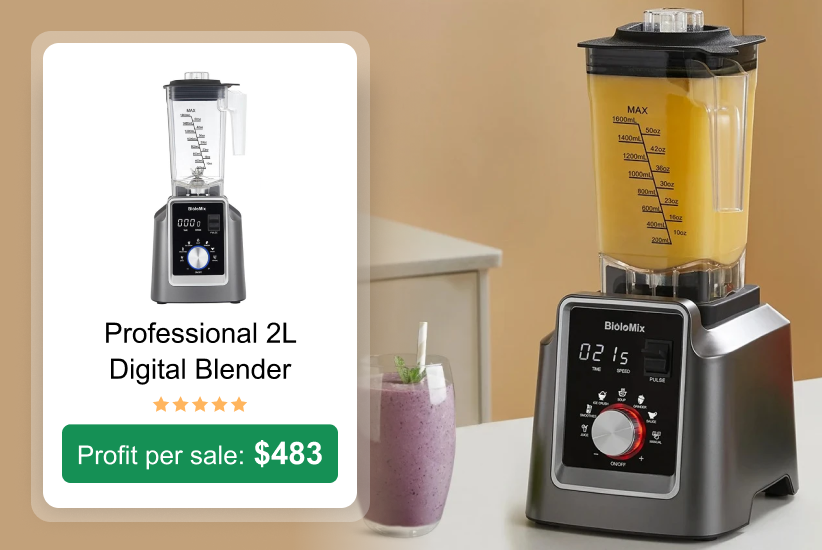
Equipped with six one-touch presets and nine adjustable speed levels, the blender offers both convenience and full texture control. Users can prepare smoothies, sauces, juices, or even hot soups directly in the jar thanks to blade-generated heat. Simple controls, strong performance, and versatile use make this a high-value product for any online store.
📊 Niche scorecard
Overall niche score: 4.5/5 – Highly recommended for beginners and experienced dropshippers.
2. Health and beauty
📊 Data snapshot
Market size: The global beauty and personal care market is expected to reach $758.4 billion by 2025, with continued growth to $803.2 billion by 2027
2026 growth rate: 8.9% year-over-year
High-demand keywords:
“clean beauty products” (avg. 198K monthly searches)
“Korean skincare routine” (avg. 267K monthly searches)
“natural hair care” (avg. 223K monthly searches)
“LED face mask therapy” (avg. 189K monthly searches)
“scalp massager electric” (avg. 156K monthly searches)
Average profit margin: 50-75%
Health and beauty products continue their explosive growth in 2026, but the landscape has shifted dramatically toward wellness technology and clean beauty. This niche now encompasses not just traditional skincare and makeup, but also beauty tech devices, wellness supplements, and holistic self-care products.
The 2026 consumer is highly educated and values-driven. They’re looking for products that are cruelty-free, vegan, sustainably sourced, and free from harmful chemicals. Clean beauty brands that transparently list ingredients and provide third-party certifications are winning market share.
Beauty tech is a particularly hot segment. LED face masks, ultrasonic skin scrubbers, heated eyelash curlers, and scalp massage devices are flying off virtual shelves. These products merge skincare with technology, appealing to tech-savvy millennials and Gen Z consumers.
The key to success in this niche is authenticity and education. Consumers want to understand how products work, what ingredients do, and why they should choose your brand over competitors.
🎯 Niche deep dive
Target audience profile:
- Primary demographics: Women ages 18-35 (Gen Z and Millennials) deeply interested in skincare routines, self-care practices, and beauty trends
- Secondary demographics: Men ages 25-40 in the rapidly growing men’s grooming and skincare market
- Tertiary demographics: Health-conscious consumers ages 35-55 focused on anti-aging solutions and holistic wellness
Key pain points:
- Persistent skin concerns (acne, premature aging, dryness, sensitivity)
- Information overload about ingredients and conflicting skincare advice
- High cost of dermatologist visits and professional treatments
- Difficulty finding truly cruelty-free and clean products (greenwashing concerns)
- Challenge of maintaining consistent skincare routines
- Uncertainty about which products actually work vs. marketing hype
Psychographic profile: Strong values around sustainability and ethical consumption, extremely active on Instagram, TikTok, and YouTube watching beauty content, follows beauty influencers and “skinfluencers” religiously, willing to invest significantly in self-care and appearance, highly educated about ingredient science and formulations, seeks authentic, unfiltered reviews and before/after results
Shopping behavior: Extremely research-intensive purchasing process, carefully reads and analyzes ingredient lists, actively checks for certifications (Leaping Bunny, vegan, organic), heavily influenced by before/after transformation photos and videos, values educational content that explains how products work, participates in beauty communities on Reddit and dedicated forums
Actionable marketing angles:
- Educational content strategy: Create TikTok/Instagram content explaining skincare science: “What does niacinamide actually do?”, “AM vs. PM Skincare Routines,” “Ingredients You Should Never Mix.” Build authority and trust through education, not just selling.
- Before/after transformation campaigns: Showcase customer transformation photos at 30-day, 60-day, and 90-day intervals. Be authentic – show real results from real customers without heavy editing. Before/after content generates massive engagement and social proof.
- Micro-influencer partnerships: Partner with beauty micro-influencers (10K-100K followers) who align with your values. Offer 15-20% affiliate commissions for authentic reviews. Skincare influencers have highly engaged audiences who trust their recommendations.
- Ingredient transparency marketing: Highlight clean ingredients prominently, display certification badges, create ingredient glossaries, and publish third-party test results. Make transparency your competitive advantage in an industry plagued by greenwashing.
Deep Tissue Massage Ball
This deep tissue massage ball is a compact, non-electric recovery tool designed to relieve muscle tension anytime, anywhere. Featuring pointed shiatsu-style nodes, it delivers targeted pressure to tight muscles in the neck, back, shoulders, legs, feet, and more. Its small, palm-sized design makes it easy for customers to use at home, at the gym, at work, or while traveling.
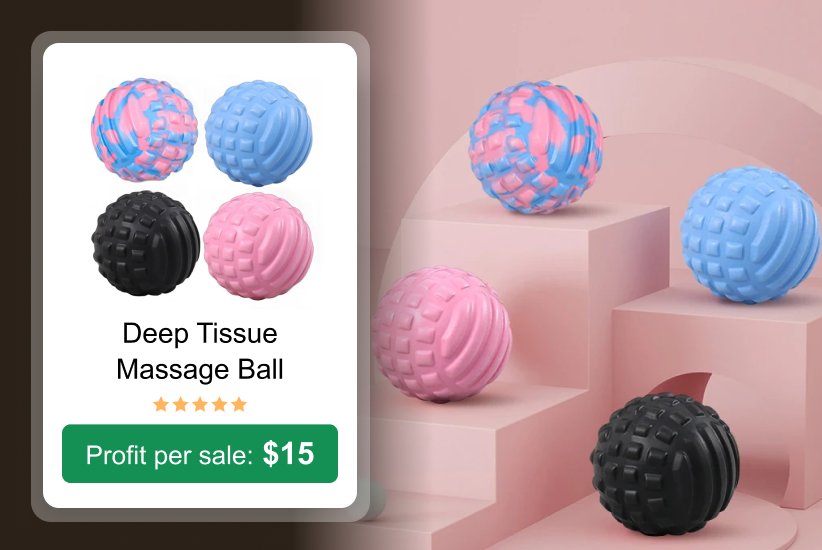
Ideal for post-workout recovery and daily relaxation, the ball helps improve circulation, reduce soreness, and increase flexibility. It can be used warm or cold for added pain relief and is suitable for conditions like plantar fasciitis, sciatica, and general muscle stiffness. Simple, durable, and easy to clean, this massage ball is a high-demand wellness product with broad appeal.
📊 Niche scorecard
Overall niche score: 4.3/5 – Excellent for those willing to invest in educational content.
3. Sustainability & eco-friendly products
📊 Data snapshot
Market size: The global sustainable products market is projected to reach $382.8 billion by 2030, with 2026 showing accelerated growth
2026 growth rate: 12.3% year-over-year
High-demand keywords:
- “reusable products zero waste” (avg. 245K monthly searches)
- “biodegradable phone case” (avg. 134K monthly searches)
- “solar powered gadgets” (avg. 189K monthly searches)
- “eco friendly water bottle” (avg. 301K monthly searches)
- “reusable silicone bags” (avg. 167K monthly searches)
Average profit margin: 45-65%
Sustainability isn’t just a trend anymore – it’s a fundamental shift in consumer behavior that’s defining the 2026 marketplace. This niche encompasses reusable products, zero-waste lifestyle items, solar-powered gadgets, biodegradable alternatives, and products made from recycled materials.
What’s driving this explosive growth? Climate anxiety among younger generations, increasing awareness of plastic pollution and its environmental impact, and a genuine desire to make environmentally responsible choices. Gen Z and millennials, who now represent the largest consumer demographic, are willing to pay premium prices for sustainable alternatives.
The beauty of this niche is its breadth. You can find eco-friendly alternatives for nearly every product category: bamboo toothbrushes, reusable food wraps, solar-powered chargers, compostable phone cases, stainless steel straws, and much more.
Success in this niche requires authenticity. Greenwashing – making false or misleading environmental claims – is quickly called out by today’s informed consumers. Provide transparent information about materials, manufacturing processes, and the actual environmental impact of your products.
🎯 Niche deep dive
Target audience profile:
- Primary demographics: Gen Z and Millennials (ages 18-40) with strong environmental values and climate consciousness
- Secondary demographics: Eco-conscious parents (ages 28-45) wanting to model sustainable practices and teach environmental responsibility to their children
- Tertiary demographics: LOHAS consumers (Lifestyles of Health and Sustainability, ages 35-65) with higher disposable income and established sustainable living practices
Key pain points:
- Persistent guilt about personal environmental impact and carbon footprint
- Frustration with single-use culture and plastic waste accumulation
- Difficulty finding truly sustainable products amid greenwashing
- Balancing sustainability goals with convenience and practicality
- Confusion about which eco-friendly alternatives actually make a difference
- Higher costs of sustainable products vs. conventional alternatives
Psychographic profile: Deeply climate-conscious with environmental anxiety driving purchasing decisions, socially responsible and values-aligned consumption, highly active on social media discussing environmental issues and climate action, values radical transparency from brands, willing to pay 20-40% premium for verified ethical and sustainable products, actively shares values-driven content and eco-tips with their networks, participates in climate activism and environmental movements
Shopping behavior: Conducts extensive research on brands’ environmental commitments before purchasing, meticulously checks certifications (B Corp, Climate Neutral, Fair Trade), reads sustainability and impact reports, influenced heavily by brands’ demonstrated environmental action beyond products, prefers brands offering carbon-neutral or plastic-free shipping, actively participates in online eco-communities sharing product recommendations
Actionable marketing angles:
- Quantified impact storytelling: Use concrete numbers: “This reusable water bottle saves 1,460 plastic bottles per year,” “Our bamboo toothbrush prevents 4 plastic toothbrushes from reaching landfills annually.” Make individual impact feel meaningful and significant.
- Cost-benefit comparisons: Show both environmental and financial benefits. Example: “Disposable makeup pads cost $96/year + 1,095 pads in landfills. Our reusable set costs $12 once, lasts 2+ years.” Address the objection that sustainable products are too expensive.
- Behind-the-scenes transparency: Show your complete supply chain, materials sourcing, and manufacturing. Radical transparency builds trust where greenwashing is common. Share both successes and challenges – authenticity resonates.
- Challenge campaigns: Launch “30-Day Zero Waste Challenge” or “Plastic-Free July” with daily tips and community support. User-generated content from challenges amplifies reach exponentially and builds community.
Eco-Friendly Wood Plant Stand
This 7-tier solid wood plant stand is a high-appeal home décor product designed to help customers display plants while saving space. Made from eco-friendly, carbonized solid wood, it offers strong load capacity, long-term durability, and a natural aesthetic that fits modern, rustic, and minimalist interiors. The vertical, multi-level design allows users to showcase multiple plants in one organized area, making it ideal for apartments, balconies, offices, and living rooms.
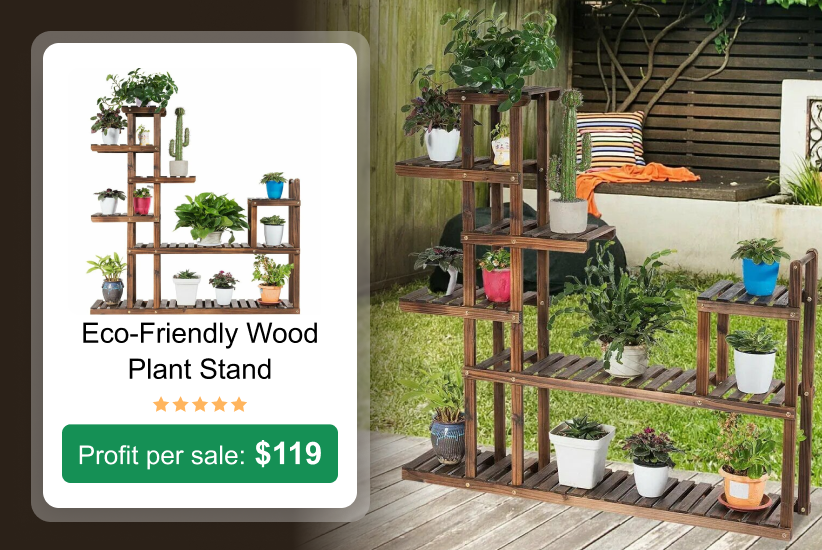
The open, hollow shelves support proper airflow and drainage to promote healthier plant growth, while the waterproof finish allows for both indoor and outdoor use. With rounded edges, easy portability, and the ability to hold different plant sizes, this stand delivers both practicality and visual impact. Its versatility as a plant display or storage rack makes it an easy-to-sell product with broad customer appeal.
📊 Niche scorecard
Overall niche score: 4.2/5 – Ideal for mission-driven entrepreneurs with authentic values.
4. Pet supplies (Smart pet tech focus)
📊 Data snapshot
Market size: The global smart pet care market is projected to reach $28.4 billion by 2030, with explosive growth in tech-enabled products
2026 growth rate: 14.7% year-over-year
High-demand keywords:
“automatic pet feeder camera” (avg. 223K monthly searches)
“GPS dog collar tracker” (avg. 189K monthly searches)
“interactive cat toy automatic” (avg. 167K monthly searches)
“smart pet water fountain” (avg. 145K monthly searches)
“pet camera treat dispenser” (avg. 198K monthly searches)
Average profit margin: 45-60%
The pet supplies niche has evolved dramatically, and in 2026, it’s all about smart pet technology. Pet owners – particularly millennials and Gen Z – are treating their pets as family members and investing heavily in tech solutions that enhance their pets’ lives and provide peace of mind.
Smart pet tech includes GPS tracking collars that let owners monitor their pet’s location in real-time, automatic feeders with portion control and scheduling via smartphone apps, pet cameras with two-way audio and treat dispensers, and interactive toys that keep pets entertained while owners are away.
What makes this niche particularly lucrative is the combination of high willingness to spend and emotional purchasing decisions. Pet owners don’t view these purchases as luxuries – they’re essentials for their beloved companions’ safety, health, and happiness.
The market is also driven by the rise in pet ownership during and after the pandemic, the increase in dual-income households needing pet monitoring solutions, and growing awareness of pet health and wellness.
🎯 Niche deep dive
Target audience profile:
- Primary demographics: Millennial and Gen Z pet owners (ages 25-40) who view their pets as family members, not just animals
- Secondary demographics: Busy professionals and dual-income households (ages 30-50) needing remote pet monitoring and care solutions
- Tertiary demographics: First-time pet owners seeking guidance, reassurance, and technology-assisted pet care
Key pain points:
- Separation anxiety experienced by both pets and owners during work hours
- Persistent guilt about leaving pets alone for extended periods
- Concerns about monitoring pet health, activity levels, and behavioral changes
- Fear of pets escaping, getting lost, or being stolen
- Ensuring proper feeding schedules and portion control for pet health
- Managing boredom-related destructive behaviors when pets are alone
- Difficulty training pets and reinforcing positive behaviors remotely
Psychographic profile: Highly tech-savvy and early adopters of smart home technology, extremely high emotional investment in pet wellbeing and happiness, very active in online pet communities (Facebook groups, Reddit’s r/dogs, r/cats), frequently shares pet content on Instagram and TikTok, willing to invest significantly in anything that benefits their pet, values convenience and peace of mind, experiences genuine anxiety when separated from pets
Shopping behavior: Reads extensive product reviews across multiple platforms before purchasing, watches numerous product demonstration and unboxing videos, heavily influenced by veterinarian recommendations and endorsements, actively participates in pet-specific Facebook groups and Reddit communities seeking advice, trusts recommendations from pet influencers and other pet parents, prioritizes product reliability and safety over price
Actionable marketing angles:
- Emotional storytelling: Lead with the pet-owner bond: “Never wonder ‘What is my dog doing right now?’ again,” “See your cat’s face light up when they hear your voice from work.” Pet owners make decisions with their hearts first – emotional messaging converts better than feature lists.
- User-generated content: Encourage customers to share pet videos using your products. Pet content dominates social media – leverage this. Create hashtag campaigns like #SmartPetParent with incentives: contests, features, discount codes.
- Problem-solution videos: Show relatable problems (destructive behavior, escape attempts) followed by solutions. Example: “My dog destroyed furniture while I was at work. This camera with treat dispenser changed everything.”
- Pet influencer partnerships: Partner with pet influencers on Instagram/TikTok (50K-500K followers). Pet influencer audiences are incredibly engaged and trust recommendations implicitly. These deliver better ROI than human influencers.
Interactive Feeding Toy for Dogs
This interactive slow-feeding dog toy is designed to turn everyday meals into a fun and mentally stimulating activity. By hiding food inside multiple pockets and compartments, it encourages dogs to sniff, paw, and work for their treats, helping slow down eating and reduce common digestive issues like bloating. Made from soft, pet-safe fleece, it’s gentle on teeth and gums while keeping dogs engaged during mealtime.
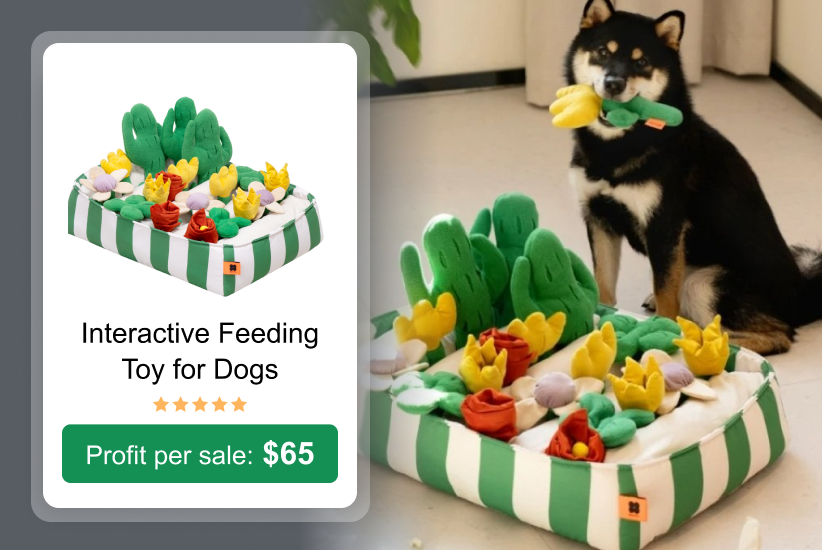
Ideal for puppies, adult dogs, and seniors alike, this toy promotes healthier eating habits and reduces boredom and anxiety. It combines feeding and play in one simple product, making it highly appealing to pet owners looking for practical enrichment solutions. Easy to clean, durable, and suitable for all breeds and sizes, this slow-feeding toy is a strong addition to any online pet store.
📊 Niche scorecard
Overall niche score: 4.5/5 – Exceptional niche with passionate, high-spending customer base
5. Content creator equipment
📊 Data snapshot
Market size: The global creator economy is valued at $104.2 billion in 2025, with equipment sales representing a significant and growing segment
2026 growth rate: 16.2% year-over-year
High-demand keywords:
- “ring light for streaming” (avg. 389K monthly searches)
- “portable green screen” (avg. 178K monthly searches)
- “wireless lavalier microphone” (avg. 267K monthly searches)
- “phone tripod with remote” (avg. 334K monthly searches)
- “studio lighting kit” (avg. 223K monthly searches)
Average profit margin: 40-60%
The creator economy is booming in 2026, and with it comes massive demand for content creation equipment. This niche caters to YouTubers, TikTokers, Instagram influencers, podcasters, Twitch streamers, and the millions of aspiring creators entering the space daily.
This market includes ring lights, portable LED panels, green screens, microphones (lavalier, shotgun, USB), tripods and gimbals, backdrop systems, teleprompters, and camera accessories. The key is offering products that deliver professional results at accessible price points.
What’s particularly attractive about this niche is that it appeals to a broad demographic. It’s not just full-time creators – it’s also small business owners creating marketing content, remote workers producing professional video calls, students creating educational content, and hobbyists pursuing their passions.
The equipment doesn’t need to be top-of-the-line professional gear. Most creators are looking for the sweet spot: products that significantly improve their content quality without breaking the bank. Affordable, user-friendly equipment that delivers visible results is what sells.
Social proof is huge in this niche. Creators trust recommendations from other creators, so influencer partnerships and authentic reviews are essential marketing tools.
🎯 Niche deep dive
Target audience profile:
- Primary demographics: Aspiring and part-time content creators (ages 16-35) actively creating content on TikTok, YouTube, Instagram, and Twitch
- Secondary demographics: Small business owners and entrepreneurs (ages 25-50) creating marketing content, product demos, and branded social media
- Tertiary demographics: Remote professionals and corporate employees (ages 28-45) wanting professional-looking video call setups and presentation capabilities
Key pain points:
- Poor video quality preventing channel growth and limiting reach
- Looking unprofessional compared to competitors with better equipment
- Terrible lighting making them look washed out or in shadows
- Echo-y, muffled audio that viewers complain about in comments
- Shaky, unstable footage that’s difficult to watch
- Overwhelmed by complicated professional equipment with steep learning curves
- Budget constraints – can’t afford $2000+ professional setups
- Uncertainty about which equipment to buy first and what actually matters
Psychographic profile: Ambitious and entrepreneurial mindset with dreams of monetization, highly creative with strong desire for self-expression, active daily on multiple social media platforms, follows successful creators for inspiration and tips, constantly learning and seeking to improve content quality, invests in self-improvement and skill development, values authenticity and relatability over polished perfection, part of creator communities sharing tips and equipment recommendations
Shopping behavior: Watches extensive YouTube reviews, tutorials, and “What’s in my setup” videos before any purchase, heavily influenced by equipment tour content from successful creators showing exactly what they use, seeks affordable alternatives to expensive professional gear, reads hundreds of Amazon reviews and customer photos, looks specifically for beginner-friendly, plug-and-play options with minimal technical setup, compares specifications across multiple similar products, values detailed comparison videos
Actionable marketing angles:
- Before/after quality comparisons: Create split-screen videos showing “without ring light vs. with ring light” or “built-in mic vs. USB microphone.” The visual improvement sells itself and performs exceptionally well on YouTube, TikTok, and Instagram.
- “Starter Kit” bundles: Package complementary items together (ring light + tripod + phone holder) at a slight discount. Creators appreciate curated solutions. Bundles increase average order value 2-3x and reduce decision fatigue.
- YouTube tutorial SEO: Create videos titled “Best Budget Ring Light for Beginners 2026,” “TikTok Setup Under $100,” “How to Look Professional on Zoom.” YouTube is where creators research purchases – these videos have long-term SEO value.
- Micro-creator partnerships: Partner with aspirational micro-creators (10K-100K) for authentic “Setup Tour” or “Gear I Actually Use” content. Small creators deliver better ROI because their audiences see them as attainable and trustworthy.
Photo Studio Four Lamp Softbox
This professional softbox lighting kit is a proven, easy-to-sell product for creators, online sellers, and small studios. Designed to deliver soft, even illumination, it helps customers improve photo and video quality by reducing shadows and enhancing detail – ideal for product photography, portraits, social media content, and video recording. The large 50×70 cm softboxes combined with adjustable 2 m light stands allow flexible positioning for different shooting setups.
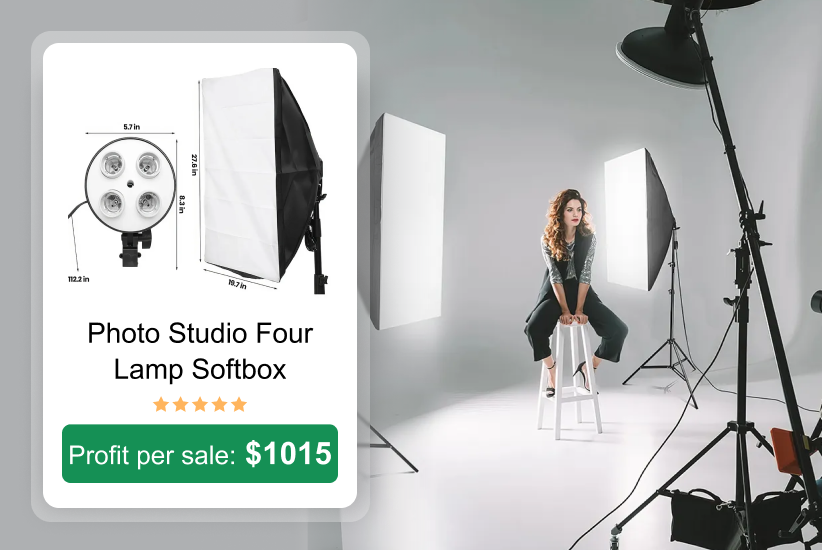
The kit includes energy-efficient LED bulbs with universal E27 lamp holders, ensuring broad compatibility and low running costs. Built with lightweight aluminum alloy and a foldable design, it’s simple to assemble, transport, and store. Practical, durable, and beginner-friendly, this softbox kit appeals to both new creators and professionals looking for reliable studio lighting at home or on location.
📊 Niche scorecard
Overall niche score: 4.2/5 – Strong niche for those who understand creator culture.
6. Mental wellness & self-care tech
📊 Data snapshot
Market size: The global mental wellness market is projected to reach $239.3 billion by 2030, with tech-enabled solutions leading growth
2026 growth rate: 11.4% year-over-year
High-demand keywords:
- “light therapy lamp SAD” (avg. 245K monthly searches)
- “meditation cushion set” (avg. 134K monthly searches)
- “aromatherapy diffuser” (avg. 389K monthly searches)
- “weighted blanket anxiety” (avg. 312K monthly searches)
- “sleep sound machine” (avg. 267K monthly searches)
Average profit margin: 50-70%
Mental wellness has moved from niche to mainstream in 2026, driven by increased awareness of mental health issues, lingering pandemic-related stress and anxiety, the normalization of therapy and self-care conversations, and growing scientific validation of wellness practices.
This niche encompasses a wide range of products: light therapy lamps for seasonal affective disorder, weighted blankets for anxiety relief, meditation cushions and props, aromatherapy diffusers and essential oils, sound machines for sleep improvement, acupressure mats, stress relief fidget tools, and journaling supplies designed specifically for mental wellness.
What makes this niche particularly powerful is the intersection of necessity and self-investment. People aren’t just buying products – they’re investing in their mental health and overall well-being. This creates strong emotional connections to brands and significantly higher customer lifetime value.
The stigma around mental health has dramatically decreased, especially among younger generations. Talking openly about anxiety, stress management, and self-care routines is now normalized and even celebrated on social media platforms.
Success in this niche requires sensitivity and authenticity. Avoid making medical claims or promising to “cure” mental health conditions. Instead, position products as supportive tools for overall wellness and self-care routines.
🎯 Niche deep dive
Target audience profile:
- Primary demographics: Gen Z and Millennials (ages 18-38) experiencing heightened anxiety, stress, and burnout from modern life
- Secondary demographics: Working professionals (ages 28-50) seeking work-life balance and stress management solutions
- Tertiary demographics: Individuals with diagnosed mental health conditions (ages 25-55) supplementing professional treatment with self-care tools
Key pain points:
- Chronic stress, anxiety, and overwhelm from work, social media, and modern pressures
- Sleep disturbances and insomnia affecting daily functioning
- Difficulty “turning off” and relaxing after stressful days
- Seasonal affective disorder (SAD) and mood changes with seasons
- Lack of healthy coping mechanisms for stress and anxiety
- Hesitation or barriers to accessing professional mental health services
- Feeling disconnected from body and needing grounding techniques
Psychographic profile: Open about mental health struggles on social media, actively working on self-improvement and personal growth, follows wellness influencers and mental health advocates, values scientifically-backed solutions, integrates self-care into daily routines, willing to invest in anything that improves mental wellbeing, participates in therapy or counseling (or interested in starting), practices mindfulness and intentional living
Shopping behavior: Seeks products validated by mental health professionals, reads reviews specifically mentioning anxiety/stress relief results, influenced by testimonials and personal stories, prefers brands that approach mental health sensitively and authentically, values educational content explaining how products work, looks for evidence-based benefits, attracted to calming, aesthetic product design
Actionable marketing angles:
- Authentic personal stories: Share real customer testimonials about how products helped with specific struggles. Example: “My weighted blanket has become part of my nightly routine – it helps me feel grounded and calm.” Video testimonials showing genuine experiences perform exceptionally well.
- Educational mental health content: Create content like “5 Science-Backed Ways to Reduce Anxiety,” “Understanding Seasonal Affective Disorder,” “How Weighted Pressure Calms the Nervous System.” Position yourself as a wellness resource, not just a seller.
- Routine integration content: Show products in realistic daily routines: “My Evening Wind-Down Routine,” “Morning Mindfulness Practice,” “Self-Care Sunday.” Demonstrate achievable 5-10 minute routines viewers can actually implement.
- Therapist endorsements: Collaborate with licensed therapists who can speak to self-care tools as supplements to professional treatment. Example: “As a therapist, I often recommend weighted blankets as part of anxiety management.” Professional endorsements carry significant weight.
AMOLED Smart Watch
This 1.85″ AMOLED smartwatch is a high-demand wearable designed to combine health tracking, communication, and everyday convenience in one sleek device. The large, vibrant display offers clear visibility in all lighting conditions, while features like wireless calling, AI voice assistant, NFC support, and TWS headphone pairing deliver a seamless, phone-free experience. Its modern design and lightweight build make it suitable for daily wear at work, the gym, or outdoors.
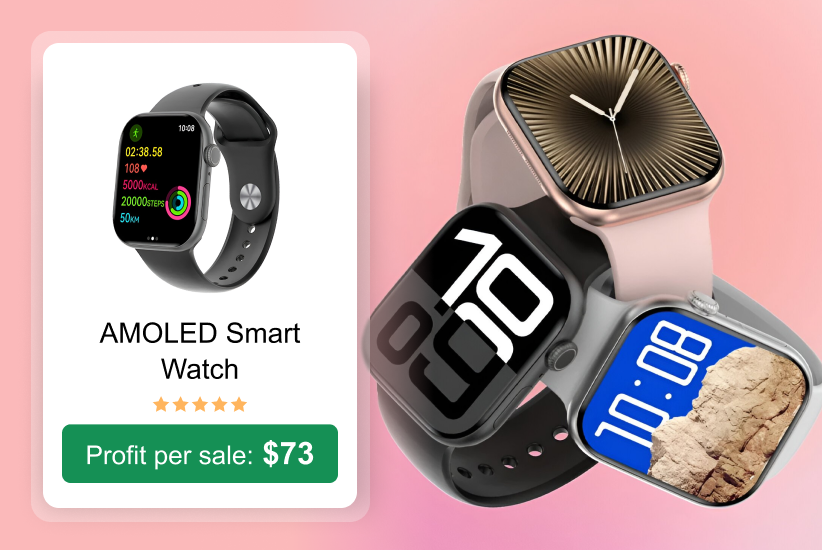
Equipped with a full health monitoring suite, built-in compass, multiple sports modes, and IP68 water resistance, this smartwatch appeals to fitness-focused and tech-savvy customers alike. Multi-language support and a durable sapphire crystal dial enhance its global appeal and long-term value. With broad functionality and strong perceived value, this smartwatch is an easy-to-sell product for online stores targeting lifestyle, fitness, and smart tech shoppers.
📊 Niche scorecard
Overall niche score: 4.3/5 – Excellent for empathetic entrepreneurs committed to authentic marketing.
7. Baby products (Smart & eco focus)
📊 Data snapshot
Market size: The global baby care products market is projected to reach $128.7 billion by 2030, with smart baby tech and eco-friendly products driving premium segments
2026 growth rate: 7.1% year-over-year
High-demand keywords:
- “organic baby products” (avg. 189K monthly searches)
- “smart baby monitor camera” (avg. 234K monthly searches)
- “silicone baby products” (avg. 145K monthly searches)
- “montessori toys baby” (avg. 167K monthly searches)
- “baby sleep tracker” (avg. 134K monthly searches)
Average profit margin: 45-65%
The baby products niche in 2026 is defined by two major, intersecting trends: smart technology and eco-consciousness. Modern parents, predominantly millennials and Gen Z, are both tech-savvy and environmentally aware, creating strong demand for products that combine innovation with sustainability.
Smart baby tech includes video monitors with AI-powered sleep tracking and breathing detection, smart thermometers that sync with smartphones, baby wearables that monitor vital signs and sleep patterns, app-connected bottle warmers and sterilizers, and sleep training devices. These products provide the peace of mind and data-driven insights that modern parents crave.
The eco-friendly segment encompasses organic cotton clothing and bedding, BPA-free and silicone feeding products, non-toxic wooden toys, biodegradable diapers and wipes, and sustainably made nursery furniture and decor.
Parents are willing to invest heavily in their children’s safety, health, and development, making this a high-ticket niche with strong profit margins. The emphasis on non-toxic, safe materials allows for premium pricing that parents willingly pay.
The Montessori education movement has also significantly influenced this niche, creating sustained demand for developmentally appropriate toys and furniture that encourage independence and natural learning.
🎯 Niche deep dive
Target audience profile:
- Primary demographics: Millennial and Gen Z first-time parents (ages 26-38) navigating parenthood with technology and values-driven consumption
- Secondary demographics: Expecting parents in nesting phase (ages 28-40) actively researching and preparing for baby’s arrival
- Tertiary demographics: Grandparents and family gift-givers (ages 50-70) wanting to purchase modern, safe, high-quality products
Key pain points:
- Overwhelming amount of baby products and conflicting advice about what’s necessary
- Anxiety about baby’s safety, health, and development
- Concerns about toxic chemicals, plastics, and materials in baby products
- Sleep deprivation and exhaustion – desperate for anything that helps baby sleep
- Guilt about environmental impact of disposable baby products
- Fear of making wrong choices that could affect child’s wellbeing
- Need for reassurance and data showing baby is healthy and developing normally
Psychographic profile: Research-intensive and extremely careful about product selection, strong values around environmental sustainability and non-toxic living, active in parenting communities seeking advice and product recommendations, follows parenting influencers and pediatrician accounts on social media, willing to invest significant money in anything that benefits child or provides peace of mind, interested in developmental psychology and evidence-based parenting, documents and shares parenting journey on social media
Shopping behavior: Reads extensive reviews and safety information before every purchase, checks for certifications (Greenguard, GOTS organic, CPSC safety approved), influenced heavily by pediatrician and parenting expert recommendations, participates in parenting Facebook groups and forums asking for product advice, creates detailed baby registries after thorough research, values brands with transparent ingredients/materials, prioritizes safety and quality over price
Actionable marketing angles:
- Safety & peace of mind messaging: Lead with safety and certifications. Examples: “Certified non-toxic materials – safe for teething,” “Pediatrician-recommended breathing monitor,” “GOTS certified organic cotton.” Parents pay premium prices for safety confidence. Display all certifications prominently.
- Educational parenting content: Create content like “Creating a Safe Sleep Environment,” “Understanding Baby Development Milestones,” “Montessori Principles at Home,” “Choosing Non-Toxic Baby Products.” Parents are hungry for credible, evidence-based information.
- Real parent testimonials: Feature authentic video testimonials from real parents. Example: “The smart monitor helped us catch my daughter’s fever early and avoid an ER trip.” Real stories build enormous trust with new parents.
- Gift registry & bundle strategy: Make products easy to add to registries (Amazon, Babylist). Create “New Parent Essentials” bundles that simplify decision-making during an overwhelming time. Bundles are extremely popular and increase average order value.
Puzzle Montessori Toy
This 3D Wooden Forest Animals Puzzle is a high-selling educational toy designed for toddlers and young children. Crafted from natural, BPA-free wood, it’s safe, durable, and perfect for small hands, combining fun with early learning. The Montessori-style design helps kids explore shapes, colors, and problem-solving while developing hand-eye coordination and fine motor skills.
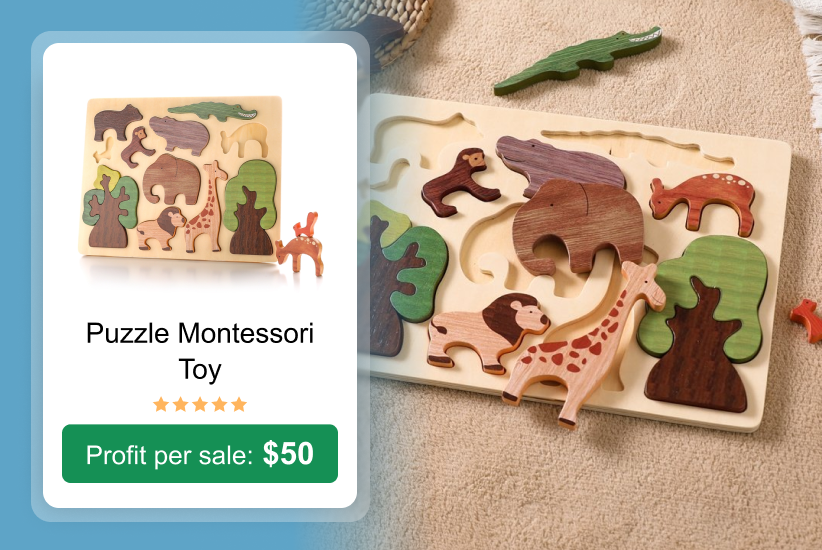
Each piece fits snugly on the board, encouraging interactive play, cognitive growth, and creativity. With a smooth finish and teether-friendly design, it’s gentle for teething babies and ideal for boys and girls alike. Lightweight, durable, and multi-functional, this puzzle is an easy-to-sell product for online stores targeting parents, gift buyers, and educational toy enthusiasts.
📊 Niche scorecard
Overall niche score: 4.2/5 – Excellent for patient marketers who can build deep trust.
8. Home office products (Hybrid work focus)
📊 Data snapshot
Market size: The global home office furniture market is projected to reach $49.3 billion by 2028, with continued demand from hybrid work models
2026 growth rate: 8.6% year-over-year
High-demand keywords:
- “ergonomic office chair under 300” (avg. 378K monthly searches)
- “standing desk converter” (avg. 289K monthly searches)
- “monitor light bar” (avg. 145K monthly searches)
- “cable management box” (avg. 178K monthly searches)
- “desk shelf organizer” (avg. 223K monthly searches)
Average profit margin: 45-65%
The home office niche has evolved from pandemic necessity to permanent fixture in 2026. With hybrid work models now standard at most companies (3 days office, 2 days home being most common), professionals are investing in quality home office setups that rival traditional office environments in functionality and aesthetics.
This niche now focuses on optimization and wellness. Ergonomic solutions are paramount: adjustable standing desks and converters, ergonomic chairs with proper lumbar support, monitor arms and laptop stands that promote proper posture, keyboard and mouse wrist rests, and footrests for circulation and posture.
Organization and aesthetics matter equally. Modern workers want home offices that are both functional and Instagram-worthy: cable management solutions that hide unsightly wires, desk organizers and drawer dividers, aesthetic storage solutions, desk plants and decor, and ambient lighting options.
Tech integration is crucial. Popular products include USB hubs and docking stations, wireless charging pads built into desk accessories, monitor light bars that reduce eye strain during long screen time, and noise-cancelling desk accessories for professional video calls.
The key to success is addressing real pain points: back pain, cluttered workspaces, poor lighting causing headaches, and lack of separation between work and personal life. Products that solve these problems while looking good perform exceptionally well.
🎯 Niche deep dive
Target audience profile:
- Primary demographics: Remote and hybrid workers (ages 28-45) working from home 2-5 days per week
- Secondary demographics: Freelancers, consultants, and self-employed professionals (ages 25-50) with permanent home offices
- Tertiary demographics: Students and academics (ages 18-35) needing functional study spaces
Key pain points:
- Chronic back, neck, and shoulder pain from poor ergonomics
- Eye strain and headaches from inadequate lighting and screen glare
- Cluttered, disorganized workspaces affecting focus and productivity
- Distractions and lack of boundary between work and personal life
- Looking unprofessional on video calls due to poor setup
- Feeling unmotivated or uninspired in makeshift workspace
- Limited space in apartments or shared living situations
Psychographic profile: Values productivity and efficiency, seeks work-life balance, willing to invest in health and comfort, influenced by productivity content and workspace aesthetics on Instagram/Pinterest, interested in minimalism and intentional living, wants workspace that reflects professional identity, follows productivity influencers and workspace optimization content
Shopping behavior: Research-intensive, reads ergonomic guides and reviews, influenced by workspace tour videos and photos, looks for space-saving solutions, values both function and aesthetics, willing to invest in quality items that will last, seeks multi-functional products, compares specifications and dimensions carefully
Actionable marketing angles:
- Workspace transformation content: Create dramatic before/after content showing chaotic workspaces transformed into organized, ergonomic setups. Time-lapse transformation videos perform extremely well and demonstrate tangible value.
- Pain point education: Create content addressing work-from-home health issues: “5 Signs Your Desk Setup is Hurting Your Health,” “Why You Get Headaches at Your Desk,” “Posture Mistakes Causing Your Back Pain.” Educational content that diagnoses problems then presents solutions converts well.
- Productivity & wellness investment angle: Position products as investments with measurable returns. Example: “An ergonomic chair costs $200 – one doctor visit for back pain costs $300. Better lighting = fewer headaches and better focus.”
- Aesthetic workspace showcase: Share beautifully styled workspace photos on Instagram and Pinterest. Home office aesthetics are trending heavily. Create inspiration boards and theme-based setups (minimalist, modern industrial). Tag products for easy shopping.
Mesh Desk Organizer
This Black Metal Mesh Desk Organizer is a practical and stylish product perfect for professionals, students, and home office setups. Made from durable metal with a sleek black mesh design, it keeps papers, folders, magazines, and notebooks neatly stacked while adding a modern touch to any workspace. Its compact yet spacious design makes it easy for customers to stay organized without taking up too much desk space.
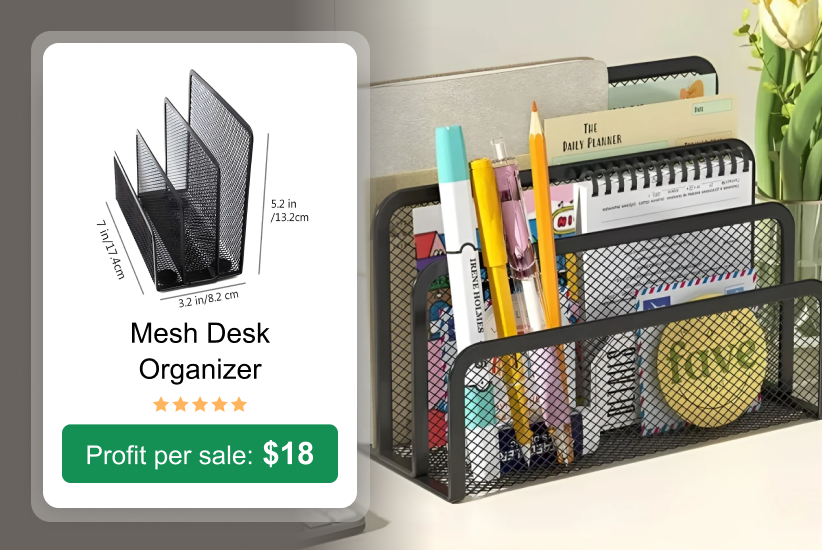
The sturdy construction ensures long-lasting use, while the open mesh layout allows for quick access and prevents dust buildup. Multi-purpose and versatile, it’s ideal for office desks, study areas, or home organization. With strong selling points like durability, elegance, and functionality, this desk organizer is a ready-to-sell item for online stores targeting productivity and home office solutions.
📊 Niche scorecard
Overall niche score: 4.2/5 – Solid long-term niche with sustainable demand.
9. Smart home & IoT devices
📊 Data snapshot
Market size: The global smart home market is projected to reach $313.95 billion by 2027, with mainstream adoption accelerating in 2026
2026 growth rate: 15.8% year-over-year
High-demand keywords:
- “smart light bulbs alexa” (avg. 334K monthly searches)
- “smart plug wifi” (avg. 289K monthly searches)
- “video doorbell camera” (avg. 412K monthly searches)
- “smart thermostat” (avg. 367K monthly searches)
- “motion sensor lights indoor” (avg. 234K monthly searches)
Average profit margin: 35-55%
Smart home technology has reached critical mass in 2026. What was once considered luxury or cutting-edge is now mainstream, with average households owning multiple smart devices. The market has matured beyond early adopters to include all demographics seeking convenience, security, and energy efficiency.
Entry-level smart home products offer excellent dropshipping opportunities: smart plugs that make any device controllable, smart light bulbs with color-changing and scheduling capabilities, video doorbells for security and convenience, smart switches that don’t require rewiring, and motion sensors for automated lighting and security.
The appeal is universal across demographics: homeowners want security and monitoring, renters want non-permanent smart installations, parents want child safety features, and everyone wants energy savings and convenience.
Compatibility is crucial in this niche. Products that work seamlessly with major ecosystems (Amazon Alexa, Google Home, Apple HomeKit) sell significantly better than proprietary systems. Emphasize easy setup and ecosystem compatibility in all marketing.
The energy efficiency angle is particularly strong. Smart thermostats, plugs, and lights demonstrably help consumers reduce electricity bills, making both the environmental and financial case for adoption compelling.
🎯 Niche deep dive
Target audience profile:
- Primary demographics: Tech-savvy homeowners and renters (ages 25-45) interested in home automation and convenience
- Secondary demographics: Security-conscious families (ages 30-55) prioritizing home safety and monitoring
- Tertiary demographics: Eco-conscious consumers (ages 28-50) seeking energy efficiency and cost savings
Key pain points:
- Concerns about home security when away from home
- High energy bills and desire to reduce electricity consumption
- Inconvenience of manual controls throughout the home
- Forgetting to turn off lights, appliances, or adjust thermostats
- Worry about package theft and monitoring visitors
- Wanting modern, convenient lifestyle without complex installation
- Difficulty managing multiple devices and remotes
Psychographic profile: Values convenience and efficiency in daily life, interested in technology but not necessarily tech experts, seeks practical solutions to everyday annoyances, environmentally conscious about energy waste, influenced by friends’ and neighbors’ smart home setups, wants gradual adoption starting with affordable entry-level devices
Shopping behavior: Starts with one or two devices then expands ecosystem, prioritizes compatibility with existing devices, heavily influenced by ease of setup and user-friendly apps, reads reviews focusing on reliability and customer service, values video setup tutorials, prefers devices that work with voice assistants they already own
Actionable marketing angles:
- Practical use case demonstrations: Show relatable scenarios: “Never worry about leaving the iron on again,” “Turn on lights before arriving home at night,” “Check on packages while you’re at work.” Avoid tech jargon – focus on practical benefits.
- Energy savings calculator: Quantify cost savings: “Smart thermostats save an average of $180/year,” “Smart plugs eliminate phantom power costing you $165 annually.” Provide calculators for potential savings. ROI messaging is extremely effective.
- Easy setup emphasis: Create “Setup in 5 Minutes” videos showing unboxing and installation. Emphasize “No electrician required,” “Renter-friendly – no damage,” “Just plug in and connect to WiFi.” Many people are intimidated – show it’s simple.
- Ecosystem starter bundles: Create bundles that work together: “Complete Smart Lighting Starter Pack,” “Home Security Basics Bundle.” Bundles reduce decision fatigue and increase average order value.
Smart WiFi Video Doorbell
This Smart WiFi Video Doorbell is a top-selling home security product designed to give customers real-time access to their front door from anywhere. With HD video, infrared night vision, and an 85-degree wide-angle lens, it captures clear images day and night. Two-way audio lets users speak with visitors or delivery personnel directly from their smartphone, making it a convenient and practical addition to any home.
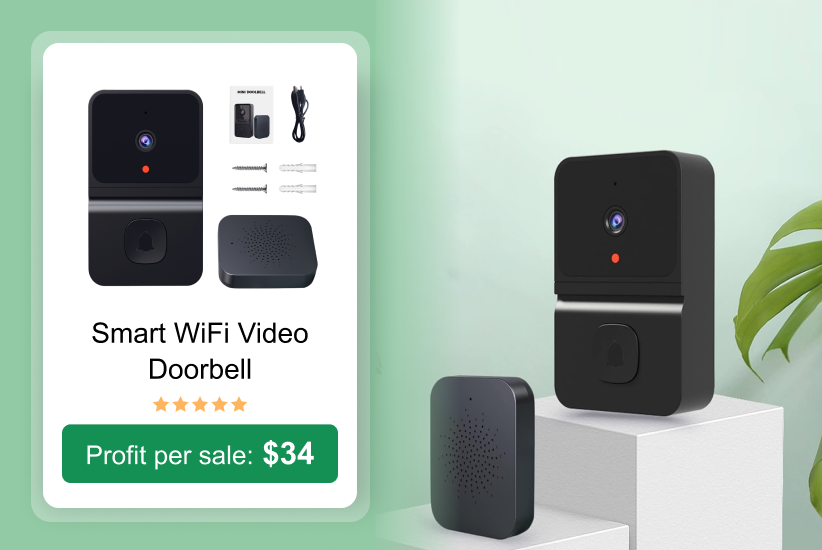
Equipped with motion detection, free cloud storage, and push notifications via Tuya or Smart Life apps, this doorbell keeps homeowners informed and in control without monthly fees. Its wireless design allows easy installation, while compatibility with smart home systems and optional ding-dong chime adds versatility. With strong selling points like safety, convenience, and tech-savvy appeal, this video doorbell is an easy-to-sell product for online stores targeting home security and smart home shoppers.
📊 Niche scorecard
Overall niche score: 4.0/5 – Strong niche for those who can educate and differentiate.
10. Outdoor & Adventure Gear (Micro-Adventures Focus)
📊 Data snapshot
Market Size: The global outdoor gear market is projected to reach $21.8 billion by 2028, with micro-adventure and camping segments showing exceptional growth
2026 growth rate: 8.3% year-over-year
High-Demand Keywords:
- “portable camping gear” (avg. 289K monthly searches)
- “hiking backpack lightweight” (avg. 312K monthly searches)
- “camping accessories must have” (avg. 267K monthly searches)
- “portable camping stove” (avg. 198K monthly searches)
- “travel hammock camping” (avg. 178K monthly searches)
Average Profit Margin: 45-65%
The outdoor and adventure gear niche is experiencing a renaissance in 2026, driven by the “micro-adventure” movement – the trend of short, accessible outdoor experiences that don’t require extensive planning or time off work. Post-pandemic, people are prioritizing outdoor activities, mental wellness through nature, and weekend getaways over expensive international travel.
This niche encompasses portable camping gear, lightweight hiking equipment, outdoor cooking tools, travel-friendly adventure accessories, and compact survival gear. The key differentiator in 2026 is the focus on convenience, portability, and “Instagram-worthy” experiences.
What makes this niche particularly attractive is its broad demographic appeal. It’s not just hardcore outdoor enthusiasts – it’s also families seeking weekend camping trips, young professionals looking for weekend adventures, festival-goers needing portable gear, and digital nomads working remotely from scenic locations.
The sustainability angle is also strong here. Consumers increasingly prefer durable, multi-use outdoor gear over disposable alternatives, and they’re willing to pay premium prices for products that enhance their outdoor experiences while minimizing environmental impact.
🎯 Niche deep dive
Target Audience Profile:
- Primary Demographics: Millennials and Gen Z (ages 22-40) embracing outdoor lifestyles and seeking affordable adventure experiences
- Secondary Demographics: Young families (ages 28-45) introducing children to camping and outdoor activities
- Tertiary Demographics: Remote workers and digital nomads (ages 25-45) combining work with outdoor experiences
Key Pain Points:
- Limited time for extended camping trips or wilderness expeditions
- Lack of storage space for bulky camping equipment in apartments
- Uncertainty about what gear is actually necessary for beginners
- High costs of traditional camping equipment from specialty outdoor retailers
- Difficulty finding lightweight, portable gear for public transportation travel
- Intimidation factor of “serious” outdoor culture and complex equipment
- Desire for outdoor experiences without extensive planning or expertise
Psychographic Profile: Values experiences over possessions, active on social media sharing outdoor adventures, environmentally conscious and seeks sustainable products, prioritizes work-life balance and mental wellness, influenced by outdoor lifestyle influencers and adventure content, seeks accessibility and convenience in outdoor activities, interested in photography and creating shareable content from adventures
Shopping Behavior: Researches extensively through YouTube reviews and outdoor blogs, influenced by Instagram and TikTok outdoor content creators, reads Amazon reviews focusing on portability and ease of use, seeks multi-functional gear that serves multiple purposes, values lightweight and compact designs for easy transport, prefers affordable entry-level gear before investing in premium equipment, looks for complete starter kits that simplify gear selection
Actionable Marketing Angles:
- Before/After Transformation Content: Show the difference between struggling with bulky, complex gear versus the simplicity of compact, user-friendly equipment. Create videos demonstrating how quickly camp can be set up with portable gear versus traditional equipment. Time-lapse setup videos perform exceptionally well.
- Instagram/TikTok Adventure Storytelling: Partner with micro-influencers who document weekend adventures, camping trips, and hiking experiences. Outdoor content generates massive engagement – leverage beautiful scenery, campfire moments, and sunrise/sunset shots. Use trending sounds and location tags to increase discoverability.
- Beginner-Focused Educational Content: Create comprehensive guides for outdoor beginners: “Complete Camping Checklist for First-Timers,” “How to Choose a Campsite,” “Camping Safety Essentials.” Position your store as the helpful guide for people new to outdoor activities, not just a product seller.
- Seasonal Campaign Strategy: Align marketing with outdoor seasons – Spring (camping season kickoff), Summer (peak outdoor activities), Fall (autumn camping and leaf-peeping), Winter (winter camping and preparation for next season). Create urgency around seasonal opportunities.
Backpacking Tent for Hiking
This ultralight solo backpacking tent is a premium outdoor product designed for hikers, campers, and adventure travelers who want maximum performance with minimal weight. Constructed from high-strength 15D ripstop nylon with dual-sided silicone coating, it offers reliable waterproof protection and durability while packing down to an ultra-compact size. Its three-season design makes it suitable for spring, summer, and fall camping in a wide range of environments.
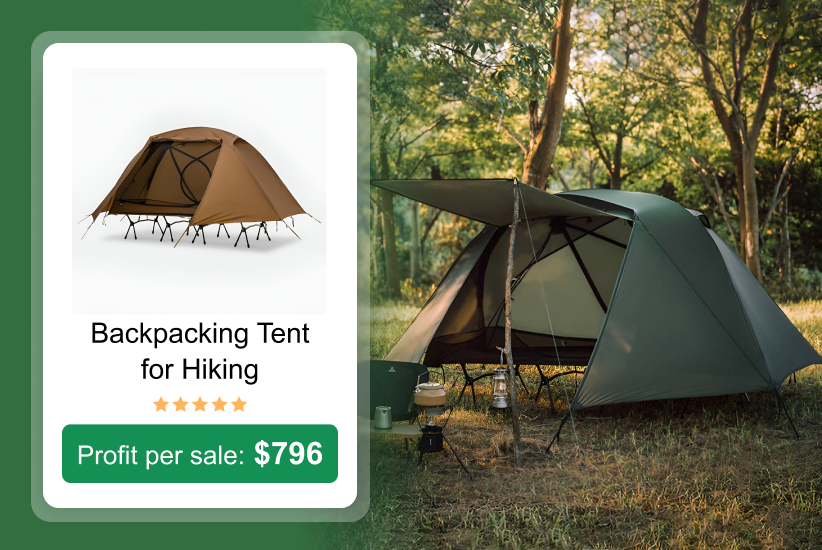
The tent supports both ground setup and cot camping, giving users added flexibility across different terrains. Dual-door access improves ventilation and convenience, while the spacious interior allows comfortable sleeping and movement. Lightweight, durable, and easy to pack, this tent appeals strongly to ultralight backpackers and is a high-conversion product for outdoor and camping-focused online stores.
📊 Niche scorecard
Overall niche score: 4.3/5 – Excellent niche with strong growth trajectory and broad appeal.
Conclusion: Your 2026 dropshipping success starts now
Choosing the right dropshipping niche in 2026 isn’t just about following trends – it’s about positioning yourself in markets with proven demand, sustainable growth, and real profit potential. From kitchen gadgets with viral appeal to mental wellness products addressing genuine needs, from smart pet tech capturing emotional spending to outdoor gear riding the micro-adventure wave, the opportunities are vast and validated by data.
Throughout this guide, we’ve provided you with:
- Data-driven insights from 18 months of real sales analysis across thousands of stores
- Market intelligence backed by leading research firms and consumer behavior trends
- 10 thoroughly vetted niches with comprehensive audience profiles and marketing strategies
- Actionable roadmaps including specific keywords, profit margins, and competition assessments
- Strategic guidance on which niches to avoid and why
But here’s the critical truth: information alone doesn’t generate income. The dropshipping graveyard is full of entrepreneurs who researched endlessly but never launched. They knew which niches were profitable but never sold a single product. They understood the market but never entered it.
The difference between those who succeed and those who don’t isn’t knowledge – it’s execution.
You now possess the strategic framework for 2026 success. You understand which niches are exploding, why consumers are buying, and how to position your marketing for maximum impact. You’ve seen the profit margins, competition levels, and scalability potential for each category.
The question isn’t whether these niches will be profitable in 2026 – the data confirms they will be. The question is whether you’ll be among those profiting from them.
Your competitors are reading guides like this too. Some will bookmark it and forget. Others will “plan to start soon” but never do. A select few will take immediate action – and those few will be the ones celebrating their first sales, then their first profitable month, then their first six-figure year.
Which group will you join?
The barrier to entry has never been lower. You don’t need massive capital, inventory warehouses, or years of business experience. You need the right products, optimized sales pages, and the commitment to start today rather than “someday.”
Your 2026 success story doesn’t begin with perfection – it begins with action.
Stop researching and start selling. You’ve invested time learning about the most profitable niches for 2026 – now it’s time to profit from them. Get instant access to a complete, ready-to-launch ecommerce store featuring 2,026 handpicked bestsellers!
What is the most successful niche for dropshipping?
What is the number 1 dropshipping item?
Can I be a millionaire from dropshipping?
What is the hardest thing about dropshipping?
What is the easiest thing to sell dropshipping?


