Product Trends 2026: What To Sell And How To Profit

If you have been wondering which products are actually worth selling online right now, you are not alone. The ecommerce landscape in 2026 looks very different from even two years ago – consumer habits have shifted, social media has become a legitimate product discovery engine, and the niches that dominate are no longer the ones anyone would have predicted.
Quick Answer: The top product trends for 2026 are concentrated in at-home health and wellness, smart home technology, eco-friendly everyday goods, and functional fashion accessories – categories with proven, sustained demand rather than one-week TikTok spikes.
This guide breaks down the most promising product trends you can act on today, what you can realistically earn from them, and how to build a store around them without wasting months on dead-end research.

What are product trends and why do they matter in 2026?
A product trend is a measurable, sustained increase in consumer demand for a specific item or category – tracked through search volume, social media engagement, and actual sales data. In 2026, trends move faster than ever because short-form video on TikTok and Instagram Reels can push a product from obscurity to sold-out in under a week.
The opportunity for dropshippers and ecommerce store owners is real, but so is the risk of chasing a product that peaks before your ads even go live.
What separates smart product selection from guesswork is understanding the difference between a viral moment and a durable trend. Viral moments spike and crash. Durable trends – like the ongoing consumer shift toward at-home wellness or smart home convenience – grow steadily across months and years. Building a store around durable trends is significantly more profitable than reacting to every TikTok clip.
Why this works in 2026: The global dropshipping market reached $351.8 billion in 2024 and is projected to exceed $500 billion by 2026, which means the addressable market is enormous – but only for sellers who pick the right products and move decisively.
How much can you realistically earn from trending products?
Income from an ecommerce store selling trending products varies enormously depending on your niche, traffic source, and how much time you invest. Below is a realistic breakdown by approach.
These figures reflect stores that have been running for 60–90 days and have found at least one or two converting products. New stores typically take 4–8 weeks to generate consistent sales – during which time product testing, supplier vetting, and ad optimization are the real work.
One note on ceiling figures: The $10,000+/month range is achievable but requires real advertising spend, consistent effort, and a product-market fit that takes time to find. For most beginners, a realistic first-year goal is $500–$1,500/month with part-time commitment.
The honest framing here is that product trends are an input, not a guarantee. Knowing what is trending gives you a head start on demand – but execution, supplier quality, and store presentation determine whether that demand converts into revenue for you specifically.
The biggest product trends to watch in 2026
Below are the categories showing the strongest, most durable demand signals in 2026 – backed by search data, social media virality, and actual sales performance across major dropshipping platforms.
At-home health and wellness
This is the single largest opportunity category in 2026. Consumers are consistently spending on products that replicate professional health and beauty experiences at home – driving sustained demand that is not linked to any one platform or season.
Red light therapy masks
These face masks cost between $18 and $25 to source and retail for $59–$89, delivering 55–65% gross margins. Interest has been climbing steadily since mid-2024, driven by K-Beauty and medical aesthetics content on social platforms. The product addresses a real pain point (professional facials are expensive), which gives it lasting appeal beyond a single trend cycle.
Earning potential: $40–$65 margin per unit with strong repeat purchase potential through complementary skincare products.
Smart posture correctors
The 2026 versions vibrate when posture slips, directly solving the remote-work ergonomics problem that hundreds of millions of people deal with every day. This is a strong problem-solution product with a clear, demonstrable benefit – the kind that performs well in short-form video ads without heavy scripting.
Period heat pads (wearable)
Wearable, discreet, and solving a universal problem that essentially did not have a good product solution two years ago. Viral on TikTok and generating strong repeat purchases. The product category is still young enough that early-mover dropshippers have a real competitive window.
Smart home and tech gadgets
AI-powered gadgets and home automation are expanding rapidly as the cost of components drops and consumer awareness rises. Products in this category have strong visual appeal – which translates directly into performance on social media and in video ads.
Wireless multi-device charging stations
Search interest in wireless chargers saw its largest sustained spike in the last five years in late 2025, and momentum is continuing into 2026. Multi-device versions that charge phones, earbuds, and watches simultaneously command premium pricing while remaining easy to ship.
Smart door knobs and keyless entry
Smart home security products are trending upward across multiple markets simultaneously. Keyless entry products with multiple unlock methods (app, fingerprint, code) appeal to both tech-forward early adopters and practical homeowners – a broad audience that is useful for ad targeting.
Earning potential: $25–$60 per unit depending on product tier, with strong upsell potential to complementary smart home accessories.
Smart glasses (affordable consumer tier)
Affordable smart glasses saw a dramatic rise in search interest from late summer through early fall of 2025. The key driver is accessibility – at consumer-friendly price points, these products appeal to a much wider audience than previous tech wearables. Saturation is still low enough in 2026 that nimble dropshippers can establish a position before the category matures.
Eco-friendly everyday products
Green commerce is no longer niche – it is mainstream. Consumers in 2026 actively seek out products that reduce waste or come from sustainable sources, and many will pay a meaningful premium for them. This creates margin opportunities that commodity product categories simply cannot match.
Silicone air fryer liners
A textbook example of the “boring product, consistent revenue” principle. Low return rates, genuine repeat purchase behavior (they wear out), and a clear sustainability angle – reusable vs. disposable paper liners. Sellers who build content around this product report thousands in consistent monthly revenue with minimal ad spend.
Why this works in 2026: Repeat buyers generate three times the lifetime value of one-time buyers, and consumable or wear-out products in the eco category are uniquely positioned to drive that repeat behavior.
Biodegradable packaging accessories
Products like compostable bags, beeswax wraps, and reusable food storage containers sell well across all seasons and demographics. They are lightweight, cheap to ship, and benefit from consistent media coverage around waste reduction – providing a steady stream of organic search intent.
Fashion accessories and functional apparel
Fashion remains one of the largest dropshipping categories in 2026, but the winning sub-niches have shifted. Pure trend-driven apparel is high-risk. Functional fashion – wearable tech, problem-solving clothing, and accessories with a clear utility – carries far lower risk and stronger margins.
Heated jackets and vests
Battery-powered heated outerwear has become a legitimate product category. Popular with winter sports enthusiasts, commuters, and outdoor workers, these items command premium prices while remaining lightweight enough for cost-effective shipping. Seasonal peaks are strong, but search data shows year-round baseline interest from buyers in colder climates.
Minimalist jewelry and wearable accessories
Low cost, high margin, impulse-buy pricing, and easy to ship – minimalist jewelry consistently appears on best-practice lists for beginner dropshippers. The key in 2026 is differentiation: niche aesthetics (vintage, cottagecore, maximalist) outperform generic “trending” jewelry because they attract a defined, targetable audience.
Earning potential: $8–$25 per unit with high volume potential at low ad costs, particularly through organic TikTok and Pinterest content.
How to evaluate a product trend before you commit
Not every trending product is worth selling. Before adding anything to your store, run it through these four checks – they take about 20 minutes per product and will save you months of wasted effort.
Check demand consistency, not just peaks
Use Google Trends to look at search interest over 12–24 months, not just the last 90 days. A product with a single massive spike followed by a flat line is a fading trend. A product with a gradually rising baseline – even if it has seasonal peaks – is a durable opportunity. Aim for products where the 12-month low is still meaningfully higher than two years ago.
Verify supplier readiness before scaling
Winning a sale you cannot fulfill is worse than not winning it at all. Before you commit to a product, confirm your supplier can provide: consistent stock availability, accurate product data and images, real-time tracking updates, and a clear returns process.
According to industry data, 84% of ecommerce retailers cite supplier reliability as their biggest operational challenge – which means vetting suppliers upfront is one of the highest-leverage things you can do.
Assess the shipping and margin profile
Lightweight, compact products with strong visual appeal are the best candidates for dropshipping in 2026. A useful rule: if the product can be demonstrated in a 15-second video and fits in a padded envelope, it is operationally low-risk.
Products requiring fragile shipping, complex assembly instructions, or compliance documentation (electronics with certifications, children’s products with safety standards) require significantly more operational overhead to sell successfully.
Look for problem-solving over novelty
Novelty products – gadgets with a “wow factor” but no clear ongoing need – sell in bursts and then collapse. Products that solve a recurring, painful problem generate sustained demand, repeat buyers, and far stronger word-of-mouth. When evaluating a trend, ask: does this product still make sense in someone’s life 6 months after they buy it? If the answer is yes, you have found something worth building a store around.
Legal and ethical considerations when selling trending products
Selling trending products online comes with a set of responsibilities that directly affect your store’s long-term viability. Cutting corners here is one of the most common reasons stores fail after an initially promising start.
Key principle: Your store’s reputation is built on every single order experience – not on your product page copy or your ad creative.
What to avoid absolutely
Selling counterfeit goods or branded products without authorization is the fastest way to get your store suspended and face legal action. This includes products with logos, characters, or designs owned by third parties – even if the supplier on AliExpress is offering them openly. If a product looks like it belongs to a recognizable brand and you did not license it, do not sell it.
Fake reviews are another hard line. Platforms and payment processors have become significantly better at detecting review manipulation in 2025–2026, and the downside – account bans, withheld payouts, and reputational damage – far outweighs any short-term conversion lift.
Important: Products in certain categories – supplements, children’s toys, electrical goods, and skincare – may require compliance documentation, safety certifications, or import declarations depending on your target market. Research your market’s requirements before listing.
What to do instead
Build a store around products you can authentically describe and stand behind. Source from suppliers with documented quality records. Write product descriptions based on real specifications. Set accurate delivery expectations. These practices feel slower in the short term but they compound: genuine positive reviews, lower refund rates, and higher customer lifetime value are all direct outputs of operating ethically.
How to choose your product trend strategy based on your situation
There is no single “best” product trend for everyone. The right niche depends on your budget, time availability, and how long you are willing to operate before seeing consistent returns. Here is a straightforward breakdown by profile.
Complete beginner
Start with a single niche in the at-home wellness or eco-friendly everyday goods categories. Both have strong organic content potential (tutorials, before/after demonstrations, problem/solution videos) which reduces your dependence on paid ads while you are still learning. Expect 60–90 days to your first consistent revenue, with earnings in the $200–$600/month range by month three if you are consistent.
Intermediate / part-time seller
If you already have some ecommerce experience, the smart home technology category offers higher margins and a growing audience that is willing to spend. The trade-off is slightly more complex product knowledge and a higher average order value that requires more trust-building in your store’s presentation. Budget $200–$500/month for initial ad testing alongside organic content.
Advanced / full-time goal
If you are aiming for a full-time income ($3,000–$10,000+/month), high-ticket dropshipping in the smart home, wellness device, or functional apparel categories is where the margins justify the ad spend.
High-ticket products ($200+) achieve 20–35% margins compared to 10–20% for commodity items under $30 – meaning each sale works harder for you. The key is mastering paid traffic (Meta or TikTok ads) alongside a strong supplier relationship that can handle volume without quality degradation.
Regardless of where you are starting from, the structural opportunity in 2026 is clear. The dropshipping market is growing at nearly 24% annually, and the categories described above are expanding with it. The sellers who win are not the ones who found a secret product – they are the ones who built a reliable, professionally presented store and operated it consistently.
AliDropship: Your complete all-in-one solution for starting dropshipping in 2026
If you want the simplest possible way to start dropshipping – especially if you’re brand new – AliDropship remains one of the most beginner-friendly tools available in 2026. It brings together store creation, product imports, automation, and marketing into a single streamlined system designed to help you launch quickly and grow confidently.
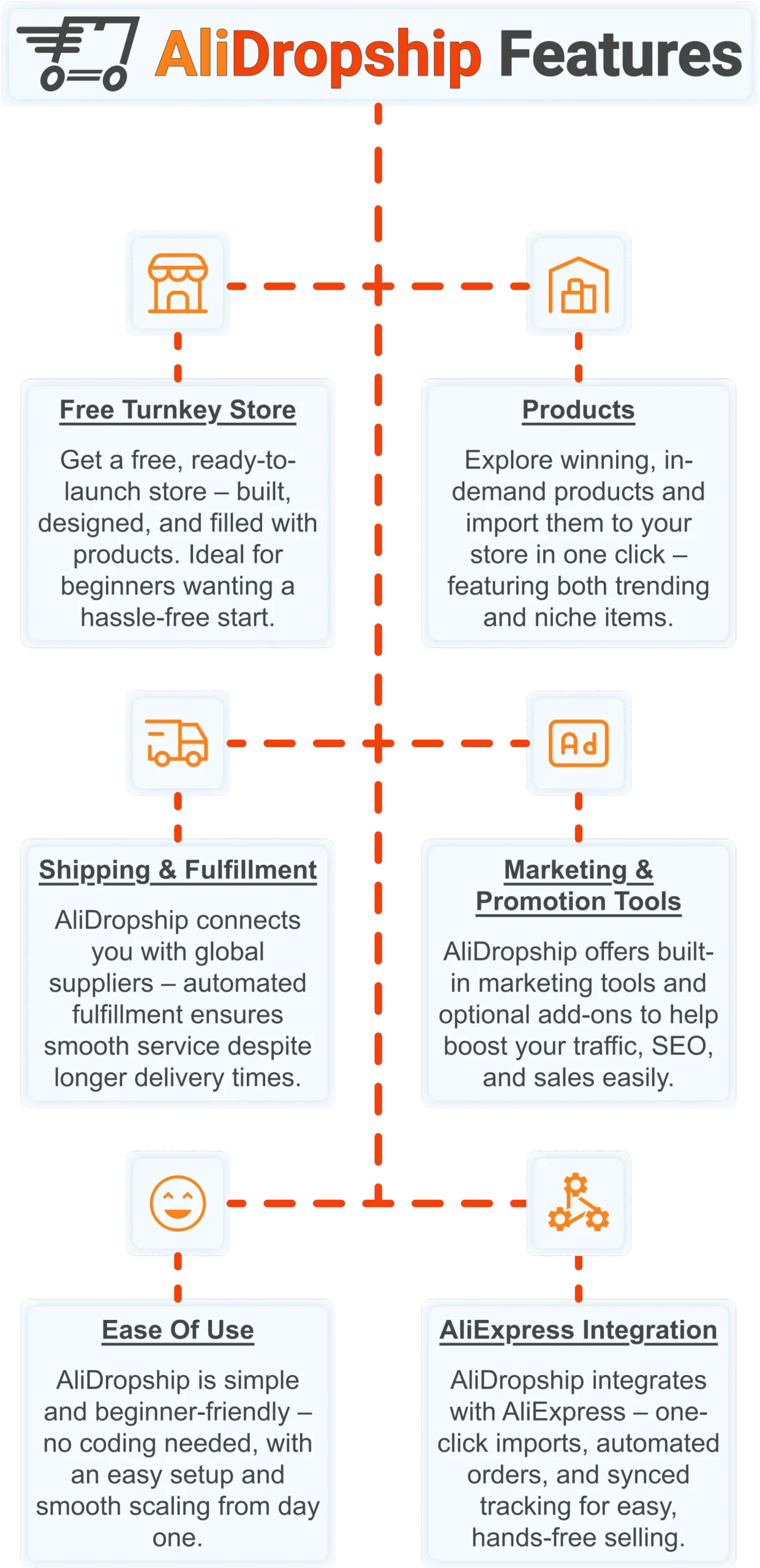
Free turnkey store 🛍️
Get a free turnkey store – built, designed, and filled with products. Ideal for beginners wanting a hassle-free start, the store comes fully optimized to attract customers right away, saving you time on setup. Plus, it includes professional design elements to give your business a polished, trustworthy look from day one. This ready-made foundation makes it easy to move seamlessly into product selection.
Products 📦
Once your store is set up, you can explore winning, in-demand products and import them in one click – featuring both trending and niche items. This wide selection lets you cater to diverse customer interests and test what works best. Regular updates ensure you always have fresh products, keeping your store competitive and relevant. With great products in place, smooth shipping becomes the next essential step.
Shipping & fulfillment 🚚
AliDropship connects you with global suppliers, and automated fulfillment ensures seamless order processing despite international delivery times. Customers receive real-time tracking updates, which builds confidence and trust in your store. Once shipping is handled reliably, you can focus on promoting your store and attracting traffic.
Marketing & promotion tools 📣
To maximize sales, AliDropship offers built-in marketing tools and optional add-ons that help boost traffic, SEO, and conversions. From email campaigns and discounts to social media integration, these tools empower you to reach and retain customers without needing prior marketing experience. With promotion strategies in place, managing your business becomes simpler and more efficient.
Ease of use 👌
AliDropship is beginner-friendly – no coding needed, with an intuitive dashboard that guides you through every step. Easy setup and smooth scaling let you expand your store without stress. As your business grows, adding new features, products, and marketing campaigns remains hassle-free, giving you more time to focus on sales.
AliExpress integration 🛒
Finally, AliDropship integrates seamlessly with AliExpress, enabling one-click imports, automated orders, and synced tracking. Your inventory stays up-to-date with the latest products and prices, while automated order processing frees you from manual tasks. Combined with the turnkey setup, reliable shipping, and built-in marketing tools, this integration ensures your dropshipping business is fully equipped for growth and success.
The 2026 product trends covered in this guide represent some of the most durable, high-margin opportunities available to dropshippers right now. Get your free turnkey store and start selling the products consumers are already searching for.
What are the top product trends for 2026?
How do I find trending products to dropship?
The most reliable methods for finding trending products combine at least two data sources. Google Trends shows whether interest in a product is growing, stable, or declining over time. AliExpress bestseller lists reveal what is already selling at volume. TikTok and Instagram Reels surface products that are gaining social momentum before they peak. Industry research tools like Tradelle and Minea automate much of this process by curating trending products with estimated profit margins and demand data. Cross-referencing two or three of these sources before committing to a product will filter out most short-term fads.
Are product trends the same as viral products?
Not always. A viral product is one that spikes rapidly due to a single piece of content – often a TikTok video – and then fades just as quickly. A product trend is a sustained increase in demand over months or years, often driven by a broader behavioral or cultural shift rather than a single moment. Red light therapy masks, for example, are a product trend driven by the ongoing move toward at-home professional skincare – not a single viral clip. When evaluating a product, looking at 12 to 24 months of search data will reveal whether you are looking at a trend or a viral moment.
How long does a product trend typically last?
Durable product trends – those tied to a real behavioral shift or recurring consumer need – typically last 2 to 4 years before the category matures and margins compress due to increased competition. Short-term trend products tied to a specific cultural moment or seasonal factor may peak and decline within 3 to 6 months. Products with genuine repeat purchase behavior, such as eco-friendly consumables or health accessories, tend to have the longest commercial lifespans. Entering a trend category 6 to 12 months before it peaks gives sellers the best combination of low competition and growing demand.
Can I build a full-time income selling trending products in 2026?
Building a full-time income from trending products is achievable but requires realistic expectations about timeline and effort. Most sellers working 15 to 20 hours per week reach 800 to 2,500 dollars per month after 3 to 6 months of consistent operation. Full-time income of 3,000 dollars or more per month is more commonly reached at the 9 to 12 month mark, typically by sellers who have tested multiple products, identified 2 to 3 consistent performers, and invested in paid advertising alongside organic content. The dropshipping market is growing at nearly 24 percent annually in 2026, which means the opportunity is genuinely expanding – but consistent effort, not just product selection, is what determines results.