

White-Label Dropshipping

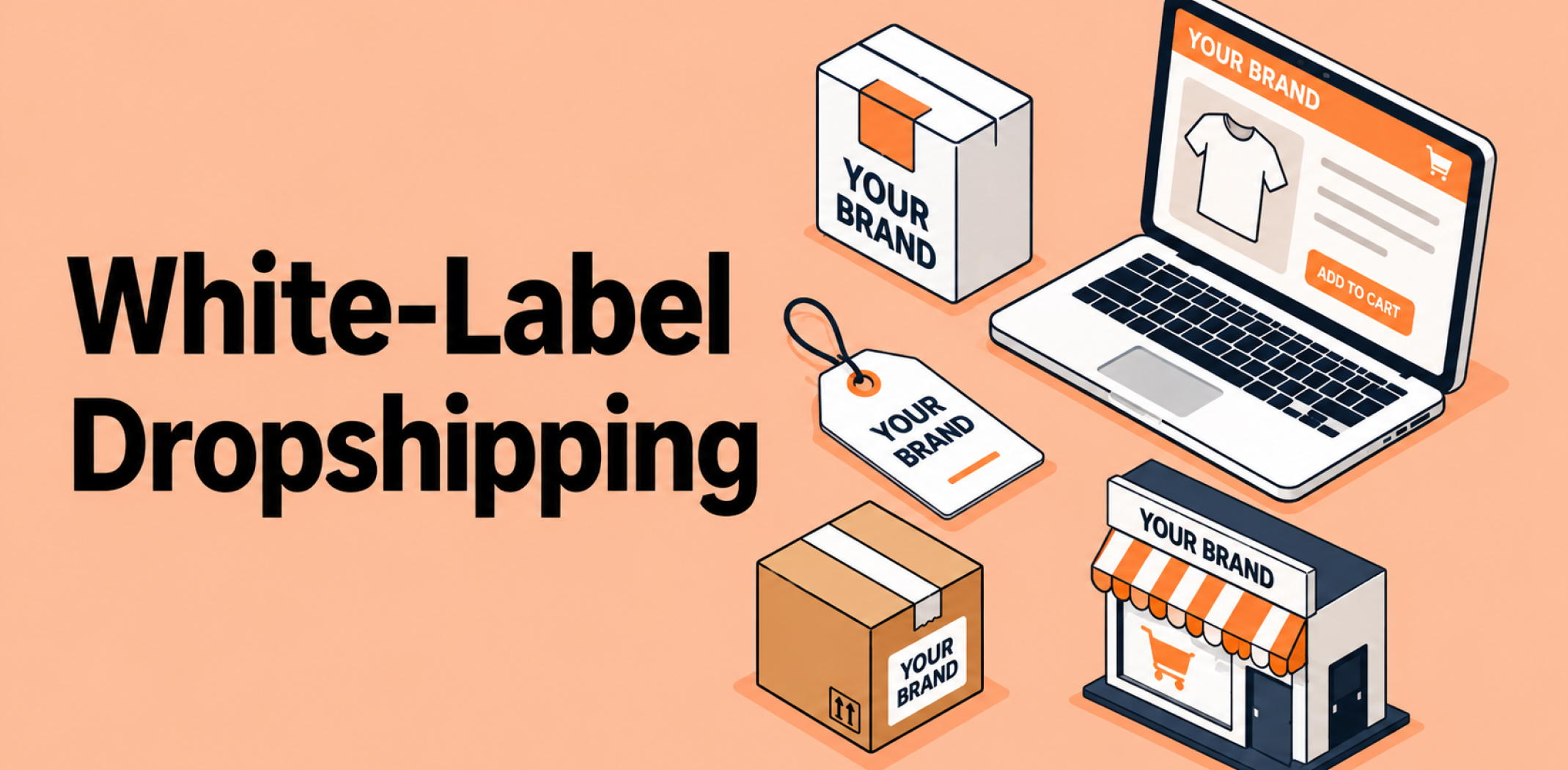
White-label dropshipping is a fulfillment model in which a seller markets and sells generic products under a proprietary brand name, while a third-party supplier manufactures, labels, and ships those products directly to the end customer.
In standard dropshipping, a seller lists and resells products exactly as the supplier offers them, without modification to branding or packaging. White-label dropshipping differs in that the seller applies its own brand identity – store name, logo, or custom packaging instructions – to otherwise unbranded or generic products before they reach the customer.
The supplier fulfills orders on the seller’s behalf, and the end customer receives a package that appears to come from the seller’s brand rather than the manufacturer.
The model sits between conventional dropship arrangements and full private label dropshipping, which typically involves exclusive product formulations or custom manufacturing runs. White-label products are pre-made by the supplier and made available to multiple sellers; the differentiating element is the brand layer the seller applies on top.
How white-label dropshipping works
- The seller identifies a generic product from a supplier that accepts white-label or blind dropshipping arrangements.
- The seller registers a brand name, designs a logo, and prepares branded assets such as packaging inserts, labels, or custom packaging specifications.
- The seller lists the product in an online store under its own brand name and sets a retail price.
- When a customer places an order, the seller forwards the order details to the supplier, along with any branding instructions.
- The supplier picks, packs, and ships the product using the seller’s branded packaging or inserts – with no mention of the supplier’s identity on the parcel.
- The customer receives the order appearing to have shipped from the seller’s brand; the supplier’s role remains invisible.
Example
A seller launches an online store focused on personal care products. The seller sources an unbranded vitamin C serum from a supplier on AliExpress that offers white-label fulfillment. The seller creates a brand called “Lumé Skin,” has custom labels printed, and sends them to the supplier. When a customer orders the serum at $34, the supplier fills the bottle, applies the Lumé Skin label, and ships directly to the customer. The customer receives a branded product; the supplier’s name appears nowhere on the package.
Key characteristics
- Supplier-fulfilled branding: The third-party supplier applies the seller’s label, packaging, or inserts before shipping – the seller never handles the physical product.
- Generic product base: The underlying product is typically a standard item the supplier offers to multiple sellers simultaneously, not an exclusive formulation.
- Brand ownership: The seller controls the brand identity presented to the customer, including name, logo, and packaging design.
- Higher perceived value: Branded products generally command higher retail prices than unbranded equivalents, which can improve return on investment relative to generic dropshipping.
- Minimum order requirements: Some suppliers impose minimum order quantities for white-label packaging or custom inserts, unlike standard dropshipping which often operates on a per-order basis.
Related terms
- Dropship – the base fulfillment model on which white-label dropshipping is built, involving a supplier shipping goods directly to the customer on the seller’s behalf.
- Blind dropshipping – a related practice in which the supplier omits its identity from packaging, a common requirement in white-label arrangements.
- Supplier – the manufacturer or distributor responsible for producing, labeling, and shipping products in a white-label arrangement.
- Product positioning – the strategy of placing a product in the market relative to competitors, which branded presentation in white-label dropshipping directly supports.
- Niche market – a defined buyer segment; white-label dropshipping is commonly used to build brand authority within a specific niche.
Frequently asked questions
What is the difference between white-label and private label dropshipping?
White-label products are generic, pre-manufactured items that a supplier offers to multiple sellers with custom branding applied. Private label dropshipping typically goes further – the seller commissions a product developed or formulated to their specification, which may be exclusive to their brand. White-label arrangements are generally easier to enter and require less investment.
Do white-label dropshipping suppliers ship without their own branding?
Yes – suppliers that offer white-label or blind dropshipping services ship orders without including their own name, logo, or contact details on the package. The parcel reaches the customer appearing to originate from the seller’s brand.
Is white-label dropshipping more profitable than standard dropshipping?
White-label dropshipping can yield higher margins because branded products often support higher retail prices than generic equivalents. However, branding costs – such as label design and custom packaging – represent an additional expense that must be factored into pricing. Whether it produces greater profit depends on the product category, supplier pricing, and the seller’s ability to build brand recognition.
What types of products are commonly sold through white-label dropshipping?
Categories commonly used for white-label dropshipping include personal care, supplements, pet products, kitchenware, and apparel accessories – items where branding adds perceived value and where the underlying product is widely available from generic manufacturers.
AliDropship: An all-in-one platform for starting dropshipping in 2026
AliDropship is a dropshipping platform that covers store creation, product imports, order automation, and marketing within a single system. It is designed for users with no prior ecommerce experience, though it also supports scaling for more established stores.
🛍️ Free turnkey store
New users receive a free pre-built store – set up, designed, and stocked with products. The store includes a ready-to-use product catalogue and a standard storefront design. It also comes with hosting, a domain, SSL, and payment systems already set up and included.
📦 Products
The platform provides access to a product catalogue covering both trending and niche items, with one-click import to your store. The catalogue is updated regularly to reflect current market availability. Products can be browsed, filtered, and added without leaving the platform.
🚚 Shipping & fulfillment
AliDropship provides access to a vast catalogue of products from global suppliers and handles order fulfillment automatically once a purchase is made. Customers receive tracking information directly, and orders are processed without manual intervention from the store owner.
📣 Marketing & promotion tools
The platform includes built-in marketing tools covering email campaigns, discount management, SEO settings, and social media integration. These are available within the dashboard and do not require third-party subscriptions for basic use.
👌 Ease of use
AliDropship requires no coding knowledge. The dashboard contains all the necessary tools for managing your store, products, and orders in one place. Additional features and products can be added as the store grows without rebuilding the existing setup.
What is the difference between white-label and private label dropshipping?
Do white-label dropshipping suppliers ship without their own branding?
Is white-label dropshipping more profitable than standard dropshipping?
What types of products are commonly sold through white-label dropshipping?
Are you ready to become an owner
of a profitable online business?
Free Dropshipping Guide