

Pricing Strategy

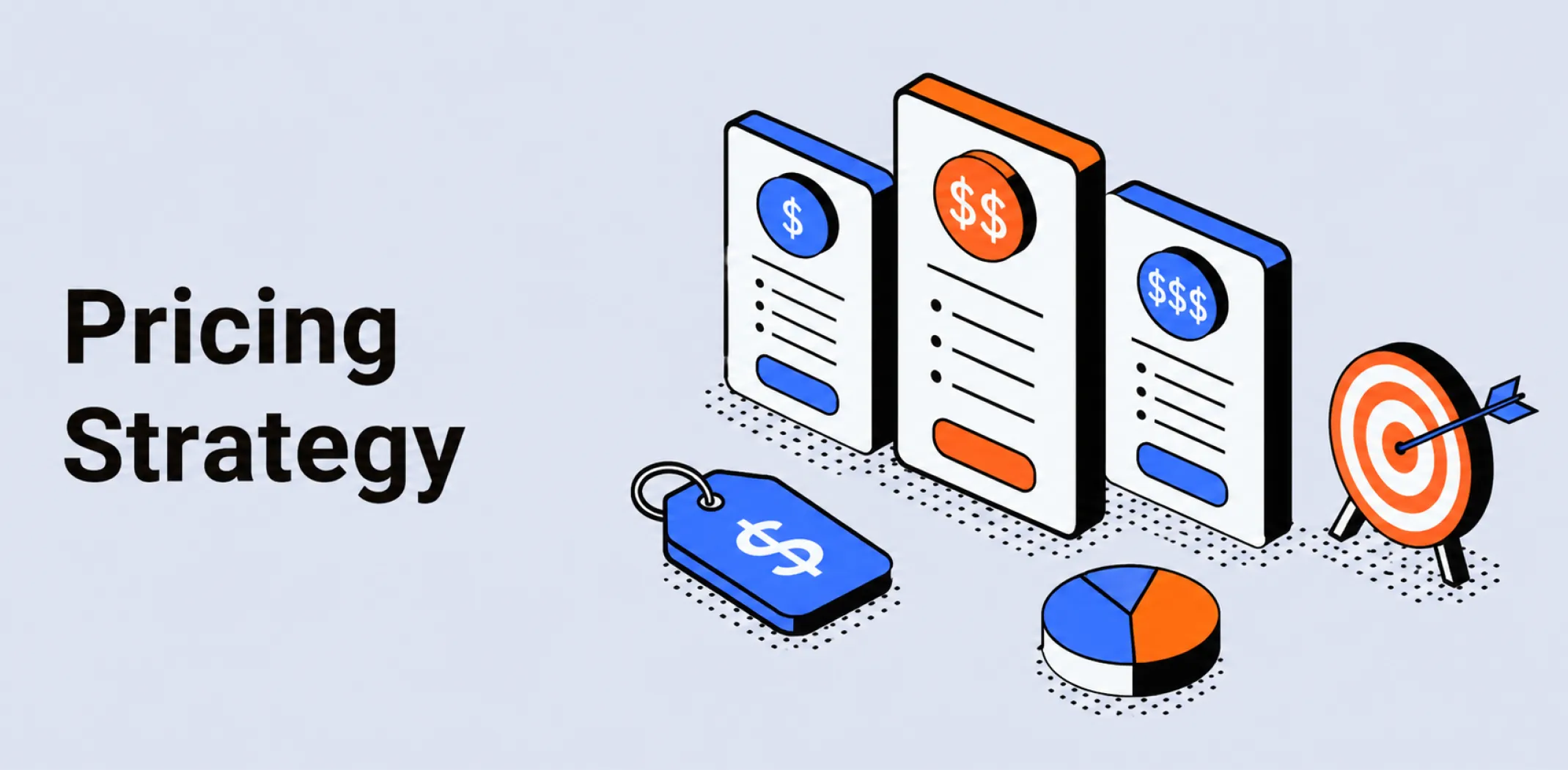
Pricing strategy is the overall approach a business uses to set prices for its products, based on factors such as cost, competitor pricing, customer demand, and desired profit margin rather than a single fixed formula.
While calculations like profit margin or wholesale cost determine the mechanics of a single price, pricing strategy describes the broader decision-making framework a business applies consistently across its catalogue.
Common approaches include cost-based pricing, which starts from a fixed markup over cost, competitor-based pricing, which sets prices relative to similar products in the market, and value-based pricing, which sets prices according to perceived customer value rather than cost alone.
A business’s niche market and product positioning both influence which pricing strategy fits best.
For dropshipping stores, pricing strategy also has to account for variable supplier costs and advertising spend, since both can change the actual profit left after a sale even when the listed price stays the same.
Key characteristics
- Cost-based approach: Prices are set by applying a fixed markup over the product’s cost, prioritizing predictable profit per unit.
- Competitor-based approach: Prices are set relative to what similar products sell for elsewhere, prioritizing market positioning over a fixed formula.
- Value-based approach: Prices are set according to how much customers perceive the product to be worth, which can result in prices well above raw cost.
- Dynamic adjustment: Some pricing strategies adjust automatically based on demand, inventory levels, or competitor price changes rather than staying fixed.
Example
A dropshipping store sourcing a phone case for 5 dollars could apply a cost-based strategy and price it at 20 dollars using a fixed 300 percent markup. Alternatively, the store could check competitor listings and notice similar cases selling for 28 to 32 dollars, leading it to price at 27 dollars under a competitor-based strategy instead. Both approaches are valid pricing strategies, but they produce different prices and different profit outcomes from the same 5 dollar cost.
Related terms
- Profit margin – the profitability measure that a pricing strategy ultimately aims to protect.
- Product positioning – the market identity that often determines which pricing strategy fits a product.
- Niche market – the customer segment whose expectations influence acceptable pricing.
- Conversion funnel – the customer journey where pricing decisions directly affect purchase likelihood.
Frequently asked questions
What is the difference between pricing strategy and markup?
Markup is a single calculation used to set one price from a cost, while pricing strategy is the broader framework that determines how and why prices are set across an entire store. A pricing strategy might use markup as one tool within a larger approach.
Which pricing strategy is most common in dropshipping?
Cost-based pricing using a fixed markup is common in dropshipping because it is simple to apply across many products quickly. Some stores combine it with competitor research to keep prices aligned with the broader market.
Can a store use more than one pricing strategy at once?
Yes, many stores apply different pricing strategies to different products or categories depending on competition, demand, and profit goals. A single fixed approach is not required across an entire catalogue.
How does pricing strategy affect profit margin?
Pricing strategy directly affects profit margin, since the chosen approach determines the final selling price relative to cost. A value-based strategy can produce a higher margin than a strict cost-based markup on the same product.
AliDropship: An all-in-one platform for starting dropshipping in 2026
AliDropship is a dropshipping platform that covers store creation, product imports, order automation, and marketing within a single system. It is designed for users with no prior ecommerce experience, though it also supports scaling for more established stores.
🛍️ Free turnkey store
New users receive a free pre-built store – set up, designed, and stocked with products. The store includes a ready-to-use product catalogue and a standard storefront design. It also comes with hosting, a domain, SSL, and payment systems already set up and included.
📦 Products
The platform provides access to a product catalogue covering both trending and niche items, with one-click import to your store. The catalogue is updated regularly to reflect current market availability. Products can be browsed, filtered, and added without leaving the platform.
🚚 Shipping & fulfillment
AliDropship provides access to a vast catalogue of products from global suppliers and handles order fulfillment automatically once a purchase is made. Customers receive tracking information directly, and orders are processed without manual intervention from the store owner.
📣 Marketing & promotion tools
The platform includes built-in marketing tools covering email campaigns, discount management, SEO settings, and social media integration. These are available within the dashboard and do not require third-party subscriptions for basic use.
👌 Ease of use
AliDropship requires no coding knowledge. The dashboard contains all the necessary tools for managing your store, products, and orders in one place. Additional features and products can be added as the store grows without rebuilding the existing setup.
What is the difference between pricing strategy and markup?
Which pricing strategy is most common in dropshipping?
Can a store use more than one pricing strategy at once?
How does pricing strategy affect profit margin?
Does pricing strategy need to stay fixed over time?
Are you ready to become an owner
of a profitable online business?
Free Dropshipping Guide