

Off-Page SEO

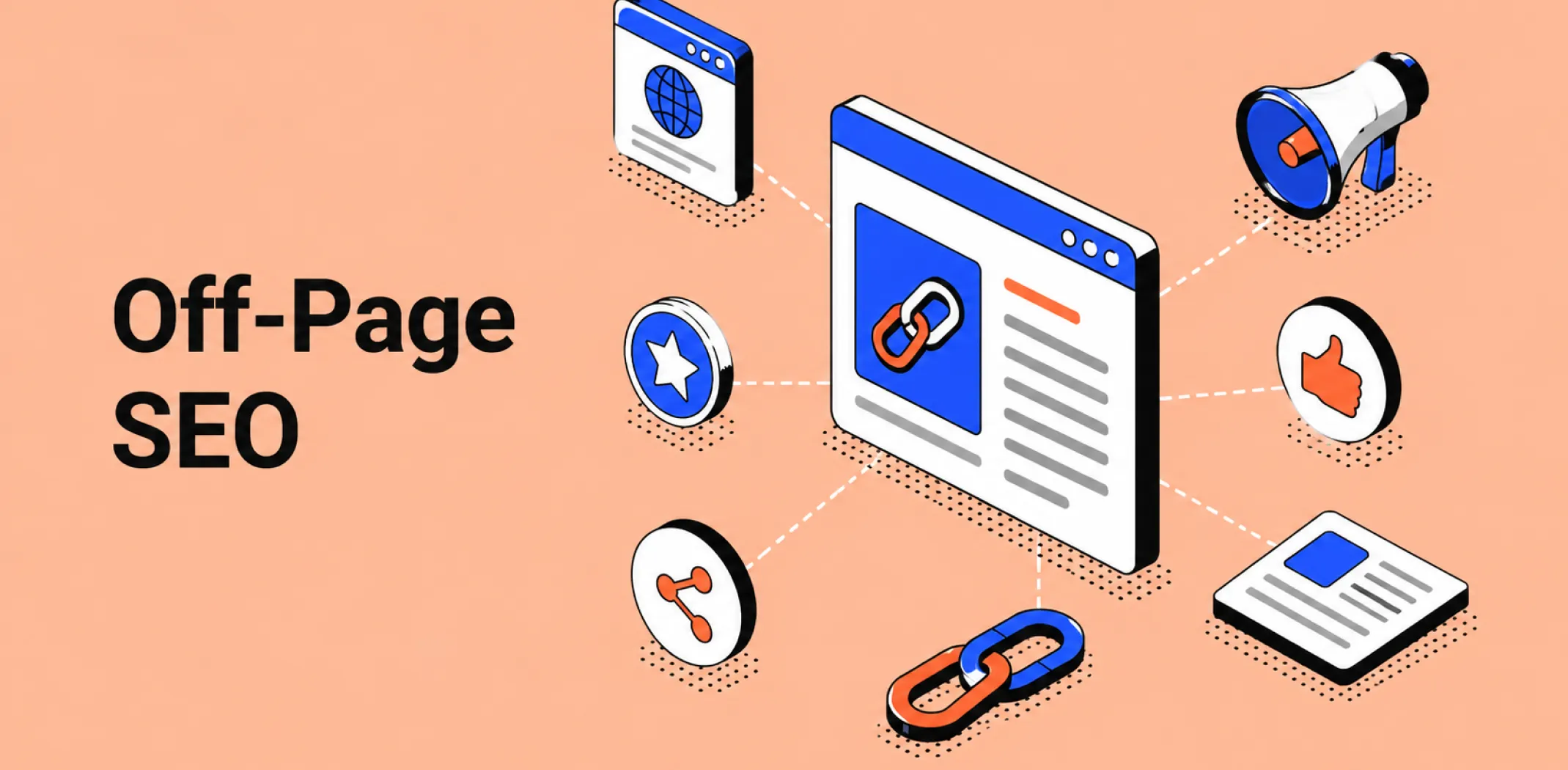
Off-page SEO is the practice of building external signals, such as backlinks and brand mentions that indicate a website’s authority and trustworthiness to search engines.
Off-page SEO is centered on backlinks, which are links from other websites pointing back to a store’s pages. Search engines treat backlinks, particularly from established or relevant sites, as a signal that a page’s content is credible and worth ranking.
Off-page SEO also includes activities such as guest posting, influencer collaborations, and brand mentions across other websites and social platforms, even when those mentions do not include a direct link.
Off-page SEO differs from on-page SEO, which involves changes made directly to a page’s content and structure, and from technical SEO, which addresses site-wide factors like loading speed. Because off-page signals depend on other websites choosing to reference a store, results are less directly controllable and often take longer to build than on-page changes.
How off-page SEO works
- The store owner identifies websites, blogs, or publications relevant to its niche.
- The store owner creates content, such as a product review pitch or a guest article, worth linking to.
- The store owner reaches out to site owners, bloggers, or influencers to request a link or feature.
- Other websites publish content that links back to the store’s pages.
- Search engine crawlers discover these backlinks as they revisit the linking pages.
- The engine factors the quantity and quality of backlinks into the store’s perceived authority when ranking its pages.
Example
A store selling skincare products sends sample products to three beauty bloggers in exchange for honest reviews. Two of the bloggers publish articles that link back to specific product pages on the store’s website. Over the following months, search engines index these backlinks, and the linked product pages gradually gain visibility for related search terms, supplementing the results the store already sees from on-page SEO work.
Key characteristics
- Backlink quality: Links from established, relevant, and reputable sites generally carry more weight than links from low-quality or unrelated sites.
- Domain authority: A cumulative measure of how trustworthy a website appears based on its backlink profile, often used as a general indicator rather than a precise ranking factor.
- Brand mentions: References to a store or product on other sites, which can support off-page SEO even without a direct link.
- Slower timeline: Off-page results typically build gradually, since they depend on other sites choosing to link to or mention a store.
Related terms
- SEO – the broader practice off-page SEO is one component of.
- On-page SEO – a related practice focused on elements within a single page rather than external signals.
- Influencer – a content creator whose mentions or reviews can contribute to a store’s off-page SEO.
- Ecommerce – the broader business activity off-page SEO is commonly used to support.
Frequently asked questions
How is off-page SEO different from link building?
Link building is one specific tactic within off-page SEO, while off-page SEO also includes brand mentions, influencer collaborations, and other signals that do not always involve a direct link.
Can off-page SEO work without any backlinks?
Backlinks are the primary signal in off-page SEO, though brand mentions and other external references can provide some supporting value even without a link.
How long does off-page SEO take to affect rankings?
Off-page SEO results generally take longer than on-page changes, often several months, since they depend on other websites publishing and search engines recrawling the linking content.
AliDropship: An all-in-one platform for starting dropshipping in 2026
AliDropship is a dropshipping platform that covers store creation, product imports, order automation, and marketing within a single system. It is designed for users with no prior ecommerce experience, though it also supports scaling for more established stores.
🛍️ Free turnkey store
New users receive a free pre-built store – set up, designed, and stocked with products. The store includes a ready-to-use product catalogue and a standard storefront design. It also comes with hosting, a domain, SSL, and payment systems already set up and included.
📦 Products
The platform provides access to a product catalogue covering both trending and niche items, with one-click import to your store. The catalogue is updated regularly to reflect current market availability. Products can be browsed, filtered, and added without leaving the platform.
🚚 Shipping & fulfillment
AliDropship provides access to a vast catalogue of products from global suppliers and handles order fulfillment automatically once a purchase is made. Customers receive tracking information directly, and orders are processed without manual intervention from the store owner.
📣 Marketing & promotion tools
The platform includes built-in marketing tools covering email campaigns, discount management, SEO settings, and social media integration. These are available within the dashboard and do not require third-party subscriptions for basic use.
👌 Ease of use
AliDropship requires no coding knowledge. The dashboard contains all the necessary tools for managing your store, products, and orders in one place. Additional features and products can be added as the store grows without rebuilding the existing setup.
What is off-page SEO?
How important are backlinks for off-page SEO?
What counts as a high quality backlink?
Can social media activity help off-page SEO?
How long does off-page SEO take to work?
Are you ready to become an owner
of a profitable online business?
Free Dropshipping Guide