

On-Page SEO

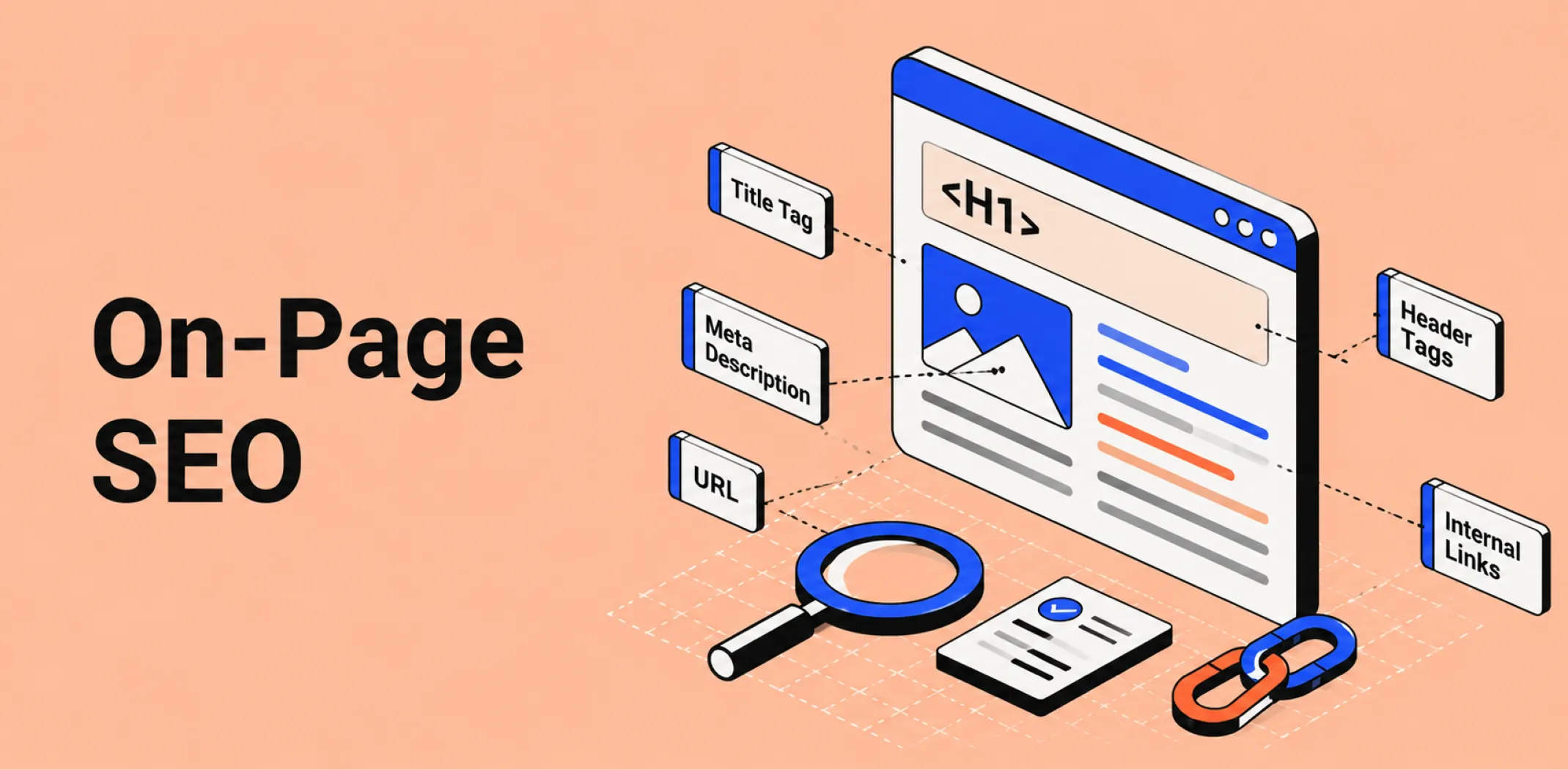
On-page SEO is the practice of optimizing individual elements on a single webpage, such as titles, headings, and content, to improve that page’s ranking for specific search queries.
On-page SEO covers everything a store owner can control directly on a page, including the title tag, meta description, header structure, body content, image alt text, internal links, and URL.
It is distinct from technical SEO, which addresses site-wide factors like loading speed, and from off-page SEO, which relies on external signals such as backlinks. On-page work is typically guided by keyword research, since each page is optimized around a specific term or small group of related terms that match what customers search for.
Within dropshipping, on-page SEO is commonly applied to product pages, category pages, and blog posts to help them rank for relevant purchase-related searches rather than relying solely on paid traffic, an approach outlined further in how to improve SEO.
How on-page SEO works
- The store owner identifies a target keyword for a specific page based on prior keyword research.
- The store owner writes a title tag and meta description that include the keyword naturally.
- The store owner structures the page with headings that reflect the keyword and related subtopics.
- The store owner incorporates the keyword and related terms naturally within the body content.
- The store owner adds descriptive alt text to images and internal links to related pages.
- The store owner publishes the page and monitors its ranking for the target keyword over time.
Example
A store selling running shoes optimizes a category page by setting the title tag to Running Shoes for Men and Women, writing a meta description that mentions key features, and organizing the page with headings such as Best Running Shoes for Trail and Best Running Shoes for Road. Product images are given descriptive alt text, and internal links point to related pages such as Running Accessories. Several weeks later, the page begins ranking for searches related to those specific terms.
Key characteristics
- Title tag: The clickable headline shown in search results, typically written to include the page’s target keyword.
- Header hierarchy: The use of H1, H2, and H3 tags to organize content and signal topic structure to search engines.
- Keyword placement: Natural inclusion of the target keyword and related terms within the title, headings, and body content.
- Internal linking: Links from one page on a site to another, used to help search engines and visitors discover related content.
Related terms
- SEO – the broader practice on-page SEO is one component of.
- Niche market – a narrow customer segment on-page keyword choices are often built around.
- Landing page – a page type commonly optimized using on-page SEO techniques.
- Product positioning – a strategy on-page content can help communicate to search users.
- Conversion funnel – the stages a visitor moves through after landing on an optimized page.
Frequently asked questions
How is on-page SEO different from technical SEO?
On-page SEO focuses on elements within a specific page, such as titles and content, while technical SEO addresses site-wide factors like loading speed and crawlability that affect every page.
Does on-page SEO apply to every page on a store?
It can be applied to any page, though stores typically prioritize product, category, and high-traffic blog pages first since these usually drive the most search visibility.
Can a page rank well without on-page SEO?
It is possible for a page to rank on the strength of backlinks or domain authority alone, but on-page SEO generally improves both relevance and the likelihood of ranking for a specific search term.
AliDropship: An all-in-one platform for starting dropshipping in 2026
AliDropship is a dropshipping platform that covers store creation, product imports, order automation, and marketing within a single system. It is designed for users with no prior ecommerce experience, though it also supports scaling for more established stores.
🛍️ Free turnkey store
New users receive a free pre-built store – set up, designed, and stocked with products. The store includes a ready-to-use product catalogue and a standard storefront design. It also comes with hosting, a domain, SSL, and payment systems already set up and included.
📦 Products
The platform provides access to a product catalogue covering both trending and niche items, with one-click import to your store. The catalogue is updated regularly to reflect current market availability. Products can be browsed, filtered, and added without leaving the platform.
🚚 Shipping & fulfillment
AliDropship provides access to a vast catalogue of products from global suppliers and handles order fulfillment automatically once a purchase is made. Customers receive tracking information directly, and orders are processed without manual intervention from the store owner.
📣 Marketing & promotion tools
The platform includes built-in marketing tools covering email campaigns, discount management, SEO settings, and social media integration. These are available within the dashboard and do not require third-party subscriptions for basic use.
👌 Ease of use
AliDropship requires no coding knowledge. The dashboard contains all the necessary tools for managing your store, products, and orders in one place. Additional features and products can be added as the store grows without rebuilding the existing setup.
What is on-page SEO?
What are the main elements of on-page SEO?
How many keywords should one page target?
Does on-page SEO affect page load speed?
How often should on-page SEO be updated?
Are you ready to become an owner
of a profitable online business?
Free Dropshipping Guide