

SEO (Search Engine Optimization)

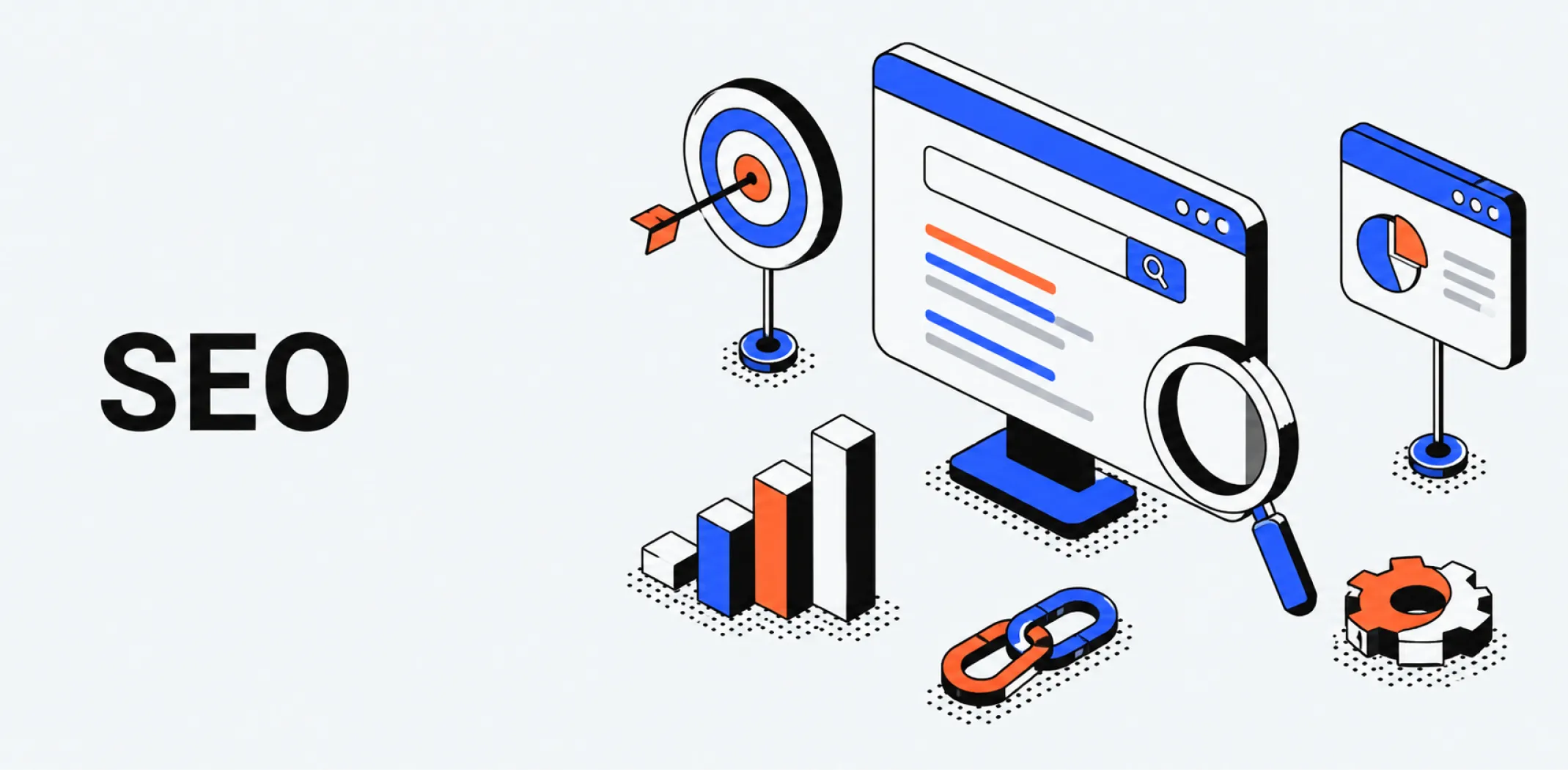
SEO, short for search engine optimization, is the practice of adjusting a website’s content, structure, and technical setup to improve its ranking in unpaid search engine results.
Search engines such as Google use automated software to crawl web pages, index their content, and rank them for relevant search queries based on hundreds of signals.
SEO work is generally grouped into three areas: on-page factors, such as titles, headings, and content quality; technical factors, such as site speed and mobile usability; and off-page factors, such as backlinks from other websites. SEO produces organic traffic, meaning visits that are not paid for directly, which distinguishes it from pay-per-click advertising.
Keyword research typically forms the starting point of an SEO strategy, since it identifies the specific terms and phrases a store’s target customers use when searching. Content, page structure, and internal links are then built around these terms to help search engines understand what each page is about and who it serves, an approach covered in more detail in ecommerce SEO guidance.
For a dropshipping store, SEO is a long-term channel that can reduce reliance on paid ads over time, though it typically takes weeks or months to produce measurable ranking improvements.
Because ranking algorithms weigh many factors and change periodically, SEO is treated as an ongoing practice rather than a one-time setup, and results on one page do not guarantee similar results on another without repeating the same optimization process.
How SEO works
- Search engine bots crawl the store’s pages to discover new or updated content.
- The engine indexes each page’s content, structure, and metadata into a searchable database.
- The store owner researches target keywords that match customer search intent.
- The store owner optimizes on-page elements, such as titles, headings, and product descriptions, around those keywords.
- The store owner improves technical factors, such as site speed and mobile usability, that affect how easily pages are crawled.
- Other websites link back to the store’s pages, contributing to its perceived authority.
- The search engine’s algorithm ranks the page when a matching search query occurs, weighing relevance and authority signals together.
Example
A dropshipping store selling ceramic mugs rewrites its product titles and descriptions to include terms customers commonly search, such as handmade style ceramic mug, rather than generic labels like Mug 4. Over several months, the store also improves page load speed, fixes broken internal links, and earns a few backlinks from home decor blogs, following steps similar to those in an SEO ecommerce checklist. As a result, several product pages begin appearing on the first page of search results for those terms, generating visits that do not require ongoing ad spend and that continue even when the daily ad budget is reduced.
Key characteristics
- On-page optimization: Adjustments made directly on a webpage, such as titles, headings, and content, to target specific search queries.
- Technical optimization: Site-level factors, such as loading speed, mobile responsiveness, and crawlability, that affect how easily search engines can access a page.
- Off-page optimization: External signals, primarily backlinks from other websites, that indicate a page’s authority and trustworthiness.
- Algorithm dependent: Search engines periodically update their ranking algorithms, which can shift rankings even without changes to a page itself.
- Long-term timeline: Meaningful ranking changes typically take weeks or months to appear after optimization work is completed.
Related terms
- Ecommerce – the broader business activity SEO is commonly used to support.
- Niche market – a narrow customer segment SEO keyword research often targets.
- Landing page – a page type that is frequently optimized as part of an SEO strategy.
- Product positioning – a strategy SEO content can help communicate to search users.
- Conversion funnel – the stages an organic visitor moves through after arriving from a search result.
Frequently asked questions
Is SEO the same as paid search advertising?
No, SEO focuses on improving unpaid, organic search rankings, while paid search advertising involves paying for ad placement above or alongside organic results.
How long does SEO take to show results?
Most SEO changes take weeks to several months to produce measurable ranking improvements, since search engines need time to recrawl and reassess a page.
Does SEO apply to product pages or only blog content?
SEO applies to any page a store wants to rank, including product pages, category pages, and blog content, though the specific optimization tactics can differ by page type.
Can SEO rankings change without any changes to a page?
Yes, since search engines periodically update their ranking algorithms, a page’s position can shift even if its content and structure remain unchanged.
AliDropship: An all-in-one platform for starting dropshipping in 2026
AliDropship is a dropshipping platform that covers store creation, product imports, order automation, and marketing within a single system. It is designed for users with no prior ecommerce experience, though it also supports scaling for more established stores.
🛍️ Free turnkey store
New users receive a free pre-built store – set up, designed, and stocked with products. The store includes a ready-to-use product catalogue and a standard storefront design. It also comes with hosting, a domain, SSL, and payment systems already set up and included.
📦 Products
The platform provides access to a product catalogue covering both trending and niche items, with one-click import to your store. The catalogue is updated regularly to reflect current market availability. Products can be browsed, filtered, and added without leaving the platform.
🚚 Shipping & fulfillment
AliDropship provides access to a vast catalogue of products from global suppliers and handles order fulfillment automatically once a purchase is made. Customers receive tracking information directly, and orders are processed without manual intervention from the store owner.
📣 Marketing & promotion tools
The platform includes built-in marketing tools covering email campaigns, discount management, SEO settings, and social media integration. These are available within the dashboard and do not require third-party subscriptions for basic use.
👌 Ease of use
AliDropship requires no coding knowledge. The dashboard contains all the necessary tools for managing your store, products, and orders in one place. Additional features and products can be added as the store grows without rebuilding the existing setup.
What does SEO stand for?
How long does it take to see SEO results?
What are the main types of SEO?
Is SEO more cost effective than paid ads over time?
Do search engine algorithm updates affect SEO results?
Are you ready to become an owner
of a profitable online business?
Free Dropshipping Guide