

Instagram Ads

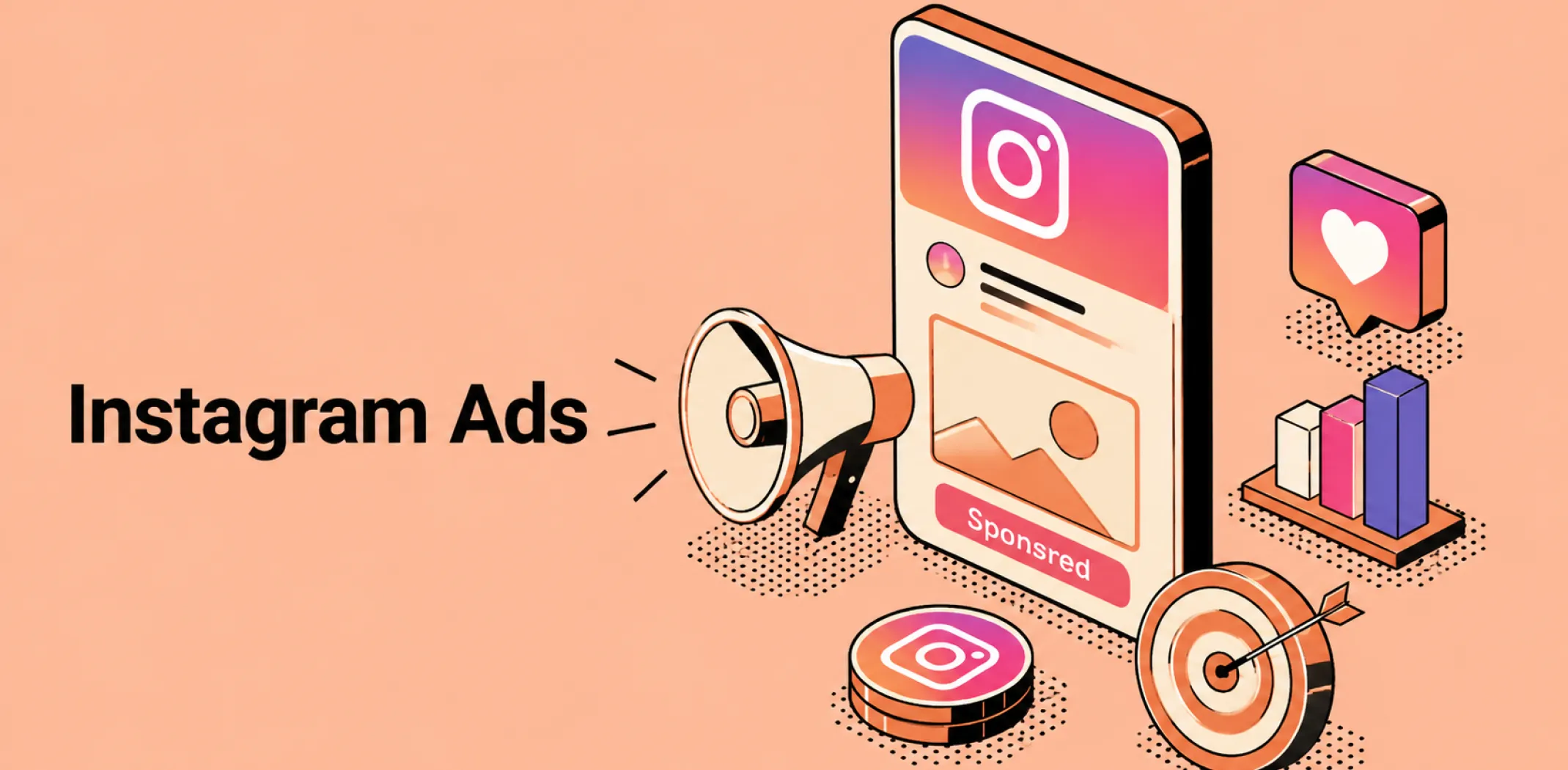
Instagram Ads are paid promotional placements delivered to audiences on Instagram – across feed, Stories, Reels, Explore, and Shop surfaces – created and managed through Meta Ads Manager as part of the broader Meta Ads platform, using the same audience targeting, pixel infrastructure, and campaign structure as Facebook Ads but serving within Instagram’s distinctly visual content environment.
Instagram Ads are not a separate advertising platform – they are a placement option within the Meta Ads system, created in the same Meta Ads Manager interface used for Facebook Ads and drawing on the same audience data, Meta Pixel events, and campaign objectives.
What distinguishes Instagram Ads from other Meta placements is the platform’s content environment: Instagram is a visual-first platform where audiences engage primarily with image and video content, and where ad creative that matches the aesthetic and format of organic Instagram content consistently outperforms content that reads as a conventional advertisement.
This creative alignment – producing ads that look and feel native to the platform rather than imported from a display advertising context – is one of the most significant determinants of Instagram Ads performance and distinguishes effective Instagram creative strategy from that used on other paid channels.
For dropshipping and ecommerce businesses, Instagram Ads are particularly effective for product categories where visual presentation is central to purchase motivation – fashion, beauty, home decor, fitness equipment, jewelry, and lifestyle accessories consistently generate strong performance on Instagram because the platform’s image-driven format allows products to be shown in aspirational or contextual settings that convey value more effectively than a product-on-white-background image.
Instagram’s user demographics skew younger than Facebook’s – with particularly strong engagement among users aged 18 to 34 – making it the more appropriate primary placement for stores targeting that age segment.
The platform’s Reels placement, introduced as Instagram’s short-form video format, has become one of the highest-reach placements within the Meta ecosystem and is increasingly used for top-of-funnel ecommerce prospecting through video creative that demonstrates products in use.
Example
A dropshipping store selling minimalist jewelry creates a Meta Ads campaign with the Sales objective and selects Instagram feed and Reels as the only active placements, excluding Facebook and the Audience Network based on prior campaign data showing Instagram consistently produces a lower cost per acquisition for its target demographic of women aged 22 to 38. The campaign runs two ad formats simultaneously: a static carousel ad in the feed showing five product images against a clean white background with pricing overlaid, and a 15-second Reels video showing the jewelry being worn in a lifestyle context with no voiceover and on-screen text. After ten days the Reels video produces a cost per acquisition of $8.40 against the carousel’s $14.20, and the store owner shifts 70% of the campaign budget to the Reels format while keeping the carousel active for retargeting audiences who have already seen the video.
Key characteristics
- Visual-first creative environment: Instagram’s content format is built around images and short-form video, and ad creative that matches the platform’s aesthetic – lifestyle imagery, native video, minimal text overlays – consistently outperforms conventional advertising formats that stand out as ads rather than blending with organic content.
- Multiple placement surfaces: Instagram Ads are served across five distinct surfaces – feed, Stories, Reels, Explore, and Shop – each with different format requirements, audience engagement patterns, and creative specifications that affect how the same product message is received and acted upon.
- Younger audience demographics: Instagram’s user base skews younger than Facebook’s, with the 18 to 34 age segment representing a disproportionately large share of active users and ad impressions – making Instagram the more appropriate primary placement for stores whose target customer falls within that demographic range.
- Shared Meta infrastructure: Instagram Ads share the same pixel data, custom audiences, lookalike audiences, and campaign objectives as Facebook Ads – meaning a store’s existing Meta Ads setup, conversion data, and audience pools apply directly to Instagram placements without separate configuration.
- Reels reach advantage: Instagram Reels placements offer broader organic-adjacent reach than feed placements at lower cost per impression, making them particularly effective for top-of-funnel prospecting campaigns where video creative can demonstrate a product to cold audiences who have not previously encountered the brand.
Related terms
- Meta Ads – the unified advertising platform of which Instagram Ads are one placement option, managed through the same Meta Ads Manager interface and sharing the same audience, pixel, and campaign infrastructure as all other Meta placements.
- Facebook Ads – the colloquial name for paid advertising delivered through Facebook placements within the Meta Ads system, which shares all campaign infrastructure with Instagram Ads and is commonly run alongside it within the same campaign.
- Meta Pixel – the tracking code that records purchase and behavioral events on a store’s website and feeds conversion data to the Meta Ads platform, enabling Instagram Ads campaign optimization, retargeting audience building, and return on ad spend reporting.
- Influencer – a content creator whose Instagram presence is used as an organic or paid channel for product promotion, often running alongside Instagram Ads campaigns as a complementary awareness and social proof mechanism for the same product.
- Retargeting – a core Instagram Ads use case in which past website visitors segmented by pixel-recorded behavior are served tailored ads within Instagram feed, Stories, and Reels placements to re-engage them toward a conversion.
Frequently asked questions
How are Instagram Ads different from Facebook Ads?
Instagram Ads and Facebook Ads are both managed through Meta Ads Manager and share the same audience targeting, pixel data, and campaign structure – the difference is the platform on which the ads are served and the content environment in which they appear.
Instagram is a visual-first platform where image and video creative dominates, audiences skew younger, and ad formats are built around immersive full-screen and scroll-based experiences such as Stories and Reels. Facebook’s feed and placement environment is more text-tolerant and serves an older average demographic.
The same campaign can serve both simultaneously through Advantage+ placements, with Meta’s algorithm determining which placement to use for each impression based on estimated conversion efficiency.
What ad formats are available for Instagram Ads?
Instagram Ads are available in several formats across its placement surfaces: single image and single video ads in the feed and Explore tab; carousel ads displaying multiple images or videos in a swipeable format; Stories ads that occupy the full screen in a vertical format between organic Stories; Reels ads that appear between organic Reels content in a full-screen vertical video format; and Shopping ads that tag products directly within the ad creative and link to a product detail page.
Stories and Reels placements require vertical video or image assets at a 9:16 aspect ratio, while feed placements support square (1:1) and portrait (4:5) formats. Producing platform-native creative – particularly vertical video for Stories and Reels – significantly improves performance compared to repurposing horizontal or square assets across all placements.
Which product categories perform best on Instagram Ads?
Product categories where visual presentation is central to purchase motivation consistently perform strongly on Instagram Ads – including fashion and apparel, beauty and skincare, home decor and interior accessories, jewelry, fitness and wellness products, and lifestyle accessories.
These categories benefit from Instagram’s image and video format because the platform allows products to be shown in aspirational or contextual settings that communicate desirability more effectively than a text description or product specification list.
Categories where purchase decisions are driven primarily by price comparison, technical specifications, or functional utility – such as industrial tools, software, or commodity household products – tend to generate stronger performance on search-based channels such as Google Shopping than on Instagram’s visually driven environment.
Can Instagram Ads be run without a Facebook account?
No – Instagram Ads are created and managed through Meta Ads Manager, which requires a Facebook account and a connected Facebook Page to operate. Even if the advertiser has no intention of running ads on Facebook placements, a Facebook Page must exist and be connected to the Meta Ads account before Instagram Ads can be created.
The Facebook Page does not need to be active or publicly visible for Instagram Ads to run – it functions as an administrative requirement of the Meta Ads infrastructure rather than as an active content channel. Instagram business accounts are connected to the ad account separately and serve as the identity shown on Instagram ad placements.
AliDropship: An all-in-one platform for starting dropshipping in 2026
AliDropship is a dropshipping platform that covers store creation, product imports, order automation, and marketing within a single system. It is designed for users with no prior ecommerce experience, though it also supports scaling for more established stores.
🛍️ Free turnkey store
New users receive a free pre-built store – set up, designed, and stocked with products. The store includes a ready-to-use product catalogue and a standard storefront design. It also comes with hosting, a domain, SSL, and payment systems already set up and included.
📦 Products
The platform provides access to a product catalogue covering both trending and niche items, with one-click import to your store. The catalogue is updated regularly to reflect current market availability. Products can be browsed, filtered, and added without leaving the platform.
🚚 Shipping & fulfillment
AliDropship provides access to a vast catalogue of products from global suppliers and handles order fulfillment automatically once a purchase is made. Customers receive tracking information directly, and orders are processed without manual intervention from the store owner.
📣 Marketing & promotion tools
The platform includes built-in marketing tools covering email campaigns, discount management, SEO settings, and social media integration. These are available within the dashboard and do not require third-party subscriptions for basic use.
👌 Ease of use
AliDropship requires no coding knowledge. The dashboard contains all the necessary tools for managing your store, products, and orders in one place. Additional features and products can be added as the store grows without rebuilding the existing setup.
How are Instagram Ads different from Facebook Ads?
What ad formats are available for Instagram Ads?
Instagram Ads are available in several formats across its placement surfaces: single image and single video ads in the feed and Explore tab; carousel ads displaying multiple images or videos in a swipeable format; Stories ads that occupy the full screen in a vertical format between organic Stories; Reels ads that appear between organic Reels content in a full-screen vertical video format; and Shopping ads that tag products directly within the ad creative and link to a product detail page. Stories and Reels placements require vertical video or image assets at a 9 to 16 aspect ratio, while feed placements support square and portrait formats. Producing platform-native creative – particularly vertical video for Stories and Reels – significantly improves performance compared to repurposing horizontal or square assets across all placements.
Which product categories perform best on Instagram Ads?
Product categories where visual presentation is central to purchase motivation consistently perform strongly on Instagram Ads – including fashion and apparel, beauty and skincare, home decor and interior accessories, jewelry, fitness and wellness products, and lifestyle accessories. These categories benefit from Instagram image and video format because the platform allows products to be shown in aspirational or contextual settings that communicate desirability more effectively than a text description or product specification list. Categories where purchase decisions are driven primarily by price comparison or technical specifications – such as industrial tools or commodity household products – tend to generate stronger performance on search-based channels such as Google Shopping than on Instagram visually driven environment.
Can Instagram Ads be run without a Facebook account?
No – Instagram Ads are created and managed through Meta Ads Manager, which requires a Facebook account and a connected Facebook Page to operate. Even if the advertiser has no intention of running ads on Facebook placements, a Facebook Page must exist and be connected to the Meta Ads account before Instagram Ads can be created. The Facebook Page does not need to be active or publicly visible for Instagram Ads to run – it functions as an administrative requirement of the Meta Ads infrastructure rather than as an active content channel. Instagram business accounts are connected to the ad account separately and serve as the identity shown on Instagram ad placements.
How should creative be produced for Instagram Ads?
Instagram Ads creative performs best when it is produced natively for the platform rather than repurposed from other contexts. For feed placements, square or portrait format images and videos with minimal text overlay and strong visual composition outperform horizontal formats or text-heavy creatives. For Stories and Reels placements, vertical video at 9 to 16 aspect ratio is required, and content that mimics the aesthetic of organic creator content – informal presentation, on-screen text captions, authentic product demonstrations – consistently generates lower cost per acquisition than polished studio-produced video that reads as a conventional advertisement. User-generated content and creator-style video formats have become the dominant high-performing creative type for Instagram Ads ecommerce campaigns across most product categories.
Are you ready to become an owner
of a profitable online business?
Free Dropshipping Guide