

ePacket

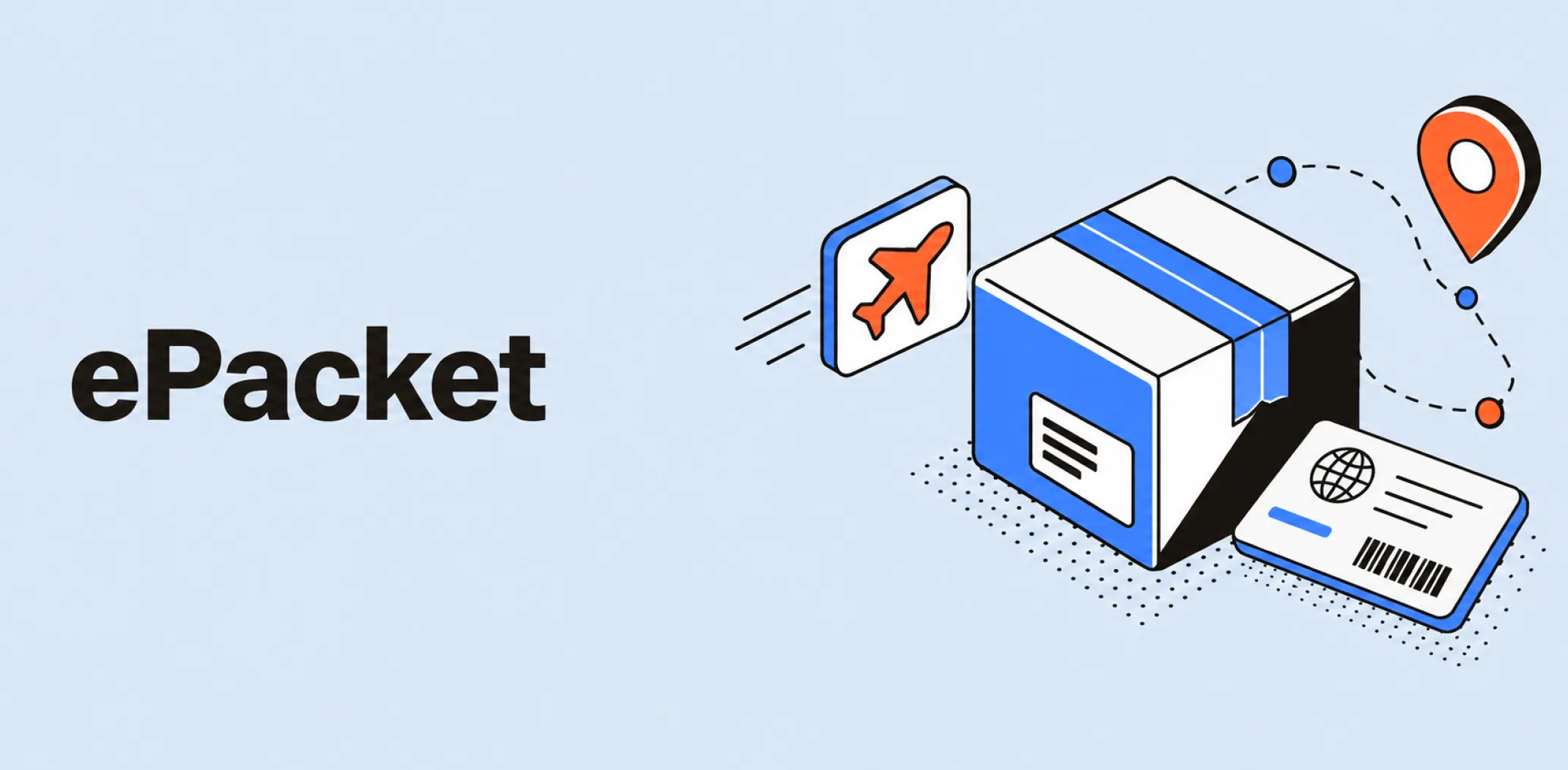
ePacket, also called EUB or e-Youbao, is a tracked postal shipping agreement between China Post or Hongkong Post and national postal services in dozens of destination countries, designed specifically for lightweight ecommerce packages under 2 kilograms travelling from China or Hong Kong to a buyer’s door.
ePacket became closely associated with dropshipping in the late 2010s because it offered something earlier Chinese postal options did not: genuine end-to-end tracking at a very low cost, typically a few dollars or less, with delivery in roughly 10 to 20 days, compared to the four-plus-week transit times and limited tracking of older economy services such as China Post Ordinary Small Packet.
For years, ePacket was the default shipping method many AliExpress sellers offered, and its low, often seller-absorbed cost was a major reason dropshipping with no upfront inventory became viable at scale for small operators.
The landscape has shifted significantly more recently. ePacket has become increasingly rare as an option on AliExpress listings, with most sellers migrating to AliExpress Standard Shipping, the platform’s own logistics product built on the Cainiao network, which offers broader country coverage, slightly higher weight tolerance, and comparable delivery speed.
Separately, and more consequentially, the US de minimis exemption, which had allowed shipments under $800 to enter duty-free, was eliminated for goods originating from China and Hong Kong in May 2025, with the suspension extended globally later that year.
This means packages that once cleared US customs quickly and without duties, including the majority of ePacket and AliExpress Standard Shipping parcels, now require formal customs entry and duty payment regardless of value, materially raising landed costs and slowing clearance for direct-from-China dropshipping in a way that has nothing to do with the postal service itself.
Example
A dropshipper running a Shopify store in 2019 lists a $12 phone accessory with free shipping, relying on the supplier’s near-zero ePacket cost and duty-free de minimis treatment to keep margins workable. Running the same playbook in 2026, the same dropshipper finds that ePacket is no longer offered on most supplier listings, AliExpress Standard Shipping has taken its place, and the order now requires formal customs entry with duties applied regardless of the item’s low value, pushing the dropshipper to either raise prices, switch to a domestic fulfillment partner, or absorb a cost that did not exist under the old model.
Key characteristics
- Weight and size limited: ePacket only covers packages under 2 kilograms with combined dimensions not exceeding roughly 90 centimetres, restricting it to small, lightweight goods.
- Tracked but handed off at the border: ePacket only manages the journey from China or Hong Kong to the destination country’s border; the local postal service, such as USPS, then handles final delivery using its own tracking system.
- Increasingly superseded by AliExpress Standard Shipping: Many sellers have moved away from ePacket toward AliExpress’s own logistics product, which now functions as the practical default for similar low-cost, lightweight shipments.
- No longer duty-free in major markets: Following the 2025 US de minimis suspension for China-origin goods, ePacket parcels are no longer exempt from formal customs entry and duty payment based on low declared value.
- Still technically available: The underlying postal agreement has not been formally discontinued, but its practical relevance to dropshipping has declined sharply due to both platform shifts and customs policy changes.
Related terms
- Dropship – the fulfillment model that ePacket’s low cost and tracking historically made viable at scale for sellers with no inventory of their own.
- Tracking number – the unique identifier assigned to an ePacket shipment, distinct in format from numbers issued by USPS, UPS, or FedEx.
- Shipping carrier – the broader category of company handling package transport, of which China Post and the destination country’s postal service are both examples for an ePacket shipment.
- Shipping cost – the underlying expense that ePacket historically kept extremely low, though customs duty changes have since added new cost layers outside the postal rate itself.
- 3PL – a logistics alternative many dropshippers have shifted toward, using domestic or regional warehousing to reduce reliance on direct-from-China postal shipping.
Frequently asked questions
Is ePacket still available for dropshipping in 2026?
ePacket technically still exists as a postal service, but it has become increasingly rare on AliExpress listings as sellers migrate to AliExpress Standard Shipping. Even where still offered, ePacket parcels are no longer exempt from duties in the US following the 2025 de minimis suspension for China-origin goods.
What is the difference between ePacket and AliExpress Standard Shipping?
ePacket is an older postal agreement between China Post and national postal services in roughly 40 countries, limited to packages under 2 kilograms. AliExpress Standard Shipping is the platform’s own logistics product, built on the Cainiao network, offering broader country coverage and a similar delivery timeline, and has effectively replaced ePacket on most current listings.
Why are ePacket shipments no longer duty-free in the US?
The US de minimis exemption, which let shipments valued under $800 enter the country without formal customs duties, was suspended for goods originating from China and Hong Kong in May 2025. This change applies regardless of which shipping service is used, meaning ePacket parcels now require formal customs entry and duty payment just like any other shipment.
How long does ePacket delivery typically take?
ePacket shipments to major markets such as the US have typically taken around 10 to 20 days, though this can extend depending on customs processing, holidays, and the destination country. Delivery only covers the journey to the destination country’s border; the local postal service then completes final delivery.
AliDropship: An all-in-one platform for starting dropshipping in 2026
AliDropship is a dropshipping platform that covers store creation, product imports, order automation, and marketing within a single system. It is designed for users with no prior ecommerce experience, though it also supports scaling for more established stores.
🛍️ Free turnkey store
New users receive a free pre-built store – set up, designed, and stocked with products. The store includes a ready-to-use product catalogue and a standard storefront design. It also comes with hosting, a domain, SSL, and payment systems already set up and included.
📦 Products
The platform provides access to a product catalogue covering both trending and niche items, with one-click import to your store. The catalogue is updated regularly to reflect current market availability. Products can be browsed, filtered, and added without leaving the platform.
🚚 Shipping & fulfillment
AliDropship provides access to a vast catalogue of products from global suppliers and handles order fulfillment automatically once a purchase is made. Customers receive tracking information directly, and orders are processed without manual intervention from the store owner.
📣 Marketing & promotion tools
The platform includes built-in marketing tools covering email campaigns, discount management, SEO settings, and social media integration. These are available within the dashboard and do not require third-party subscriptions for basic use.
👌 Ease of use
AliDropship requires no coding knowledge. The dashboard contains all the necessary tools for managing your store, products, and orders in one place. Additional features and products can be added as the store grows without rebuilding the existing setup.
Is ePacket still available for dropshipping in 2026?
What is the difference between ePacket and AliExpress Standard Shipping?
Why are ePacket shipments no longer duty-free in the US?
How long does ePacket delivery typically take?
Are you ready to become an owner
of a profitable online business?
Free Dropshipping Guide