

Cart Abandonment

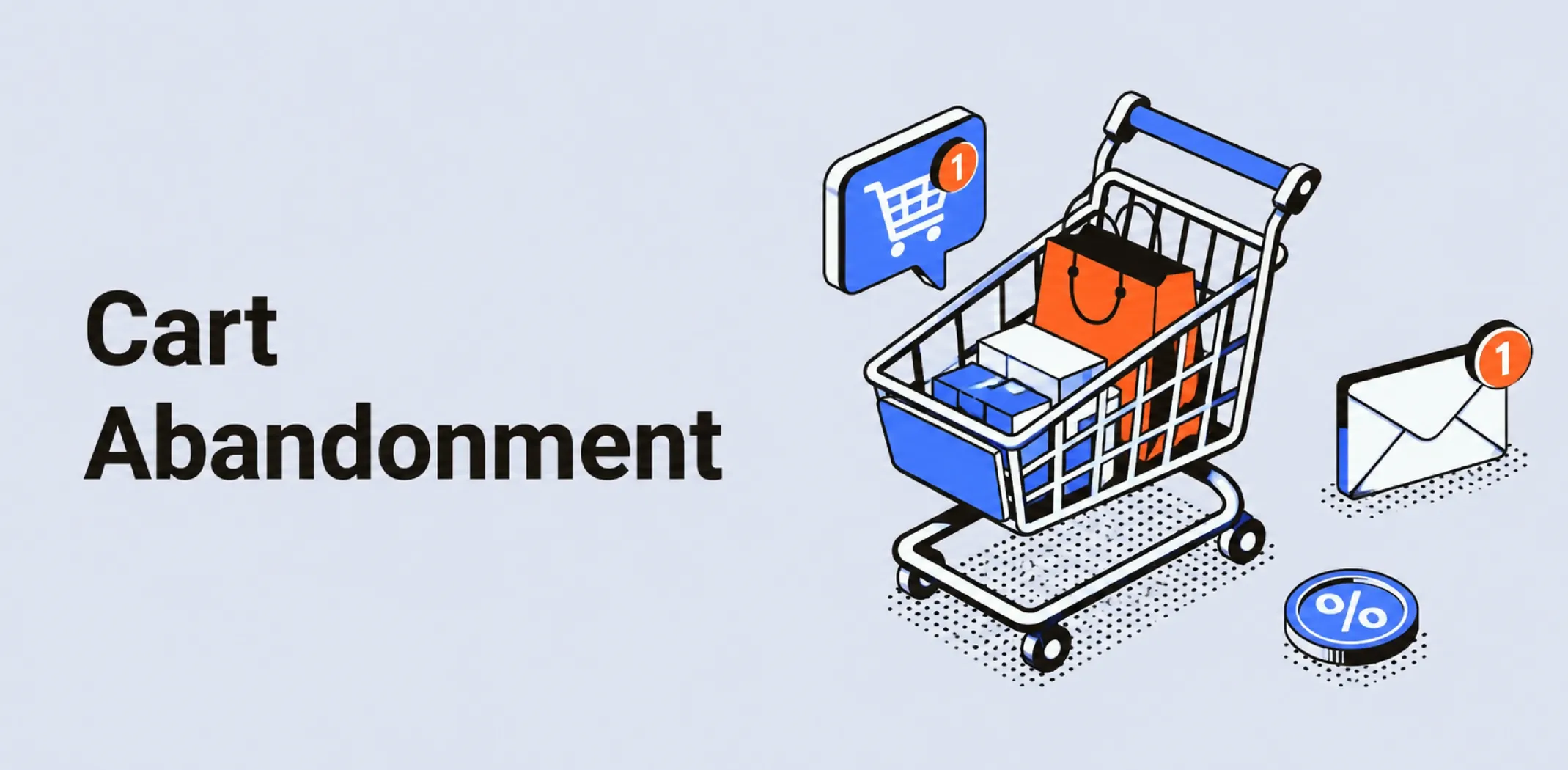
Cart abandonment is the behavior of a shopper who adds one or more products to an online shopping cart but exits the store before completing the purchase, representing a transaction that was initiated but not converted into a sale.
Cart abandonment is measured as a rate – the percentage of initiated checkouts or cart additions that do not result in a completed purchase. Industry benchmarks place the average ecommerce cart abandonment rate between 70% and 75%, meaning that for every 100 shoppers who add a product to their cart, approximately 70 to 75 leave without buying.
The rate varies by device, traffic source, product category, and checkout complexity, but consistently represents the largest single pool of recoverable revenue available to an ecommerce store.
Understanding why abandonment occurs is the foundation of any effort to reduce it: causes range from unexpected shipping costs revealed at checkout, to a required account creation step, to a slow-loading checkout page, to a shopper who was simply browsing without immediate purchase intent.
Cart abandonment is distinct from browse abandonment – where a visitor views a product page but does not add anything to their cart – and from checkout abandonment – where a shopper begins entering payment or shipping details but does not complete the order. Each represents a different stage of purchase intent and is addressed through different recovery tactics.
For dropshipping stores, the most common recovery mechanisms are remarketing email sequences triggered automatically when a cart is abandoned, and paid retargeting campaigns that re-serve ads to the abandoning visitor across social and display platforms.
Example
A dropshipping store selling outdoor camping gear records 1,400 cart additions in a given month, of which 980 do not result in a completed purchase – a cart abandonment rate of 70%. An analysis of exit point data shows that 43% of abandoning visitors leave at the shipping cost reveal step, where a $9.99 flat-rate fee is displayed for the first time. The store owner tests a free shipping threshold of $65 – absorbing the shipping cost into margin on qualifying orders – and observes a 12 percentage point reduction in abandonment rate at that step over the following month, recovering approximately 118 additional sales without any change to the store’s remarketing or retargeting programs.
Key characteristics
- High baseline rate: Cart abandonment affects the majority of ecommerce shopping sessions – industry averages consistently fall between 70% and 75% – making it one of the most significant sources of unrealized revenue for any product-based online store.
- Multiple causation: Abandonment is driven by a range of factors including unexpected costs at checkout, friction in the payment process, lack of preferred payment options, slow page load times, and low purchase intent at the point of adding to cart – each requiring a different remediation approach.
- Recoverable through re-engagement: A portion of abandoned carts can be recovered through remarketing email sequences and retargeting ad campaigns that re-engage the shopper after they have left, with recovery rates typically ranging from 5% to 15% of abandoned sessions depending on the tactics deployed.
- Device and traffic source variation: Abandonment rates are consistently higher on mobile devices than desktop, and vary significantly by traffic source – paid social traffic typically abandons at higher rates than organic search traffic, reflecting differences in purchase intent at the point of arrival.
- Checkout friction as a primary driver: Research consistently identifies unexpected shipping costs, mandatory account creation, and lengthy or complex checkout flows as the leading causes of abandonment at the checkout stage specifically, making checkout optimization one of the highest-return interventions available to store owners.
Related terms
- Remarketing – the primary owned-channel recovery mechanism for cart abandonment, typically delivered as an automated email sequence triggered when a shopper leaves without completing their purchase.
- Retargeting – the paid advertising counterpart to remarketing, used to re-serve ads to cart-abandoning visitors across social and display platforms after they have left the store.
- Conversion funnel – the staged path from awareness to purchase in which cart abandonment represents a failure at the final stage, where a visitor who has demonstrated strong purchase intent does not complete the transaction.
- Landing page – the page a visitor first arrives on from a paid or organic source, whose relevance and quality influence whether the visitor reaches the cart stage at all and with sufficient intent to complete a purchase.
- Average order value – a metric directly affected by cart abandonment recovery tactics, since free shipping thresholds and minimum spend incentives used to reduce abandonment simultaneously encourage higher-value orders from completing customers.
Frequently asked questions
What is a normal cart abandonment rate for ecommerce stores?
Industry benchmarks consistently place average ecommerce cart abandonment rates between 70% and 75%, though rates vary significantly by device, product category, and traffic source. Mobile devices typically see abandonment rates 10 to 15 percentage points higher than desktop.
Stores with complex or lengthy checkout flows, unexpected shipping costs, or limited payment options tend to see rates at the higher end of the range. A rate below 65% is generally considered strong performance; a rate above 80% suggests significant checkout friction that warrants investigation.
What are the most common reasons shoppers abandon their carts?
The most frequently cited causes of cart abandonment are unexpected shipping costs revealed at checkout, mandatory account creation before purchase, a checkout process perceived as too long or complex, concerns about payment security, and a lack of preferred payment options.
A proportion of abandonment also reflects low purchase intent – shoppers using the cart as a wishlist or price comparison tool with no immediate intention to buy, a behavior that is difficult to address through checkout optimization alone and is better addressed through remarketing re-engagement after the session ends.
How is cart abandonment rate calculated?
Cart abandonment rate is calculated by dividing the number of completed purchases by the number of shopping carts created, subtracting the result from one, and expressing it as a percentage. For example, if a store records 800 cart creations and 200 completed purchases in a month, the abandonment rate is 1 minus (200 divided by 800), which equals 75%.
Most ecommerce analytics platforms calculate and display this figure automatically, but the metric can also be derived from funnel reports that track drop-off between the cart and order confirmation stages.
What is the difference between cart abandonment and checkout abandonment?
Cart abandonment occurs when a shopper adds a product to their cart but leaves before beginning the checkout process. Checkout abandonment occurs when a shopper has begun entering payment or shipping details – and therefore has demonstrated stronger purchase intent – but does not complete the order.
Checkout abandonment typically has a lower rate than cart abandonment but represents higher-intent visitors and is therefore a more urgent recovery priority. The two are tracked separately because they have different causes and respond to different optimization interventions.
AliDropship: An all-in-one platform for starting dropshipping in 2026
AliDropship is a dropshipping platform that covers store creation, product imports, order automation, and marketing within a single system. It is designed for users with no prior ecommerce experience, though it also supports scaling for more established stores.
🛍️ Free turnkey store
New users receive a free pre-built store – set up, designed, and stocked with products. The store includes a ready-to-use product catalogue and a standard storefront design. It also comes with hosting, a domain, SSL, and payment systems already set up and included.
📦 Products
The platform provides access to a product catalogue covering both trending and niche items, with one-click import to your store. The catalogue is updated regularly to reflect current market availability. Products can be browsed, filtered, and added without leaving the platform.
🚚 Shipping & fulfillment
AliDropship provides access to a vast catalogue of products from global suppliers and handles order fulfillment automatically once a purchase is made. Customers receive tracking information directly, and orders are processed without manual intervention from the store owner.
📣 Marketing & promotion tools
The platform includes built-in marketing tools covering email campaigns, discount management, SEO settings, and social media integration. These are available within the dashboard and do not require third-party subscriptions for basic use.
👌 Ease of use
AliDropship requires no coding knowledge. The dashboard contains all the necessary tools for managing your store, products, and orders in one place. Additional features and products can be added as the store grows without rebuilding the existing setup.
What is a normal cart abandonment rate for ecommerce stores?
What are the most common reasons shoppers abandon their carts?
How is cart abandonment rate calculated?
What is the difference between cart abandonment and checkout abandonment?
How can a dropshipping store reduce its cart abandonment rate?
Are you ready to become an owner
of a profitable online business?
Free Dropshipping Guide