

Remarketing

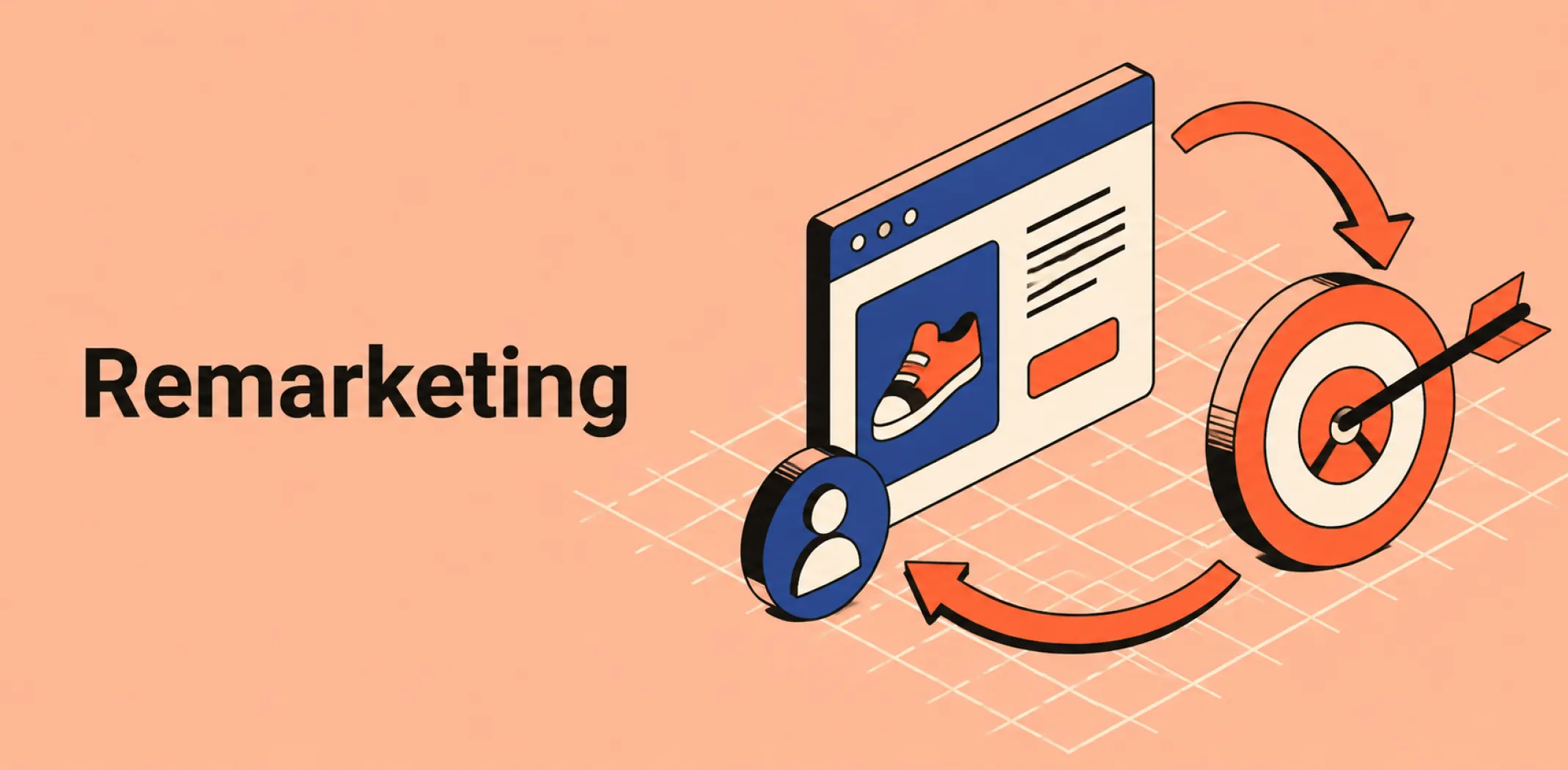
Remarketing is the practice of re-engaging past website visitors or existing customers through owned communication channels – primarily email – to recover unconverted visits, encourage repeat purchases, and extend the revenue generated from an already-warm audience.
Remarketing is distinguished from retargeting by its channel: retargeting serves paid ads to past visitors across third-party platforms such as Meta or Google using pixel-based tracking, while remarketing communicates through channels the business owns and controls directly – most commonly email, but also SMS, push notifications, and on-site messaging.
Because remarketing operates through owned channels, it does not require ongoing ad spend to reach its audience; once a contact is on an email list or has opted into notifications, the marginal cost of sending a remarketing message is near zero.
This makes remarketing one of the most cost-efficient re-engagement mechanisms available to an ecommerce store, particularly when combined with behavioral triggers that automate message delivery based on specific customer actions.
The most common remarketing applications in ecommerce are abandoned cart sequences – emails sent to shoppers who added products to their cart but did not complete checkout – and win-back campaigns targeting customers who have not purchased within a defined period. Both address revenue that would otherwise be lost without active re-engagement.
Abandoned cart sequences are among the highest-returning automated email types in ecommerce, with recovery rates typically ranging from 5% to 15% of abandoned carts depending on timing, sequence length, and incentive. Win-back campaigns extend customer lifetime value by returning lapsed customers to active buying status at a fraction of the cost of acquiring a new customer through paid channels.
Example
A dropshipping store selling home decor products identifies that 68% of visitors who add a product to their cart do not complete the purchase. The store activates a 3-email abandoned cart sequence: the first email is sent one hour after abandonment with a simple product reminder, the second is sent 24 hours later with a customer review of the product, and the third is sent 72 hours later with a 10% discount valid for 48 hours. The sequence recovers 11% of abandoned carts, generating an average of 34 additional sales per month at near-zero incremental cost. A separate win-back campaign targeting customers who have not ordered in 90 days – offering a personalized product recommendation and a loyalty discount – reactivates 8% of the lapsed segment within 30 days of the send.
Key characteristics
- Owned channel operation: Remarketing communicates through channels controlled by the business – email, SMS, push notifications – rather than paid placements on third-party platforms, making it independent of algorithm changes, platform policy updates, or rising ad costs.
- Behavioral trigger automation: Remarketing sequences are typically triggered automatically by specific customer actions – a cart abandonment, a purchase, a period of inactivity – allowing a store to run continuous re-engagement programs without manual intervention per send.
- Near-zero marginal cost: Once a contact list is established and sequences are built, the cost of sending an additional remarketing message is limited to the platform subscription fee, making it one of the most cost-efficient re-engagement channels relative to revenue recovered.
- Warm audience targeting: Every remarketing recipient has a prior relationship with the store – as a past visitor, cart abandoner, or existing customer – meaning messages reach audiences with established brand familiarity rather than cold contacts with no prior exposure.
- Sequence-based structure: Remarketing programs are most effective when structured as multi-step sequences rather than single messages, with each touchpoint serving a distinct purpose – reminder, social proof, incentive – and spaced to avoid overwhelming the recipient.
Related terms
- Retargeting – the paid advertising counterpart to remarketing, which re-engages past visitors through pixel-tracked ads served on third-party platforms rather than through owned communication channels.
- Customer lifetime value – the metric most directly extended by remarketing activity, since win-back campaigns and post-purchase sequences drive repeat orders from existing customers at a fraction of the cost of new customer acquisition.
- Conversion funnel – the staged path from awareness to purchase that remarketing addresses at the lower stages, re-engaging visitors and customers who entered the funnel but did not progress to a completed or repeat transaction.
- Customer segmentation – the practice of dividing a contact list by behavior or purchase history, used in remarketing to ensure each segment receives messaging relevant to their specific relationship with the store rather than a generic broadcast.
- Average order value – a metric relevant to remarketing incentive design, since minimum spend thresholds attached to win-back discounts are a standard method for ensuring recovered orders generate sufficient revenue to offset the cost of the offer.
Frequently asked questions
What is the difference between remarketing and retargeting?
Remarketing re-engages past visitors and customers through owned channels – primarily email and SMS – at near-zero marginal cost once contacts are captured. Retargeting serves paid ads to past visitors across third-party platforms such as Meta and Google using pixel-based tracking, requiring ongoing ad spend to maintain reach.
Both techniques target audiences with prior brand exposure, but remarketing operates independently of advertising platforms and budget cycles, while retargeting depends on continued spend and platform availability.
What is an abandoned cart remarketing sequence?
An abandoned cart remarketing sequence is a series of automated emails sent to a shopper who added one or more products to their cart but did not complete the purchase. A standard structure involves three emails: a reminder sent within one hour of abandonment, a follow-up featuring social proof or product benefits sent at 24 hours, and a final message with a time-limited incentive sent at 72 hours.
Recovery rates for well-structured sequences typically range from 5% to 15% of abandoned carts, making them one of the highest-returning automated programs available to an ecommerce store.
How is remarketing different from regular email marketing?
Regular email marketing sends promotional or informational content to a subscriber list on a scheduled basis – weekly newsletters, product announcements, seasonal campaigns – regardless of individual recipient behavior. Remarketing is triggered by specific customer actions: a cart abandonment, a purchase, a defined period of inactivity.
The distinction is intent and timing: remarketing messages are sent because a specific behavior has occurred and are designed to respond to that behavior directly, producing higher relevance and typically higher conversion rates than broadcast email campaigns.
What is a win-back campaign in remarketing?
A win-back campaign is a remarketing sequence targeting customers who have not made a purchase within a defined period – typically 60 to 180 days depending on the store’s average purchase frequency. The sequence commonly includes a personalized product recommendation based on past purchase history, a re-engagement offer such as a loyalty discount, and a final message creating urgency around the offer expiry.
Win-back campaigns typically reactivate between 5% and 15% of the lapsed segment contacted, returning customers to active buying status at significantly lower cost than acquiring an equivalent number of new customers through paid channels.
AliDropship: An all-in-one platform for starting dropshipping in 2026
AliDropship is a dropshipping platform that covers store creation, product imports, order automation, and marketing within a single system. It is designed for users with no prior ecommerce experience, though it also supports scaling for more established stores.
🛍️ Free turnkey store
New users receive a free pre-built store – set up, designed, and stocked with products. The store includes a ready-to-use product catalogue and a standard storefront design. It also comes with hosting, a domain, SSL, and payment systems already set up and included.
📦 Products
The platform provides access to a product catalogue covering both trending and niche items, with one-click import to your store. The catalogue is updated regularly to reflect current market availability. Products can be browsed, filtered, and added without leaving the platform.
🚚 Shipping & fulfillment
AliDropship provides access to a vast catalogue of products from global suppliers and handles order fulfillment automatically once a purchase is made. Customers receive tracking information directly, and orders are processed without manual intervention from the store owner.
📣 Marketing & promotion tools
The platform includes built-in marketing tools covering email campaigns, discount management, SEO settings, and social media integration. These are available within the dashboard and do not require third-party subscriptions for basic use.
👌 Ease of use
AliDropship requires no coding knowledge. The dashboard contains all the necessary tools for managing your store, products, and orders in one place. Additional features and products can be added as the store grows without rebuilding the existing setup.
What is the difference between remarketing and retargeting?
What is an abandoned cart remarketing sequence?
How is remarketing different from regular email marketing?
What is a win-back campaign in remarketing?
How is remarketing performance measured?
Are you ready to become an owner
of a profitable online business?
Free Dropshipping Guide