

Campaign

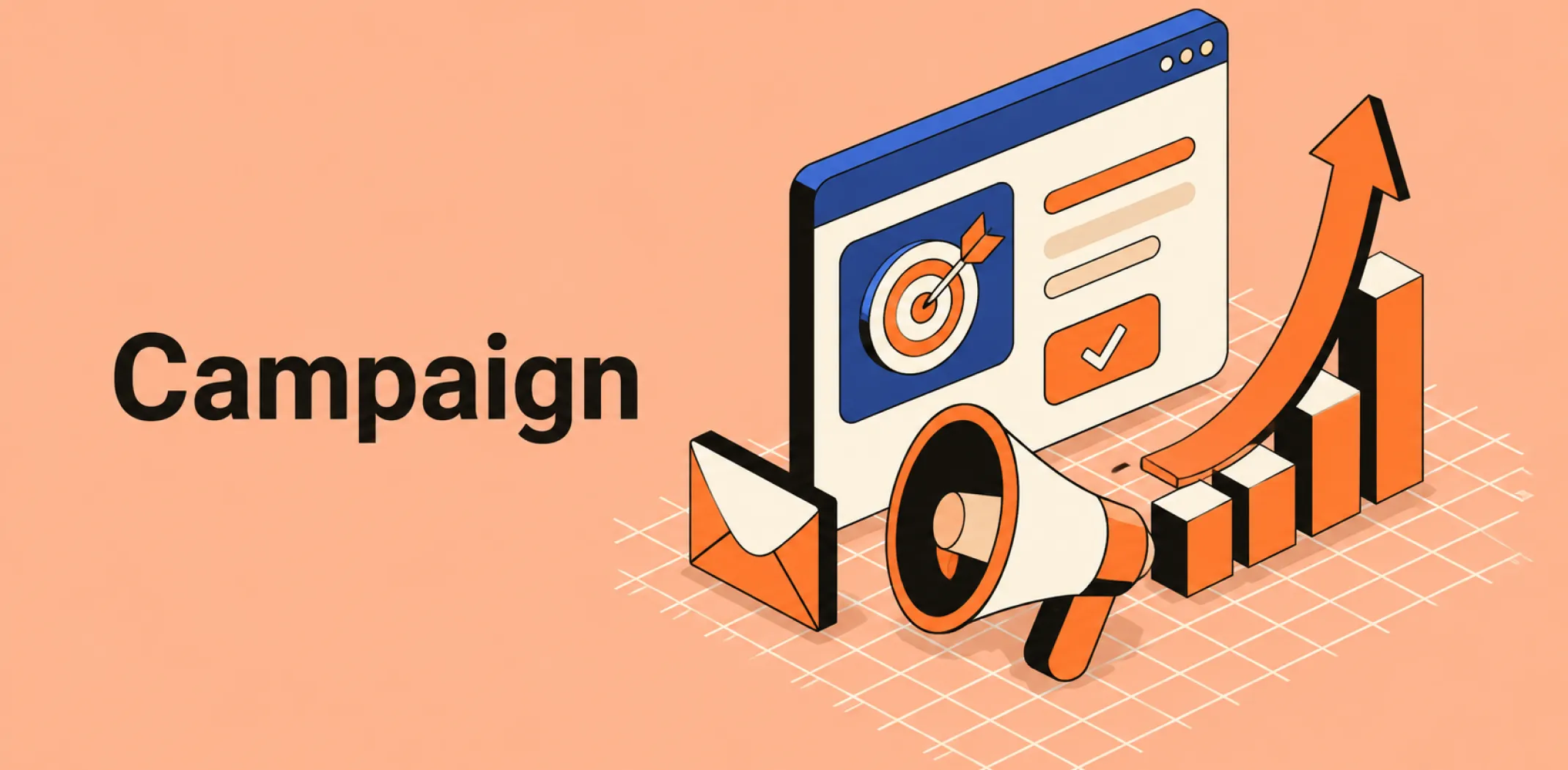
A campaign is the top level of an advertising account structure, where an advertiser sets the overall objective and, on many platforms, the overall budget, serving as the container that organizes everything beneath it, including ad sets and individual ads.
Within most major platforms, including Google Ads, TikTok Ads, and Meta, a campaign sits at the top of a three-level hierarchy: the campaign defines why the advertiser is running ads, such as driving traffic, sales, or awareness; the ad set, or ad group on some platforms, defines who sees the ads and how much is spent reaching them; and the individual ad holds the actual ad creative and ad copy.
A single campaign can contain multiple ad sets, each with its own targeting and budget, but every ad set within a campaign shares the same overall objective. Choosing the correct objective at the campaign level matters significantly, since it determines which optimization options and bidding strategies are available further down the hierarchy.
For dropshipping and ecommerce sellers, campaigns are commonly organized around a single business goal, such as a conversions campaign for an established product or a traffic campaign for testing a new one.
Key characteristics
- Top of the account hierarchy: A campaign sits above ad sets and individual ads, containing both within its structure.
- Defines the objective: The campaign level is where an advertiser selects the overall goal, such as traffic, conversions, or awareness, that shapes optimization throughout the campaign.
- Can hold a campaign-level budget: Many platforms allow budget to be set at either the campaign level, distributed automatically across ad sets, or at the ad set level individually.
- Objective stays consistent below it: Every ad set and ad within a single campaign shares the same campaign objective, even if their targeting or creative differs.
Example
A dropshipping store wants to drive sales for a new product, so it creates a single campaign with a conversions objective on Google Ads. Within that one campaign, the store sets up two ad sets, each targeting a different audience segment with its own budget, and each ad set contains several individual ads testing different creative. All of the activity beneath the campaign still shares the same conversions objective set at the top level.
Related terms
- Ad set – the layer directly beneath a campaign, controlling targeting and budget.
- Ad creative – the visual and written content held within individual ads inside a campaign.
- Google Ads – a platform that organizes advertising activity into campaigns, ad groups, and ads.
- Conversion funnel – the customer journey that a campaign’s objective is designed to support.
Frequently asked questions
What is the difference between a campaign and an ad set?
A campaign sets the overall advertising objective and sits at the top of the account structure, while an ad set sits beneath it, controlling targeting, budget, and schedule for a specific audience. A single campaign can contain multiple ad sets that all share the same objective.
Can a campaign have more than one objective?
No, a campaign typically has a single objective that applies to everything within it, including all of its ad sets and ads. Advertisers who want to pursue different goals, such as awareness and conversions, generally create separate campaigns for each.
Where is the budget set in a campaign?
Budget can often be set at either the campaign level, where it is distributed automatically across ad sets, or at the ad set level individually, depending on the platform and the advertiser’s preference. Each approach offers different levels of manual control over spend allocation.
Why does the campaign objective matter so much?
The campaign objective matters because it determines which bidding strategies, optimization goals, and ad formats are available at the ad set and ad levels beneath it. Choosing the wrong objective early on can limit options or lead to the algorithm optimizing toward the wrong outcome.
AliDropship: An all-in-one platform for starting dropshipping in 2026
AliDropship is a dropshipping platform that covers store creation, product imports, order automation, and marketing within a single system. It is designed for users with no prior ecommerce experience, though it also supports scaling for more established stores.
🛍️ Free turnkey store
New users receive a free pre-built store – set up, designed, and stocked with products. The store includes a ready-to-use product catalogue and a standard storefront design. It also comes with hosting, a domain, SSL, and payment systems already set up and included.
📦 Products
The platform provides access to a product catalogue covering both trending and niche items, with one-click import to your store. The catalogue is updated regularly to reflect current market availability. Products can be browsed, filtered, and added without leaving the platform.
🚚 Shipping & fulfillment
AliDropship provides access to a vast catalogue of products from global suppliers and handles order fulfillment automatically once a purchase is made. Customers receive tracking information directly, and orders are processed without manual intervention from the store owner.
📣 Marketing & promotion tools
The platform includes built-in marketing tools covering email campaigns, discount management, SEO settings, and social media integration. These are available within the dashboard and do not require third-party subscriptions for basic use.
👌 Ease of use
AliDropship requires no coding knowledge. The dashboard contains all the necessary tools for managing your store, products, and orders in one place. Additional features and products can be added as the store grows without rebuilding the existing setup.
What is the difference between a campaign and an ad set?
Can a campaign have more than 1 objective?
Where is the budget set in a campaign?
Why does the campaign objective matter so much?
How many ad sets can a single campaign contain?
Are you ready to become an owner
of a profitable online business?
Free Dropshipping Guide