

Ad Set

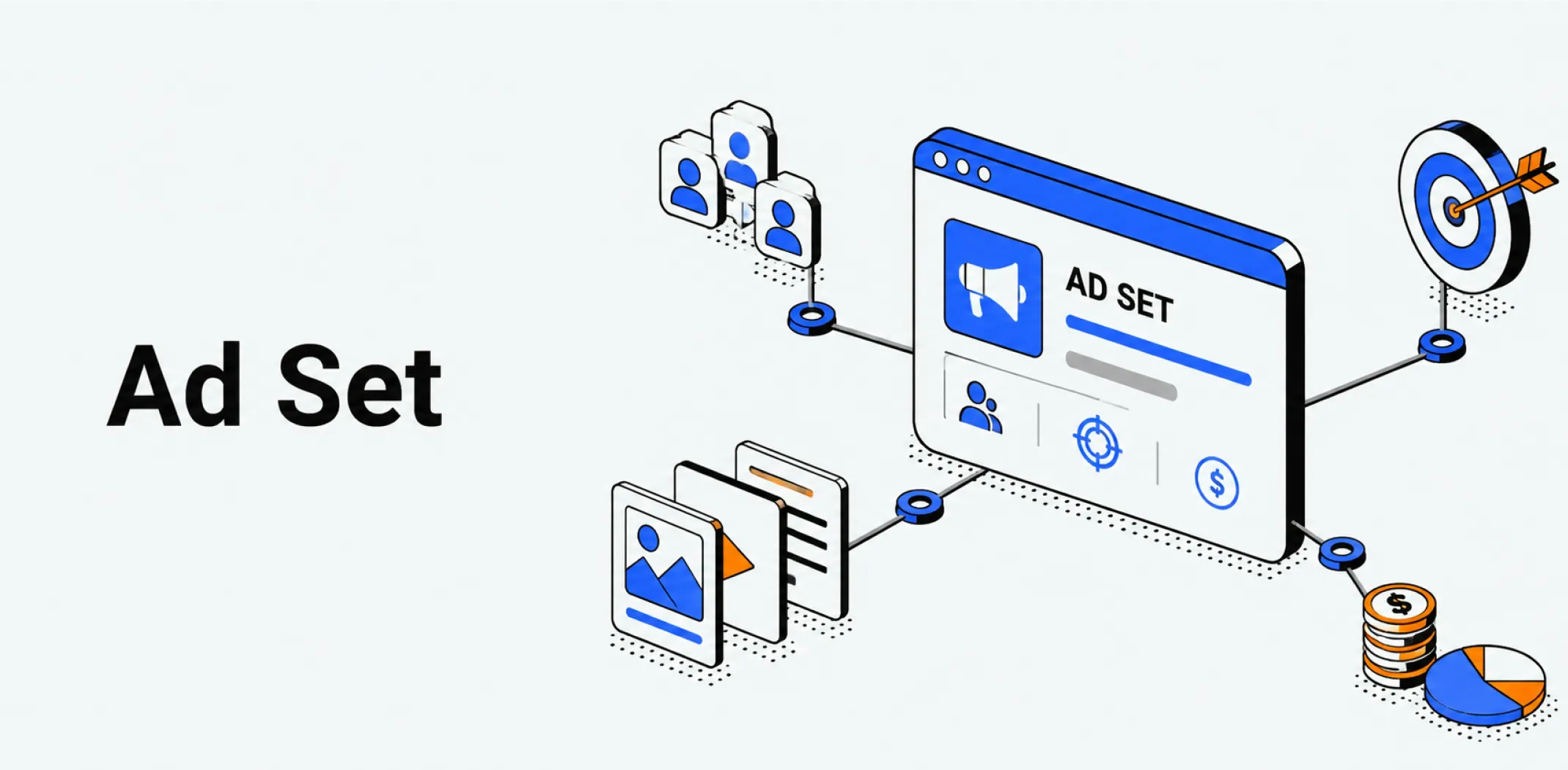
An ad set is the organizational layer within an advertising campaign where targeting, budget, schedule, and placement settings are defined, sitting between the overall campaign objective and the individual ads that share those settings.
The term ad set is specific to Meta platforms such as Facebook and Instagram; other platforms use different names for the same structural layer, most notably ad group on Google Ads and TikTok Ads.
Regardless of the name used, this layer functions the same way across platforms: the campaign sets the broad objective, the ad set or ad group controls who sees the ads and how much is spent reaching them, and the individual ad holds the actual ad creative and ad copy. A single campaign can contain multiple ad sets, each targeting a different audience segment, using a different budget, or testing a different placement strategy.
For dropshipping and ecommerce sellers, splitting a campaign into multiple ad sets is a common way to test different audiences against the same creative before deciding where to concentrate spend.
Key characteristics
- Middle layer of campaign structure: An ad set sits between the campaign, which sets the objective, and the individual ad, which holds the creative and copy.
- Controls targeting and budget: Audience targeting, budget allocation, schedule, and placement settings are typically defined at the ad set level rather than the campaign or ad level.
- Platform-specific naming: Meta uses the term ad set, while Google Ads and TikTok Ads use ad group for the equivalent layer in their campaign structure.
- Requires sufficient data to optimize: Each ad set generally needs a meaningful volume of conversions or events before automated bidding can optimize its delivery effectively.
Example
A dropshipping store creates a single campaign on Meta with the objective of driving sales for a kitchen gadget. Within that campaign, the store sets up two ad sets: one targeting a broad audience interested in cooking, and another targeting a custom audience of past website visitors. Both ad sets use the same ad creative, but each has its own budget and audience settings, allowing the store to compare performance and shift spend toward whichever ad set converts more efficiently.
Related terms
- Ad creative – the visual and written content held within individual ads inside an ad set.
- Google Ads – a platform that uses the equivalent term ad group for this layer of campaign structure.
- TikTok Ads – a platform that also uses ad group rather than ad set for this same structural layer.
- Conversion funnel – the customer journey that an ad set’s targeting determines entry into.
Frequently asked questions
Is an ad set the same as an ad group?
Yes, ad set and ad group describe the same structural layer within an advertising campaign, just using different platform-specific terminology. Meta uses ad set, while Google Ads and TikTok Ads both use ad group.
What settings are controlled at the ad set level?
Audience targeting, budget, schedule, and placement settings are typically controlled at the ad set level, separate from the campaign objective above it and the individual ad creative below it. This is where most day-to-day testing and optimization decisions happen.
How many ad sets should a campaign have?
There is no fixed number of ad sets every campaign needs, but many advertisers start with a small number, often 2 to 4, to avoid spreading budget too thin across too many audiences at once. Too many ad sets running simultaneously can slow down the algorithm’s ability to gather enough data to optimize each one.
Can different ad sets in the same campaign use different budgets?
Yes, each ad set can typically be assigned its own budget, allowing an advertiser to allocate more spend toward better-performing audiences. Some platforms also offer campaign-level budget options that distribute spend across ad sets automatically based on performance.
AliDropship: An all-in-one platform for starting dropshipping in 2026
AliDropship is a dropshipping platform that covers store creation, product imports, order automation, and marketing within a single system. It is designed for users with no prior ecommerce experience, though it also supports scaling for more established stores.
🛍️ Free turnkey store
New users receive a free pre-built store – set up, designed, and stocked with products. The store includes a ready-to-use product catalogue and a standard storefront design. It also comes with hosting, a domain, SSL, and payment systems already set up and included.
📦 Products
The platform provides access to a product catalogue covering both trending and niche items, with one-click import to your store. The catalogue is updated regularly to reflect current market availability. Products can be browsed, filtered, and added without leaving the platform.
🚚 Shipping & fulfillment
AliDropship provides access to a vast catalogue of products from global suppliers and handles order fulfillment automatically once a purchase is made. Customers receive tracking information directly, and orders are processed without manual intervention from the store owner.
📣 Marketing & promotion tools
The platform includes built-in marketing tools covering email campaigns, discount management, SEO settings, and social media integration. These are available within the dashboard and do not require third-party subscriptions for basic use.
👌 Ease of use
AliDropship requires no coding knowledge. The dashboard contains all the necessary tools for managing your store, products, and orders in one place. Additional features and products can be added as the store grows without rebuilding the existing setup.
Is an ad set the same as an ad group?
What settings are controlled at the ad set level?
How many ad sets should a campaign have?
Can different ad sets in the same campaign use different budgets?
How much data does an ad set need to optimize properly?
Are you ready to become an owner
of a profitable online business?
Free Dropshipping Guide