Best Dropshipping Products For Women’s Clothing In 2026

Women’s clothing is one of the most searched, most purchased, and most reliably profitable niches in all of ecommerce.
But walk into it blind and you will quickly discover that “fashion dropshipping” covers a huge range of products – some that print money and some that quietly drain your ad budget. So before you build a store, it pays to know exactly which products are worth your focus right now.
Quick Answer: The best dropshipping products for women’s clothing in 2026 include athleisure and seamless leggings, maxi and midi dresses, co-ord sets, wide-leg trousers, oversized blazers, plus-size fashion, sustainable basics, and floral boho pieces. Each of these hits a specific demand curve – some are evergreen year-round sellers, others are trend-driven with strong seasonal spikes.
This guide breaks down the top product categories, what makes each one work, realistic earning figures, and exactly how to position your store for long-term profit rather than a one-hit wonder.

What is women’s clothing dropshipping?
Women’s clothing dropshipping is a business model where you sell apparel through your own online store without holding any physical inventory.
When a customer places an order, your supplier ships the product directly to them. You never touch the item – you just market it, price it, and collect the margin between what the customer pays and what the supplier charges.
It sounds simple, and in practice the mechanics are straightforward. What makes the women’s fashion niche interesting in 2026 is the sheer scale of demand behind it.
Women’s apparel accounts for close to 70% of revenue within the online fashion market, and in the US alone over 127 million women shop for clothes online.
That is a massive, active, repeat-purchase audience. Unlike electronics or furniture, fashion buyers come back season after season – and often week after week when a new trend lands on their feed.
What sets successful dropshippers apart in this niche is product selection paired with clear positioning. The stores that struggle are the ones trying to sell everything to everyone.
The stores that grow are the ones that pick a specific angle – athleisure, boho dresses, plus-size, sustainable basics – and own it. That is what this guide helps you do.
How much can you realistically earn dropshipping women’s clothing?
Earnings in this niche vary widely depending on your product selection, niche focus, and how much effort you put into marketing. The table below gives you a realistic breakdown by approach.
A general fashion store with no clear identity tends to see thin conversions – visitors browse but do not buy with urgency. A focused niche store with strong imagery and consistent branding dramatically improves trust and conversion rate, which is why the earning range jumps sharply in the second tier.
One note on the top figures: Reaching $100–$300/day consistently takes real effort – typically 60–90 days of building, testing, and optimising before you see stable returns. Most dropshippers who get there are running paid social ads, working with micro-influencers, or producing regular organic content. It is absolutely achievable, but it is not automatic on day one.
The good news for women’s fashion specifically is that gross profit margins in apparel dropshipping tend to be strong.
Niche categories like plus-size dresses, recycled-fabric hoodies, and premium athleisure sets often command markups of 2–4x the supplier cost – and because customers return frequently for new seasonal pieces, your revenue compounds over time.
The best dropshipping products for women’s clothing in 2026
Below are the product categories that consistently perform in women’s fashion dropshipping right now – broken into evergreen staples and trend-driven winners. Within each, you will find specific product types, the audience they serve, and what makes them work commercially.
Evergreen staples: Products that sell year-round
Athleisure and seamless leggings
High-waisted leggings and matching seamless sets are the single most consistently searched category in women’s fashion dropshipping. Customers wear them to the gym, on errands, and at home – the gym-to-street trend is not slowing down.
Seamless versions with contouring details and hidden pockets regularly outperform basic alternatives because they photograph well and justify a higher price point. A supplier price of $8–$12 for a seamless legging set can retail comfortably at $35–$55, giving you a strong gross margin.
Why this works in 2026: The athleisure market is fuelled by health culture, TikTok workout content, and the “hot girl walk” lifestyle trend – all of which push repeat purchases as customers refresh their gym wardrobe every few months.
Earning potential: $40–$90/day with a focused athleisure store running consistent Instagram and TikTok content.
Maxi and midi dresses
Dresses are the most consistent best-seller in online women’s fashion. Within dresses, maxi and midi silhouettes perform especially well because they are size-inclusive, easy to style, and work across multiple occasions – casual, date night, beach, wedding guest.
Flowy fabrics in neutral tones and seasonal florals are perennial winners, and styles that move well in video content (which is most maxi dresses) get organic reach on TikTok and Reels without heavy ad spend. Wholesale costs typically run $10–$18, with retail prices of $35–$70 depending on fabric and occasion positioning.
Why this works in 2026: Accurate size grading and clear fit descriptions dramatically reduce returns in this category. Stores that include body-shape styling guides alongside dress listings convert meaningfully better than those with generic product pages.
Earning potential: $30–$80/day for a dress-focused store with strong seasonal collections.
Co-ord sets and matching loungewear
Matching two-piece sets – a co-ord blazer and trouser, a ribbed top and shorts, a matching sweats set – are one of the fastest-growing categories in women’s casual fashion. They appeal because they remove the styling decision for the customer: buy the set, look put-together instantly.
Co-ord sets also have strong visual appeal on social media, which makes them self-marketing products. Loungewear co-ords that feel premium (think soft fleece or ribbed cotton textures) can retail at $40–$80 while costing $12–$20 to source.
Important note: Post-pandemic “couch-to-cafe” dressing is now a stable lifestyle category rather than a short-term trend – customers who buy one set typically return for more colourways.
Earning potential: $35–$75/day with lifestyle-focused content marketing.
Trend-driven winners: Products with strong 2026 momentum
Wide-leg trousers and linen pants
Wide-leg silhouettes have been rising steadily for two years and remain firmly in the fashion mainstream heading into late 2026. Linen wide-leg trousers, cargo-style wide-legs, and tailored palazzo pants all perform strongly because they cut across casual and smart-casual occasions.
They are also forgiving in sizing – a key advantage in dropshipping where returns for fit issues eat into margins. Supplier prices for linen or relaxed-fit wide-leg trousers run $8–$15, with retail typically $30–$55.
Why this works in 2026: Linen and relaxed-fit trousers align with the sustainable-leaning “quiet luxury” aesthetic that is driving purchase decisions among millennial shoppers, giving you a strong storytelling angle beyond just product features.
Oversized blazers
The oversized blazer trend has real staying power. It works as a standalone statement piece over a co-ord set, over jeans, or as a beach cover-up.
It photographs well, appeals to a broad age range, and tends to be less size-sensitive than bodycon or tailored styles – which keeps return rates lower. Blazers also have a higher perceived value than basics, which lets you price them at $45–$90 retail while sourcing at $14–$22.
Earning potential: $25–$60/day when included as part of a broader co-ord or smart-casual store, rather than as a standalone niche.
Plus-size fashion
Plus-size women’s clothing remains one of the most underserved and therefore most profitable sub-niches in fashion dropshipping. While major platforms offer plus-size ranges, the dedicated plus-size fashion store with genuine variety, inclusive messaging, and accurate size guides builds intense customer loyalty.
Top-performing products in this sub-niche include plus-size wrap dresses, stretch denim, matching sets, and everyday essentials in sizes up to 5X or 6X. Customers in this category are deeply loyal to stores that actually serve them well – which most stores do not.
Why this works in 2026: Inclusivity in fashion is no longer just a trend – it is an expectation. A store with a genuine plus-size-first identity and real size diversity in its imagery stands out immediately from generic fashion stores.
Earning potential: $50–$120/day for a well-branded plus-size store with active community engagement on social media.
Graphic tees and slogan tops
Graphic tees are a dropshipping staple for good reason. They are low-cost to source ($4–$8), easy to ship, require no size-sensitive fit decisions beyond S–XL, and are driven almost entirely by cultural relevance and visual appeal.
On TikTok in particular, the right slogan tee can go viral organically, generating sales without ad spend. The key is staying current – pop culture references, empowerment slogans, and vintage-aesthetic prints consistently outperform generic designs.
Retail at $18–$35 gives a clean margin even at the lower supplier price point.
Sustainable and eco-conscious basics
The shift toward ethical fashion is not a niche trend anymore – it is reshaping mainstream buying decisions. Organic cotton tees, recycled-fabric leggings, and neutral-toned sustainable basics are growing consistently in search volume.
Customers actively seek out stores that align with their values, and they pay a meaningful premium for it. A recycled-fabric hoodie that costs $14 to source can retail at $55–$70 when positioned as a sustainable piece, delivering a margin that generic basics simply cannot match.
Important: Be specific and honest about materials when marketing sustainable products. Vague claims without supplier verification can attract negative attention and returns. Where your supplier can confirm fabric composition – bamboo, GOTS-certified organic cotton, recycled polyester – include that information.
Earning potential: $40–$90/day for a sustainability-positioned fashion store with an engaged email list and strong SEO content.
Floral and boho dresses
Floral maxi dresses, kimono wraps, and bohemian midi styles have been perennial bestsellers across every major fashion platform for years.
They are visually striking (important for social content), have broad seasonal appeal from spring through early autumn, and tend to be among the easiest clothing items to photograph attractively without professional studio setups.
Boho styles also carry strong Pinterest traction – an often-overlooked traffic source for fashion stores. Sourcing costs run $10–$16, with retail typically $30–$65.
Swimwear and beach cover-ups
Swimwear carries strong seasonal spikes (February through August in North American and European markets) but holds year-round appeal for tropical destinations and the growing “hot girl summer” content cycle.
Bikinis, one-pieces, and matching beach cover-up sets all perform well in dropshipping because they are light to ship and have high perceived value relative to cost. A bikini set that costs $7–$12 to source routinely retails at $30–$55.
Pairing swimwear with matching boho cover-ups as a bundle increases average order value significantly.
Earning potential: $50–$130/day during peak season (March–July) for a swimwear-focused or summer fashion store.
Comparing women’s clothing niches at a glance
Here is how the main product categories stack up when you weigh them across the three factors that matter most in dropshipping: profit margin, return risk, and year-round demand stability.
The categories with the highest return risk are those where fit is critical and sizing varies by supplier – bodycon dresses and tailored trousers being the main examples. Athleisure, co-ords, and graphic tees tend to have more forgiving sizing, which keeps your post-sale costs lower.
Tips for maximising profit in women’s clothing dropshipping
Choose your niche before you choose your products
The single biggest mistake new fashion dropshippers make is building a general clothing store and hoping something sticks. A store with 200 random women’s products has no clear identity and no reason for any specific customer to trust it.
Pick one angle first – athleisure, sustainable basics, plus-size, boho dresses – and build your product catalogue, visuals, and content around that identity. You can always expand later once you have a loyal customer base.
Invest in strong product images
In clothing dropshipping, the product image is your fitting room. Customers cannot try anything on – they are buying based entirely on how the item looks on screen.
Use lifestyle photography where possible over plain white backgrounds, include multiple angles, and where your supplier provides images of the item on a model, use those over flat-lays. Stores with high-quality, consistent imagery convert significantly better and have lower return rates.
Use TikTok and Instagram Reels as your primary traffic engine
Women’s fashion is made for short-form video. A dress that moves beautifully, a co-ord set styled three ways, a legging haul – these are the formats that regularly go viral in this niche with no ad spend.
If you are starting with a limited marketing budget, organic social content on TikTok and Instagram Reels is your best route to early traffic. Even basic smartphone video shot in good natural light performs well when the products are visually compelling.
Build size guides into every product listing
Return rates are the hidden killer of clothing dropshipping margins. Most returns happen because customers receive an item that does not fit. A detailed, supplier-specific size guide on every product page – including measurements in both centimetres and inches – reduces returns meaningfully.
Do not use a generic size chart that covers your whole store. Source the actual measurements from your supplier for each item and display them clearly.
Plan your catalogue around seasonal spikes
Women’s fashion has clear seasonal rhythms. Swimwear spikes from February to July. Knitwear and matching lounge sets peak from October to January. Floral dresses peak in spring. Wide-leg linen trousers are a summer staple.
Planning your product additions and marketing pushes around these cycles lets you ride each trend rather than react to it. A simple 12-month editorial calendar with planned product launches keeps your store feeling fresh and relevant year-round.
Legal and ethical considerations for women’s fashion dropshipping
Fashion dropshipping has a few specific areas where it pays to be careful – both to protect your business legally and to build genuine trust with your customers.
Sustainability claims
Eco-conscious fashion is a major growth category, but it has attracted regulatory attention in multiple markets. The UK and EU have introduced rules around “greenwashing” – making vague or unverifiable environmental claims.
If you position products as sustainable, organic, or recycled, you need to be able to verify those claims with your supplier. “Made from 100% organic cotton (GOTS-certified)” is a claim you can defend. “Eco-friendly fashion” with no specifics is not.
The distinction matters legally and it matters to the customers you are trying to attract – a greenwashing accusation on social media can damage a brand very quickly.
Key principle: Only make sustainability claims you can directly verify with supplier documentation.
Sizing and fit transparency
Consumer protection law in most markets requires that products match their description. In practice for clothing dropshipping, this means your size guides need to accurately reflect what customers will receive.
If a supplier’s sizing runs small, note that clearly. If a fabric does not stretch as much as a lifestyle image implies, say so. Transparent product descriptions reduce disputes, chargebacks, and negative reviews – all of which cost you real money.
Important: Never use AI-generated lifestyle images of clothing if the actual product looks significantly different. Misleading visuals are the fastest route to return rate problems and potential platform bans.
Counterfeit and brand-infringing products
Avoid any products that use logos, brand names, or distinctive design elements from established fashion brands without authorisation. This includes “inspired by” items that closely replicate a recognisable branded design.
The risk is not just legal action – it is payment processor account suspension and permanent damage to your store. AliExpress and similar platforms occasionally list items that infringe on brand IP; it is your responsibility as the store owner to check before listing.
Key principle: When in doubt about whether a product infringes on brand IP, do not list it – find an equivalent from a supplier with original designs.
How to choose your women’s clothing niche by reader profile
The right product strategy depends a lot on where you are starting from and what kind of business you are trying to build.
Complete beginner
If you are brand new to dropshipping and ecommerce, start with a single, clearly defined sub-niche rather than a broad fashion store.
Athleisure and leggings, or a boho dress store, are both good entry points because they have strong visual appeal, manageable return rates, and active social media communities that make organic marketing easier.
Keep your initial catalogue to 20–40 carefully selected products. Master your product pages, your size guides, and your social content before scaling up.
Intermediate / part-time
If you have some ecommerce experience or are building a side income alongside full-time work, co-ord sets and sustainable basics are excellent choices.
Both have premium pricing potential that delivers strong margins even at modest order volumes, which means you do not need enormous traffic to see meaningful revenue. Aim for $40–$80 per day as your 90-day target, using a combination of SEO product descriptions and regular TikTok content.
Advanced / full-time goal
If your goal is a full-time income from women’s fashion dropshipping, the plus-size niche and the sustainable fashion niche both offer the combination of premium pricing, strong customer loyalty, and underserved demand that makes scaling genuinely achievable.
Expect a 90–120-day runway to reach consistent daily revenues above $100. At that stage, the stores that perform best are running paid Facebook and Meta ads alongside influencer partnerships and an active email list. The women’s apparel market globally is projected to surpass $1 trillion by 2027 – there is room to grow.
Looking for a done-for-you starting point
If you want to skip the setup phase entirely and start with a fully built, product-loaded women’s fashion store, AliDropship offers exactly that – including all the integrations, design, and supplier connections already in place.
The platform handles the infrastructure so you can focus on the part that actually drives revenue: marketing and product selection.
AliDropship: Your complete all-in-one solution for starting dropshipping in 2026
If you want the simplest possible way to start dropshipping – especially if you are brand new – AliDropship remains one of the most beginner-friendly tools available in 2026.
It brings together store creation, product imports, automation, and marketing into a single streamlined system designed to help you launch quickly and grow confidently.
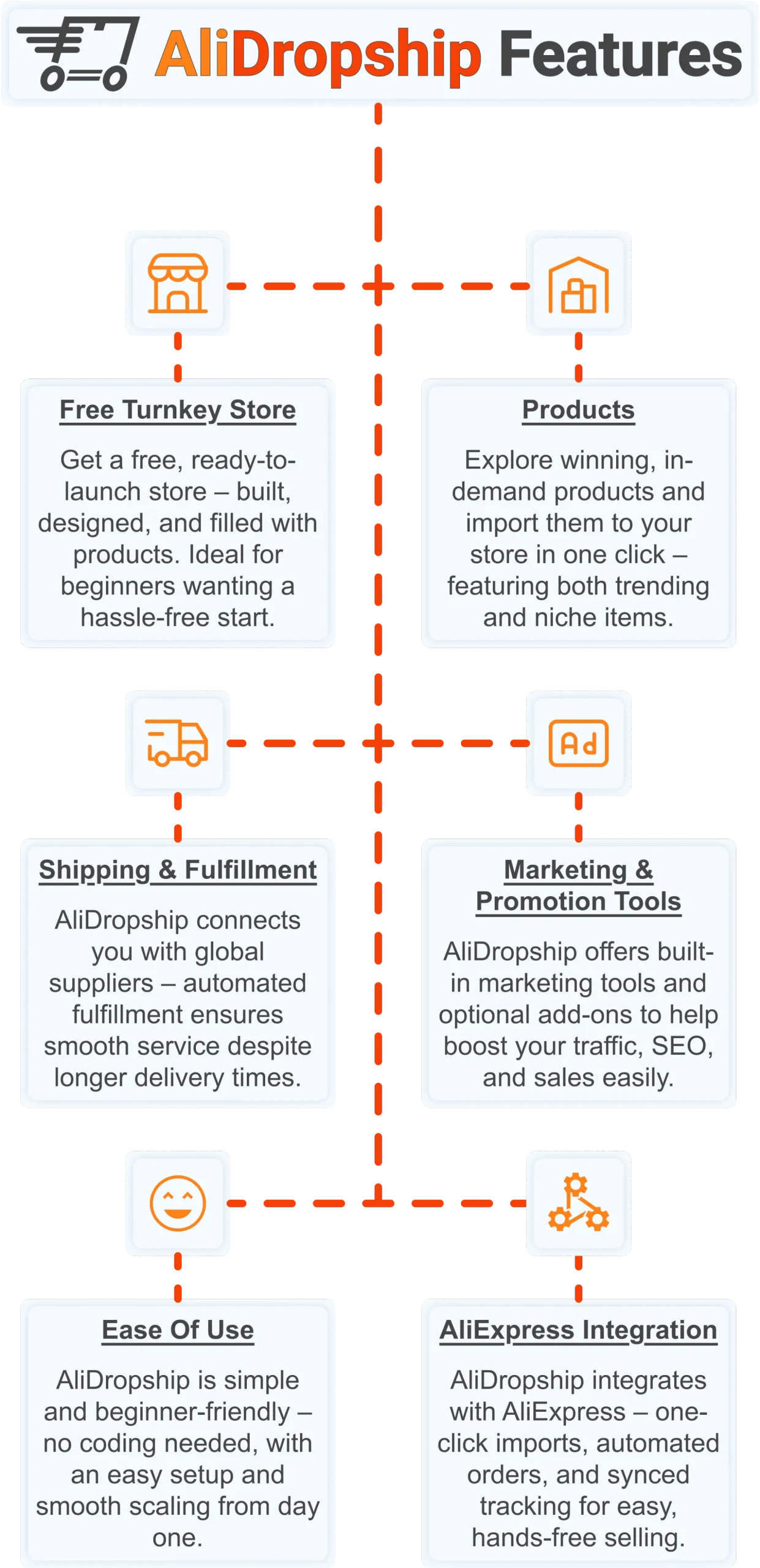
Free turnkey store 🛍️
Get a free turnkey store – built, designed, and filled with products. Ideal for beginners wanting a hassle-free start, the store comes fully optimized to attract customers right away, saving you time on setup.
Plus, it includes professional design elements to give your business a polished, trustworthy look from day one. This ready-made foundation makes it easy to move seamlessly into product selection.
Products 📦
Once your store is set up, you can explore winning, in-demand products and import them in one click – featuring both trending and niche items. This wide selection lets you cater to diverse customer interests and test what works best.
Regular updates ensure you always have fresh products, keeping your store competitive and relevant. With great products in place, smooth shipping becomes the next essential step.
Shipping & fulfillment 🚚
AliDropship connects you with global suppliers, and automated fulfillment ensures seamless order processing despite international delivery times. Customers receive real-time tracking updates, which builds confidence and trust in your store.
Once shipping is handled reliably, you can focus on promoting your store and attracting traffic.
Marketing & promotion tools 📣
To maximize sales, AliDropship offers built-in marketing tools and optional add-ons that help boost traffic, SEO, and conversions. From email campaigns and discounts to social media integration, these tools empower you to reach and retain customers without needing prior marketing experience. With promotion strategies in place, managing your business becomes simpler and more efficient.
Ease of use 👌
AliDropship is beginner-friendly – no coding needed, with an intuitive dashboard that guides you through every step. Easy setup and smooth scaling let you expand your store without stress. As your business grows, adding new features, products, and marketing campaigns remains hassle-free, giving you more time to focus on sales.
AliExpress integration 🛒
Finally, AliDropship integrates seamlessly with AliExpress, enabling one-click imports, automated orders, and synced tracking. Your inventory stays up-to-date with the latest products and prices, while automated order processing frees you from manual tasks. Combined with the turnkey setup, reliable shipping, and built-in marketing tools, this integration ensures your dropshipping business is fully equipped for growth and success.
Women’s clothing is one of the highest-demand, most repeat-purchase niches in all of ecommerce – and AliDropship gives you everything you need to tap into it from day one. Get your free turnkey store and start selling women’s fashion today.
What are the best dropshipping products for women clothing?
Is women clothing dropshipping profitable in 2026?
Yes, women clothing dropshipping remains one of the most profitable ecommerce niches in 2026. Women account for nearly 70% of online fashion revenue, and in the US alone more than 127 million women shop for clothes online. The fashion segment holds over 34% of the global dropshipping market revenue share, making it the largest single category in the industry. Stores focused on a specific niche – such as athleisure, plus-size, or sustainable fashion – consistently earn more than general clothing stores, with focused stores capable of reaching 40 to 100 dollars per day within 60 to 90 days of consistent effort.
What is the profit margin for women clothing dropshipping?
Gross profit margins in women clothing dropshipping typically range from 50 to 70%, meaning you keep 50 to 70 cents for every dollar of revenue after covering your cost of goods. However, the net profit margin after accounting for marketing, platform fees, and returns is usually 5 to 20%, depending on your niche and how efficiently you manage ad spend. Premium niches like sustainable fashion and plus-size allow higher retail prices and therefore stronger net margins. Graphic tees and athleisure at the volume end offer lower per-unit profit but benefit from high repeat purchase rates.
How do I find trending women clothing products to dropship?
The most effective ways to find trending women clothing products are Google Trends, TikTok and Instagram hashtag research, and AliExpress best-seller lists. Google Trends shows whether interest in a specific style is rising or declining over time, which helps you avoid products that have already peaked. TikTok is especially valuable because viral fashion content often signals demand 2 to 4 weeks before it shows up in search data. AliExpress trending dashboards and tools like Sell The Trend surface high-order-volume items across fashion categories in real time. Checking competitor stores on social media to see what products generate the most engagement is also a reliable and free research method.
What women clothing niches have the least competition for dropshipping?
Plus-size fashion, sustainable and eco-conscious clothing, and modest fashion are among the women clothing niches with the least direct competition in dropshipping. These segments are underserved by fast-fashion giants and therefore give independent stores a clearer path to customer loyalty and premium pricing. Boho and bohemian dress stores also tend to face less aggressive paid advertising competition than general fashion, which keeps customer acquisition costs lower. Seasonal sub-niches like resort wear and warm-weather cover-ups see strong demand spikes with relatively few dedicated competitors outside major retail seasons.