Best Dropshipping Products For Gardening In 2026

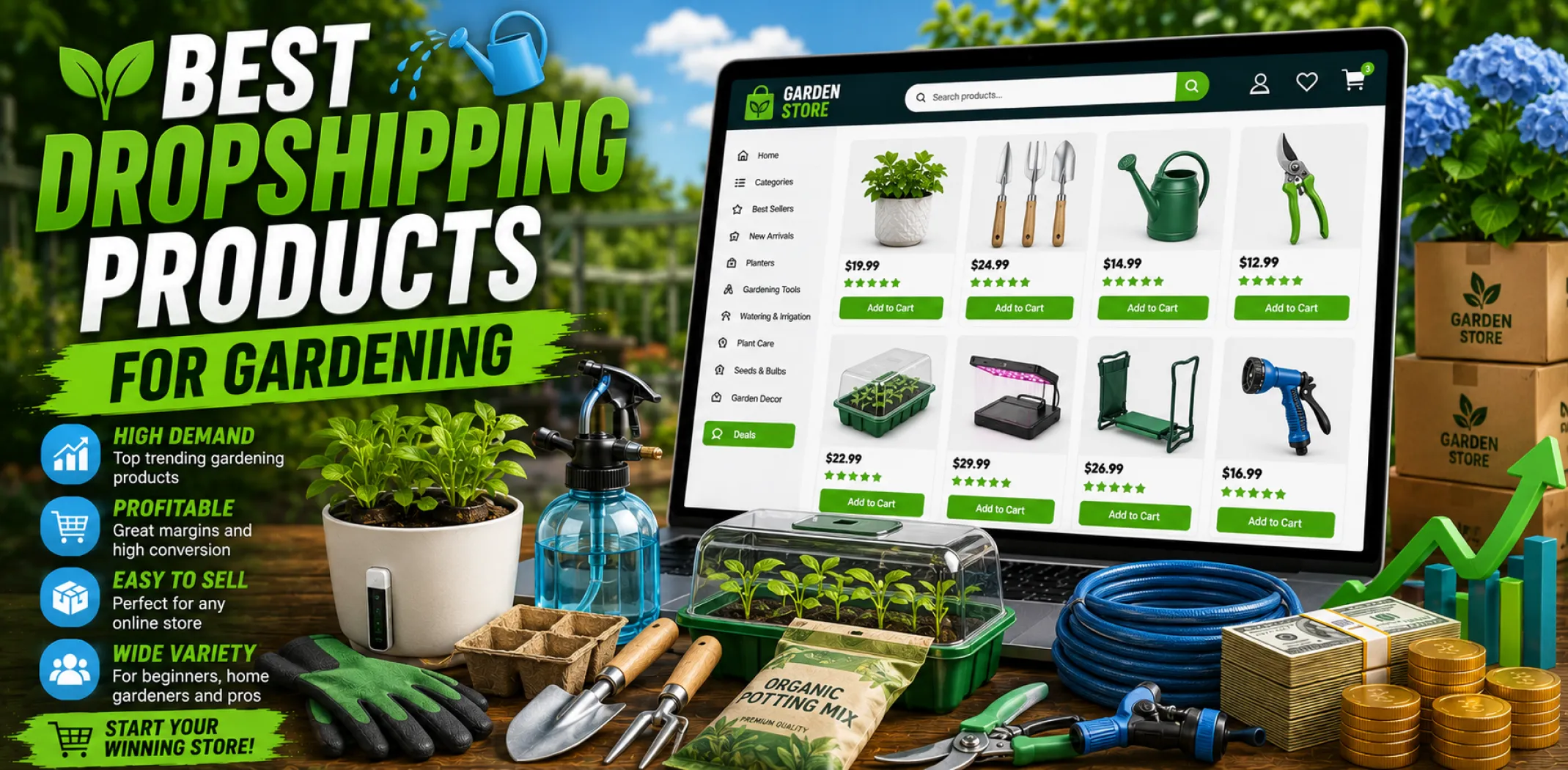
Gardening is one of the most consistently lucrative niches in ecommerce – and it has been for years, with no signs of slowing down. The global home and garden market continues to grow as more people take up gardening as a hobby, grow their own food, and invest in outdoor living spaces.
Post-pandemic home improvement trends brought millions of new gardeners into the market, and many of them are now experienced buyers actively upgrading their tools, containers, and growing systems season after season. If you are looking for the best dropshipping products for gardening, you are entering a niche with passionate, repeat-purchase buyers and product demand that spans every month of the year.
The global gardening tools and supplies market was valued at over $14 billion in 2023 and continues to expand as urban gardening, indoor plant cultivation, and raised-bed vegetable growing become mainstream hobbies across all age groups.
For dropshippers, this translates into a broad audience across multiple price points – from a $9 seed starter tray to a $65 self-watering planter set – with products compact enough to ship globally without specialist logistics arrangements.
Quick Answer: The best dropshipping products for gardening in 2026 include self-watering planters, raised bed kits, pruning and grafting tools, drip irrigation sets, seed starter trays, LED grow lights, and kneeling pads. These categories consistently perform as trending gardening products to dropship because they combine high seasonal search volume, clear practical utility, and 2–3x supplier cost markup potential – with a buyer who is planning to use their purchase immediately.
How much can you earn selling gardening supplies online?
Earnings in the gardening niche dropshipping space follow a well-documented pattern across seller communities. New sellers launching two or three focused products typically see $500–$2,000 per month within their first 60–90 days, especially if they time their launch to coincide with the spring gardening season.
Established stores running 8–15 products across a standalone store and Amazon commonly report $4,000–$16,000 per month within six months.
At the top end, niche-focused gardening stores built around a specific audience – urban balcony gardeners, raised-bed vegetable growers, or indoor plant collectors – have reached six figures annually by combining physical garden supplies with high-margin digital products like planting calendars, vegetable growing guides, and garden layout planning templates.
The gardening niche also benefits from one of the strongest seasonal demand patterns in ecommerce. Spring (March–May) is the primary peak as gardeners prepare their plots, purchase new tools, and start seeds for the season.
A second wave hits in autumn (September–October) as gardeners prepare beds for winter and buy bulb-planting equipment. And year-round, the indoor plant and grow-light sub-niche runs strong demand regardless of season. A well-stocked gardening store captures all three demand windows from the same catalog.
How gardening niche dropshipping works
Dropshipping garden supplies follows the same model as any other niche – but the category has specific dynamics that are worth understanding before you choose your first products and suppliers. Here is how a typical gardening sale flows:
Garden supplies sit in a particularly comfortable zone for dropshipping economics: most products are lightweight and compact enough for standard international shipping, prices are high enough to generate meaningful per-order margins without requiring premium brand assurance, and the buyer is motivated – someone who has already decided to start or expand their garden is not browsing casually, they are ready to buy the tools they need to get started this weekend.
Physical garden supplies vs digital gardening products – building the right mix
Physical garden supplies are the backbone of any gardening niche dropshipping catalog – they drive the initial sale and serve a buyer who wants something tangible in their hands before their next planting session.
But the most profitable gardening stores layer digital products on top of the same audience: seasonal planting calendars, raised-bed layout planners, vegetable companion planting guides, and beginner gardening handbooks. These deliver instantly, cost nothing to fulfill, and convert naturally to gardeners who are already in planning mode.
The two-track approach works especially well in gardening because the buyer is inherently planning-oriented. Someone ordering a raised bed kit is thinking about what to plant, when to plant it, and how to lay out their space – all problems that a digital gardening guide solves perfectly. The physical product brings the buyer in; the digital product adds margin to the same order with zero extra fulfillment work.
Best dropshipping products for gardening by category
The gardening supplies category is broad, but the strongest dropshipping performers share a common profile: they are practical, they photograph well in garden settings, they sit at price points that allow a clean markup, and they serve a buyer who is actively planning to use them. Below are three categories that consistently deliver in the gardening niche dropshipping space.
All three categories above serve the same core buyer – someone who wants their garden to thrive – and together they cover every stage of the gardening journey from setup to ongoing maintenance. A catalog that includes products from each category gives you cross-sell and upsell opportunities on every order and a natural reason for buyers to return with each new season.
Real sellers earning from the gardening niche
Seeing how specific sellers built real income from gardening niche dropshipping makes the path from zero to first sale far more tangible. Here are two examples that reflect what is genuinely achievable when you start with a focused product selection, a free store, and the discipline to run two channels from day one.
Claire timed her launch to the spring demand peak and paired physical products with a digital upsell from day one. Ray leveraged existing knowledge to write product descriptions that outranked competitors on Amazon. Both built real monthly income within 90 days from a free store, a focused catalog, and the decision to run two channels simultaneously.
Four strategies that work in gardening niche dropshipping
Stocking the right products is only half of what determines success in the best dropshipping products for gardening space. The strategies below consistently separate sellers who build compounding income from those who see strong spring sales and then plateau. Each one is grounded in how gardeners actually shop – with planning intent, seasonal timing awareness, and a genuine passion for their hobby.
Build around a specific gardener type
The gardening buyer pool is large and diverse – which means a generic garden store competes against everyone, and a store built for one specific gardener type competes against almost no one. A store for “urban balcony gardeners” carries different products, uses different imagery, and speaks a different language than one for “allotment vegetable growers” or “indoor plant collectors.” Narrowing to one audience dramatically improves ad conversion rates and builds the kind of store trust that turns first-time buyers into repeat customers.
Pair every physical product with a planning guide
Gardeners are natural planners – they think in seasons, planting windows, and companion combinations. Every physical product in your catalog has a natural digital companion: a raised bed kit pairs with a layout planner, a seed tray pairs with a planting calendar, an irrigation kit pairs with a watering schedule guide. These digital products add 7–20 dollars of pure margin per order, deliver instantly regardless of season, and convert at high rates because the buyer is already in planning mode when they purchase the physical product.
Run your store and Amazon from day one
Garden products rank well on Amazon organically because the category is search-led and the keywords are specific – “drip irrigation kit raised bed,” “self watering planter indoor,” “ergonomic kneeling pad garden.” Getting your listings live from day one means building organic ranking during your first 4–8 weeks while your ads are still generating the data needed to optimise. Sellers who run a standalone store alongside Amazon from the start consistently report 35–50% more revenue in their first 90 days than single-channel operators with the same catalog.
Launch 6 weeks before the spring peak
The spring gardening season is the most predictable demand surge in ecommerce – and sellers who start 6 weeks before it peak capture the full wave rather than reacting to it after it crests. Launching in mid-February (for Northern Hemisphere audiences) means your ad audiences are optimised by the time March and April demand peaks, your Amazon listings have had time to accumulate early reviews, and your digital products are already converting before the highest-competition period begins. The same principle applies to the autumn bulb-planting wave (August launch for September peak) and Christmas gifting (October launch for December).
These strategies share a single underlying principle: serve a specific gardener, serve them well, and be ready before they start actively looking. The sellers who build sustainable income in this niche are not the ones who spend the most on ads – they are the ones who understand their buyer’s rhythm and show up with the right products at the right moment, every season.
A fully built store and a complete Amazon business – both free to start
AliDropship builds your ecommerce store and fills it with 100+ digital products ready to sell, then hands you an Amazon Seller Kit – import file, beginner guide, and access to 300 million buyers on a $514 billion marketplace. Your $40 ad coupon is waiting inside so your first campaign costs nothing out of pocket.
Five factors that determine your results in this niche
Two sellers can choose the same gardening products with the same starting budget and end up in very different places after three months. The variables below consistently explain that gap – and understanding them before you launch means you avoid the most avoidable mistakes in the gardening niche dropshipping space.
Seasonal launch timing
The gardening niche has one of the most predictable demand calendars in all of ecommerce, which means timing your launch correctly is one of the highest-leverage decisions you make. Sellers who launch 6 weeks before the spring peak arrive with optimized ad audiences, established Amazon listings, and early product reviews already accumulating – advantages that a seller who launches in late March simply cannot replicate. For Northern Hemisphere audiences, mid-February is the optimal store launch date for the spring season. For autumn, mid-August captures the bulb-planting and seasonal preparation wave. Mark both dates in your calendar before you source your first product.
Garden lifestyle imagery
Gardening products sell through aspiration – the buyer wants to see the product in a real garden setting, not on a white studio background. A self-watering planter photographed on a sun-lit balcony with herbs growing in it converts 2–3x better than the same planter photographed against a neutral background. A pruning shear set laid out on a wooden garden table with gloves and a pot converts better than a flat-lay on cardboard. Sellers who source or create lifestyle imagery – even simple phone photography in real outdoor settings – see dramatically better ad performance from their first campaign.
Supplier material quality verification
Garden tool buyers are practical and experience-oriented – they use their purchases in real conditions and notice quality immediately. A trowel that bends, a pruning shear that dulls after one use, or a raised bed kit that warps in rain will generate a wave of negative reviews that is difficult to recover from on Amazon. Always request a physical sample before listing any tool product, check for stainless steel construction on cutting tools, UV-stable plastics on outdoor planters, and weight-rated claims on any load-bearing item. This single due-diligence step eliminates the majority of return risk in the gardening tools category.
Amazon listing keyword specificity
Gardening buyers on Amazon use highly specific search terms: “self watering planter indoor herbs,” “raised bed kit 4×8,” “drip irrigation kit raised bed vegetables,” “ergonomic kneeling pad garden foam.” Listings that include these specific keyword phrases in their titles and bullet points rank faster and hold positions longer than generic descriptions. Sellers who invest 30 minutes writing Amazon-specific listing copy before uploading their Seller Kit import file see measurably faster organic ranking than those who use the default supplier copy – and those rankings translate into revenue with no ongoing ad cost.
Building a cross-season catalog
The biggest risk in gardening dropshipping is building a catalog that only works in spring. Sellers who plan their product mix for all three demand windows – spring planting (March–May), autumn preparation (September–October), and Q4 gifting (November–December) – generate significantly more stable annual revenue than those who go heavy on spring items and then watch sales fall off in summer. Indoor grow lights, plant care accessories, and compact indoor planters perform well year-round and give your store consistent income between the seasonal peaks. Gifting-friendly items – tool sets, beautiful planters, gardening glove sets – belong in every autumn and Q4 catalog.
All five factors come back to preparation and specificity. The gardening niche rewards sellers who think like gardeners – who understand the seasonal rhythm, the need for reliable products that work in real conditions, and the planning intent of a buyer who is already imagining what their garden will look like next season.
That mindset, applied consistently from launch day, is what separates a profitable gardening store from one that peaks in April and then goes quiet.
Why AliDropship is built for selling gardening supplies online
AliDropship handles every technical and logistical layer of starting a gardening supplies store – so you can focus on what actually generates revenue: choosing the right products, testing ads, and building a catalog that serves your buyer across every season. Your store arrives professionally built and stocked before you log in for the first time. Here is what the platform includes.
Free turnkey store – built, designed, and filled with products
Your store arrives professionally designed, pre-loaded with 50 bestselling products, and fully optimized to convert. No setup fees, no coding, no design time. You start at the product-testing stage – not the store-building stage. Hosting, SSL, and payment gateway are all included.
Winning products, one-click import
Browse trending and niche items from AliDropship’s catalog – including brand-name and digital products – and import them to your store in one click. The catalog updates regularly so your store always has fresh, competitive inventory without manual research.
Automated fulfillment and real-time tracking
Orders are processed automatically through global supplier connections. Customers receive real-time tracking updates – building trust and reducing support volume. You don’t touch the shipping logistics; the platform handles it end-to-end.
Built-in marketing and promotion tools
Email campaigns, discount management, abandoned-cart recovery, live countdown timers, and social media integration are all included or available as add-ons. No prior marketing experience required – the tools guide you through each campaign type.
Beginner-friendly – no coding, no learning curve
An intuitive dashboard walks you through every step. Adding products, running campaigns, and scaling your catalog require no technical knowledge. As your business grows, the platform scales with you – adding features without adding complexity.
AliExpress integration – one-click imports, synced inventory
AliDropship connects directly to AliExpress for one-click product imports, automated order processing, and synced tracking. Inventory stays current with the latest products and prices. Combined with the turnkey store and automated fulfillment, this integration makes the entire operation manageable for one person.
What are the best dropshipping products for gardening in 2026?
Is gardening niche dropshipping profitable for beginners?
Yes, gardening niche dropshipping is one of the most beginner-friendly niches in ecommerce. The global gardening tools and supplies market is valued at over 14 billion dollars and continues to grow as urban gardening, indoor plant cultivation, and home food production become mainstream hobbies. The niche has a predictable seasonal demand calendar that allows new sellers to plan their launch timing in advance, and physical gardening products have low return complexity because they are simple, functional items with no complex spec claims to verify. Many sellers report their first consistent earnings within 60 to 90 days of launching, particularly those who time their launch 6 weeks before the spring gardening peak.
What trending gardening products to dropship have the best margins?
Raised bed kits offer some of the strongest per-order margins in gardening niche dropshipping, retailing for 38 to 75 dollars at supplier costs of 13 to 24 dollars. Drip irrigation kits retail for 18 to 42 dollars at supplier costs of 5 to 12 dollars and generate consistent 3 times markup at high seasonal volume. Self-watering planters retail for 22 to 55 dollars at supplier costs of 7 to 16 dollars with very low return rates. Digital companion products – planting calendars, vegetable growing guides, garden layout planners – deliver 50 to 70 percent margin per sale with instant delivery and no fulfillment cost, making them the cleanest margin addition available to any gardening store.
How do I find the best gardening supplies to sell online?
The most reliable method is to cross-reference Amazon bestseller rankings in the patio, lawn, and garden category with supplier catalog data and Google Trends seasonal data. Products that rank in the top 100 of their Amazon garden subcategory, have a supplier cost below one-third of the retail price, and show rising search volume between January and April are the strongest spring season candidates. Self-watering planters, pruning shears, and drip irrigation kits have held strong positions consistently. LED grow lights and indoor planters are worth prioritising for year-round revenue between seasonal peaks.
Can I run a gardening store and an Amazon business at the same time?
Yes, and running both channels simultaneously is one of the most effective strategies in gardening niche dropshipping. Garden products rank well on Amazon organically because buyers use specific search terms – self watering planter indoor herbs, raised bed kit 4x8, drip irrigation kit raised bed vegetables – and listings that include these terms in titles and bullet points rank within 4 to 8 weeks of upload. Sellers who run a standalone store alongside Amazon listings from launch day consistently generate 35 to 50 percent more monthly revenue than single-channel operators with the same catalog. The Amazon Seller Kit available through AliDropship includes a pre-formatted product import file that reduces Amazon setup from days to hours, with most sellers having their listings live within 24 hours of receiving it.