How A Mom Got Her 14-Year-Old To Save $145 In 30 Days: Teaching Teens About Money


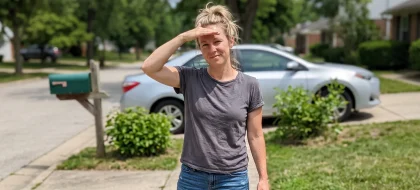
Madison earned $280 babysitting over three months and spent every dollar within eleven days – Robux, Sephora hauls she barely used, drive-throughs after volleyball. Her mom Brittany had taught her to drive a stick shift and fold a fitted sheet, but went looking for help with teaching teens about money because no one had ever taught her how to teach it.
Brittany is 36, a school bus driver in Tulsa raising Madison alone on $32,400 a year. She had never seen a financial advisor or taken a money class – she balances the checkbook in pencil on the back of a receipt. That kept the lights on, but it was not enough to sit a 14-year-old down and explain what money actually is.
What changed it was not a lecture. It was fifteen minutes at the kitchen table each Sunday for four weeks, following a script a parent can just read aloud – no personal-finance knowledge required. Here is the order it happened in.
Why lecturing a teenager about money never works
Telling a teen to “be careful with money” slides right off, because a teenager does not learn from a warning – they learn from doing it with real cash they earned. The gap was never Madison’s attitude or Brittany’s love. It was that no one had handed Brittany a structure to turn a painful spending moment into a lesson that lands.
The reassuring part: a parent does not need a finance degree, and the school will not fill the gap. A few minutes a week, tied to money the teen actually earned, does more than any classroom worksheet. That is exactly what a guided script hands a busy parent.
Brittany was not raising an irresponsible kid, and she was not doing anything wrong. There was simply no ritual in place – no time, no script, no structure – for the one thing school never taught either of them.

Brittany drives the 5:30am route and the 2:45pm route, then comes home to homework and dinner. She did not need a course – she needed someone to hand her the exact words to say to Madison on a Sunday night that would not sound like a lecture.
Like a lot of parents searching for help with teaching teens about money, Brittany was not after a finance curriculum. She wanted a simple weekly script that would help Madison keep some of the next $280 instead of blowing all of it.
What Brittany tried first – and why none of it stuck
Before the script that worked, she tried the usual things:
“Just be careful with your money”
A warning, not a lesson. Madison nodded and spent the next $280 the same way. Words with no system behind them changed nothing.
A $97 Dave-Ramsey-style course
Aimed at adults with credit cards and mortgages, not a 14-year-old with babysitting money. Too expensive, too abstract, and it never told her what to actually say.
A YouTube channel run by a 22-year-old
Confident advice from someone who had clearly never had a babysitting job. Generic tips with no script a tired mom could run on a Sunday night.
Every option assumed either an adult learner or a parent who already knew personal finance. None answered the real question: what exact words do I say to my teen, on a schedule, using the money they already earned?
Seven dollars – the price of a Whataburger combo. I thought, even if it’s garbage, I just want a script. I just want someone to tell me what to say to my daughter on a Sunday night that does not sound like a lecture.
She bought it Monday morning before her route and started that Sunday at the kitchen table with Madison and a yellow legal pad. A few questions about Madison’s age and earnings set up the four lessons.
The 4 Sunday lessons the coach built for Madison
Fifteen minutes a Sunday, four weeks, all read straight off Brittany’s phone. Each lesson used Madison’s own babysitting cash, not pretend money:
Madison stared at that first page a long time. She did not cry – she just laughed and said, mama, I bought a face mask that did not work for forty dollars, and then I bought another one. That was the moment it clicked for both of us.
The whole thing hinged on the script, not on Brittany knowing finance. She read the questions; Madison did the math and the thinking – which is exactly why it landed.
From $0 saved to $145 in 30 days: Madison’s month
Madison’s babysitting kept coming in. This time, a chunk of it stayed – moving into a clear Mason jar on her nightstand, a little more each week.

A jar of $145 is not a fortune. But it was the first time Madison chose to keep money on purpose – and the first structure she’ll carry into her first paycheck, first car, first apartment.
Why the money lesson has to happen before the first paycheck
There is a reason so many adults never learn to save. The habits set early and run for decades – a teen who learns to split earnings they made themselves carries that structure into every paycheck after. Miss the teen window and the pattern hardens the hard way, through overdrafts and credit cards.
The other options are not bad – they are just built for adults or for no one in particular. A teen learns from a script tied to their own money, run on a schedule – the part nobody hands a busy parent.
What if I do not know anything about personal finance myself?
That is the whole point of the script – you read, the teen thinks. Brittany balances her checkbook in pencil on a receipt and has never taken a finance class. The parent asks the questions off the phone; the teen does the math with their own money. You are the coach reading the plays, not the expert.
What other families did with the same 4-Sunday coach

“My 12-year-old does yard work for $15 a lawn and used to blow it instantly. Four Sundays with the script and he started keeping half toward a bike. I never had to lecture once.”
Tasha R. · single mom, McAlester OK

“I’m raising my 13-year-old grandson. I printed the lessons and we did one every Sunday after church. He saved for his own cleats – and asked me what a savings account was. That question was everything.”
Linda M. · grandmother, Tulsa OK
Beyond the 4 Sunday lessons, Teen Budgeting & Savings Coach includes the save/spend/give split, the named-goal worksheet, the 24-hour cart rule, the Mason-jar interest demo, and age-tuned versions for 11 to 17. One purchase, and you can run it again for each kid.
Teaching teens about money: the 5-step playbook
Use their own money, not pretend money
Babysitting, yard work, a first paycheck – the lesson only lands when it is cash the teen earned and cares about.
Trade the lecture for a script
Read the questions and let the teen do the thinking. The conversation lands because they reach the answer, not you.
Anchor it to one goal they actually want
Concert tickets, shoes, a summer trip. A named target turns saving from a chore into a countdown. The right tool helps pick it.
Split every dollar: save / spend / give
A simple three-way split on each amount they earn builds the habit that carries into adult paychecks.
Keep it short and weekly
Fifteen minutes, same time each week. A short repeated ritual beats one long talk every time.
Brittany did not become a finance expert. She used real money, swapped the lecture for a script, anchored it to a goal Madison wanted, split each dollar and kept it short and weekly – in that order. Any parent or grandparent can run the same sequence.
That is the whole idea of a teen budgeting coach: stop lecturing, hand the parent a script tied to the teen’s own earnings, and let one named goal teach the habit.
Teach your own teen the money lesson school skipped – the same 4-Sunday coach Brittany used.
*Individual results may vary. Educational family guidance, not personalized financial advice.
How do you teach teens about money?
How do you teach a teenager money management?
When should you start teaching kids about money?
What are good money activities for teens?
How do you teach teenagers about money without lectures?
Why teach kids about money early?


Recommended for You