Get your FREE store and a $100 gift voucher!
Side hustle starter pack with a $100 bonus voucher inside
Claim a free store with a head-start voucher today!
Get for free

A 7-Year-Old’s Homework Saved Her Mom $340/Month: How To Learn Financial Literacy From Zero


learn money

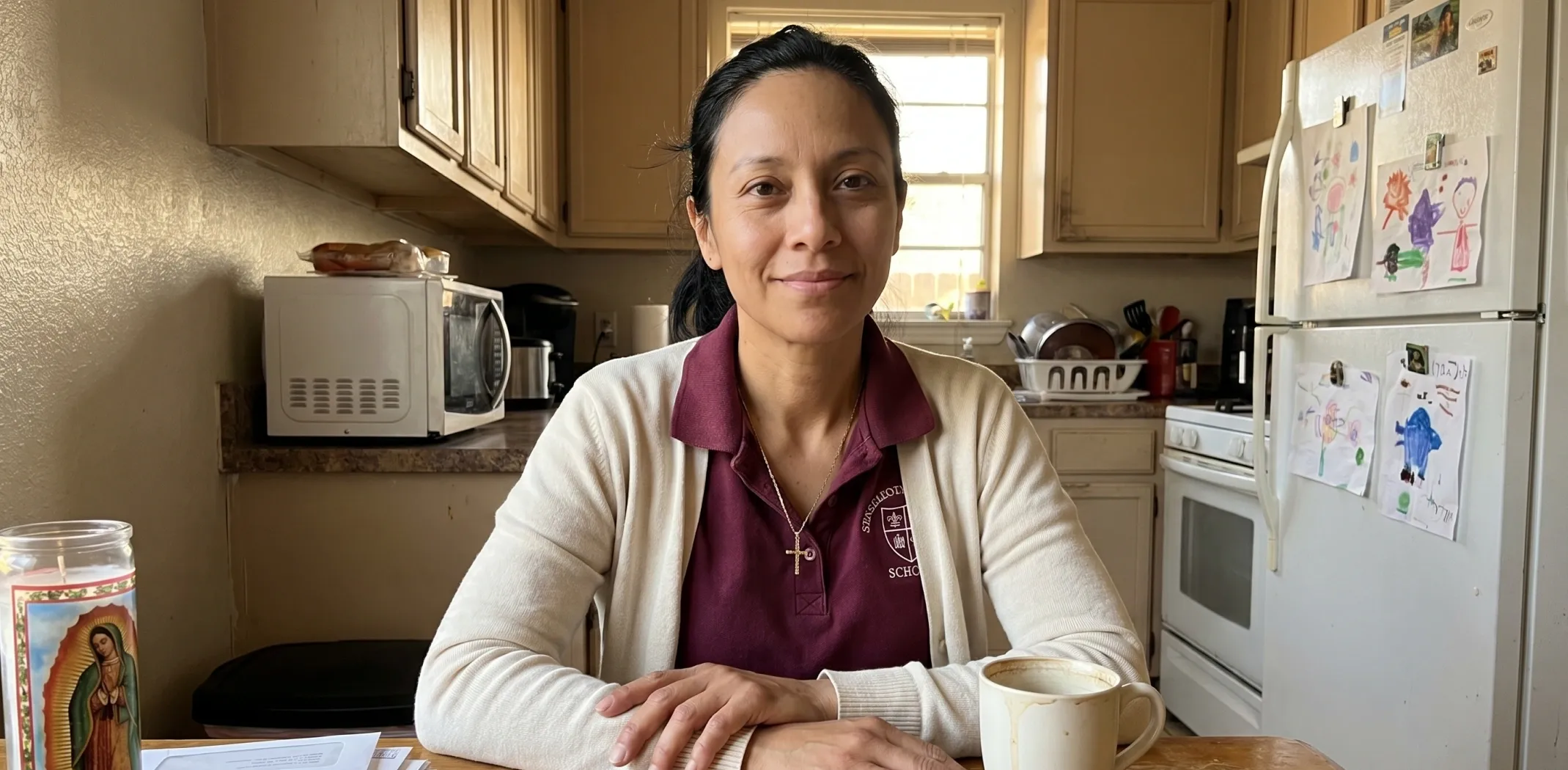
Looking for how to learn financial literacy when your seven-year-old’s homework just asked you what interest is and you realized you could not answer her? Marisol did exactly that on a Saturday morning in San Antonio. By Day 30 of a $19 course she had built a budget that cut $340 a month of waste, called her credit card company and dropped her rate from 24.99% to 16.99% in eight minutes, and enrolled in a 401(k) match her employer had been offering for three years.

Most articles about how to learn financial literacy assume you already have a savings account, a budgeting app, and an emergency fund. Marisol had none of those. She is 38, works in the cafeteria at an elementary school on the west side of San Antonio, makes $32,400 a year, and is raising Diego (11) and Sofia (7) alone in a two-bedroom apartment off Bandera Road. On the 28th of the month there is roughly $124 in overdraft fees, a $4,800 Capital One balance she had been paying the minimum on for three years, and a seven-year-old who needed help with a homework worksheet titled “Money Words.”

For three years Marisol carried the same debt and the same overdrafts and the same quiet shame about not understanding it. Then one Saturday morning at the kitchen table Sofia looked up from a worksheet and asked five words Marisol could not unhear, a $19 link showed up in her search results that afternoon, and thirty days of fifteen-minute lessons changed what her daughter would learn about money. Keep reading.

Why learning financial literacy as an adult is no longer optional for working-class families

For three years Marisol told herself the same thing every Friday: this paycheck I will start to understand it. Three years went by. The minimum on the Capital One got paid. The overdraft fees got paid. Diego’s school clothes got paid. Sofia’s preschool got paid. And the part of Marisol’s brain that knew she was supposed to know more than this got quieter and quieter until she could not hear it anymore.

76%
of US adults cannot pass a basic financial literacy test (FINRA 2024)
$972
is what Marisol lost per year by not enrolling in her 401(k) match
$340
is the monthly waste Marisol cut in 30 days using a $19 course

Those numbers explain the position Marisol was in – not lazy, not stupid, just untaught. Three quarters of American adults are in the same position. The financial literacy advice she had encountered online was built for someone who already knew what an APR was. None of it said: given that nobody has ever taught you the basics, here are the ten plain-English lessons that pay back $340 a month inside 30 days.

Expert tips:
Most financial illiteracy is not the adult’s fault. Public schools spent two periods on balancing a checkbook in 1999 and called it personal finance. HR departments hand out 25-page 401(k) PDFs and never follow up. Parents who were never taught cannot pass down what they do not know. The Financial Literacy Course runs 30 lessons of 15 minutes each, in plain English, with real dollar amounts and phone-call scripts for the actual conversations that lower your rates and unlock your benefits.

Marisol’s situation was not catastrophic. The lights stayed on. The kids ate. Sofia’s teacher loved her. But the $4,800 Capital One balance had not moved in three years, the overdrafts came around every other month, the savings account had been at $0 since Diego was born, and Marisol was starting to feel like she had been quietly bleeding money she did not even know she had.

how to learn financial literacy

Marisol is 38. She wakes up at 5:45am, walks Diego and Sofia to the school bus by 7:15, and clocks in at the cafeteria at 7:30. She serves breakfast and lunch to 412 elementary kids, scrubs the steam tables at 1:45, and clocks out at 2:30. She walks back to the apartment, makes coffee, and tries to be home before Diego and Sofia walk back from the bus stop at 3:10. Her mother lives in Eagle Pass and calls every Sunday at 4pm. Her ex-husband has not been seen in five years.

Like a lot of working-class single mothers hunting for how to learn financial literacy without the time, money, or background to take a community college class, Marisol was not chasing wealth. She was hunting for one weekend of plain-English answers that would mean Sofia did not grow up like she did – with a mother who could not explain what compound interest was.

What Marisol tried for three years – and why none of it taught her anything

Before the $19 course, here is what Marisol had tried:

Scrolling past three different $400 financial planning courses on TikTok

Every other ad on her feed promised wealth, financial freedom, or seven figures of passive income. Every single one cost between $397 and $1,997. Marisol could not justify any of them on $32,400 a year, and the discomfort of scrolling past made her feel worse every time.

Free YouTube “passive income” channels that opened with Lamborghinis

Marisol watched eleven videos across four creators and learned about side hustles, crypto, and yacht-club tax shelters – but never what APR meant or how to call a credit card company. The content was built for people who already understood the basics. Marisol was not those people.

Asking HR about her 401(k) once in 2022

During onboarding three years ago, the HR coordinator handed Marisol a 25-page PDF, said “just fill it out when you can,” and never followed up. The form sat in her work locker for two months and then ended up in the recycling. Marisol had been refusing $972 a year of free money ever since.

Every option Marisol encountered assumed someone she wasn’t. Someone with $400 to spare. Someone who already understood basic terms. Someone with HR support. None of them ever said: given that you have $0 to spend and you have never been taught the basics, here are the ten plain-English lessons that change everything inside 30 days.

That is the gap Marisol walked into the Saturday afternoon her phone returned a $19 link in a search for a money course built for working-class adults starting from zero.

I almost did not click it. Nineteen dollars after three years of scrolling past four-hundred-dollar courses felt suspicious. But the description said plain English and fifteen minutes a day and I thought: if this is the thing that lets me explain interest to Sofia, it is the cheapest seminary in America.

Marisol paid the $19 that Saturday afternoon. Sofia was watching Encanto in the living room for the fourteenth time. The course’s first email arrived with a Day 1 lesson called “Three Months Of Statements: Look, Do Not Judge” and a fifteen-minute video she could watch on her phone in the bath the kids were not using.

single mom financial literacy success story

The 3 financial literacy paths the course mapped for Marisol

Fifteen minutes in, Marisol had a clear ranked picture of where her three options actually stood – not the same Lamborghini-driver list, but a real working-class triage.

FINANCIAL LITERACY COURSE · 3 PATHS RANKED FOR MARISOL
15 MIN A DAY · 30 DAYS
Inputs: $32,400/yr · $4,800 credit card debt at 24.99% · $124/mo overdraft · 2 kids · phone only
3
★ BEST FIT
~$340/mo back + $972/yr unlocked

Path 1 · 30-day phone-based course in plain English

15 minutes a day · budget audit, APR explainer + phone script, 401(k) match enrollment, savings automation · real dollar amounts · runs on her phone in the cafeteria break room · Realistic in: 30 days

SLOWER RAMP
free, 14+ hours

Path 2 · Khan Academy Personal Finance (free)

Comprehensive video library · no phone-call scripts for the actual negotiation moves · no step-by-step day plan · designed for self-pacers with a college background · realistic in: 4–6 months

WRONG TOOL FOR GOAL
needs $1K+ to even start

Path 3 · Robo-advisor or trading app

Assumes you already have an emergency fund and no high-interest debt · investing while paying 24.99% on a credit card is mathematically backward · will not fix the bleed

The thing that stopped me was the course was honest about Path 3. It said do not open a Robinhood account while you are paying 24.99% on Capital One – that math will eat you. That was the first money advice in my life that did not try to sell me an app I could not afford to use.

Financial Literacy Course
Every year you wait costs roughly $1,500–$3,800 in overdrafts, interest, and missed employer match. Working-class adults who keep scrolling past usually lose $7,000–$15,000 across a decade of not knowing the basics.

76% of US adults are financially illiterate. Are you in the 24%?

30 lessons of 15 minutes each, in plain English, with real dollar amounts and phone-call scripts. Budget audit, APR negotiation, 401(k) match enrollment, savings automation. No app, no subscription. Built for adults whose schools and HR departments skipped the lesson.

A fee-only financial planner charges $200+/hr

$19

Start The 30-Day Course Now →

One-time · Instant access · 30-day refund, no questions · Private

Marisol started Path 1 that Monday morning on her phone in the cafeteria break room. Day 1 she pulled her last three Wells Fargo statements onto a single piece of notebook paper and just wrote down every recurring charge. Disney+ she had not opened in eight months: $14. Cable add-on for movie channels she never watched: $19. Drive-through breakfasts twice a week she did not remember buying: about $160. Three subscriptions she had signed up for during a free trial and never canceled: $54. Total monthly bleed she had not seen: $247.

From $0 saved and $4,800 in debt to $340/mo found in 30 days: Marisol’s timeline

Day 6, Marisol read the lesson called “What APR Means And What To Say When You Call.” The course gave her a four-sentence phone script. She read it twice in the bathroom mirror at 6:48am. She called Capital One on her cafeteria break at 9:20. Eight minutes. They cut her rate from 24.99% to 16.99% without arguing.

I almost dropped the phone. They just said yes. Eight minutes. Like asking for ketchup. I had been bleeding that money for three years because nobody had told me I could ask.

30-Day Timeline · Marisol, San Antonio TX
Day 1
Budget audit: three months of statements on one notebook page. Found $247/mo of waste – subscriptions, cable, drive-throughs.
Day 6
Called Capital One with the course’s 4-sentence script. Rate dropped 24.99% → 16.99% in 8 minutes.
Day 11
Walked into HR at lunch with the course’s enrollment guide. Enrolled in the 3% 401(k) match: $972/yr unlocked.
Day 18
Opened a real savings account at a credit union. Set up $50/week auto-transfer from checking.
Day 24
Cancelled three forgotten subscriptions and the cable add-on. Total monthly waste cut: $340.
Day 30
Sofia’s 8th birthday paid for in cash: bounce house, piñata, cousins driven up from Laredo. First debt-free birthday in 3 years.

Three hundred forty dollars a month is not rich-people money. But it covered Sofia’s birthday in cash, stopped the overdraft cycle, and bought back Marisol’s ability to look her daughter in the eye and explain compound interest with pennies in a Mason jar. The Capital One balance started dropping for the first time in three years. The savings account passed $200 for the first time in Marisol’s adult life.

The first thing Sofia said when I told her about compound interest was “Mami so that means if I put a penny in every day I will get more pennies for free?” That was the moment I stopped feeling like a 38-year-old woman who did not know money. I started feeling like a mother who could teach her daughter what nobody had ever taught her.

Why most adults never learn financial literacy – and the whole trap

There is a reason 76% of US adults cannot pass a basic financial literacy test. It is not laziness. It is that the personal finance advice they encounter was built for someone who already knows what an APR is, who already has an emergency fund, and who already has time to take a community college class. None of those describe a single working mother on a $32K salary with a Capital One balance and two kids.

financial literacy 30 day plan for adults

Option
Cost
Time
Matched to you
$400 TikTok finance course
$397–$1,997
Many weeks
Built for high earners
Fee-only financial planner
$200+/hr
Multiple sessions
Slow, expensive
Free YouTube + trial-and-error
Free
Many months
No, generic
Financial Literacy Course
$19
30 days × 15 min
✓ Yes, plain English

The other options are not bad. They are built for someone with more disposable income, more time, or more existing financial knowledge than a working-class adult starting from zero actually has. The match to your real paycheck and your real schedule is what matters – not the price tag.

🤔

What if my situation is worse than Marisol’s – or completely different?

The course covers the foundations every working-class adult needs first – not the specifics of one woman’s case. The 30 lessons cover budgeting, APR, the 401(k) match, savings automation, credit scores, debt prioritization, emergency funds, and basic investing fundamentals – in plain English. Whether you are $0 in debt or $40,000 in debt, the lessons apply. And because it’s one-time with lifetime access, you can come back any time the situation shifts – same $19 still works.

What other working-class adults are doing with the same 30-day plan

WEBP-Jennifer-R-Compressify.io_.webp

★★★★★

“I called Discover with the script and they wiped a $39 late fee. The budget audit found me $218/month. Two weeks in and I felt like a different person.

Elena R. · daycare worker, Phoenix AZ

WEBP-Rosa-M-Compressify.io_.webp

★★★★★

“Found out my employer matches up to 6%, not 3%. I was leaving $2,400 a year on the floor for FOUR YEARS. Course paid itself back 267 times over.

Rosa H. · warehouse worker, Memphis TN

ALSO INCLUDED

Beyond the 30 daily lessons – Financial Literacy Course includes 12 plain-English phone-call scripts (credit card APR negotiation, late-fee reversal, overdraft fee waiver, HR 401(k) enrollment), a downloadable budget worksheet, and lifetime access to revisit any lesson when your situation shifts. One purchase, every working-class year of your life.

How to learn financial literacy when nobody at school, work, or home ever taught you

1

Stop scrolling past the $400 courses

They are not for you. They are for people with disposable income. Working-class adults need plain English in 15-minute chunks.

2

Start with the budget audit, not the investing lesson

You cannot invest your way out of a hole you are still digging. Three months of statements on one page. Look, do not judge.

3

Make the phone calls nobody told you you could make

APR reduction. Late fee reversal. Overdraft waiver. 401(k) match enrollment. The right course gives you the script.

4

Automate before you can talk yourself out of it

$50/week to savings. Set it the same day you set up the budget. The discipline is the automation, not your willpower.

5

Teach your kids what you wished you had been taught

Pennies in a Mason jar. A compound interest demo every Sunday. So they never grow up to be 38 in a bathroom not knowing.

⏱ Most readers see their first $50+ saved within 7 days

Tired of paying minimums and overdraft fees you never understood?
Learn the money you were never taught.

30 lessons of 15 minutes each, on your phone, in plain English. Budget audit, APR negotiation, 401(k) match enrollment, savings automation, basic investing. No app, no subscription. Built for adults whose schools skipped the lesson.

A fee-only planner charges $200+/hr

$19

Start The 30-Day Course Now →

One-time payment · Lifetime access · Instant access · No subscription

✓ 30-day money-back guarantee

Learn the money your school never taught you – try the same 30-day course Marisol used.

START THE 30-DAY COURSE

FAQ

How long does it take to see real money back?

Realistically – between 6 and 14 days for the first $50–$100 back with the budget audit and the APR call. Marisol cut $247/mo on Day 1 and got her APR reduction on Day 6. By Day 30 the total was $340/mo back plus a $972/yr unlocked 401(k) match.

Do I need a budgeting app or any other paid tool?

No. The course runs on your phone with no app, no subscription, and no required spreadsheet. A pencil and a notebook page are enough. Everything you need comes with the $19 purchase – lessons, scripts, worksheet.

What kinds of adults does the course work for?

Financial Literacy Course works for any working-class adult – cafeteria workers, retail, food service, healthcare aides, warehouse, education staff, customer service. The 30 lessons assume zero background and use real dollar amounts a real paycheck can relate to.

Is $340/month in 30 days typical or unusual?

$340/month is on the realistic side of typical for adults on $30K–$50K incomes carrying credit card debt and missing employer benefits. Most adults using a system like this for 30 days find between $180 and $520 of monthly waste plus 1–2 unlocked employer benefits.

What if my debt is bigger than Marisol’s?

The course covers debt strategy specifically for higher balances ($10K–$50K) in lessons 14, 17, and 22 – debt prioritization (avalanche vs snowball), consolidation pros and cons, when to call a non-profit credit counseling service (NFCC) and when not to. The plan adapts to your real debt size.

Can I revisit lessons after 30 days?

Yes – the course includes lifetime access. Most users come back at tax time, after a raise, or when a kid is heading to college.
avatar
By Anna V.
They say you can't do too many tasks at once and achieve great results. But they most likely don't know Ann! She's, first of all, a mother and a wife, then, a marketing expert, and... a proud creator of multiple 6-figure stores. Can you keep up? Learn from her experience and you'll achieve success!
×