Her Sketches Sat In A Drawer For Years: How To Turn A Hobby Into A Business


Maya Okafor had been told “you should sell these” about her illustrations for years, and never knew how. She loved drawing on her iPad every weekend – but figuring out how to turn a hobby into a business felt like a different skill she did not have.
She is 29, an office administrator in Sacramento who draws for the joy of it. The talent was never the question; the business was. What to offer, what to charge, where to find a first customer, and how to do any of it on a few weekend hours – that was the wall, and so the art stayed a hobby that paid nothing.
What changed it was not a business degree – it was a plan. Five questions turned her hobby into one clear offer, a beginner price, the scripts to find a first client, and a 60-day path to get there. Six weeks later her first invoice cleared. Here is the order she did it in.
Why “just sell your art” never turns a hobby into income
Loving a craft and running it as a business are two different skills. Most talented hobbyists master the making and never learn the rest – which offer to sell, what to charge, and how to ask. So the work piles up, admired and unpaid, while “I should sell this” stays a someday.
Read together, the numbers are encouraging: side income is common, the average is healthy, and a hobby business costs almost nothing to start. The difference between a hobby and a paid one is not talent – it is one clear offer, a real price, and the nerve to make the first ask.
Maya was not short on skill or even on interest from friends. What she lacked was a way to turn “you should sell these” into an actual offer with a price – and the fear of charging kept her giving the work away.
Like a lot of creative people, Maya had a sellable skill and an audience of admirers. What she needed was a plan to convert that into one offer and a first paying customer – not more practice.
What Maya tried first – and why none of it paid
Before the plan that worked, there were months of almost-starting:
Posting art and hoping someone asks
Lots of likes, no sales. Admiration is not an offer – without a clear “here is what I sell and for how much,” nobody knew they could buy.
Giving it away for “exposure”
Free pieces for friends that never turned into paid work, because she never set a price or made the ask. Exposure does not pay rent.
Waiting to feel “good enough” to charge
The confidence never arrived on its own. Without a price and a script, “one day I will sell” stayed one day, year after year.
Every approach assumed the missing piece was more skill or more followers. None answered the real question: what is the one thing I sell, what do I charge, and how do I ask the first person – this month?
I did not have a talent problem. I had an offer problem. The first time something turned my drawing into a priced package and handed me the words to pitch it, I finally stopped giving it away.
The 4 things the Starter built from Maya’s answers
She answered five quick questions – her hobby, income goal, weekly hours, the materials she had, and her biggest fear. A few minutes later she had four things, all sized for a few weekend hours:
It did not tell me to “believe in myself.” It told me exactly what to sell, what to charge, and what to say – and the first sale stopped feeling impossible.
The first move the plan flagged was the smallest: post three pieces as a simple portfolio and message five people who had already admired her work, using the script. No new skill, no big audience – just a clear offer and the first five to ask.
From a free hobby to a first invoice: Maya’s 60 days
The plan ran like one focused couple of months – portfolio, price, pitch, deliver. A few weekend hours at a time.

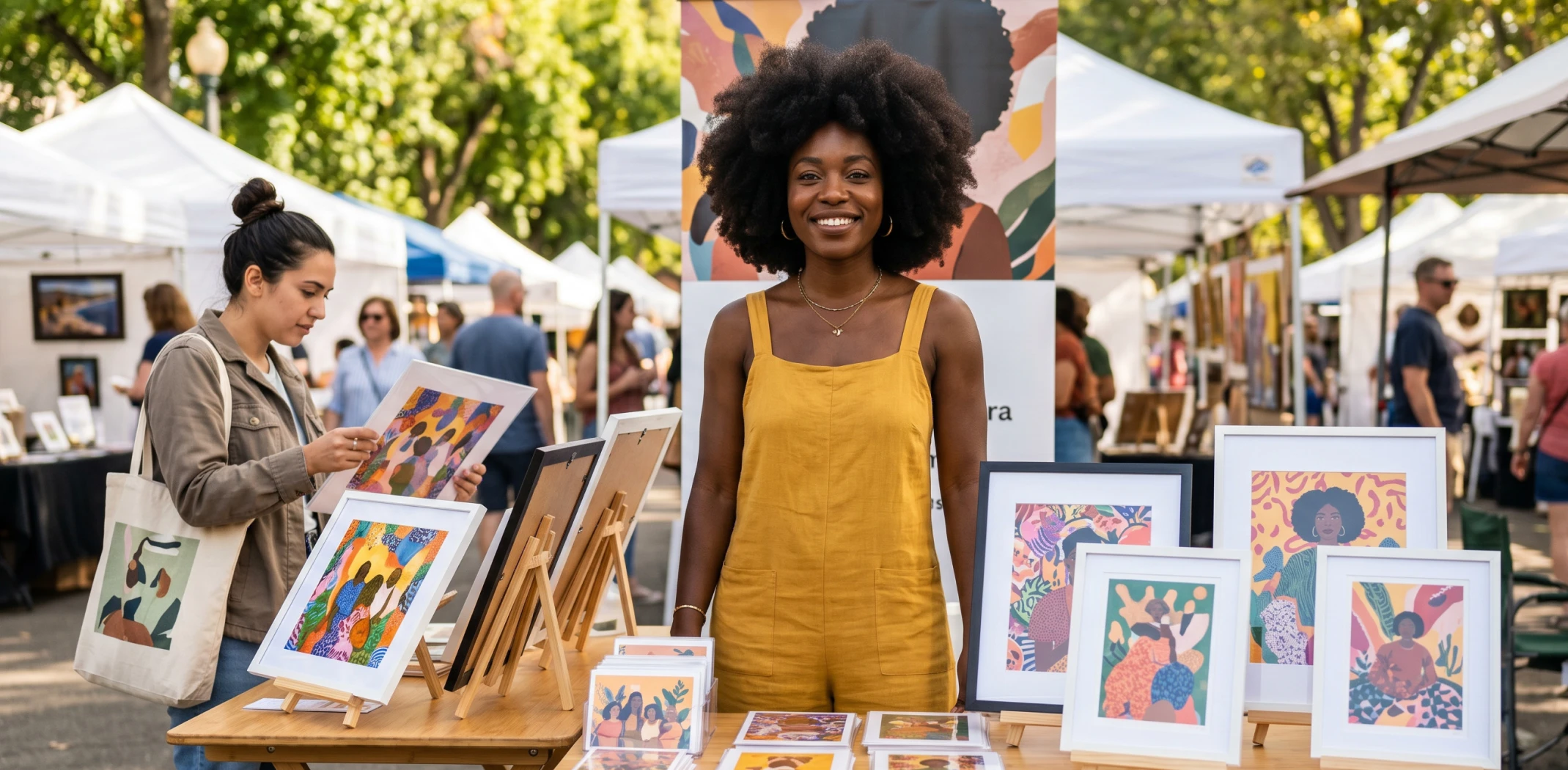
A first paid piece is not just $55. For Maya it was proof the hobby is a business. The same offer and scripts keep bringing clients now – the art finally pays her back for the years she has loved it.
Why “do what you love and the money follows” leaves you broke
There is a reason so many gifted hobbyists never earn a cent. It is not a lack of talent – it is that loving the work does not, by itself, produce an offer, a price, or a customer. The money follows a clear offer and a real ask, not just passion. Structure is what turns “do what you love” into income.
The other options are not useless – a course teaches, a coach encourages. But none of them hand you one offer, a price, the scripts, and a dated plan for your specific hobby. That package is the whole job.
What if my hobby is common, like photography?
Common hobbies sell best – you just niche down. “Photography” is crowded; “pet portraits” or “real-estate photos for local agents” is not. The monetisation map narrows your skill to a specific, sellable offer with less competition and a clearer buyer. You do not need a rare hobby, just a focused one.
What other hobbyists did with the same plan
Maya’s pattern is common: the skill was there, the admirers were there – only the offer and the ask were missing.

“I had taken photos for fun for years. The plan told me to niche into real-estate photos for local agents and gave me the exact pitch. First paid shoot in three weeks, about $450 a month now on weekends.”
Caleb Foster · hobby photographer, Boise ID

“I make ceramics and always undercharged out of nerves. The pricing guide gave me a real number and the 5-try rule made pitching feel normal. I filled my first small batch of paid orders within the 60 days.”
Hana Suzuki · hobby ceramicist, Seattle WA
Beyond the monetisation map, Hobby to Freelance Income Starter includes the beginner pricing formulas, the first-client scripts with the 5-try rule, the 60-day action plan, and a cut-out quick-reference card. One purchase, and you can re-run it for a different hobby or income goal.
Different crafts, different cities, the same first move: stop waiting to feel ready, turn the hobby into one priced offer, and pitch the people already around you.
How to turn a hobby into a business: the 5-step playbook
If “you should sell these” keeps staying a compliment, here is the order that turns it into income – the same one the Starter walks you through:
Pick one offer, not “everything you make”
Choose a single thing to sell – commissions, prints, or a class – matched to your hours. One clear offer beats a vague “I do art.”
Niche it down so it stands out
A specific offer (“pet portraits”) beats a broad one (“illustration”). Less competition, a clearer buyer, and a higher price.
Set a real price with a formula
Use a simple hourly or per-piece formula, not a number you talk yourself down from. A price you can defend is half the battle with the fear of charging.
Pitch your warm circle with a script
The first client almost always comes from people who already like your work. A word-for-word pitch and a 5-try rule make the ask feel routine.
Work one small task a week for 60 days
A dated plan with one weekly step beats waiting for motivation. Two months of small actions is enough to land a first paying client.
Maya did not get more talented – she got organised. She picked one offer, niched it, priced it, pitched her circle, and worked a weekly step for two months. That sequence is open to anyone whose hobby keeps getting compliments but no invoices.
That is the whole idea: stop waiting to feel professional, turn the hobby into one priced offer, and pitch the people already around you until the first sale lands.
Turn your hobby into a business – the same five-minute plan Maya used to turn weekend drawing into a first paying client in six weeks.
*Individual results may vary.
How do you turn a hobby into a business?
Can I make money from a common hobby?
How much money do I need to start?
How do I price my work as a beginner?
How do I find my first client?
How long until my hobby makes money?


Recommended for You