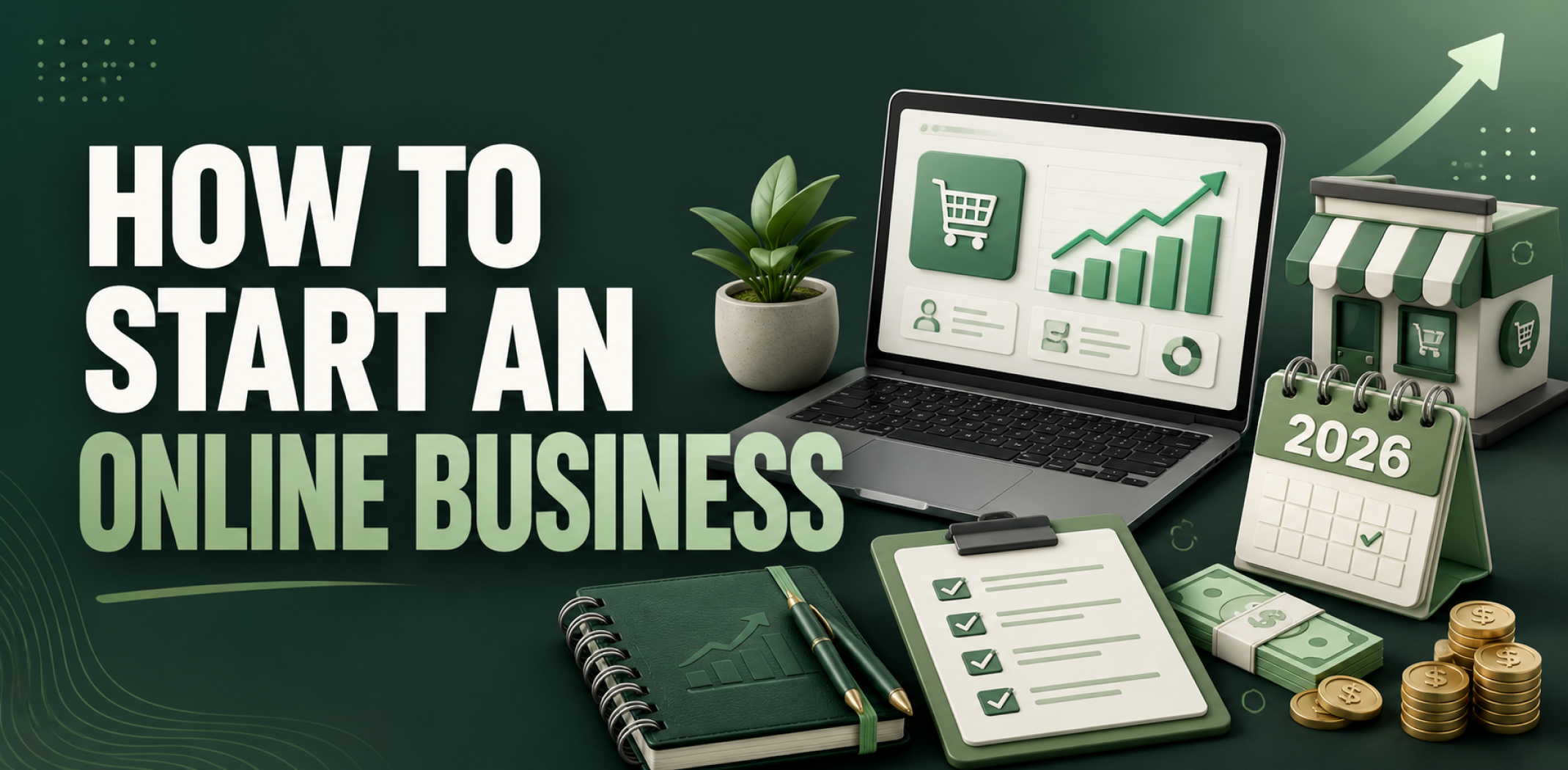
How To Start An Online Business In 2026 – Even With No Experience
So you want to know how to start an online business. Good news: you do not need a business degree, a warehouse, or a pile of savings to do it. In 2026, the tools that used to take a team of people to build – a store, a product catalog, a way to reach customers – are packaged into a single platform you can turn on in an afternoon.
⚡
Quick Answer
The fastest way to start an online business in 2026 is to use a ready-made platform loaded with digital products, since they deliver instantly, need no shipping, and typically keep 50 to 70 percent margin per sale, so you can skip the setup work and go straight to turning on sales.
That does not mean it is effortless. Building any business takes real work, and anyone who tells you otherwise is selling something. Most new online businesses do not take off overnight, and results vary widely depending on the product, the ad budget, and how consistently you show up. What has changed is how much of the technical and logistical heavy lifting gets done for you before you ever open your laptop, which is what actually shifts the odds in your favor, including the option to start an online business for free.
This guide walks through the real numbers, the different ways people are doing this right now, and the specific factors that separate a store that gets its first sale from one that sits untouched for months. Robinhood did not invent the stock market, it just tore down the paperwork and minimum balances that used to keep ordinary people out of it. Online business platforms are doing the same thing to ecommerce right now, and this guide covers exactly what that removes and what it does not.
🛍️
📦
📣
Your store can be live today
14-day free trial • Cancel anytime • $39/month after trial
The real numbers behind starting an online business today
Before getting into strategy, it helps to see the actual scale of what is happening. Most people who try to make money online without any real system behind them end up with something low-effort and low-margin, like reselling on a marketplace with no ad strategy. A store built around a real catalog and a real ad system is a different starting point, and the numbers behind it look different too.
Stores launched worldwide
1.5M+
That is how many stores have been built on the AliDropship platform alone, across more than 150 countries.
Total earned by store owners
$1.5B+
A combined historical total earned by AliDropship store owners since 2015, not a projection for any single new store.
Free trial length
14 days
Enough time to get a store live with 60+ digital products already loaded and your first ad campaign running.
Do you need to register a business first?
Once you have a product direction in mind, the next honest question is whether you need to make things official before you start selling. The short answer: it depends on how you plan to operate, but there are a few basics worth understanding before your first sale rather than after.
Most people starting out choose between a sole proprietorship, which requires no separate registration and uses your own name and Social Security number for taxes, or a Limited Liability Company (LLC), which creates a separate legal entity that protects your personal assets if the business runs into debt or a legal dispute. An LLC typically costs 50 to 500 dollars to file, depending on the state, plus an annual report fee in most places.
If you want to open a business bank account, which is worth doing even as a sole proprietor to keep personal and business money separate, you will likely need an Employer Identification Number (EIN) from the IRS. It is free to apply for directly on the IRS website, and most applicants receive one immediately.
Whether you need a specific business license or permit depends on your state, city, and what you are selling, since some categories carry extra requirements. Digital products sold online may also trigger sales tax obligations once you cross a certain revenue threshold in a given state, so it is worth checking your state’s rules once sales start picking up.
None of this has to happen before you see whether an idea has any traction. Many people validate their first digital product sales as a sole proprietorship, then formalize an LLC once there is real revenue to protect. This is general information, not legal or tax advice, so check with an accountant or attorney for guidance specific to your location and situation. For a broader look at typical costs beyond the legal side, see how much it costs to start an online business.
🛍️
📦
📣
Validate your idea before the paperwork
14-day free trial • Cancel anytime • $39/month after trial
Strip away the jargon and starting an online business comes down to three moving parts working together. Here is the simple version of how it fits together in practice.
🛍️
Load your products
Pick digital products from an existing catalog to sell right away, no sourcing required.
📣
Turn on your ads
Set a daily budget and let the built-in ad system handle targeting and creative for you.
📦
It delivers itself, instantly
Every digital product lands in the buyer inbox automatically, the moment they buy.
Where this differs from a typical DIY online store is the ad step. Most people who try to sell online end up posting in social media groups or hoping a marketplace listing gets noticed, with no real system behind it. A built-in ad system that runs on a fixed daily budget replaces that guesswork with something closer to a repeatable process. For a closer look at everything this actually involves day to day, see what it really takes to start an online business.
The main types of digital products to sell online
Not every digital product looks the same under the hood, and the type you pick affects how fast you get your first sale and how much you keep from it. Here are the two categories that account for most of what beginners actually sell, starting with the one most new stores lean on first. For the full picture of what you actually sell and how AI toolkits fit in, our dedicated guide breaks it down further, and if you want to weigh this against other paths first, see our roundup of the best online business ideas.
Type · Guides, courses & templates
Digital guides & courses
Best margin
Time to launchSame day
Daily hands-on workLow
Highest margin Instant delivery No shipping ever Widest catalog
Guides, courses, and templates are the most established digital category, because the entire catalog already exists and nothing has to be built from scratch. Every title delivers itself the instant someone buys, so there is no wait time, no packaging, and no returns to manage. You typically keep 50 to 70 percent of each sale, since there is no packaging or shipping cost eating into the margin. Because the catalog spans dozens of categories, from productivity and wellness to business tools, most beginners can find a niche that already has proven buyer demand rather than guessing. This is usually the fastest category for reaching a first sale, since there is no delay standing between a purchase and a five-star review.
✓
Tip: Start with 3 to 5 digital titles in one theme rather than one title alone, so a visitor who is not interested in the first thing they see has another reason to stay.
Since digital products are the focus here, it helps to see which categories buyers are actually paying for right now, not just the general concept. For a deeper ranked breakdown, see the digital products that sell best in 2026.
Digital product category
Typical price
Why it sells
AI-powered toolkits
15 to 40 dollars
Personalized output buyers cannot easily make on their own
Productivity guides
10 to 25 dollars
Low price point, easy impulse buy
Courses and tutorials
20 to 50 dollars
Higher perceived value, longer browsing time
Templates and checklists
5 to 15 dollars
Instant use, very low buyer hesitation
Wellness and habit guides
10 to 20 dollars
Broad, evergreen demand year-round
Type · AI-powered digital products
AI-powered toolkits
Growing fast
Time to launchSame day
Daily hands-on workLow
Personalized output Premium pricing No two outputs alike
AI-powered toolkits work differently from a static guide: the buyer answers a few simple questions, and the toolkit instantly generates a tailored plan, script, or guide built around their specific answers, not a generic downloadable file. The catalog includes 100+ toolkits spanning categories like productivity, wellness, and sales, with examples including an AI Productivity Toolkit, an AI Wellness Toolkit, and an AI Sales Toolkit, and new ones added regularly. Delivery is just as automated and instant as any other digital product, with the same 50 to 70 percent margin range. For a full walkthrough, see what AI toolkits are and why customers buy them.
✓
Tip: Pair one AI toolkit with a handful of lower-priced guides, so your catalog has both a premium anchor product and easy impulse buys.
🛍️
📦
📣
See what your store could sell first
14-day free trial • Cancel anytime • $39/month after trial
Online selling is already one of the most common ways people try to make money online, which means you would not be entering an empty market. You would be entering a crowded one, but with a faster on-ramp than most of your competition had when they started.
P.S. Your store does not have to start as a blank page, since it already comes built and stocked with digital products ready to sell, so go see your free store waiting for you.
14-day free trial · Cancel anytime · $39/month after trial
Build it yourself, or use a ready-made platform
Once you know digital products are usually the strongest starting point, the next real decision is how you get a store up and running at all. There are only two paths here, and they lead to very different first few months.
Type A
Build it yourself
The traditional route
Time to first sale8–12 weeks
Technical skill neededHigh
Upfront cost$500–$2,000+
Digital product catalogYou build it
⚠️ Most of this time goes to picking a platform, creating or sourcing products, and learning ad tools from scratch.
Type B
Use a ready-made platform
Store, digital catalog, and ads included
Time to first saleAs soon as ads are on
Technical skill neededNone
Upfront costFree for 14 days
Digital product catalogAlready loaded
✓ The digital catalog, the store, and the marketing are already built, so day one is spent selling, not setting up.
The gap between these two columns is not really about money, since 39 dollars a month is not a large expense either way. It is about where your first month of effort goes: creating or sourcing your own digital products from zero, or refining an ad campaign for a catalog that already exists. See the full cost breakdown of what you actually pay for a line-by-line comparison.
Real example — one sale
Customer pays $25
Product cost −$8
You keep, this sale $17
Digital productivity guide. One-sale example, not a projection.
What this means for you
The same margin repeats on each sale. No inventory to buy. No shipping to arrange.
This is what a single digital product sale looks like once the platform is factored in. Because digital products deliver themselves instantly, there is no packaging, storage, or shipping cost eating into that margin. The percentage stays the same whether it is your first sale or your fiftieth. For a broader, honest look at realistic ranges, see how much money you can realistically make from an online business.
No inventory Instant delivery 68% margin
Real examples of people getting started
Numbers and diagrams only go so far. Here are two composite, realistic examples of what the first few months actually looked like for two different beginners.
👩💻
Maria — Austin, TX
AliDropship · Digital products · 2025
Maria started her online business as a side project while working full-time as a dental hygienist. She picked a small catalog of wellness and productivity guides, priced between 12 and 25 dollars each, and turned on the built-in ad system with a modest daily budget. Her first sale came three days after launch, and because every guide delivered itself instantly, she had a five-star review before the first week was over. Six months in, her catalog has grown to more than a dozen digital titles, all still delivered automatically with no manual work on her end.
Her biggest lesson: leading with digital products meant nothing stood between a sale and a happy customer.
🧑💼
James — Denver, CO
AliDropship · Digital products · 2025
James works in IT support and wanted a low-maintenance project that would not eat into his evenings. He built a small catalog around AI-powered toolkits and a handful of productivity guides, then set a 15 dollar daily ad budget and left it running. His first sale came on day six, and because every product delivered itself automatically, there was nothing for him to do to fulfill it. Three months later, he still spends less than an hour a week on the store, mostly answering the occasional customer question.
His takeaway: an all-digital catalog meant the store kept running with almost no ongoing maintenance.
*Individual results vary and depend on the time you put in.
Neither Maria nor Devon had a background in ecommerce before they started, and both describe the first week as more about learning the dashboard than anything dramatic. That ordinary, unglamorous start is far more typical than the handful of viral success stories that circulate online.
Strategies that actually help you get your first sale
Some habits separate stores that get moving quickly from stores that stall out in the first month. Here are four that show up again and again among stores that get results early, starting with the one that matters most. For a step-by-step breakdown of this exact window, see how to start making sales on day one of your online business.
📦
Start with digital products
Digital products are the easiest place to get real momentum in your first few weeks, since the catalog already exists and every sale delivers itself instantly with no shipping wait to slow down reviews. Starting here means your first sale and your first repeat customer can both happen inside the same week.
Example: A guide priced at 25 dollars can keep up to 70 percent margin with zero shipping cost involved.
🛍️
Pick one category and commit
Spreading your budget and attention across many product ideas at once dilutes both your ads and your store messaging, so nothing gets enough traction to prove itself. Choose one focused digital category, launch it properly, and only expand once it is working.
Example: A store focused only on productivity guides outperformed a mixed-category store with the same ad budget.
📣
Turn ads on before perfecting design
Waiting for a flawless store before turning on marketing is one of the most common reasons stores never get a first sale. A functional store with ads running beats a perfect one sitting quietly with no traffic.
Example: Stores that activate ads within the first 48 hours start collecting data long before a redesigned store ever would.
🔍
Study your closest competitors first
Before writing a single product description, spend an hour looking at two or three stores selling something similar. Their pricing, ad angles, and customer reviews tell you what is already working before you spend a cent.
Example: Checking 3 competitor stores before launch helped one seller price a digital guide 15 percent higher without losing sales.
These strategies work regardless of which platform you build on, but they work faster when the store, catalog, and ad system are not something you also have to build from zero.
If you take away only one thing from this section, let it be this: the store and the ad system are the easy part to solve with the right platform. The strategy and the patience are still yours to bring. For more on how the built-in ad system itself works, see one-click ads and the built-in advertising advantage.
Skip the setup work. Get a store instead.
50–70% per sale
14-day free trial • Cancel anytime • $39/month after trial
Two people can start the exact same type of store on the exact same day and see very different timelines. These are the factors that tend to make the real difference.
01
How many digital titles you launch with
A single digital title gives a visitor only one reason to buy. A small catalog of 3 to 5 related titles gives them more paths to a purchase and a better shot at a repeat sale, since one satisfied customer often comes back for a second title.
02
The niche you pick
Some product categories have more buyer intent than others at any given time. A niche with clear, specific search demand, like a niche hobby guide, usually converts faster than a broad, generic category with 50 competitors already selling it.
03
How consistent your ad spend is
A 10 to 20 dollar daily budget that runs every day for 2 weeks beats a 100 dollar budget turned on for one day and off for the rest. Consistency lets the ad system’s optimization actually learn who is buying.
04
How trustworthy your store looks
Buyers decide whether a store looks legitimate within seconds. Clear product descriptions, honest claims, and a couple of visible trust signals, like a return policy, do more for conversion than any single design tweak.
05
How fast you respond to customer questions
A question left unanswered for 2 days often becomes a lost sale. Store owners who reply within a few hours, even with a short answer, close a noticeably higher share of hesitant buyers.
06
Your own timeline expectations
Some stores get an order in the first week, others take a month of testing before something clicks. Store owners who treat the first 30 days as a testing period, rather than a verdict, tend to stick with it long enough to see results.
07
Whether the platform does the technical work for you
Building a store, creating a digital catalog, and learning an ad platform from scratch adds weeks before you ever make a sale. A platform that handles the store, the digital catalog, and the ad system removes most of that runway entirely.
Before you scroll past
The three things most people wonder about
🤔
Do I need any technical skills or coding experience to do this?
No coding or design experience is required since the store, digital product catalog, and ad system are already built for you. Everything runs from a simple dashboard that works on a phone. See more on starting a business with no experience if this is your biggest hesitation.
💸
What if I put in the time and effort and still get zero sales?
The 14-day free trial and included 40 dollar ad coupon mean your first campaign costs you nothing out of pocket. You can test the waters before committing to a monthly plan.
🔍
Is this actually legitimate, or is it just another online business scam?
AliDropship has launched over 1.5 million stores and holds a 4.7 star rating on Trustpilot from real store owners. The company has also been featured by outlets including Forbes and Entrepreneur. For a deeper look at this exact question, see is starting an online business legit and worth it.
Most people who never start an online business are not stopped by a lack of ability. They are stopped by a long list of unanswered practical questions that never get resolved, which is exactly what the three points above are meant to clear up.
Once the technical worry and the money worry are both addressed, the only real question left is whether you are ready to actually start.
Are you ready to stop researching and start selling?
Your store comes built, stocked with digital products, and ready to turn on, with no coding and no design work required from you.
14-day free trial · Cancel anytime · $39/month after trial
What is AliDropship, and how it fits into starting your online business
No experience? No problem. If you want the simplest way to start an online business in 2026, AliDropship is one of the most beginner-friendly platforms out there. It brings your store, your products, your fulfillment, and your marketing together in one place, so you can launch fast and grow with confidence. Over 1,500,000 stores have already been built on AliDropship, and the platform has been featured by Forbes, Entrepreneur, Inc., NBC, Business, and Fox News. For a closer look at the AI side specifically, see our complete deep-dive on AliDropship’s AI features.
1.5M+
stores launched
4.7★
on Trustpilot
150+
countries served
🛍️
Free turnkey store
Your store comes fully built, designed, and stocked with products, ready to go the moment you sign up. There is nothing to code and nothing to design from scratch. It looks polished and professional from day one, so you can skip the setup work and get straight to the business.
📦
Products
Once your store is live, you can build your catalog with digital products like guides, courses, and AI-powered toolkits that are delivered instantly and let you keep up to 70 percent margin of each sale. New products are added regularly, so your store always has something fresh to offer. With your lineup sorted, fulfillment is the next box to check.
⚡
Instant fulfillment
Every digital product delivers itself the moment a customer buys – no packing, no shipping, no waiting. Guides, courses, and AI-powered toolkits arrive automatically, so you never touch a single box. Fulfillment runs itself, so you are free to focus on bringing in customers.
📣
Marketing & promotion tools
To help you sell, AliDropship’s built-in ad system is its most popular feature – while most platforms expect you to learn and manage your own marketing, this one does it for you, so there is no need to set up Google Ads or Facebook Ads yourself. Choose your daily budget, anywhere from $10 to $50, and the system handles targeting, creatives, and optimization behind the scenes. No marketing background needed: your store can start selling the same day you turn ads on.
👌
Ease of use
AliDropship is built for beginners: no coding, no confusing dashboards, just a simple, guided setup that walks you through every step. The whole platform works right from your phone, and a personal growth manager is available by chat if you ever get stuck. As you grow, adding new products, ads, and features stays just as simple, so scaling never feels overwhelming.
None of these five features exist in isolation. The digital catalog needs a store to live in, the store needs a way to reach buyers, and the ad system needs a finished store to send traffic to. Having all five built by the same platform is what keeps them working together instead of becoming five separate projects you have to coordinate yourself.
All of this exists specifically to remove the two biggest reasons people never start: not knowing where to begin technically, and not wanting to risk money before knowing if it works.
Before you decide
Everything included to make starting easy
🆓
14-day free trial
Full platform access. No credit card required to start.
🎯
$40 ad coupon included
Your first campaign costs nothing — the coupon covers it.
❌
Cancel anytime
No lock-in. No cancellation fees. Leave any time.
🏪
Store built for you
No setup, no design, no coding. It is ready when you are.
📦
No inventory ever
Every product delivers digitally and automatically. You never touch a file or a box.
Most people who try to make money online piece together a manual, improvised setup: a marketplace listing here, a social post there, no real system behind any of it. The six items above are what separate a store built on an actual platform from that kind of guesswork.
With the setup, the risk, and the technical barrier all addressed, the last step is genuinely just deciding to start.
🛍️
📦
📣
Ready to launch your own store?
14-day free trial • Cancel anytime • $39/month after trial
Skip months of setup and get a prebuilt store loaded with digital products ready to sell from day one.
14-day free trial $39/month after Cancel anytime $40 ad coupon included
✓ Store built for you ✓ No inventory ✓ Instant fulfillment
FAQ
How do I start an online business with no experience?
You can start an online business with no experience by using a platform that already provides a built store, a digital product catalog, and an advertising system, so you do not need coding or design skills. Most beginners start with a small catalog of digital guides, courses, or AI-powered toolkits, since they come preloaded and ready to sell with nothing to ship. A 14 day free trial is usually enough time to launch a store and turn on your first ad campaign. Real store owners have used this approach to build over 1.5 million stores since 2015.
How much does it cost to start an online business?
Starting an online business through a ready-made platform typically costs nothing during a 14 day free trial, after which a monthly plan runs around 39 dollars. On top of that, you set your own advertising budget, often between 10 and 50 dollars per day, and a small order fee applies whenever a sale actually goes through. Building a website and creating digital products entirely on your own tends to cost 500 to 2000 dollars or more before you make a single sale. The ready-made route removes most of that upfront spending.
How long does it take to make your first sale online?
Timelines vary widely. Some store owners see their first order within 1 to 2 weeks of turning on ads, since digital products deliver instantly once purchased, while others take 30 days or longer as ads and product selection get refined. Treating the first month as a testing period, rather than a verdict on the business, tends to produce better long-term results.
Why are digital products the best way to start an online business?
Digital products are the strongest starting point for a first online business, since guides, courses, and AI-powered toolkits deliver themselves instantly with no shipping and typically keep 50 to 70 percent margin per sale. There is no shipping wait, no packaging, and no inventory to manage, which is why a digital catalog tends to be the fastest path to a first sale. Categories like productivity guides, courses, templates, and AI-powered toolkits all come preloaded and ready to sell. Leading with digital products tends to produce a faster first sale than any other approach.
Is starting an online business through a platform like this legitimate?
Yes, platforms like AliDropship have been used to launch more than 1.5 million stores across over 150 countries since 2015. The company holds a 4.7 star Trustpilot rating from real store owners and has been featured in outlets including Forbes and Entrepreneur. As with any business, results depend on the work you put in, and no legitimate platform can promise a specific outcome.