Never Budgeted? How To Budget Money For Beginners On A Regular Paycheck


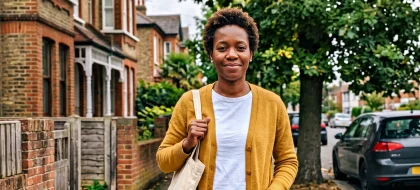
Bianca Cruz makes $3,200 a month and could never tell you where it went. Not in a reckless way – no big purchases, no wild weekends. The money just dissolved between rent, gas, groceries, and a dozen small taps of a card. At 29 she had never made a budget, because every guide to how to budget money for beginners seemed to assume she already knew the words.
She is a dental hygienist in Tucson, Arizona. Steady job, decent pay for the area, and a checking account that read close to zero every month two days before payday. Savings: none. The plan was always ’I will start budgeting next month.’ Next month kept not coming.
What finally moved her was not a money emergency. It was a friend mentioning, almost in passing, that she had a name for every dollar before it arrived. Bianca realized she could not say that about a single dollar of hers. A month later she had her first written budget, $300 in savings, and $220 of monthly leaks she had not known existed. Here is the order it happened in.
Why budgeting feels impossible when you have never done it
A budget is just a plan for money you already earn. But for a first-timer it can feel like a test you never studied for – percentages, categories, apps, spreadsheets. Most people do not skip budgeting because they are bad with money. They skip it because nobody showed them a simple first step.
Those numbers are not a story about weak willpower. They are a story about a missing first step. Bianca was a textbook case: a good income, a real job, and zero visibility into where any of it landed.
Bianca was not in crisis. Rent was paid, the car ran, the lights stayed on. But the savings line had read $0 for three years, and the quiet stress of never having a cushion was wearing on her more than she admitted.

Bianca is 29 and has cleaned teeth for seven years. She nets about $3,200 a month, pays $1,150 in rent, and splits nothing with nobody – the budget is hers alone to figure out. She is not bad at math. She just never had a system that told her, in plain numbers, how much of each paycheck was already spoken for.
Like a lot of first-time budgeters, Bianca did not need a finance degree. She needed a plan that started from her actual paycheck and her actual bills, not a generic template built for someone else’s life.
What Bianca tried first – and why none of it stuck
Before the plan that worked, there were three false starts – the same three most beginners hit:
Downloading a popular budgeting app
It linked her accounts and threw 40 charts at her. Pretty, overwhelming, and silent on the one question she had: how much can I actually spend this week? Deleted in nine days.
The “cut everything fun” crash budget
She tried banning coffee, takeout, and every small treat at once. It lasted four days and ended in a frustrated $60 dinner. A budget you hate is a budget you quit.
“I will just be more careful”
The plan with no plan. Being careful without a number is just hoping. Three years of careful had produced exactly $0 in savings.
Every attempt assumed budgeting meant either heavy software or harsh restriction. None of them gave her the one thing a beginner actually needs first: a clear split of this is what you have, this is where it can go.
I did not need another app yelling at me about my latte. I needed someone to look at my paycheck and my rent and just tell me, in real dollars, how much was safe to spend. That was the whole problem nobody solved.
The 4 outputs the Builder gave Bianca
She answered ten short questions – take-home pay, rent, the rough size of her variable spending, her debts, what she wanted to save for. A few minutes later she had four things, none of them vague:
It did not tell me to stop living. It told me I had $960 a month for the fun stuff and a real number to save. The first time in my life a budget felt like permission instead of punishment.
The first move the plan flagged was the easy money: $220 a month in subscriptions and forgotten auto-renewals she had not opened in months. Cancelled in one sitting. That alone almost funded the savings transfer.
From paycheck-to-paycheck to $300 saved: Bianca’s first month
The plan ran on a simple four-week arc – track, categorize, adjust, automate. No deprivation, no spreadsheets she would abandon. Just one small job per week.

$300 in a month is not a fortune. But it was the first $300 she had ever saved on purpose. The cushion stopped being a someday idea and started being a balance she could watch grow.
Why most budgeting advice fails beginners
There is a reason 65% of people skip budgeting entirely. It is not laziness. It is that most advice is built for people who already budget – it assumes you know the categories, the percentages, and the tools. Beginners get handed an empty spreadsheet and a pep talk, and quietly give up.
The free options are not bad – they are just built for someone who already knows how to budget. A beginner needs the split done for them the first time, so the habit can start before the overwhelm does.
What if my income is different every month?
The plan handles irregular income. Instead of budgeting a fixed paycheck, you budget off your lowest recent month and treat anything above it as bonus – savings first, then extra wants. The 50/30/20 split still works; it just flexes to the month. Tips, freelance, and gig income all fit the same system.
What other first-time budgeters did with the same plan
Bianca’s start is the common one: a decent income, no system, and a quick win once the numbers were finally on paper.

“I am 24 and had genuinely never made a budget. It gave me the 50/30/20 split for my exact paycheck and a tracker I could keep on my phone. Found $140 a month in stuff I never used and saved my first $500. No spreadsheet, no guilt.”
Devon Pratt · warehouse lead, Omaha NE

“My income swings every month from tips, so I always thought budgeting was not for me. The plan showed me how to budget off my lowest month. Three months in I have a real emergency fund for the first time at 41.”
Leticia Moreno · hairstylist, Fresno CA
Beyond the first budget, Personal Budget Builder includes a printable 30-day tracker, a forgotten-categories checklist, a monthly review template, an automation plan (bill pay, savings transfers, subscription audit), and an emergency-fund calculator. One purchase, unlimited re-runs as your income changes.
Different ages, different incomes, same first step: get the split on paper, then let one automatic transfer do the saving for you.
How to budget money for beginners: the 5-step starter playbook
If you have never made a budget, here is the order that works – the same one the plan walks you through:
Find your real take-home number first
Not your salary – the amount that actually lands in your account after taxes. Every other number is built on this one.
Track every expense for one week, no judgment
You cannot budget what you cannot see. One honest week shows you the leaks faster than a month of guessing.
Split it 50/30/20 as a starting point
Roughly half to needs, a third to wants, a fifth to savings and debt. Adjust the numbers to your life – the split is a starting line, not a rule.
Cancel the leaks before you cut the fun
Forgotten subscriptions and auto-renewals are painless to cut and usually free up $100 to $250 a month. Start there, keep your coffee.
Automate the saving so willpower is not the plan
Set an automatic transfer for the day your pay lands. Money you never see is money you do not miss – and the budget keeps working when you forget about it.
Bianca did not become a finance expert. She found her take-home number, tracked one honest week, split it, cancelled the leaks, and automated the rest – in that order. That order is open to anyone who has been meaning to start “next month.”
That is the whole idea behind a beginner budget: make the plan once, let automation carry it, and watch the cushion grow on its own.
Build your first budget the easy way – the same five-minute plan Bianca used to find $220 of leaks and save her first $300.
*Individual results may vary.
How do I start budgeting for the first time?
What is the 50/30/20 budget rule?
How much of my paycheck should I save?
Why do I keep failing at budgeting?
Can I budget on an irregular income?
What is the easiest budgeting method for beginners?


Recommended for You