He Gave His Best Skill Away At Work For Years: How To Become A Freelancer


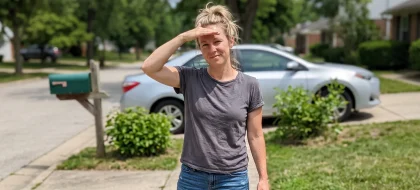
For six years, Trevor Mancini was the guy people at the warehouse pulled aside. Not for boxes. For spreadsheets. A broken tracking sheet, a messy export from the scanner, a schedule that would not add up – someone always walked over and said, “hey, can you fix this?” He always could. He never charged a cent.
Trevor is 35, lives in Toledo, and clocks in as an inventory clerk for about $19 an hour. His wife Nadia works too, and they have a six-year-old. When his overtime got cut this spring, the math got tight – roughly $500 short a month, five or six free evening hours a week, and no money to spend fixing it. He figured he needed a second job. What he actually had was a skill he kept giving away.
Nine days after he stopped calling it “just Excel,” a local landscaping owner paid him to untangle her crew scheduling. Here is the exact order he did it in – and why the hard part was never the spreadsheets.
What Trevor tried first – and why it stalled
Trevor is not lazy. He had thought about extra income for two years. He just kept hitting the same three walls.
First: “it’s just Excel.” A skill that came easy to him could not be worth money to anyone else – or so he assumed. Second: he pictured freelancers as designers and writers with slick portfolios, and he had none of that. Third: every “how to become a freelancer” guide told him to pick a niche, build a website, and post for months before earning a dollar. That is a lot of ladder to climb before your first client.
So he did nothing. The skill stayed a favor he handed out for free at work.
Here is the part most advice skips: the skill you take for granted is exactly the boring job a small-business owner will happily pay to hand off. The trick is naming it, pricing it, and finding the person who hates doing it.
The one question that changed it
One night Trevor answered a short set of questions in the Skill-to-Freelance Converter: what he was good at, how he learned it, how many hours he had, and whether he minded talking to strangers. He expected another pep talk. He got a plan.
Instead of “go freelance,” it handed him a five-part offer, built around the one skill he already had. No niche to invent. No website to buy. Just the pieces he was missing.

Trevor’s 5-part Freelance Offer Blueprint
The exact offer to sell – for Trevor: spreadsheet cleanup and simple dashboards for small local businesses.
Who needs it and where they already are – small owners drowning in messy sheets: landscapers, bakeries, gyms, bookkeepers.
A starter rate you can say out loud without flinching, and the point where you raise it.
Where to find them this week – local business groups, one bookkeeper who refers overflow, a past coworker.
The plain, no-pitch words to send so reaching out does not feel like selling.
Five cards. One skill he already had. For the first time, “become a freelancer” was not a vague goal – it was a to-do list.
What the first month actually looked like
He did not quit anything or announce a new career. He worked the plan in the evenings, after his daughter went to bed.
Day 1 – wrote the offer in one plain sentence.
Day 2 – set it up for $0 with the Google Sheets he already had and a free one-page summary.
Day 7 – sent ten short messages and posted in two local business groups.
Day 9 – a landscaping owner said yes. His first paid job: $90.
Day 30 – three clients, about $300 in the door.
Month 4 – roughly $650 a month, still five or six evening hours a week, still $0 in overhead.
Nothing went viral. No logo, no website. Just a couple of clients who started referring him around town.
Why “go freelance” advice usually flops
Most freelancing advice is built for people who already know their offer. It jumps straight to portfolios, personal brands, and bidding sites where you fight strangers on price. For someone who just has a useful skill, that is the wrong ladder.
Here is what Trevor leaned on instead – and what he skipped.
- The tools you already own (a laptop, a free sheet)
- A free one-page summary of the offer
- Local Facebook business groups
- People who already know you do this
- Paid “freelance academy” courses before client #1
- Buying a domain and website before client #1
- Low-bid marketplaces that race you to the bottom
- Waiting until the offer feels “perfect”
The order matters. Land one client with what you already have, then reinvest once real money is coming in – not before.

What it costs vs the alternatives
Trevor had almost paid for a freelancing course once. Here is how the options actually compare.
| Option | Cost | Time to a plan | Built around your skill? |
|---|---|---|---|
| Freelance course / coaching | $300–2,000 | Weeks | No – generic |
| Bidding marketplaces | Free to join | Instant, then you compete on price | No – you fit their pricing |
| Generic “start freelancing” videos | Free | 20+ hours | No – not your skill |
| Skill-to-Freelance Converter | $7 | About 2 minutes | Yes – one skill you have |
“But isn’t my skill too ordinary to sell?” That is the exact thing that stops most people – and it is backwards. Ordinary to you means invisible effort to someone who dreads the task. Trevor’s spreadsheets were boring to him and a genuine relief to a business owner who was doing them badly at 11pm.
Two people who started the same way

Tucson, AZ
“I always said ‘I’m just the organized one.’ The plan turned that into calendar and inbox cleanup for a realtor. I had a paying client before I’d have finished picking a website name.”

Greensboro, NC
“I’d fixed friends’ resumes for years for free. It named that as a real service and told me what to charge. Two clients the first month, all on evenings.”
Trevor still has his warehouse job. What changed is that his after-hours hours now belong to him – and the skill he used to give away pays for the weekends. If you are not sure which of your skills to convert first, start one step back with the High-Income Skill Identifier, then bring that skill here.
*Individual results may vary.
What is freelancing?
What does freelance mean?
How much do freelancers make?
How do freelancers get paid?
Do freelancers pay taxes?
Is freelancing worth it?


Recommended for You