Grow Followers Or Start Selling?


There is an account, there are some followers, and there is a quiet plan to start selling once the number looks respectable. Meanwhile every post is aimed at growth, because growth is what everyone measures. A year passes, the number is bigger, nothing has been sold, and it is genuinely unclear whether anything changed.
The quick answer
It is not really “grow or sell.” It comes down to one thing: how many of your followers could actually buy something from you. A few hundred people who came for one specific subject often contain more buyers than tens of thousands who arrived from a viral clip. Counting the buyers rather than the followers takes minutes and usually moves the start date a year earlier. Outcomes vary and nothing here promises income.
Below: the number that actually decides it, a quick table for your own account, and why growing first costs more than it appears to.
It is not really growth against selling
Both pieces of advice are given constantly and both come from real experience. One person grew to a large audience and then monetised it easily, so growth clearly works. Another sold to a few hundred people from the start and never chased numbers. Neither is lying, and neither is describing your account.

The mechanism is simple once you see it. Followers are not the unit of value; matched attention is. Somebody who followed you for a specific subject is close to buying something related to it. Somebody who followed after a funny clip is not, and may never be, regardless of how many of them there are. Sorting your audience by why they followed is usually the moment the decision becomes obvious. Nothing is guaranteed and results differ.
So the question is not whether you have enough followers. It is whether the people already there arrived for a reason you can sell into.
Match the move to your own account
Look at where your followers came from and what they engage with rather than at the total, then find yourself in the table. Placing your account in a band takes a few minutes and usually ends the debate.
| Your account | What usually works | Why |
|---|---|---|
| Small and tightly matched | Sell now, keep growing quietly | The buyers are already there |
| Large but broadly mixed | Narrow the subject before selling | Volume without intent converts poorly |
| Small and mixed | Choose a subject, then grow into it | Neither audience nor offer is ready yet |
| Not sure why people followed | Find that out first | Every row above depends on it |
Treat those as a starting point rather than a rule. What you sell, how much it costs and whether you are selling your own thing or somebody else’s all move the line, which is exactly why the answer belongs to your account rather than to a general figure.
What selling early actually looks like
Here is the part people miss: selling to a small audience does not mean launching a shop and hoping. It means asking a specific group for one specific thing, and shaping that first offer around what they already came for is what stops it from feeling like an interruption.
Early selling that works tends to have the same shape.
One small audience · one clear offer
Sell what the subject implies. The offer should be the obvious next step from what they already follow you for, not a pivot into something unrelated.
Ask directly, once, in plain words. Not a hint in a caption. A clear post that says what it is, what it costs and how to get it. Most small accounts never actually ask.
Start with something you can deliver by hand. A service, a session, a small batch. Volume comes later, and it is far easier to grow demand you have already proved than to guess at it.
One audience, one offer, one direct ask. The follower count barely enters into it.
Notice that none of this requires stopping growth. It requires letting the account earn while it grows, which is the arrangement a plan built around your own niche is designed to produce.
What growing first really costs
It costs the information. An account that has never sold anything does not know what its audience will pay for, so a year of growth produces a larger group of people whose willingness to buy is still a guess. The first sale is worth more than the next thousand followers, because it is the only thing that answers the question.

It also costs the shape of the account. Posting for growth pulls you towards broader, more shareable material, and broader almost always means further from anything specific enough to sell. So: check who is already there, make one clear offer, then grow with the answer in hand. A plan matched to your own account is a planning tool, not a promise of income.
Grow vs guess vs check the account
You can work this out yourself, for free, by scrolling your own followers and posting an offer. Here is how the usual routes compare with checking who is already there.
| Way to decide | Cost | Built on your audience? | Time |
|---|---|---|---|
| Keep posting for growth | Free | No – the audience is never checked | A year, often more |
| Copy what a bigger account sells | Free | No – their buyers, not yours | Ongoing |
| A social media course | $100–500 | Sometimes – general, not your niche | Weeks |
| Instagram Money Plan | $19 | Yes – your niche, your buyers, one offer | About 15 min |
“Will selling early not put people off?” Selling badly does. Selling something obviously connected to why they followed you rarely does, and the accounts that never ask are not being polite, they are being invisible. There is also a real version of this worry: an account built on one kind of content that suddenly sells something unrelated will lose people, and that is worth avoiding. The fix is matching the offer to the subject rather than delaying it. Platform reach, rules and commercial policies change constantly, and this is general educational guidance rather than a promise of income.
If it still sounds premature, two people arrived at the same crossroads with very different accounts.
Two accounts, two different answers
One had a large audience assembled by accident. The other had a few hundred people who all cared about the same thing.
“Eleven thousand followers and most of them arrived from one clip that had nothing to do with what I actually do. Narrowing the subject cost me followers and produced the first money the account ever made.”
Rufus B. · restoration hobbyist, Toledo OH
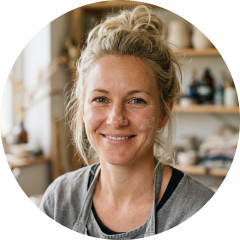
“I kept telling myself I would open orders at a thousand followers. I had four hundred and eighty and I asked anyway. Nine of them bought in the first week, which answered a question I had spent a year avoiding.”
Sunniva T. · ceramics maker, Duluth MN
If the subject itself is the part that is still vague, the Side Business Niche Selector is built for narrowing it down first. Results vary; this is general guidance and not a promise of income.
Five short answers, and a read on your own account comes back the same day: who followed you and why, and what that group is most likely to buy. It works from the audience you already have rather than from a follower target somebody else set, which is usually why the start date moves forward rather than back. One clear offer comes with it.
*Individual results may vary.
Should I grow followers first or start selling?
How many followers do you need to make money?
Will selling too early annoy my audience?
What should the first offer be?
Does a large audience not make selling easier?
Is this a guarantee of income?


Recommended for You