Emergency Fund Or Pay Off Debt First?


The arithmetic looks obvious. The card charges interest, savings earn almost nothing, so every spare pound should go at the debt. Then the car needs a part, and the only thing available is the card, and the balance is back where it was in March. This has happened once or twice already, which is usually the clue that the obvious answer is missing something.
The quick answer
It is not really “save or repay.” It comes down to one thing: whether an ordinary emergency would go straight back on the card. If it would, repayments are not reducing the balance, they are funding the next repair, and the interest saved is a rounding error against the cycle. Sizing a buffer against your own likely surprises takes minutes, and the number is smaller than most people assume.
Below: the thing that decides it, a quick table for your own situation, and why the buffer is far smaller than the advice usually suggests.
It is not really saving against repaying
Both positions are defensible on paper. One says interest is the enemy and every spare pound belongs against the balance, which is arithmetically true in isolation. The other says a household without a cushion is one boiler away from borrowing again, which is behaviourally true in practice. The disagreement survives because each side is right about a different failure.
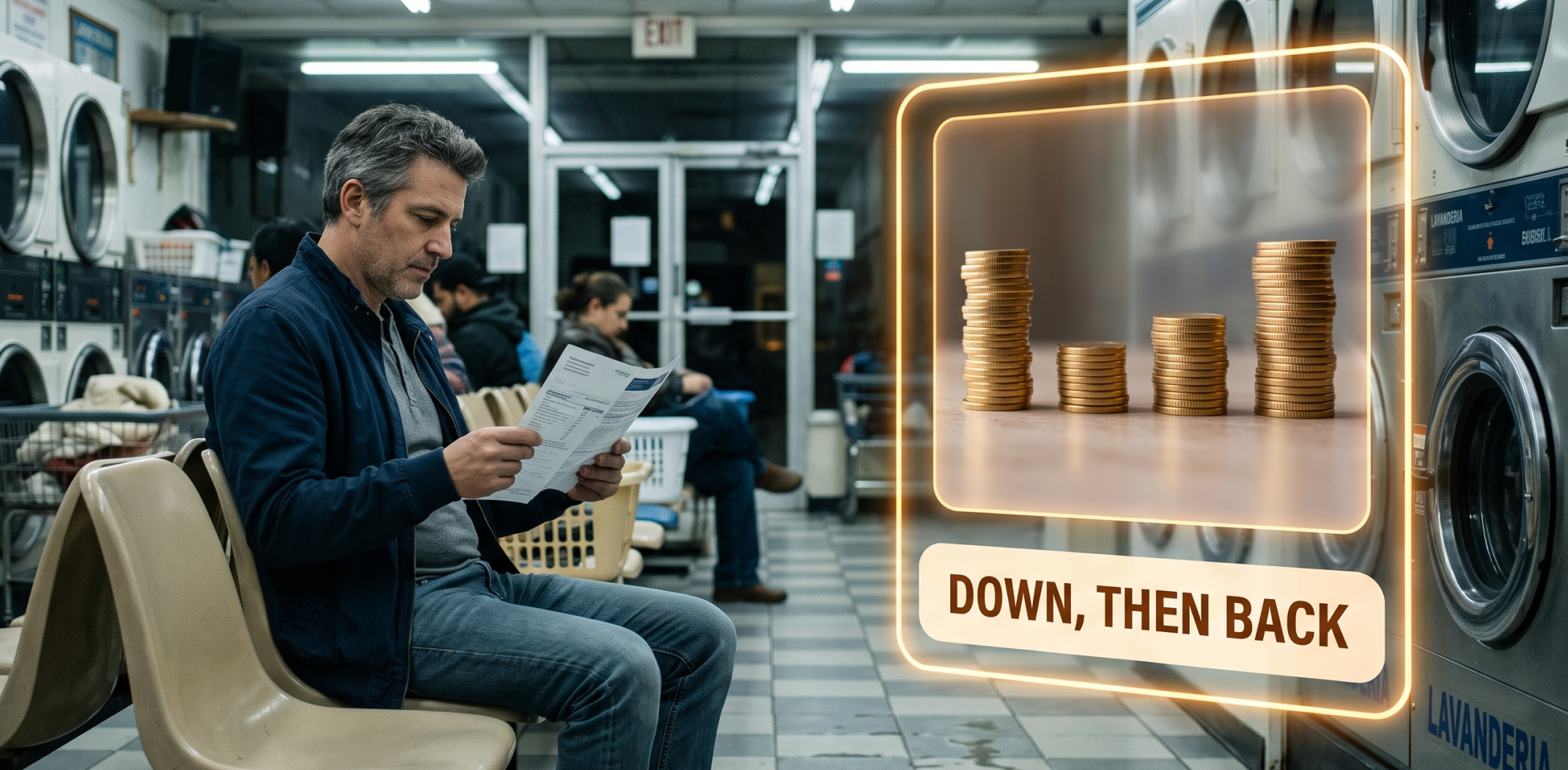
The mechanism is worth seeing plainly. Extra repayments only reduce a balance if nothing pushes it back up. With no buffer, an ordinary surprise goes on the card by default, which means the last three months of effort funded a repair rather than the debt. A small cushion breaks that loop, and checking whether your own balance keeps refilling usually settles the argument faster than any interest calculation.
So the question is not which is mathematically superior. It is whether your repayments are actually sticking, and that has an answer you can look up in your own statements.
Match the order to your own situation
Look at the last twelve months rather than at the interest rate: how many times an unexpected cost went on credit. Then find yourself in the table. Sorting that honestly takes a few minutes and usually decides the order.
| Your pattern | What usually works | Why |
|---|---|---|
| Balance keeps creeping back | Small buffer first, then attack | Repayments are funding repairs, not the debt |
| Balance falls steadily | Keep repaying, buffer alongside | The cycle is already broken, so speed wins |
| Very high rate, no surprises yet | Split it, buffer smaller | Rate matters more when nothing keeps interrupting |
| No idea how often it happens | Check twelve months of statements | Every row above depends on it |
Treat those as a starting point rather than a rule. The interest rate, whether any of the debt is at risk of escalating, how old your car and boiler are and whether anybody else could help in an emergency all move the line, which is exactly why the answer belongs to your situation.
How small the buffer actually needs to be
Here is the part people miss: the buffer that breaks the cycle is not three months of expenses. That figure exists for job loss, which is a different problem entirely. What stops a card refilling is enough to cover the sort of thing that has actually happened to you, and pricing your own likely surprises usually lands somewhere between two hundred and a thousand.
Three things decide the size, and none of them is a standard rule.
What sets your number
What actually broke last time. Not the worst case. The ordinary case: a tyre, a tooth, a boiler part, an excess. Look at what genuinely happened rather than what might.
What you cannot delay. Some surprises can wait a fortnight and some cannot. The buffer only has to cover the ones that would otherwise go on credit within days.
How fast you could rebuild it. A buffer you can refill in six weeks can be smaller than one you could not. That is why the same number is right for one household and wrong for another.
Three inputs, one figure, and it is almost always smaller than three months of anything.
Notice that this does not mean pausing repayments for a year. For most households the buffer takes weeks rather than months, and a roadmap with a target and a date exists so the pause is short and deliberate rather than open-ended.
What the pure-repayment approach really costs
It costs the progress itself. Three years of disciplined extra payments interrupted twice by a car and once by a dentist can leave a balance almost exactly where it started, and the person concludes they are hopeless with money when in fact the plan had no protection against ordinary life.
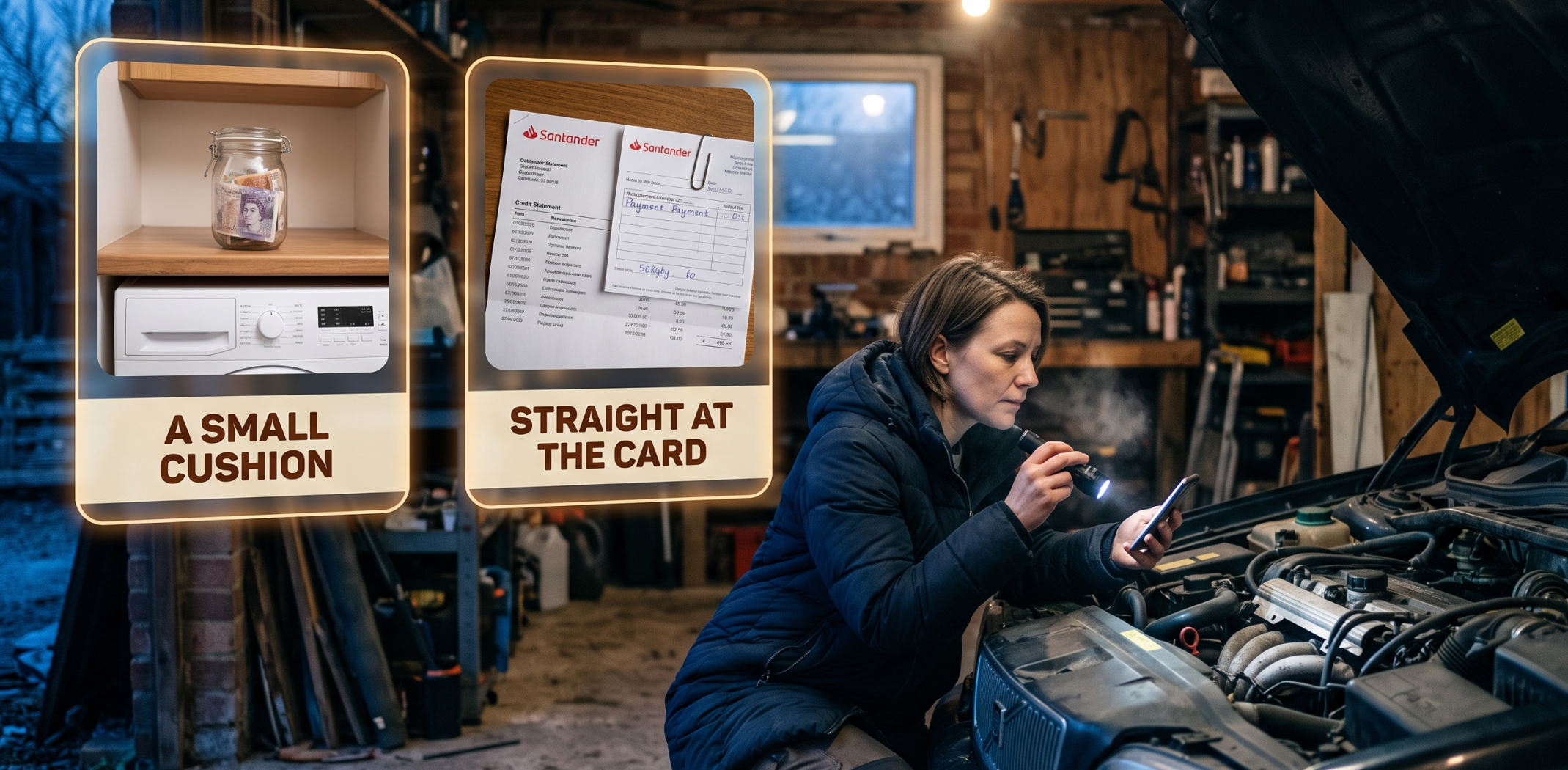
There is a second cost that matters more than the money. Every time the balance climbs back, the effort stops feeling worthwhile, and plans get abandoned on discouragement long before they fail on arithmetic. A buffer sized to your own surprises is what keeps the effort visible, which is what keeps it going.
Repay hard vs save hard vs order it properly
You can work this out yourself, for free, with a year of statements and an hour. Here is how the usual approaches compare with ordering the two deliberately.
| Way to decide | Cost | Built on your own year? | Time |
|---|---|---|---|
| Everything at the debt | Free | No – ignores the refill cycle | Years, often reset |
| Save first, ignore the rate | Free | No – expensive debt keeps running | Slow on both |
| A debt advice service | Free to low | Sometimes – excellent for serious debt | Weeks |
| $500 Emergency Fund Roadmap | $14 | Yes – your surprises, your number, your order | About 15 min |
“Is holding cash while paying interest not just losing money?” On the arithmetic alone, yes, and that objection is correct as far as it goes. The reason it still loses in practice is that it assumes nothing interrupts the plan, and the whole point of an emergency fund is that something always does. A small buffer costs a little interest and protects three years of repayments, which is usually the better trade. If the debt is at serious risk of escalating, or you are already behind on payments, that is a different situation and free debt advice services are the right first call rather than any planning tool. This is general educational guidance rather than financial advice.
If it still sounds like a detour, two people ran the same balance and only one of them cleared it.
Two people, the same balance
One paid hard for three years and finished roughly where they started. The other paused for six weeks first.

“Three years of overpaying and the balance was almost identical, because every time it dropped something broke. Six weeks of building four hundred first, and this is the first year it has actually gone down.”
Marguerite B. · care assistant, Tucson AZ

“My rate was high and nothing had gone wrong in a year, so the buffer stayed small and most of it went at the card. Different situation, different order, and the numbers said so rather than a rule.”
Cormac D. · warehouse picker, Youngstown OH
Once the order is set, the month has to hold it, and the Personal Budget Builder is built for that part. Results vary; this is general guidance rather than financial advice.
Five short answers, and your own number comes back the same day, worked out from the kind of surprise that has actually happened to you rather than from a standard three-month rule. It also sets the order: how long the buffer takes, when repayments resume and what the whole thing costs in interest along the way. For most households the pause is weeks rather than months, and it is the last time the balance climbs back.
*Individual results may vary.
Should I build an emergency fund or pay off debt first?
How big does the first buffer need to be?
Is three months of expenses not the standard?
Does holding savings while paying interest lose money?
What if the debt is already unmanageable?
How long should repayments pause for?


Recommended for You