

Supplier Vetting

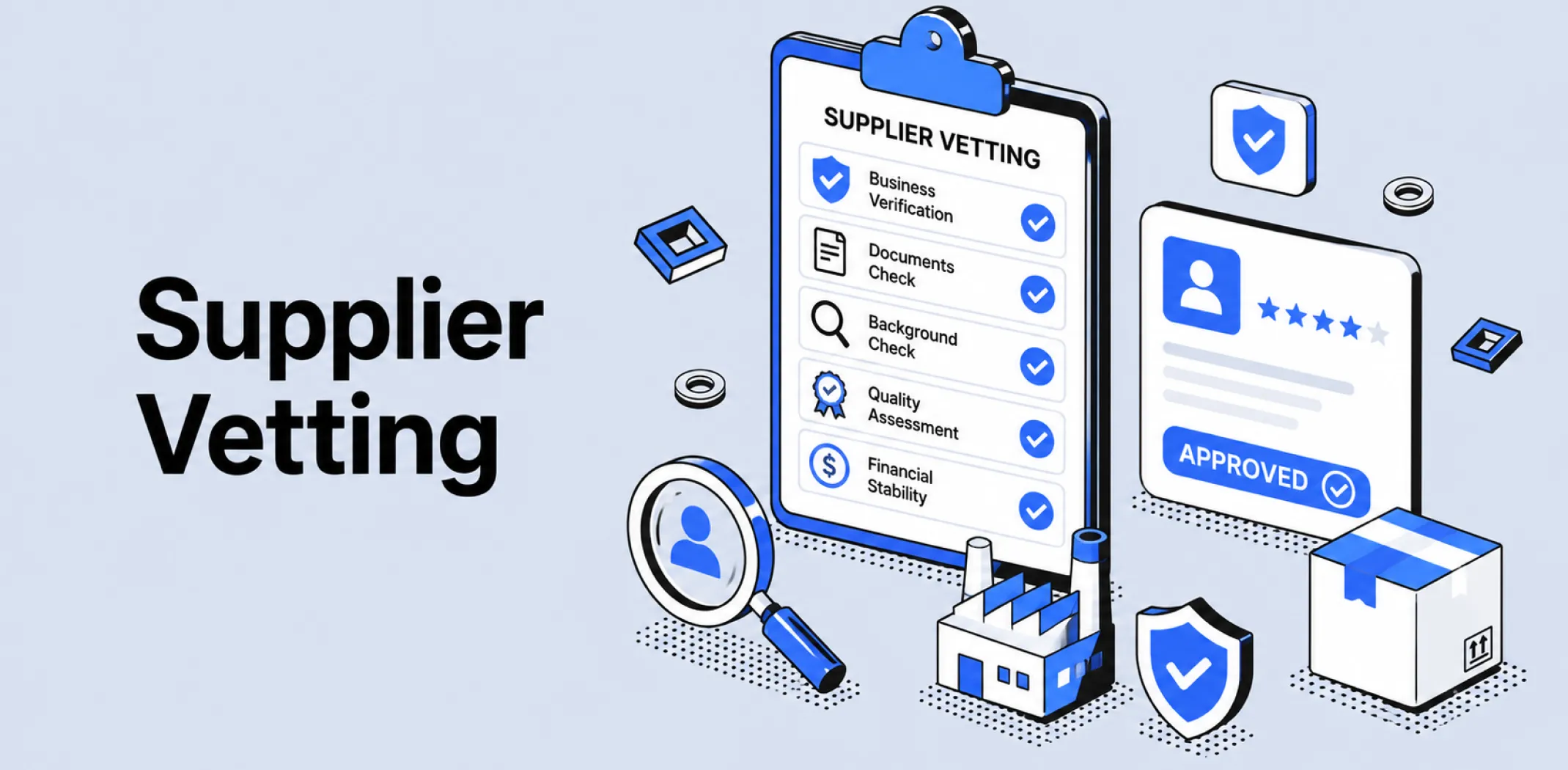
Supplier vetting is the process by which a seller systematically evaluates a prospective supplier’s reliability, product quality, and fulfillment capability before committing to them as a source for customer orders.
In dropshipping and ecommerce, the supplier is responsible for storing, packing, and shipping products directly to the end customer. Because the store owner never handles the product, any failure at the supplier level – whether a quality defect, a delayed shipment, or a fraudulent listing – reaches the customer directly and reflects on the store.
Supplier vetting is the due diligence practice that precedes placing a first commercial order, distinct from ongoing supplier monitoring that tracks performance once a relationship is established.
The depth of vetting required varies by context. A seller sourcing from an established marketplace such as AliExpress may rely on platform-provided metrics – review scores, order volume, dispute rates – as a primary vetting layer.
A seller engaging a manufacturer directly through Alibaba or attending a trade fair may conduct deeper checks including business registration verification, sample testing, and factory audits. For an overview of sourcing options, see best dropshipping suppliers.
How supplier vetting works
- The seller identifies a prospective supplier through a marketplace, directory, trade show, or referral, and collects basic business information including trading name, registration details, and country of operation.
- Platform metrics are reviewed where available – including seller rating, number of completed orders, dispute or return rate, and the age of the seller account – to establish a baseline credibility profile.
- The seller places a sample order of one or a small number of units, paying standard retail or near-cost pricing, to evaluate product quality, packaging, shipping speed, and the accuracy of the listing description against the item received.
- Communication responsiveness is assessed during the sample process – including how promptly the supplier replies to queries, whether they provide tracking information proactively, and how they handle any issues that arise with the sample.
- For higher-volume or direct-manufacturer relationships, additional checks may be conducted: requesting a copy of business registration documents, verifying the supplier against official trade or customs databases, or commissioning a third-party factory inspection.
- Findings from each check are recorded and weighed against the seller’s minimum standards; the supplier is either approved for commercial orders, placed on a watchlist for further monitoring, or rejected.
Example
A dropshipping store owner planning to list a range of LED desk lamps identifies three candidate suppliers on AliExpress. All three have review scores above 4.7 and more than 500 completed orders. The seller orders one unit from each supplier and records the actual delivery time, packaging condition, and product quality against the listing images. Two suppliers deliver within the stated window with items matching the description; the third delivers four days late with a unit that has a visible scratch. The seller approves the two passing suppliers, maps both to the product listing as backup options using their order management tool, and excludes the third from consideration.
Key characteristics
- Pre-commitment timing: Vetting occurs before the first commercial order is placed, not after problems emerge; it is a preventive practice rather than a reactive one.
- Layered criteria: A thorough vetting process combines quantitative signals – ratings, order counts, dispute rates – with qualitative assessment from sample orders and direct communication.
- Proportional depth: The level of scrutiny applied scales with the risk exposure; high-volume or high-ticket products warrant deeper checks than low-cost, low-volume lines.
- Documentation: Findings are recorded so that vetting decisions can be revisited, compared across suppliers, and referenced if disputes arise after orders are placed.
Related terms
- Supplier – the third party who holds inventory and fulfills orders; supplier vetting determines whether a given supplier meets the standards required before orders are placed with them.
- Order fulfillment – the process of packing and shipping a customer order; vetting assesses whether a supplier can execute this process reliably before they are trusted with live orders.
- AliExpress – a supplier marketplace where platform metrics such as seller rating and dispute rate serve as a built-in first layer of supplier vetting data.
- Alibaba – a wholesale and manufacturer marketplace where deeper vetting methods, including business verification and factory audits, are more commonly required.
- Wholesale – the purchase of goods at below-retail prices for resale; vetting a wholesale supplier involves assessing minimum order quantities, payment terms, and product consistency alongside quality.
- Distribution – the broader network through which products move from manufacturer to end buyer; vetting suppliers is a foundational step in establishing a reliable distribution chain for a dropshipping store.
Frequently asked questions
What is supplier vetting in dropshipping?
Supplier vetting in dropshipping is the process of assessing a prospective supplier’s product quality, shipping reliability, and business legitimacy before routing customer orders to them. Because the supplier ships directly to the end customer, their performance directly affects the buyer’s experience with the store.
What should a dropshipper check when vetting a supplier?
Core checks include platform review scores, completed order volume, dispute and return rates, communication response time, and a sample order to verify product quality and shipping speed against the listing. For direct manufacturer relationships, business registration documents and third-party audits may also be appropriate.
How many sample orders should a seller place when vetting?
For most marketplace suppliers, a single sample unit is sufficient for an initial quality and shipping assessment. When a product has multiple variants, a seller may order one unit per key variant. For high-volume or high-ticket products, ordering from two or three candidate suppliers and comparing results before selecting a primary source is a common practice.
Can platform ratings replace direct supplier vetting?
Platform ratings provide a useful baseline but are not a complete substitute for direct vetting. Ratings reflect the experience of previous buyers, which may not match the specific product variant or order volume a new seller intends to use. A sample order remains the most reliable way to verify quality and fulfillment speed for a specific listing.
How is supplier vetting different from supplier monitoring?
Supplier vetting is a one-time due diligence process conducted before a supplier relationship begins. Supplier monitoring is the ongoing tracking of a live supplier’s performance – including order accuracy, shipping times, and dispute rates – once commercial orders are in progress. Both practices are distinct stages of supplier relationship management.
AliDropship: An all-in-one platform for starting dropshipping in 2026
AliDropship is a dropshipping platform that covers store creation, product imports, order automation, and marketing within a single system. It is designed for users with no prior ecommerce experience, though it also supports scaling for more established stores.
🛍️ Free turnkey store
New users receive a free pre-built store – set up, designed, and stocked with products. The store includes a ready-to-use product catalogue and a standard storefront design. It also comes with hosting, a domain, SSL, and payment systems already set up and included.
📦 Products
The platform provides access to a product catalogue covering both trending and niche items, with one-click import to your store. The catalogue is updated regularly to reflect current market availability. Products can be browsed, filtered, and added without leaving the platform.
🚚 Shipping & fulfillment
AliDropship provides access to a vast catalogue of products from global suppliers and handles order fulfillment automatically once a purchase is made. Customers receive tracking information directly, and orders are processed without manual intervention from the store owner.
📣 Marketing & promotion tools
The platform includes built-in marketing tools covering email campaigns, discount management, SEO settings, and social media integration. These are available within the dashboard and do not require third-party subscriptions for basic use.
👌 Ease of use
AliDropship requires no coding knowledge. The dashboard contains all the necessary tools for managing your store, products, and orders in one place. Additional features and products can be added as the store grows without rebuilding the existing setup.
What is supplier vetting in dropshipping?
What should a dropshipper check when vetting a supplier?
How many sample orders should a seller place when vetting?
Can platform ratings replace direct supplier vetting?
How is supplier vetting different from supplier monitoring?
Are you ready to become an owner
of a profitable online business?
Free Dropshipping Guide