

Product

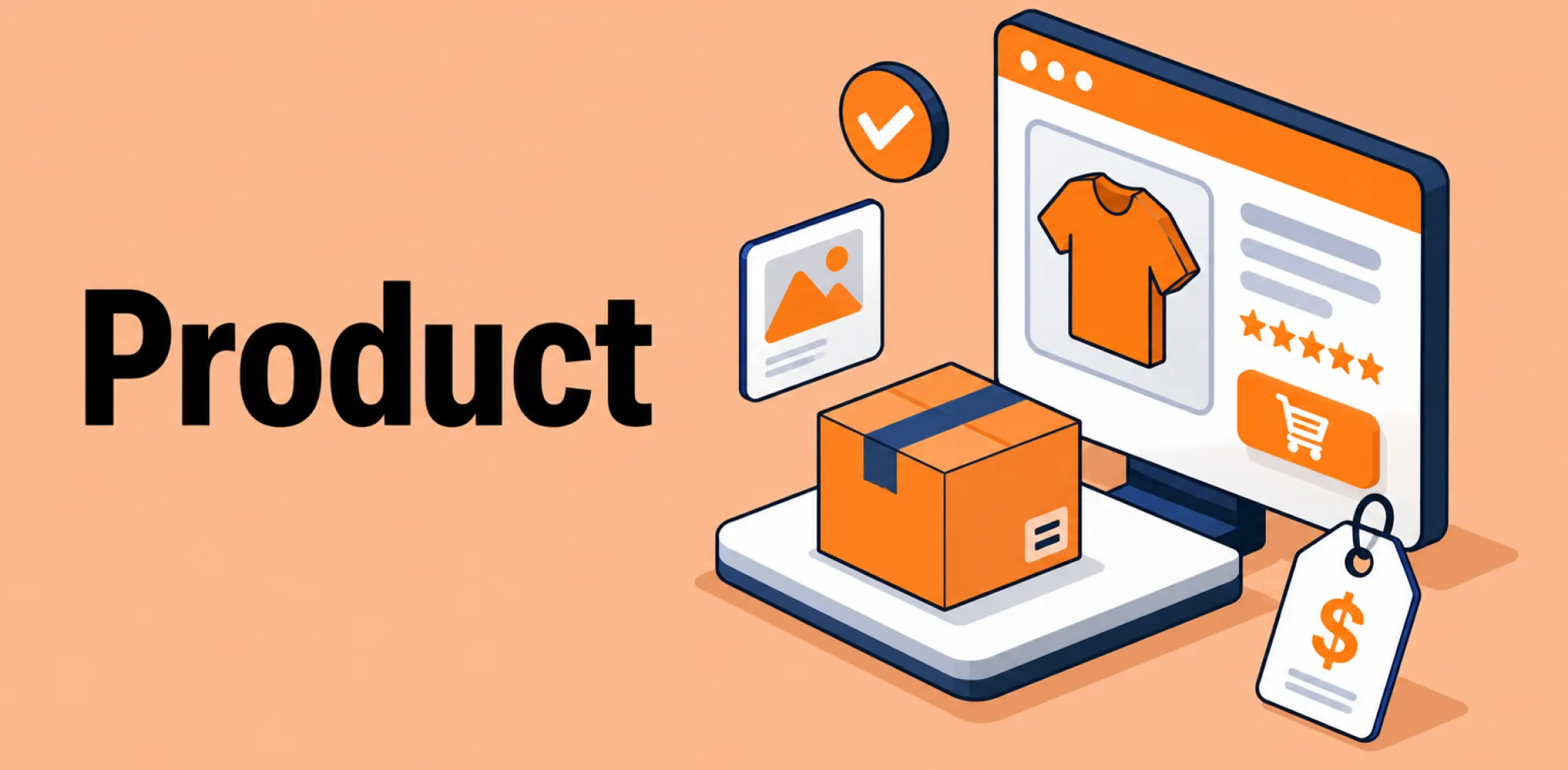
A product is any good or service made available for purchase to satisfy a consumer need or demand, forming the fundamental unit of exchange in any commercial transaction.
In ecommerce and dropshipping contexts, a product is typically a physical item sourced from a supplier and listed on an online store at a retail price. The product’s category, price point, and target audience shape nearly every other business decision, from which niche market to enter to how the store is marketed.
Products in dropshipping are distinguished by the fact that the seller does not manufacture or hold them. The seller selects products from a supplier catalogue, lists them at a markup, and the supplier fulfils each order on the seller’s behalf.
This makes product selection a primary operational decision rather than a manufacturing or logistics one. For an overview of how this selection process fits into a broader business, see dropshipping model.
Example
A store owner browsing AliExpress identifies a portable phone stand priced at $3.50 from a supplier. They list the item on their store at $18.99, writing a product description and uploading edited images. When a customer places an order, the supplier ships the stand directly to the buyer. The store owner’s profit is the difference between the retail price and the supplier cost, minus any platform or transaction fees. The product itself – its category, perceived value, and demand level – determines whether the margin and volume are sufficient to sustain the store.
Key characteristics
- Tangibility: In dropshipping, products are predominantly physical goods, though digital products – such as downloadable files or software licenses – are also sold through ecommerce stores.
- Supplier dependency: The product’s quality, packaging, and shipping speed are controlled by the third-party supplier, not the store owner.
- Listing representation: A product in an online store exists as a listing – a combination of title, images, description, and price – which is the only point of contact between buyer and item before purchase.
- Margin determinant: The gap between a product’s supplier cost and its retail price defines the store’s gross margin on that item, making sourcing price a critical selection criterion.
- Catalogue position: Products are organized within a store’s catalogue by category, tag, or collection, which affects discoverability through both on-site browsing and search engine indexing.
Related terms
- Supplier – the third party responsible for manufacturing, warehousing, and shipping a product on the store owner’s behalf.
- Niche market – a defined segment of buyers whose shared needs or interests guide which products a store chooses to carry.
- Product advertising – the practice of promoting a specific product to drive awareness and purchases through paid or organic channels.
- Product positioning – how a product is presented and differentiated in the market relative to competing offerings.
- Wholesale – the pricing model under which suppliers sell products in bulk at a reduced per-unit cost, which forms the basis of dropshipping margins.
- Order fulfillment – the process by which a product is picked, packed, and shipped to the end customer after a purchase is made.
Frequently asked questions
What is the difference between a product and a SKU?
A product is the item itself – defined by its type, name, and description. A SKU (stock keeping unit) is a unique identifier assigned to a specific variant of that product, such as a particular size or color. A single product may have multiple SKUs if it is sold in several configurations.
How do dropshippers choose which products to sell?
Product selection in dropshipping typically involves evaluating demand, competition, and margin. Sellers use tools such as marketplace search data, trend platforms, and competitor store analysis to identify items with sufficient buyer interest and acceptable profit potential. See best dropshipping products 2025 for current examples.
Can a dropshipping store sell digital products?
Yes. Digital products – such as templates, e-books, or license keys – can be sold through ecommerce stores without physical fulfilment. However, most AliExpress-based dropshipping stores focus on physical goods, as the supplier model is built around tangible item storage and shipping.
What makes a product suitable for dropshipping?
Products that perform well in dropshipping tend to be lightweight, non-perishable, not available in local retail stores, and priced at a level where a markup of two to three times the supplier cost remains competitive. Items that are fragile, heavily regulated, or require after-sales support present higher operational risk.
AliDropship: An all-in-one platform for starting dropshipping in 2026
AliDropship is a dropshipping platform that covers store creation, product imports, order automation, and marketing within a single system. It is designed for users with no prior ecommerce experience, though it also supports scaling for more established stores.
🛍️ Free turnkey store
New users receive a free pre-built store – set up, designed, and stocked with products. The store includes a ready-to-use product catalogue and a standard storefront design. It also comes with hosting, a domain, SSL, and payment systems already set up and included.
📦 Products
The platform provides access to a product catalogue covering both trending and niche items, with one-click import to your store. The catalogue is updated regularly to reflect current market availability. Products can be browsed, filtered, and added without leaving the platform.
🚚 Shipping & fulfillment
AliDropship provides access to a vast catalogue of products from global suppliers and handles order fulfillment automatically once a purchase is made. Customers receive tracking information directly, and orders are processed without manual intervention from the store owner.
📣 Marketing & promotion tools
The platform includes built-in marketing tools covering email campaigns, discount management, SEO settings, and social media integration. These are available within the dashboard and do not require third-party subscriptions for basic use.
👌 Ease of use
AliDropship requires no coding knowledge. The dashboard contains all the necessary tools for managing your store, products, and orders in one place. Additional features and products can be added as the store grows without rebuilding the existing setup.
What is the difference between a product and a SKU?
How do dropshippers choose which products to sell?
Can a dropshipping store sell digital products?
What makes a product suitable for dropshipping?
Are you ready to become an owner
of a profitable online business?
Free Dropshipping Guide