What Is The Dropshipping Model And How Does It Work?

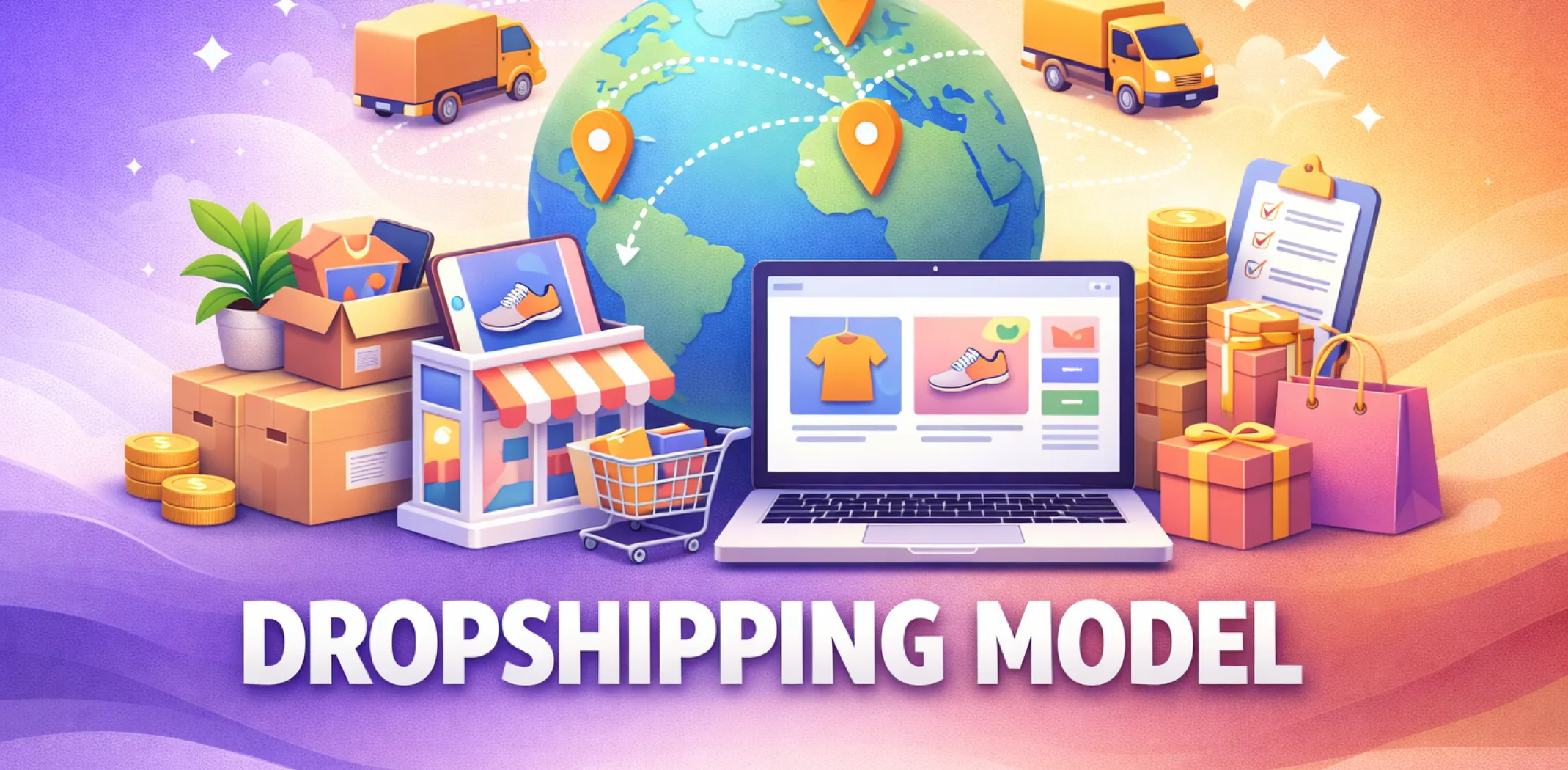
You have probably heard the word “dropshipping” thrown around a lot lately – and for good reason. The dropshipping model has quietly become one of the most accessible ways to run an ecommerce business without holding a single unit of stock. No warehouse. No bulk orders. No upfront inventory risk. You list the products, a customer buys, and a supplier ships directly to their door. That is the core of it.
But how does the dropshipping model actually work in practice, and can you realistically make money with it in 2026? The short answer: yes – but only if you understand what you are getting into. This guide breaks down every major variation of the model, what each one earns, and how to pick the right path for where you are right now.
Quick Answer: The dropshipping model is an ecommerce business model where you sell products online without holding inventory. When a customer places an order, your supplier fulfills and ships it directly. Your profit is the margin between your selling price and the supplier’s cost.

What is the dropshipping model?
At its core, the dropshipping model is a retail fulfillment method where your store never touches the product. Instead of buying inventory upfront and storing it yourself, you partner with dropshipping suppliers who handle stock and shipping on your behalf. Your job is to run the storefront – choosing products, setting prices, driving traffic, and handling customer communication.
The model works like this: a customer visits your online store and places an order. You forward that order to your supplier (often automatically through software), the supplier picks, packs, and ships the item directly to your customer, and you keep the difference between what the customer paid and what the supplier charged you. The customer never knows the supplier is involved.
This is why the dropshipping model appeals so strongly to first-time ecommerce entrepreneurs. The traditional barrier to entry – stocking thousands of dollars of inventory – disappears. You can test products, pivot quickly, and scale what works without the financial exposure that traditional retail carries.
That said, it is not a passive income machine you switch on and walk away from. Running a successful dropshipping business takes real effort in product research, supplier management, customer service, and marketing. The model removes inventory risk, not business risk.
How much can you realistically earn with a dropshipping business?
Earnings vary enormously depending on the model variation, niche, traffic source, and how much time you invest. The figures below represent realistic ranges based on real community data from Reddit’s r/dropshipping and seller forums, not best-case marketing claims.
These ranges reflect stores that have had 60–90 days to gain traction and are actively investing in traffic – either through paid ads or consistent content marketing. A brand-new store in its first month will typically earn far less, and that is completely normal.
One note on the higher figures: The $8,000–$20,000/month ceilings above are real, but they represent stores run by experienced operators putting in full-time effort, often with ad budgets of $500–$2,000/month or more. For most beginners, a realistic first-year target is $500–$2,500/month with consistent effort – still a meaningful side income, and a solid base to build from.
The main dropshipping model variations explained
Not all dropshipping businesses are built the same way. The model splits into several distinct approaches, each with its own supplier relationships, margin profile, and skill requirements. Understanding these helps you choose the variation that fits your starting point – not just the one that sounds most appealing on paper.
Standard supplier-based dropshipping
This is the original dropshipping model and still the most widely used. You list products from a third-party supplier – most commonly via AliExpress or a dedicated platform like AliDropship – on your own online store. When an order comes in, the supplier ships directly to your customer under your store name.
How to get started
You need three things: a storefront (Shopify, WooCommerce, or a turnkey solution), a supplier connection (AliExpress is the most common starting point), and a method to drive traffic. The technology side is now largely solved by tools like AliDropship, which automate product imports, order forwarding, and inventory syncing. The harder part – and the part most beginners underestimate – is traffic acquisition.
What margins look like
Standard AliExpress-based dropshipping typically delivers margins of 20–40% depending on the product category. A $30 item might cost you $10–$15 from the supplier, leaving $15–$20 gross profit per sale. After advertising costs, you are often looking at net margins of 10–20% – which is why volume and product selection matter so much.
Pros and cons
The biggest advantage is speed – you can have a live store selling real products within days. The main challenge is competition: because the barrier to entry is low, many sellers list the same products. Differentiation through branding, superior product pages, and better customer service is what separates profitable stores from abandoned ones.
Earning potential: $300–$2,000/month within 60–90 days with consistent product testing and a defined traffic strategy.
Branded niche dropshipping
A branded niche store takes the same fulfillment model but wraps it in a focused identity. Instead of selling across dozens of categories, you build a store around one audience – pet owners, home gym enthusiasts, sustainable living advocates – and create branding that speaks directly to them.
Why niche stores outperform general stores
Niche stores earn higher customer trust, benefit from more targeted (and cheaper) advertising, and build repeat purchase rates that general stores rarely achieve. A general store selling anything to anyone competes with Amazon. A niche store selling premium gear to trail runners competes with… far fewer people.
How to find your niche
Look for categories with passionate communities, repeat purchase potential, and products that photograph well. Tools like Google Trends, AliExpress bestseller lists, and Reddit communities are all useful starting points. Avoid categories dominated by major brands (electronics, established sportswear) where trust is nearly impossible to build quickly.
Earning potential: $1,000–$8,000/month for established branded stores with a loyal audience and email list, typically after 3–6 months of consistent operation.
Print-on-demand dropshipping
Print-on-demand (POD) is a variation of the dropshipping model where products are created only when a customer orders them. You upload custom designs – on t-shirts, mugs, phone cases, tote bags – to a platform like Printful or Printify, and they produce and ship each item individually.
Who this model suits
POD is a good fit for designers, content creators with existing audiences, or anyone who wants to sell branded merchandise without investing in stock. Margins are lower than standard dropshipping (typically 15–30%), but the creative upside is high – a single viral design can drive thousands of orders.
The realistic limitation
Without an existing audience or a strong content strategy, POD stores struggle to get visibility. The model works best when you already have people who want to wear your brand – an Instagram following, a YouTube channel, a community.
Earning potential: $200–$1,500/month for creators with an active audience; considerably lower without one.
High-ticket dropshipping
High-ticket dropshipping means selling products priced at $200–$2,000 or more – furniture, fitness equipment, outdoor gear, specialist tools – where a single sale can return $100–$500 in profit. The model is still supplier-based, but the economics are fundamentally different.
Why high-ticket changes everything
When your average order value is $400, you need far fewer sales to hit meaningful revenue. Selling 10 items a month at $400 each with a 25% margin earns you $1,000. Selling 10 items a month at $30 each earns you $75. The math is stark – but so is the difficulty. High-ticket buyers are more cautious, expect excellent service, and do more research before purchasing.
What you need to succeed here
Strong product pages, detailed FAQs, visible return policies, and ideally some form of phone or live chat support. Trust signals matter disproportionately when a customer is about to spend $600 in a store they have never heard of before.
Earning potential: $2,000–$15,000/month for focused operators in the right categories, typically after 90–120 days of building supplier relationships and traffic.
How to start dropshipping: A practical step-by-step overview
Knowing which dropshipping model you want to run is one thing. Actually getting a store live and generating its first sale is another. Here is the sequence that works for most beginners in 2026.
Step 1: Choose your niche and validate demand
Before building anything, spend time on research. Use Google Trends to confirm the product category has stable or growing search interest. Check AliExpress for supplier availability and existing bestseller data. Look at competitor stores and note what they are doing well – product page structure, shipping promises, review count. If you can find 3–5 competitors making visible sales, that is validation enough to proceed.
Step 2: Set up your store
You need a platform that handles product listings, checkout, payments, and order management. WooCommerce on WordPress gives you the most flexibility. Shopify is easier to set up but carries monthly fees. A turnkey solution like AliDropship gives you a pre-built, product-loaded store that removes most of the technical friction entirely – ideal if you want to move fast and focus on marketing rather than site-building.
Step 3: Import winning products
Start with 20–50 products, not 500. A focused product range is easier to market, easier to manage, and easier to test. Look for products with strong AliExpress ratings (4.5 stars or above), a reasonable order count, and a margin that leaves you room for advertising. Avoid products with fragile components, complex sizing, or known quality complaints.
Step 4: Drive traffic
This is where most dropshipping businesses succeed or fail. Your main options are paid advertising (Facebook Ads, TikTok Ads, Google Shopping), organic social content (Instagram Reels, TikTok), SEO-driven content marketing, or influencer partnerships. Most successful stores use a combination – typically one paid and one organic channel – to reduce dependency on any single traffic source.
Step 5: Optimise, test, and scale
Your first 30 days are a data collection exercise. Which products get clicks but no purchases? Which ads get engagement but no conversions? Which product pages have the highest bounce rate? Use this data to cut what does not work and double down on what does. Scaling is not about adding more products – it is about putting more budget and attention behind the handful that already convert.
Pro Tip: Set a 30-day review date from your store launch and commit to making 3 specific changes based on the data before adding any new products.
Legal and ethical considerations for your dropshipping business
The dropshipping model is fully legal, but how you run your store determines whether it stays that way. There are a handful of practices that trip up new sellers – some because they did not know better, others because they cut corners. Here is what to avoid and what to do instead.
What to avoid absolutely
Fake or purchased reviews: Buying reviews on Trustpilot, Google, or your own store is a violation of platform terms and, in several jurisdictions, constitutes misleading advertising under consumer protection law. If discovered, it can get your store de-listed and your payment processor account terminated.
Misleading shipping times: If your AliExpress supplier ships from China in 15–25 days, your store cannot advertise “3–5 day delivery.” This is one of the most common complaints dropshipping stores receive, and it generates chargebacks, PayPal disputes, and negative reviews that are very hard to recover from.
Counterfeit and branded goods: Selling items that use another brand’s logo, trademark, or design without authorisation is copyright infringement. This applies even if the product is widely available on AliExpress. The fact that a supplier sells it does not make it legal for you to retail it.
Key principle: If you would not be comfortable explaining your store’s practices to a customer in writing, those practices need to change before you launch.
What to do instead
Build reviews honestly by emailing customers post-delivery with a simple review request and a small incentive (a discount code on their next order). Set realistic shipping expectations upfront and over-communicate tracking information – customers who know their order is on the way rarely complain about wait times. Source from verified suppliers with documented quality records and avoid any product that looks like a branded replica.
Which dropshipping model is right for you?
The honest answer is that the best dropshipping model is the one you will actually execute consistently. Here is a breakdown by reader profile to help you match your situation to the right starting point.
Complete beginner
Start with a standard niche dropshipping store using AliExpress as your supplier base. Choose one category you understand or are genuinely interested in, import 20–30 products, and focus entirely on learning one traffic channel before adding another.
A turnkey solution removes the technical setup barrier and lets you spend your first 30 days on marketing research instead of theme customisation. Realistic target: $300–$800/month by month 3.
Intermediate / part-time operator
If you have some ecommerce experience or have already run a store at small scale, move toward a branded niche approach. Invest in professional product photography (or use supplier images selectively), build an email list from day one, and start a content channel – even a simple Instagram account – to reduce paid traffic dependency. Realistic target: $1,500–$4,000/month by month 6 with consistent effort.
Advanced / full-time goal
If your goal is to replace a full-time income within 12 months, high-ticket dropshipping or a deeply branded niche store offers the most viable path. The learning curve is steeper, the ad spend required is higher, and supplier relationships take time to build – but the margin per sale justifies the investment.
Budget at least $1,000–$2,000 for initial advertising, treat your first 90 days as a paid learning period, and reinvest early profits into scaling what converts. Realistic target: $5,000–$15,000/month by month 12 with full-time commitment and smart capital allocation.
Regardless of which path you choose, the fundamentals remain the same across every dropshipping model: understand your customer, source reliably, market consistently, and treat every complaint as a data point rather than a disaster. The stores that survive are the ones that iterate rather than abandon.
AliDropship: Your complete all-in-one solution for starting dropshipping in 2026
If you want the simplest possible way to start dropshipping – especially if you’re brand new – AliDropship remains one of the most beginner-friendly tools available in 2026. It brings together store creation, product imports, automation, and marketing into a single streamlined system designed to help you launch quickly and grow confidently.
Free turnkey store 🛍️
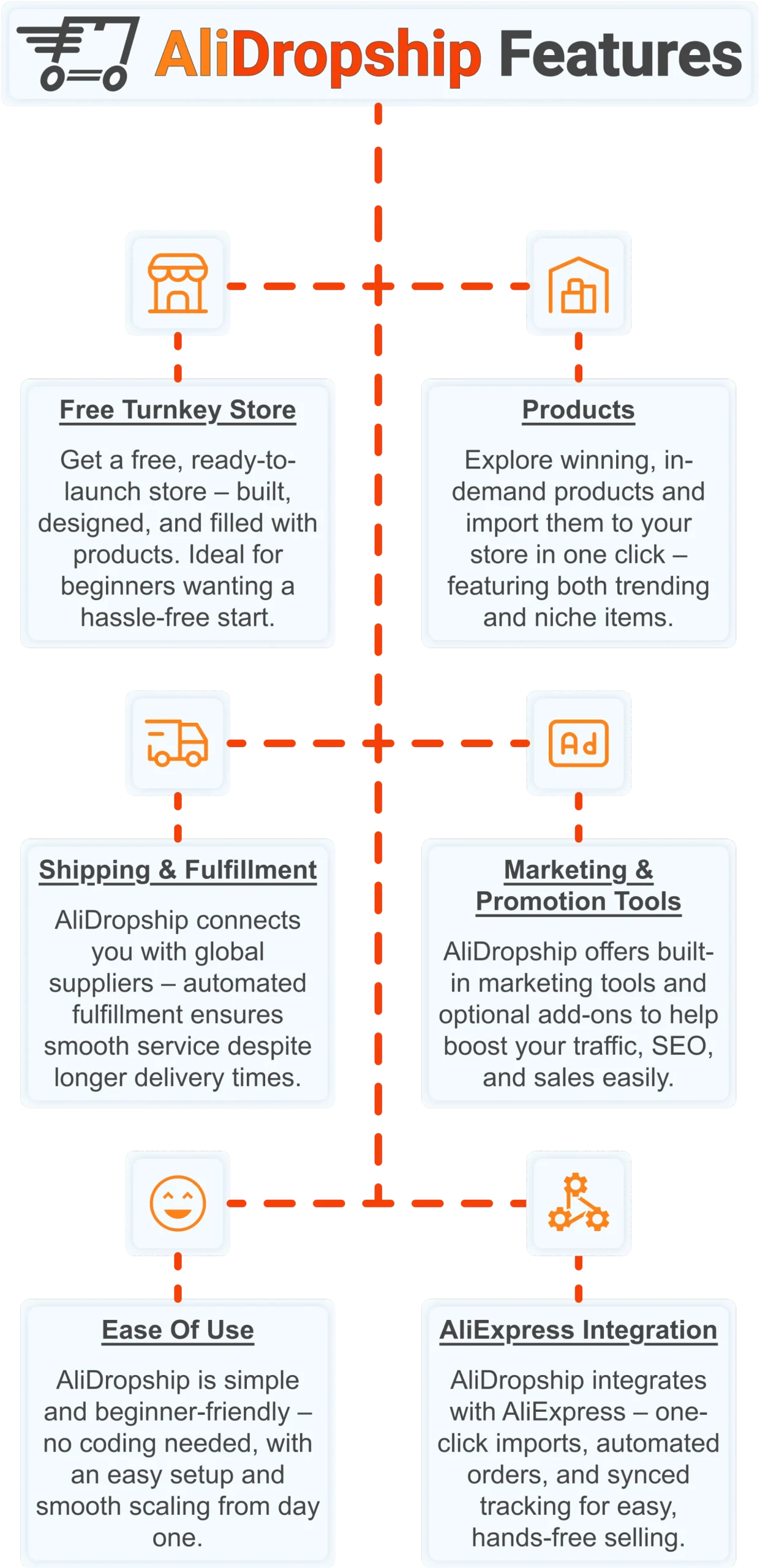
Get a free turnkey store – built, designed, and filled with products. Ideal for beginners wanting a hassle-free start, the store comes fully optimized to attract customers right away, saving you time on setup. Plus, it includes professional design elements to give your business a polished, trustworthy look from day one. This ready-made foundation makes it easy to move seamlessly into product selection.
Products 📦
Once your store is set up, you can explore winning, in-demand products and import them in one click – featuring both trending and niche items. This wide selection lets you cater to diverse customer interests and test what works best. Regular updates ensure you always have fresh products, keeping your store competitive and relevant. With great products in place, smooth shipping becomes the next essential step.
Shipping & fulfillment 🚚
AliDropship connects you with global suppliers, and automated fulfillment ensures seamless order processing despite international delivery times. Customers receive real-time tracking updates, which builds confidence and trust in your store. Once shipping is handled reliably, you can focus on promoting your store and attracting traffic.
Marketing & promotion tools 📣
To maximize sales, AliDropship offers built-in marketing tools and optional add-ons that help boost traffic, SEO, and conversions. From email campaigns and discounts to social media integration, these tools empower you to reach and retain customers without needing prior marketing experience. With promotion strategies in place, managing your business becomes simpler and more efficient.
Ease of use 👌
AliDropship is beginner-friendly – no coding needed, with an intuitive dashboard that guides you through every step. Easy setup and smooth scaling let you expand your store without stress. As your business grows, adding new features, products, and marketing campaigns remains hassle-free, giving you more time to focus on sales.
AliExpress integration 🛒
Finally, AliDropship integrates seamlessly with AliExpress, enabling one-click imports, automated orders, and synced tracking. Your inventory stays up-to-date with the latest products and prices, while automated order processing frees you from manual tasks. Combined with the turnkey setup, reliable shipping, and built-in marketing tools, this integration ensures your dropshipping business is fully equipped for growth and success.
The dropshipping model has never been easier to launch than it is right now – and AliDropship gives you every tool you need to do it without the usual technical headaches. Claim your free turnkey store and $100 welcome gift and start your ecommerce business today.
What is the dropshipping model and how does it work?
Is the dropshipping model still profitable in 2026?
The dropshipping model remains profitable in 2026 for sellers who focus on a defined niche, build genuine brand credibility, and invest in consistent traffic generation. General stores selling low-margin products face heavy competition, but branded niche stores and high-ticket operations continue to generate strong returns. Most successful dropshippers earn between 500 and 3,000 dollars per month within their first year, with experienced operators reaching significantly higher.
What are the main types of dropshipping models?
The main variations of the dropshipping model include standard supplier-based dropshipping using platforms like AliExpress, branded niche stores that focus on a specific customer audience, print-on-demand stores where products are made to order, high-ticket dropshipping with products priced above 200 dollars, and business-to-business dropshipping. Each model has different margin profiles, supplier requirements, and effort levels.
How much does it cost to start a dropshipping business?
Starting a dropshipping business can cost as little as 0 dollars if you use a free turnkey store solution, though most operators budget between 200 and 1,000 dollars for their first few months to cover advertising, domain registration, and any platform fees. Paid advertising is where most of the early spending goes. Keeping initial product testing budgets small and scaling only what converts is the smartest approach for new sellers.
How long does it take to make money with the dropshipping model?
Most new dropshipping stores see their first sales within 2 to 4 weeks of launching with active marketing. Reaching a consistent monthly income of 500 to 1,500 dollars typically takes 60 to 90 days of product testing and traffic optimisation. Full-time income levels of 3,000 dollars or more per month generally require 6 to 12 months of sustained effort, reinvestment of early profits, and a defined niche with repeatable marketing.