

PayPal

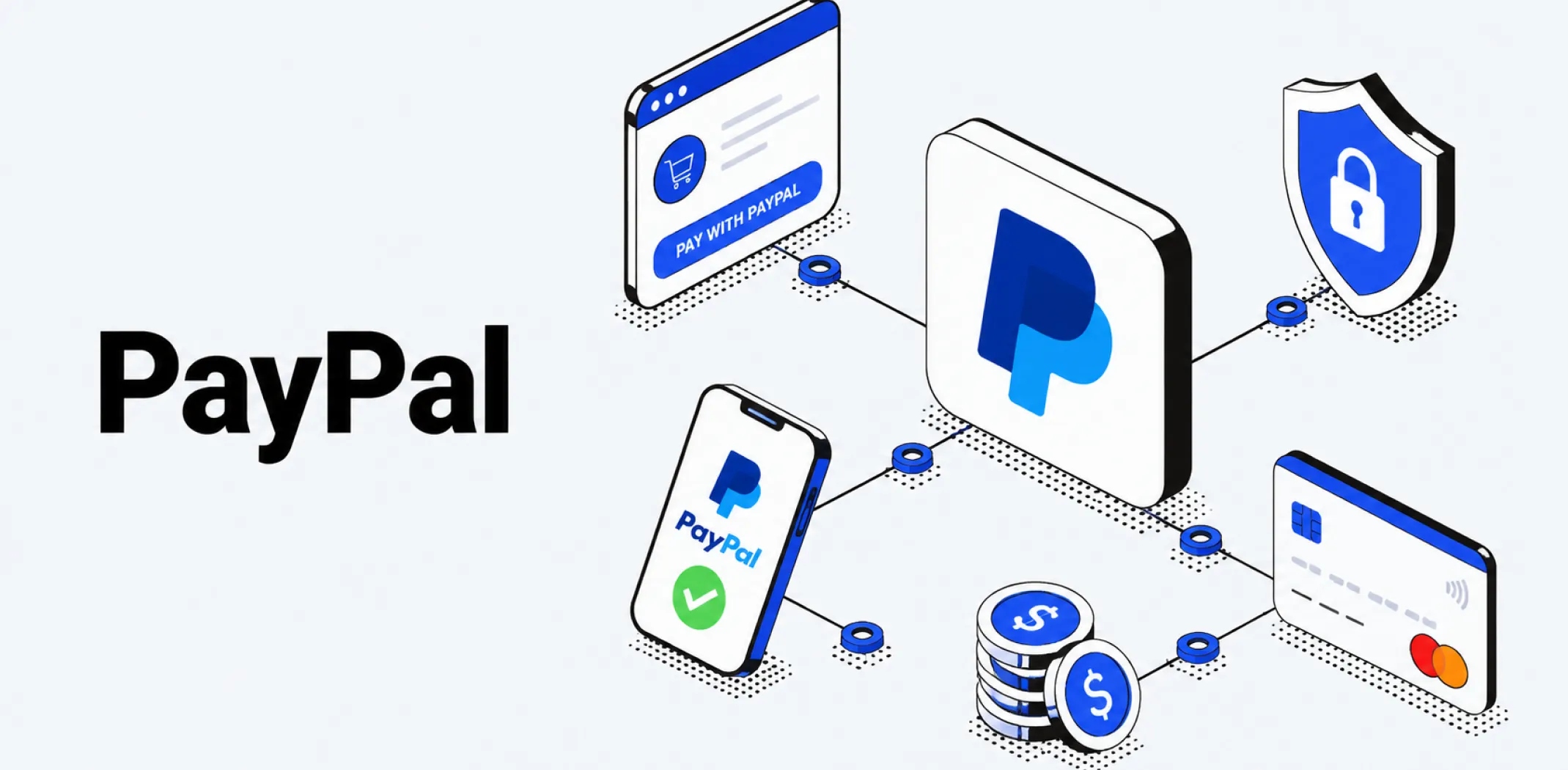
PayPal is a digital payment platform that lets individuals and businesses send, receive, and accept money online through an account-based digital wallet, functioning as a payment service provider that combines checkout, processing, and buyer protection into a single consumer-facing brand.
PayPal traces back to 1998, when Max Levchin, Peter Thiel, and Luke Nosek founded Confinity, originally a security software company for handheld devices that pivoted to digital payments after building a feature letting users send money via email.
In March 2000, Confinity merged with X.com, an online financial services company founded by Elon Musk, in what insiders later called a “merger of enemies” since the two had been competing in the same space while sharing office space. The combined company, initially led by Musk, dropped its broader internet banking ambitions to focus entirely on the payments product, rebranding as PayPal in 2001.
eBay acquired PayPal in 2002 for $1.5 billion after recognizing it had become the dominant payment method among eBay sellers, then spun the company back off as an independently traded public company in 2015. Several early PayPal employees and founders went on to start or fund other major technology companies, a group later nicknamed the “PayPal Mafia.”
As a merchant tool, PayPal differs from a developer-first platform such as Stripe in that it leans heavily on its consumer-recognized checkout button and existing user base of hundreds of millions of account holders, letting shoppers pay using a stored balance, linked bank account, or card without re-entering payment details on every new site.
Standard online checkout pricing in 2026 runs around 3.49% plus a $0.49 fixed fee per domestic transaction for PayPal or Venmo wallet payments, with somewhat lower rates available through Advanced Checkout, an API-based integration aimed at developers and higher-volume merchants.
PayPal’s Purchase Protection program, which can refund buyers for items that never arrive or significantly differ from their description, is a major part of its consumer trust proposition and a key reason many shoppers prefer paying through PayPal over entering card details directly on an unfamiliar store.
Example
A customer shopping on a small, unfamiliar dropshipping store hesitates to enter their card number directly but notices a PayPal checkout button. They log into their existing PayPal account, confirm the payment in two clicks without re-entering any card or banking details, and complete the purchase with the added confidence that PayPal’s Purchase Protection covers them if the order never arrives or turns out to be significantly different from its description.
Key characteristics
- Account-based wallet model: Customers maintain a PayPal account linked to a bank, card, or balance, allowing repeat purchases across many merchants without re-entering payment details each time.
- Strong consumer brand recognition: Decades of use across millions of online stores have made the PayPal checkout button a familiar, trusted option that can reduce hesitation at checkout, particularly on smaller or newer stores.
- Buyer and seller protection programs: Purchase Protection for buyers and Seller Protection for merchants are built into PayPal’s core offering, distinguishing it from payment methods with no built-in dispute resolution framework.
- Tiered pricing by integration type: Standard, button-based checkout carries a higher fee than Advanced Checkout, PayPal’s API-based option aimed at developers willing to handle deeper technical integration.
- Owns Venmo: PayPal acquired the peer-to-peer payment app Venmo, and many ecommerce integrations now let merchants accept Venmo payments through the same underlying PayPal checkout infrastructure.
Related terms
- Payment gateway – the broader technology category that PayPal functions within, alongside payment processing, as a combined payment service provider.
- Stripe – a developer-first payment service provider often compared to PayPal, distinguished by its API-centric integration approach versus PayPal’s consumer-recognized checkout button.
- Refund policy – a store’s published rules for returning funds, which interact with PayPal’s own buyer protection program when a dispute arises.
- WooCommerce – an ecommerce plugin that commonly integrates PayPal as a checkout option alongside other payment gateways.
- Dropship – a fulfillment model in which PayPal is frequently used by smaller sellers due to its familiar checkout and built-in buyer trust.
Frequently asked questions
What is the difference between PayPal and Stripe?
PayPal is built around a recognizable, account-based checkout button and a large existing consumer user base, with strong built-in buyer protection. Stripe is built primarily for developers, integrating through an API rather than a consumer-facing checkout brand, and is generally favored by businesses wanting deeper, more customizable control over the checkout experience.
How much does PayPal charge merchants?
Standard online checkout typically costs around 3.49% plus a $0.49 fixed fee per domestic transaction for PayPal or Venmo wallet payments in 2026, with somewhat lower rates available through Advanced Checkout, an API-based integration option, and additional fees applying to international transactions and currency conversion.
What is PayPal’s Purchase Protection?
Purchase Protection is a buyer-facing program that can refund a customer if an eligible purchase never arrives or is significantly different from how it was described. It is a major part of PayPal’s consumer trust proposition and a common reason shoppers prefer it over entering card details directly.
Is PayPal still owned by eBay?
No, eBay acquired PayPal in 2002 but spun the company off as an independently publicly traded business in July 2015. PayPal now trades on the Nasdaq under the ticker PYPL and has no ownership ties to eBay.
AliDropship: An all-in-one platform for starting dropshipping in 2026
AliDropship is a dropshipping platform that covers store creation, product imports, order automation, and marketing within a single system. It is designed for users with no prior ecommerce experience, though it also supports scaling for more established stores.
🛍️ Free turnkey store
New users receive a free pre-built store – set up, designed, and stocked with products. The store includes a ready-to-use product catalogue and a standard storefront design. It also comes with hosting, a domain, SSL, and payment systems already set up and included.
📦 Products
The platform provides access to a product catalogue covering both trending and niche items, with one-click import to your store. The catalogue is updated regularly to reflect current market availability. Products can be browsed, filtered, and added without leaving the platform.
🚚 Shipping & fulfillment
AliDropship provides access to a vast catalogue of products from global suppliers and handles order fulfillment automatically once a purchase is made. Customers receive tracking information directly, and orders are processed without manual intervention from the store owner.
📣 Marketing & promotion tools
The platform includes built-in marketing tools covering email campaigns, discount management, SEO settings, and social media integration. These are available within the dashboard and do not require third-party subscriptions for basic use.
👌 Ease of use
AliDropship requires no coding knowledge. The dashboard contains all the necessary tools for managing your store, products, and orders in one place. Additional features and products can be added as the store grows without rebuilding the existing setup.
What is the difference between PayPal and Stripe?
How much does PayPal charge merchants?
What is the PayPal Purchase Protection?
Is PayPal still owned by eBay?
Are you ready to become an owner
of a profitable online business?
Free Dropshipping Guide