

OEM

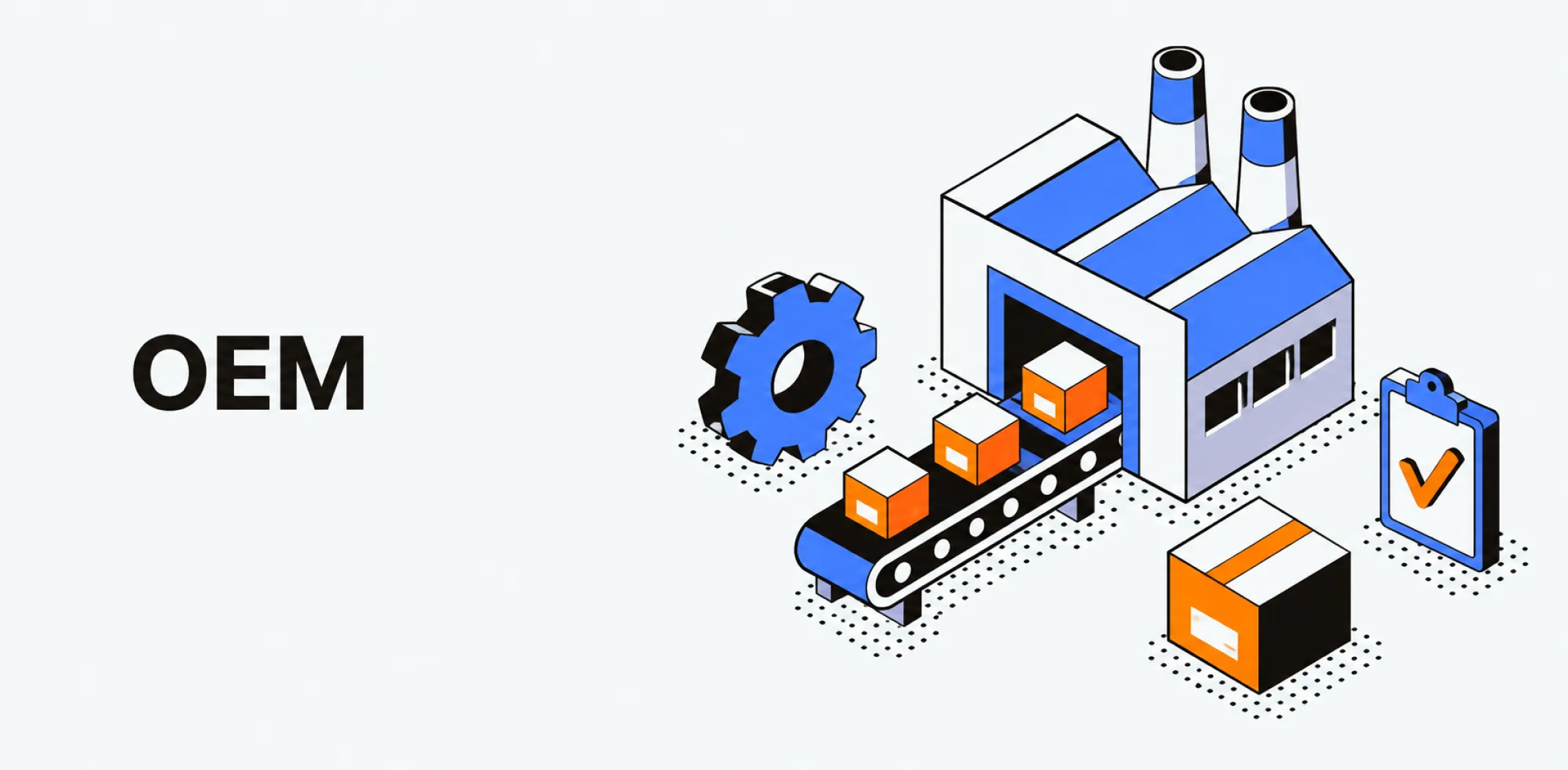
OEM, or original equipment manufacturer, is a company that produces goods which another business purchases and sells under its own brand name, without the end customer knowing who manufactured them.
The term originated in industrial and electronics manufacturing, where component makers supplied parts or finished products to brand owners who handled distribution and marketing.
In ecommerce and dropshipping contexts, OEM refers to the same principle at a smaller scale: a supplier manufactures a product to a buyer’s specification, and the buyer applies their own branding before selling. This arrangement is the foundation of private label dropshipping, where the store owner does not produce goods but controls how they are branded and presented.
OEM is often confused with ODM (original design manufacturer), a related model in which the manufacturer also holds the product design. Under OEM, the buyer typically supplies the specification or design; under ODM, the manufacturer’s existing design is licensed or rebranded. Both models result in goods sold under a brand that did not make them, but the degree of customisation differs.
Example
A store owner selling kitchen gadgets sources a stainless steel garlic press from a factory in Guangdong under an OEM arrangement. The factory produces the press to the buyer’s specified dimensions and packaging, then ships units bearing the store’s logo. The end customer sees only the store brand; the manufacturer is not named anywhere on the product or packaging. The store owner sets the retail price and manages all customer-facing activity, while the OEM handles production and quality control.
Key characteristics
- Brand separation: The manufacturer’s identity is not disclosed to the end customer; only the reseller’s brand appears on the product.
- Specification control: The buyer typically provides product specifications, materials, or design files that the OEM follows during production.
- Minimum order quantities: OEM arrangements usually require the buyer to commit to a minimum production run, which raises the entry cost compared to standard dropshipping.
- Quality dependency: Product consistency depends entirely on the OEM’s manufacturing processes and quality assurance standards.
- Scalability: Because production is outsourced, the buyer can scale order volumes without investing in manufacturing infrastructure.
Related terms
- Supplier – the third party responsible for manufacturing or warehousing products in a dropshipping or OEM arrangement.
- Wholesale – a bulk purchasing model often used alongside OEM sourcing to reduce per-unit costs.
- Dropship – a fulfillment method where the supplier ships goods directly to the customer, frequently used with OEM-sourced products.
- Product positioning – the strategy used to differentiate a branded OEM product in a competitive market.
- Niche market – a focused customer segment that OEM-branded products are often designed to serve.
Frequently asked questions
What does OEM mean in dropshipping?
In dropshipping, OEM refers to sourcing products from a manufacturer who produces goods to a store owner’s branding or specification requirements. The manufacturer ships under the store’s label, allowing the seller to offer branded products without operating a factory. This is the basis of private label dropshipping.
Is OEM the same as private label?
The terms are closely related but not identical. Private label describes the commercial arrangement – selling manufacturer-made goods under a store’s own brand. OEM describes the manufacturer’s role in that arrangement. A private label product is typically made by an OEM, but not every OEM product is sold as private label; some OEM output goes to other businesses for integration or resale under different structures.
What is the difference between OEM and ODM?
An OEM produces goods to a buyer’s design or specification, while an ODM (original design manufacturer) owns the product design and licenses or produces it for other brands to sell. OEM gives the buyer more control over product development; ODM is faster to market but offers less differentiation since the same design may be sold to multiple buyers.
Can small ecommerce stores use OEM suppliers?
Yes, though OEM arrangements typically require meeting minimum order quantities that are higher than standard dropshipping. Many factories on platforms such as Alibaba offer OEM services with negotiable minimums, making the model accessible to smaller stores willing to hold some inventory.
AliDropship: An all-in-one platform for starting dropshipping in 2026
AliDropship is a dropshipping platform that covers store creation, product imports, order automation, and marketing within a single system. It is designed for users with no prior ecommerce experience, though it also supports scaling for more established stores.
🛍️ Free turnkey store
New users receive a free pre-built store – set up, designed, and stocked with products. The store includes a ready-to-use product catalogue and a standard storefront design. It also comes with hosting, a domain, SSL, and payment systems already set up and included.
📦 Products
The platform provides access to a product catalogue covering both trending and niche items, with one-click import to your store. The catalogue is updated regularly to reflect current market availability. Products can be browsed, filtered, and added without leaving the platform.
🚚 Shipping & fulfillment
AliDropship provides access to a vast catalogue of products from global suppliers and handles order fulfillment automatically once a purchase is made. Customers receive tracking information directly, and orders are processed without manual intervention from the store owner.
📣 Marketing & promotion tools
The platform includes built-in marketing tools covering email campaigns, discount management, SEO settings, and social media integration. These are available within the dashboard and do not require third-party subscriptions for basic use.
👌 Ease of use
AliDropship requires no coding knowledge. The dashboard contains all the necessary tools for managing your store, products, and orders in one place. Additional features and products can be added as the store grows without rebuilding the existing setup.
What does OEM mean in dropshipping?
Is OEM the same as private label?
What is the difference between OEM and ODM?
Can small ecommerce stores use OEM suppliers?
Are you ready to become an owner
of a profitable online business?
Free Dropshipping Guide