

ODM

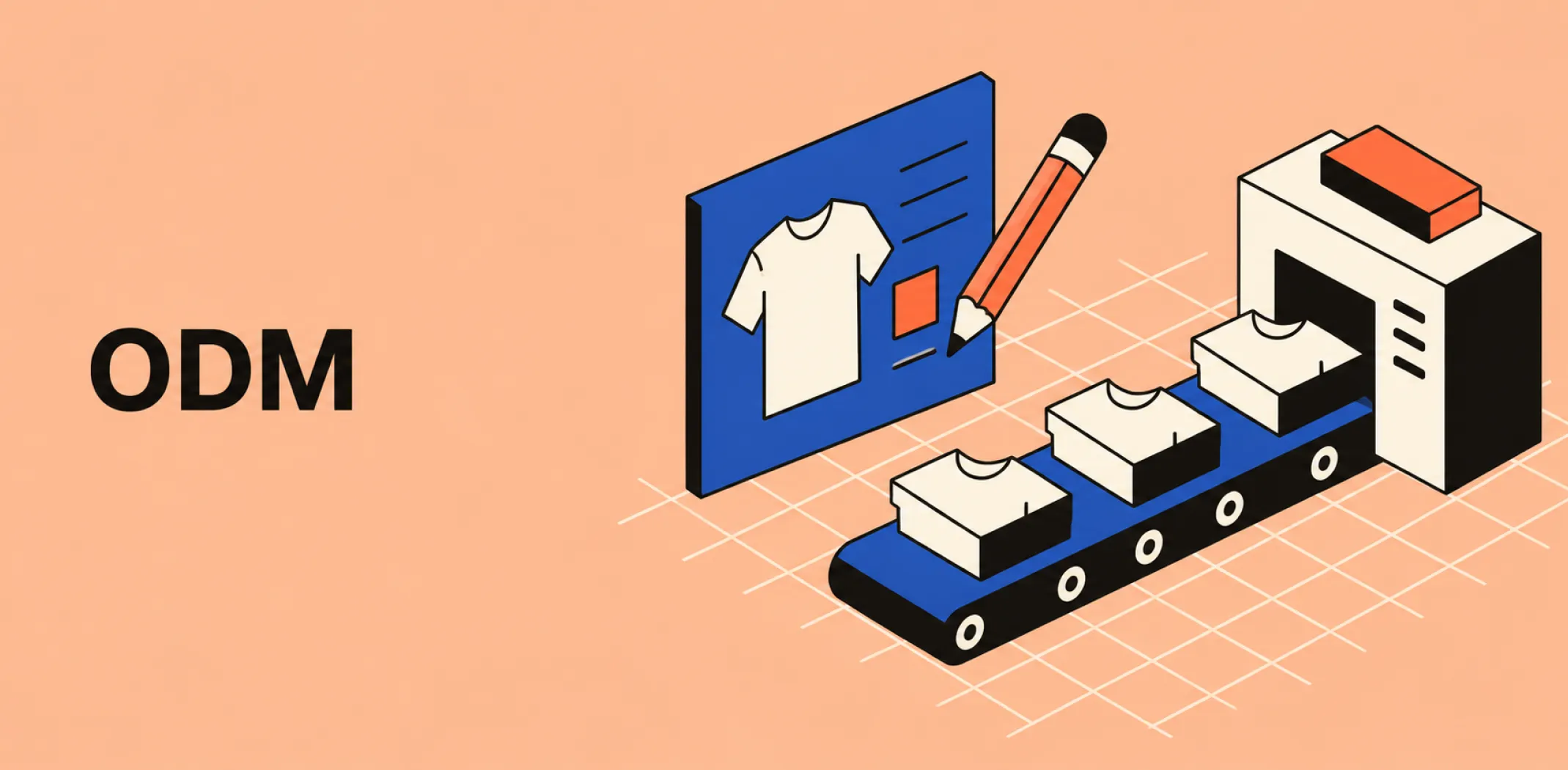
ODM, or original design manufacturer, is a company that both designs and manufactures products, which another business then purchases and sells under its own brand name.
Unlike an OEM arrangement – where the buyer supplies the product specification or design – an ODM manufacturer retains ownership of the product design and offers it to multiple buyers who rebrand and resell it.
The buyer selects from the manufacturer’s existing catalogue, requests any permitted customisations (such as colour, logo, or packaging), and sells the finished product under their own label. Because the design work is already complete, ODM sourcing typically involves shorter lead times and lower development costs than full OEM production.
In ecommerce and dropshipping, ODM is a practical route for store owners who want branded products without investing in product development. The trade-off is reduced exclusivity: the same base product may be available to competing stores through the same manufacturer. This makes product positioning and branding decisions especially important when sourcing via ODM.
Example
A store owner launching a fitness accessories brand selects a foam resistance band set from an ODM manufacturer’s catalogue. The manufacturer produces the bands in the store’s chosen colours, ships them in custom-printed packaging bearing the store’s logo, and does not disclose the manufacturer’s identity anywhere on the product. A competing store may source the same base product from the same factory but present it under a different brand. Each store differentiates primarily through branding, pricing, and marketing rather than through the product design itself.
Key characteristics
- Manufacturer-owned design: The ODM holds the intellectual property for the product design, which can be licensed to multiple buyers simultaneously.
- Limited exclusivity: Because the base design is available to multiple resellers, differentiation depends on branding and marketing rather than on unique product features.
- Faster time to market: Buyers skip the design and development phase, allowing quicker product launches compared to full OEM sourcing.
- Lower development cost: R&D expenses are absorbed by the manufacturer and spread across multiple buyers, reducing the cost per reseller.
- Customisation range: Permitted modifications are set by the manufacturer and typically cover surface-level changes such as colour, logo, and packaging rather than structural design changes.
Related terms
- Supplier – the manufacturer or vendor that produces and may ship products on behalf of a store owner.
- Wholesale – a bulk purchasing model often used when buying ODM-sourced products ahead of resale.
- Dropship – a fulfillment method that can be combined with ODM sourcing when the manufacturer ships directly to customers.
- Product positioning – the strategy for differentiating a rebranded ODM product in a market where competitors may carry the same base item.
- Niche market – a focused customer segment that ODM-branded products are typically aimed at serving.
Frequently asked questions
What is the difference between ODM and OEM?
In an ODM arrangement, the manufacturer owns the product design and sells it to multiple buyers for rebranding. In an OEM arrangement, the buyer provides the design or specification and the manufacturer produces it exclusively for that buyer. ODM is faster and cheaper to enter; OEM gives the buyer greater control and product exclusivity. Both models result in goods sold under a brand that did not make them.
Is ODM suitable for dropshipping?
ODM is commonly used in private label dropshipping, where a store owner sells branded products sourced from a third-party manufacturer. Platforms such as Alibaba list many ODM suppliers who offer branding customizations with negotiable minimum order quantities.
Does ODM mean the product is lower quality?
Not necessarily. ODM describes the ownership of the design, not the quality of manufacturing. The same ODM factory may produce goods across a range of quality tiers depending on materials specified and price point agreed. Buyers should verify quality through samples and factory audits regardless of whether the sourcing model is ODM or OEM.
Can a buyer own the design after an ODM deal?
Only if intellectual property transfer is explicitly negotiated and written into the contract. By default, the ODM manufacturer retains design ownership. Buyers who want to prevent competitors from sourcing the same product should negotiate exclusivity clauses or transition to a full OEM arrangement with a custom specification.
AliDropship: An all-in-one platform for starting an online business in 2026
AliDropship is an online business platform that gives customers a ready-made store, a digital products catalogue, and built-in, one-click advertising within a single system. Founded in 2015 and based in Irvine, California, it has helped launch more than 1,500,000 stores and holds a 4.7-star rating on Trustpilot. It is built for people with no prior experience and no technical skills.
🆓 Free 14-day trial
New users get full platform access for 14 days, including a ready-made store, hosting, a domain, an SSL certificate, and access to the digital products catalogue. The trial also includes a $40 ad coupon to test the advertising system. Order fees apply only when a sale is made.
📦 Digital products
Customers choose from AliDropship’s catalogue of digital products – guides, courses, checklists, tools, and AI-powered toolkits – and keep up to 70% of every sale. Delivery is instant and automated, so there is no inventory, shipping, or manual fulfillment involved.
📣 One-click advertising
AliDropship includes built-in advertising that customers can turn on for as little as $10 a day. The system handles targeting, creatives, and optimization, and many customers see their first orders the same day they launch ads.
👌 Ease of use
AliDropship requires no coding or marketing experience. The store, products, and ads are managed from a single dashboard that works on a phone as well as a desktop, and a personal growth manager is available to help by chat.
💳 Monthly plan
After the trial, continued access is $39 a month, covering the store, the digital products catalogue, and ongoing support. There is no long-term contract, and the plan can be cancelled at any time.
What is the difference between ODM and OEM?
Is ODM suitable for dropshipping?
Does ODM mean the product is lower quality?
Can a buyer own the design after an ODM deal?
Are you ready to become an owner
of a profitable online business?
Free Dropshipping Guide