

Long-Tail Keyword

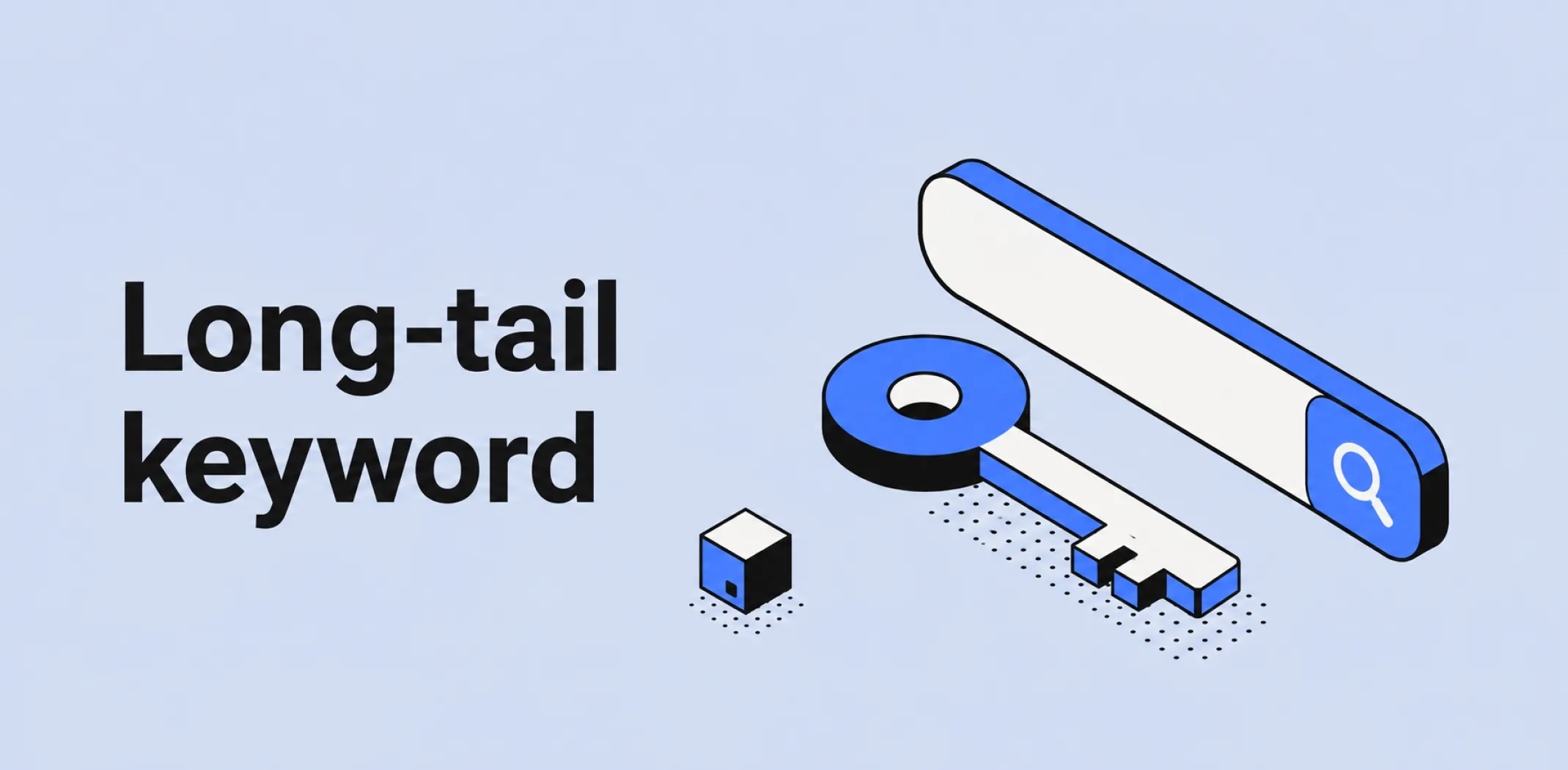
Long-tail keyword is a specific search phrase, typically three or more words, that is more precisely targeted and receives lower search volume than a broader, more general keyword.
Long-tail keywords sit at the opposite end of the spectrum from short-tail or head keywords, which are shorter, broader terms with high search volume and high competition. A search for blender is a head keyword; a search for portable blender for smoothies under 50 dollars is a long-tail keyword.
Individually, long-tail keywords attract fewer searches, but collectively they often account for a large share of total search traffic because there are so many possible variations.
Long-tail keywords are identified as part of broader keyword research and are commonly used to guide product titles, blog content, and landing page copy.
Example
A store selling yoga mats targets the head keyword yoga mat, which has high search volume but also intense competition from large retailers. Instead of competing directly, the store also targets the long-tail keyword non slip yoga mat for hot yoga, which receives far fewer monthly searches but converts at a higher rate because the searcher already knows what they want. The store builds a dedicated product page around this phrase rather than relying only on the broader term.
Key characteristics
- Lower competition: Long-tail keywords face fewer competing pages, which makes ranking for them comparatively easier than ranking for head keywords.
- Higher purchase intent: Because the phrase is specific, searchers using long-tail keywords are often closer to making a decision or a purchase.
- Lower individual search volume: Any single long-tail keyword is searched relatively few times per month compared with a head keyword.
- Conversational phrasing: Long-tail keywords frequently resemble natural spoken language or full questions, reflecting how people search using voice or detailed queries.
Related terms
- Keyword research – the process that identifies long-tail keywords alongside broader terms.
- Keyword – the broader category of search terms that includes both head and long-tail variations.
- SEO – the broader set of practices for improving organic visibility, which often relies on long-tail keywords for lower-competition rankings.
- On-page SEO – the practice of applying keywords, including long-tail phrases, to titles, headings, and page content.
- Niche market – a focused customer segment often uncovered through long-tail keyword patterns.
Frequently asked questions
What makes a keyword long-tail?
A keyword is generally considered long-tail when it contains three or more words and targets a narrow, specific search intent rather than a broad topic.
Do long-tail keywords bring less traffic?
A single long-tail keyword typically brings less traffic than a head keyword, though a large set of long-tail keywords combined can generate significant traffic over time.
Are long-tail keywords easier to rank for?
Long-tail keywords are generally easier to rank for because fewer pages compete directly for the same specific phrase.
AliDropship: An all-in-one platform for starting an online business in 2026
AliDropship is an online business platform that gives customers a ready-made store, a digital products catalogue, and built-in, one-click advertising within a single system. Founded in 2015 and based in Irvine, California, it has helped launch more than 1,500,000 stores and holds a 4.7-star rating on Trustpilot. It is built for people with no prior experience and no technical skills.
🆓 Free 14-day trial
New users get full platform access for 14 days, including a ready-made store, hosting, a domain, an SSL certificate, and access to the digital products catalogue. The trial also includes a $40 ad coupon to test the advertising system. Order fees apply only when a sale is made.
📦 Digital products
Customers choose from AliDropship’s catalogue of digital products – guides, courses, checklists, tools, and AI-powered toolkits – and keep up to 70% of every sale. Delivery is instant and automated, so there is no inventory, shipping, or manual fulfillment involved.
📣 One-click advertising
AliDropship includes built-in advertising that customers can turn on for as little as $10 a day. The system handles targeting, creatives, and optimization, and many customers see their first orders the same day they launch ads.
👌 Ease of use
AliDropship requires no coding or marketing experience. The store, products, and ads are managed from a single dashboard that works on a phone as well as a desktop, and a personal growth manager is available to help by chat.
💳 Monthly plan
After the trial, continued access is $39 a month, covering the store, the digital products catalogue, and ongoing support. There is no long-term contract, and the plan can be cancelled at any time.
What is a long tail keyword in dropshipping?
How many words does a long tail keyword usually have?
Why do long tail keywords convert better?
How do you find long tail keywords for a store?
Should product pages target long tail keywords?
Are you ready to become an owner
of a profitable online business?
Free Dropshipping Guide