

Keyword

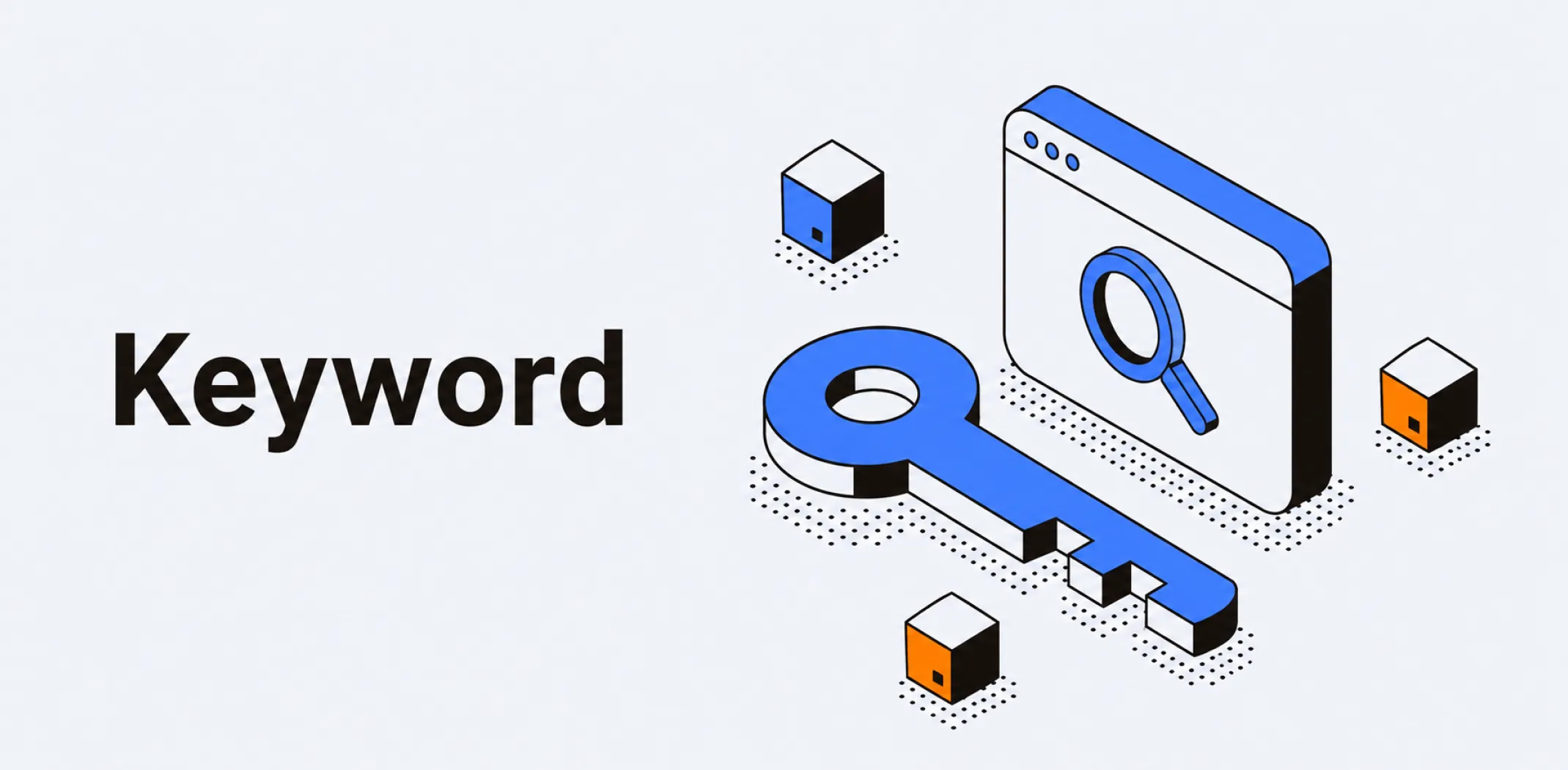
A keyword is a word or phrase that represents the topic or intent of a piece of content, used to connect that content with the terms people type into search engines or select when targeting advertising.
In ecommerce and digital marketing, keywords are the basic unit search engines and advertising platforms use to match content with user queries. A single page or product listing is usually optimized around one primary keyword and a small set of closely related variations, rather than a long list of unrelated terms.
Keywords differ from product positioning, which describes how a product is presented to a market, and from niche market, which describes the audience segment a store targets. Keyword research typically groups terms by search volume, competition level, and the intent behind the search, such as informational, navigational, or transactional.
Example
A store selling reusable water bottles might target insulated water bottle as its primary keyword, with variations such as stainless steel water bottle 32 oz used in product titles and ad campaigns. When a shopper searches either phrase, search engines and platforms such as Google Shopping compare the query against the keywords assigned to the listing to decide whether to display it. A mismatch, such as targeting sports water bottle for a plain metal flask, typically lowers click-through rates and raises advertising costs.
Key characteristics
- Search intent: Each keyword reflects a specific intent, such as researching, comparing, or buying, which shapes how content around it should be written.
- Short-tail versus long-tail: Short-tail keywords are broad and highly competitive, such as shoes, while long-tail keywords are longer and more specific, such as waterproof hiking shoes size 10.
- Search volume: The estimated number of times a keyword is searched within a given period, used to gauge potential traffic.
- Keyword density: The frequency of a keyword relative to total word count on a page, treated by search engines as one of many ranking signals rather than a guarantee of ranking.
Related terms
- Product advertising – the paid promotion of a specific product, often built around targeted keywords.
- Niche market – a defined audience segment that keyword research helps identify and target.
- Conversion funnel – the stages a shopper moves through after arriving via a keyword-driven search or ad.
- Landing page – the page a keyword-driven click typically leads to.
- Product positioning – how a product is presented to the audience a keyword attracts.
Frequently asked questions
What is the difference between a keyword and a tag?
A keyword describes search intent and is used mainly for discoverability in search engines and ad platforms, while a tag is typically an internal label used to organize or filter content within a website or store.
How many keywords should a single page target?
Most pages perform best when built around one primary keyword and a small set of closely related variations, rather than many unrelated terms, since spreading content across too many topics can dilute relevance signals.
What is keyword stuffing?
Keyword stuffing is the practice of repeating a keyword excessively within content in an attempt to manipulate search rankings, a technique that search engines generally penalize rather than reward.
AliDropship: An all-in-one platform for starting an online business in 2026
AliDropship is an online business platform that gives customers a ready-made store, a digital products catalogue, and built-in, one-click advertising within a single system. Founded in 2015 and based in Irvine, California, it has helped launch more than 1,500,000 stores and holds a 4.7-star rating on Trustpilot. It is built for people with no prior experience and no technical skills.
🆓 Free 14-day trial
New users get full platform access for 14 days, including a ready-made store, hosting, a domain, an SSL certificate, and access to the digital products catalogue. The trial also includes a $40 ad coupon to test the advertising system. Order fees apply only when a sale is made.
📦 Digital products
Customers choose from AliDropship’s catalogue of digital products – guides, courses, checklists, tools, and AI-powered toolkits – and keep up to 70% of every sale. Delivery is instant and automated, so there is no inventory, shipping, or manual fulfillment involved.
📣 One-click advertising
AliDropship includes built-in advertising that customers can turn on for as little as $10 a day. The system handles targeting, creatives, and optimization, and many customers see their first orders the same day they launch ads.
👌 Ease of use
AliDropship requires no coding or marketing experience. The store, products, and ads are managed from a single dashboard that works on a phone as well as a desktop, and a personal growth manager is available to help by chat.
💳 Monthly plan
After the trial, continued access is $39 a month, covering the store, the digital products catalogue, and ongoing support. There is no long-term contract, and the plan can be cancelled at any time.
What is a keyword in ecommerce and dropshipping?
What is the difference between a short-tail keyword and a long-tail keyword?
What is keyword stuffing and why does it hurt search rankings?
How many keywords should a single product page target?
How does keyword research affect advertising costs?
Are you ready to become an owner
of a profitable online business?
Free Dropshipping Guide