

Live Shopping

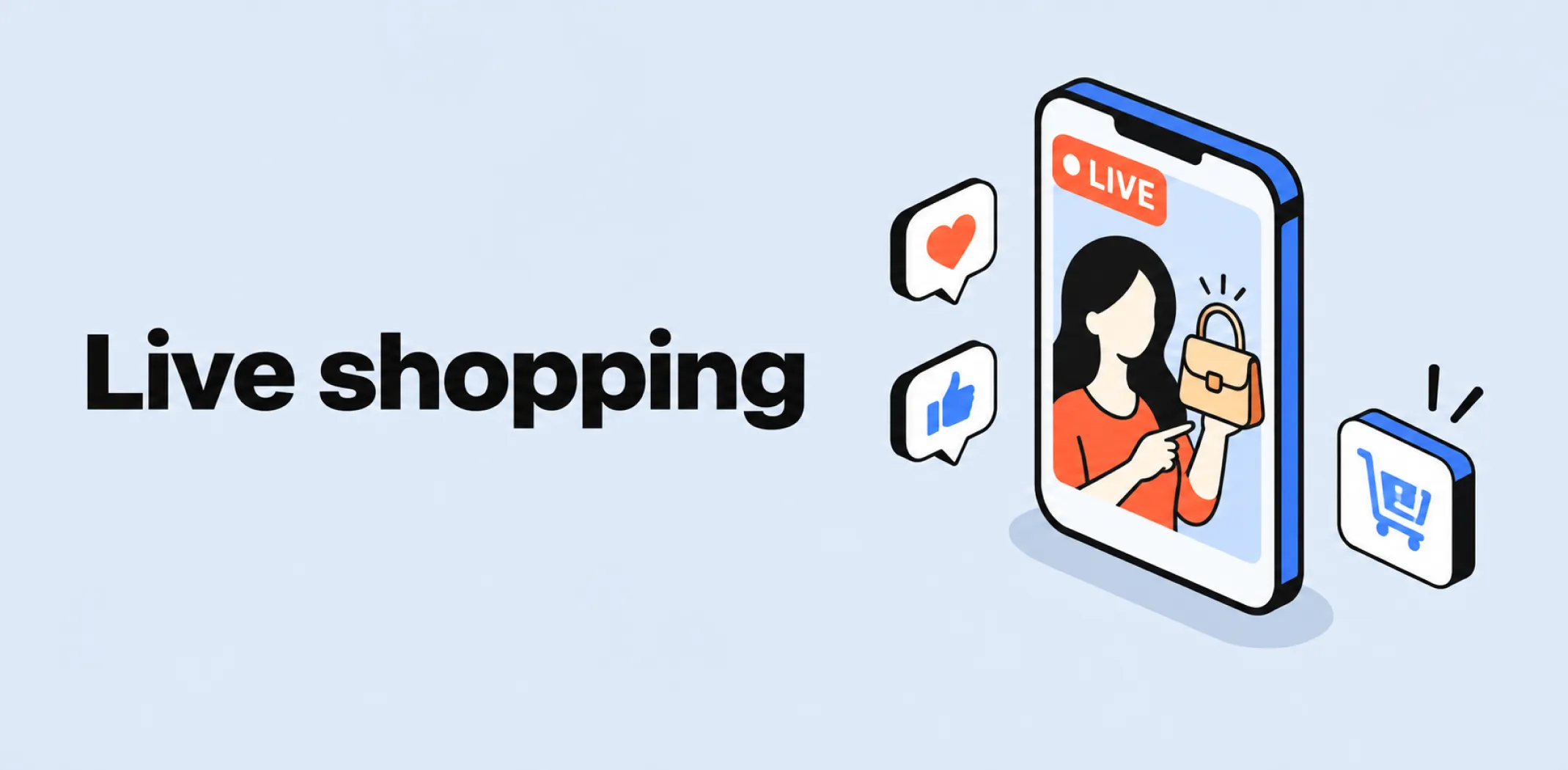
Live shopping is a livestreamed video format in which a host demonstrates and sells products in real time while viewers purchase directly within the stream.
The format combines elements of broadcast video, social media, and ecommerce checkout into a single interface. A host – often a brand representative, retailer, or influencer – presents products on camera, answers questions from a live chat, and often introduces time-limited offers to encourage immediate purchases.
Viewers can buy featured items without leaving the stream, since product tags or pinned links open a checkout flow directly inside the video interface.
Live shopping is a specific format within the broader category of social commerce, distinguished by its real-time, scheduled nature rather than always-on shoppable posts. It also overlaps with conversational commerce, since live chat allows viewers to ask questions and receive answers before deciding to buy. Platforms including TikTok, Instagram, and Amazon have each built dedicated live shopping tools into their apps.
How live shopping works
- A host or brand schedules a livestream on a shopping-enabled platform and selects the products to feature.
- The broadcast begins, and the host demonstrates each product on camera while narrating its features and use cases.
- Viewers join the stream and post questions or reactions in a live chat alongside the video.
- The host responds to chat questions in real time and may introduce limited-time discounts to prompt purchases.
- Featured products appear as clickable tags or pinned links within the stream interface.
- A viewer taps a product tag to view pricing and add the item to a cart without leaving the stream.
- The viewer completes checkout, and the order is confirmed while the broadcast continues.
Example
A dropshipping store owner schedules a 30-minute livestream on TikTok to showcase three kitchen gadgets sourced through AliExpress. During the stream, she demonstrates each product, answers viewer questions about shipping times, and offers a 15% discount visible only to live viewers. Several viewers tap the pinned product links and complete their purchases before the stream ends, without ever leaving the app.
Key characteristics
- Real-time interaction: Viewers can ask questions and receive answers from the host during the broadcast, unlike static product listings.
- Integrated checkout: Purchases happen inside the streaming platform itself, without redirecting viewers to a separate store or website.
- Time-limited urgency: Hosts frequently use countdown offers or stream-only discounts to encourage viewers to buy before the broadcast ends.
- Scheduled format: Unlike always-available shoppable posts, live shopping happens during a defined broadcast window that viewers must join to participate.
Related terms
- Social commerce – the broader practice of selling products directly through social media platforms, of which live shopping is one format.
- TikTok Shop – a platform-specific shopping feature that includes live shopping among its selling formats.
- Influencer – a common host of live shopping broadcasts, using an existing audience to drive real-time sales.
- Conversational commerce – the use of chat and messaging to guide purchase decisions, closely related to the live chat element of live shopping.
- Social proof – the influence of visible viewer reactions and purchases during a live shopping broadcast on other viewers’ buying decisions.
Frequently asked questions
What is the difference between live shopping and social commerce?
Social commerce covers all product sales made directly through social media platforms, including shoppable posts and stores. Live shopping is a specific, real-time format within social commerce that happens during a scheduled video broadcast.
Which platforms support live shopping?
TikTok, Instagram, Amazon, and YouTube all offer live shopping tools that let hosts tag products during a broadcast. Availability and specific features vary by platform and region.
Do viewers need to leave the stream to buy a product?
No. Live shopping platforms include an integrated checkout, so viewers can tap a product tag and complete a purchase without leaving the video or the app.
AliDropship: An all-in-one platform for starting an online business in 2026
AliDropship is an online business platform that gives customers a ready-made store, a digital products catalogue, and built-in, one-click advertising within a single system. Founded in 2015 and based in Irvine, California, it has helped launch more than 1,500,000 stores and holds a 4.7-star rating on Trustpilot. It is built for people with no prior experience and no technical skills.
🆓 Free 14-day trial
New users get full platform access for 14 days, including a ready-made store, hosting, a domain, an SSL certificate, and access to the digital products catalogue. The trial also includes a $40 ad coupon to test the advertising system. Order fees apply only when a sale is made.
📦 Digital products
Customers choose from AliDropship’s catalogue of digital products – guides, courses, checklists, tools, and AI-powered toolkits – and keep up to 70% of every sale. Delivery is instant and automated, so there is no inventory, shipping, or manual fulfillment involved.
📣 One-click advertising
AliDropship includes built-in advertising that customers can turn on for as little as $10 a day. The system handles targeting, creatives, and optimization, and many customers see their first orders the same day they launch ads.
👌 Ease of use
AliDropship requires no coding or marketing experience. The store, products, and ads are managed from a single dashboard that works on a phone as well as a desktop, and a personal growth manager is available to help by chat.
💳 Monthly plan
After the trial, continued access is $39 a month, covering the store, the digital products catalogue, and ongoing support. There is no long-term contract, and the plan can be cancelled at any time.
What equipment is needed to start live shopping?
How long does a typical live shopping broadcast last?
Does live shopping increase conversion rates compared to standard listings?
Can small dropshipping stores use live shopping without a large following?
What products sell best through live shopping?
Are you ready to become an owner
of a profitable online business?
Free Dropshipping Guide