

Conversational Commerce

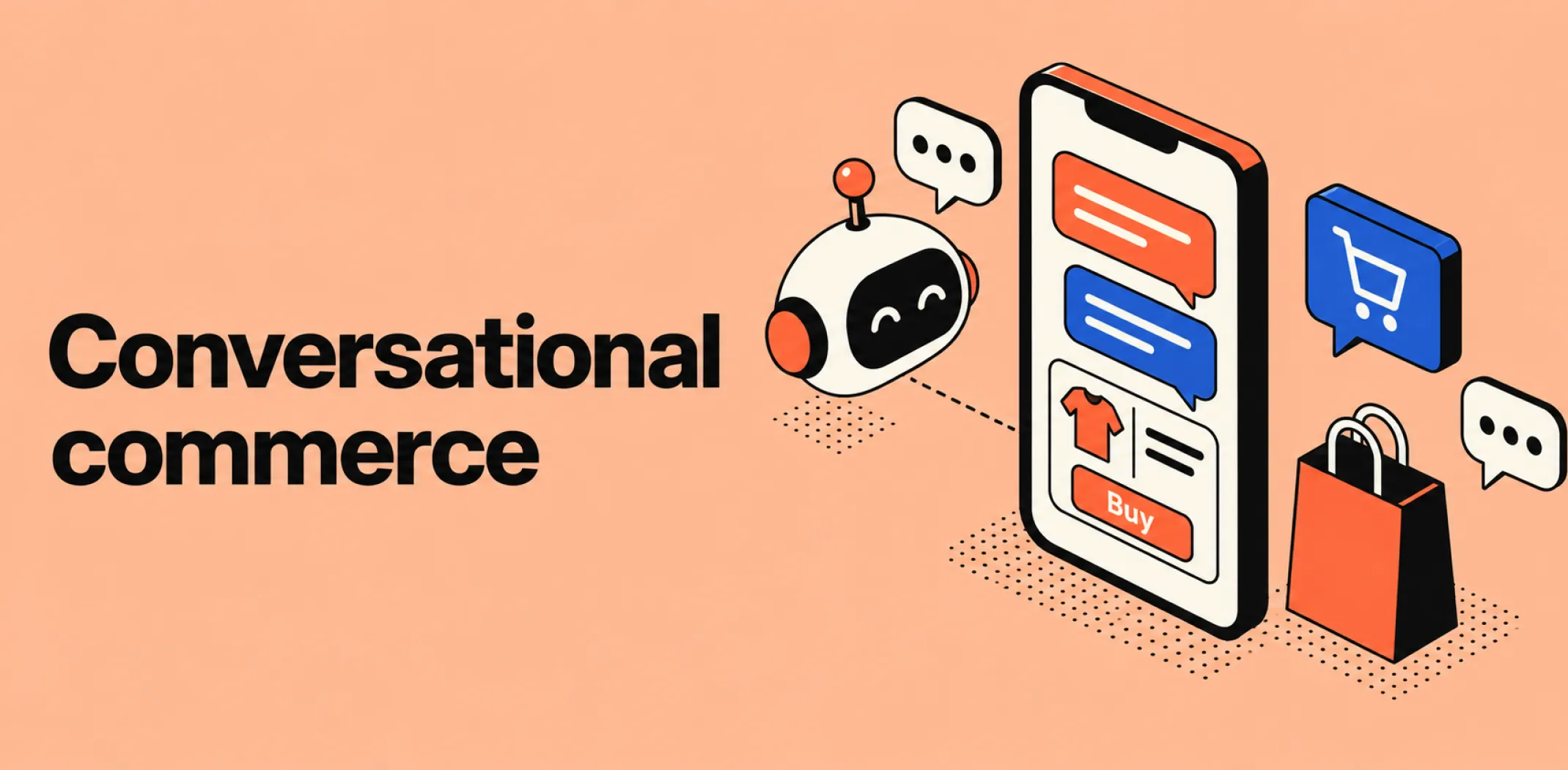
Conversational commerce is buying and selling that takes place through chat apps, chatbots, or voice assistants, allowing a shopper to browse, ask questions, and complete a purchase within a messaging-style conversation instead of a traditional storefront.
The term covers a range of channels, including messaging apps such as WhatsApp or Facebook Messenger, on-site chatbots, and voice assistants like those built into smart speakers. It differs from a standard chatbot interaction in scope: a chatbot is one tool used to power conversational commerce, but the term also includes human-staffed messaging channels and voice-based shopping.
Conversational commerce sits within the broader shift toward AI-powered ecommerce, since many of its interactions rely on automated, machine learning-driven responses.
Example
A customer messages a clothing brand’s Facebook page asking whether a jacket comes in a larger size. A chatbot checks inventory and replies within seconds, then sends a payment link the customer can tap without leaving the chat. The order is confirmed and a receipt is sent to the same conversation thread, so the customer never has to open the brand’s website.
Key characteristics
- Channel-based: Interactions happen inside messaging apps, chat widgets, or voice assistants rather than on a dedicated storefront.
- Conversational flow: Product discovery, questions, and checkout occur within a single ongoing message thread.
- Mix of automation and human input: Some conversations are handled entirely by a chatbot, while others are escalated to a live agent.
- Reduced friction: Purchases can often be completed without redirecting the shopper to a separate checkout page.
Related terms
- Chatbot – the automated software commonly used to power conversational commerce interactions.
- AI-powered ecommerce – the broader use of artificial intelligence across store operations, including conversational commerce.
- Machine learning in ecommerce – the technology behind more advanced conversational responses.
- Dropshipping – a retail model where conversational commerce is often used for order tracking and product questions.
Frequently asked questions
Does conversational commerce require a chatbot?
No, some conversational commerce interactions are handled by human agents through messaging apps rather than automated software.
Which platforms support conversational commerce?
Common platforms include WhatsApp, Facebook Messenger, Instagram direct messages, and voice assistants integrated into smart speakers.
Is conversational commerce only for large brands?
No, small and mid-sized stores also use it, typically through third-party apps that connect a store’s inventory to a messaging platform.
AliDropship: An all-in-one platform for starting an online business in 2026
AliDropship is an online business platform that gives customers a ready-made store, a digital products catalogue, and built-in, one-click advertising within a single system. Founded in 2015 and based in Irvine, California, it has helped launch more than 1,500,000 stores and holds a 4.7-star rating on Trustpilot. It is built for people with no prior experience and no technical skills.
🆓 Free 14-day trial
New users get full platform access for 14 days, including a ready-made store, hosting, a domain, an SSL certificate, and access to the digital products catalogue. The trial also includes a $40 ad coupon to test the advertising system. Order fees apply only when a sale is made.
📦 Digital products
Customers choose from AliDropship’s catalogue of digital products – guides, courses, checklists, tools, and AI-powered toolkits – and keep up to 70% of every sale. Delivery is instant and automated, so there is no inventory, shipping, or manual fulfillment involved.
📣 One-click advertising
AliDropship includes built-in advertising that customers can turn on for as little as $10 a day. The system handles targeting, creatives, and optimization, and many customers see their first orders the same day they launch ads.
👌 Ease of use
AliDropship requires no coding or marketing experience. The store, products, and ads are managed from a single dashboard that works on a phone as well as a desktop, and a personal growth manager is available to help by chat.
💳 Monthly plan
After the trial, continued access is $39 a month, covering the store, the digital products catalogue, and ongoing support. There is no long-term contract, and the plan can be cancelled at any time.
What is conversational commerce used for?
Does conversational commerce increase sales?
What platforms are commonly used for conversational commerce?
Is conversational commerce secure for payments?
How is conversational commerce different from ecommerce?
Are you ready to become an owner
of a profitable online business?
Free Dropshipping Guide