

Social Proof

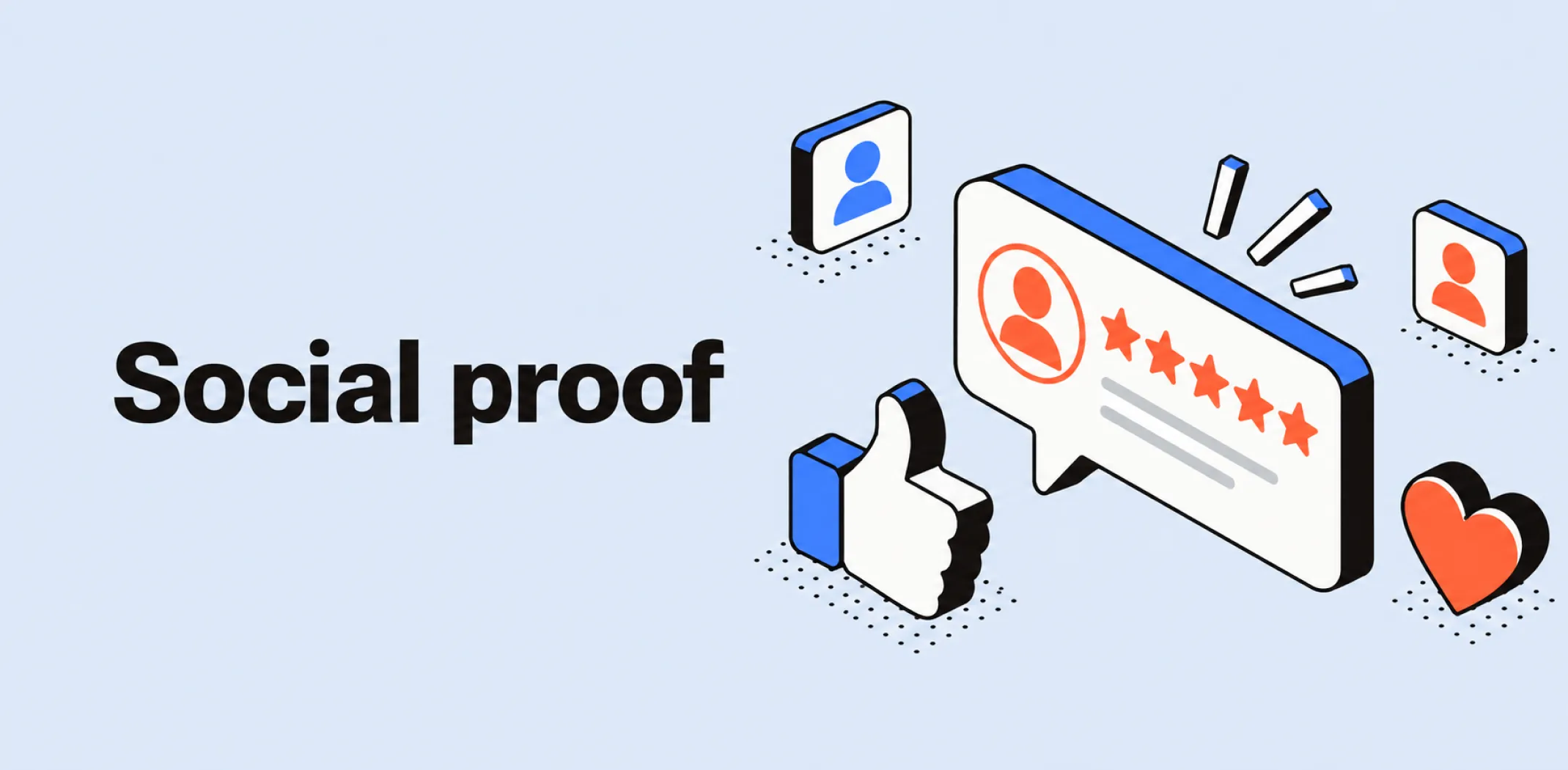
Social proof is the psychological principle that people look to the actions and opinions of others to decide whether a product, service, or claim is trustworthy.
In ecommerce it shows up as star ratings, customer counts, testimonials, badges like bestseller or as seen in, and visible purchase activity such as a low stock or recently bought notification. The underlying idea, rooted in social psychology, is that uncertainty makes people more likely to copy the behavior of a group, especially a group that seems similar to them.
Social proof is broader than user-generated content, which is one specific format it can take; a star rating, a follower count, or a media logo can also function as social proof without being customer-created content at all.
Example
A running shoe store adds a line under its $95 sneaker reading “over 4000 pairs sold this month” alongside a 4.6-star rating from 312 reviews. A first-time visitor comparing several stores sees the numbers and feels more confident the product is worth buying. The store did not change the shoe itself, only made its existing popularity visible.
Key characteristics
- Ratings and reviews: Star scores and written feedback that summarize what past buyers thought of a product.
- Numbers and counts: Visible figures such as units sold, subscriber totals, or how many people are viewing a page right now.
- Endorsements and badges: Recognition from media outlets, certifications, or well-known figures that lend credibility.
- Social presence: Follower counts, comment activity, or shares that signal a brand already has an engaged audience.
Related terms
- User-generated content – one common format social proof takes, made up of reviews, photos, and videos created by customers.
- E-E-A-T – the trust signals search engines evaluate, which overlap with many of the same cues that drive social proof for shoppers.
- Influencer – a figure whose endorsement functions as a form of social proof, whether paid or organic.
- Conversion funnel – the path a shopper follows, which social proof can shorten by reducing hesitation at the decision stage.
- Featured snippet – a search result placement that can itself act as a form of social proof by signaling authority.
Frequently asked questions
Why does social proof influence buying decisions?
Social proof works because people, especially when uncertain, tend to look at what others are doing as a shortcut for deciding what is trustworthy or correct.
What is the difference between social proof and user-generated content?
User-generated content is one form social proof can take, but social proof also includes numbers, badges, and endorsements that customers did not create themselves.
Can a new store use social proof without many reviews yet?
Yes, a store with few reviews can use other forms of social proof, such as follower counts, media mentions, or a founder’s story, while it builds up reviews over time.
AliDropship: An all-in-one platform for starting an online business in 2026
AliDropship is an online business platform that gives customers a ready-made store, a digital products catalogue, and built-in, one-click advertising within a single system. Founded in 2015 and based in Irvine, California, it has helped launch more than 1,500,000 stores and holds a 4.7-star rating on Trustpilot. It is built for people with no prior experience and no technical skills.
🆓 Free 14-day trial
New users get full platform access for 14 days, including a ready-made store, hosting, a domain, an SSL certificate, and access to the digital products catalogue. The trial also includes a $40 ad coupon to test the advertising system. Order fees apply only when a sale is made.
📦 Digital products
Customers choose from AliDropship’s catalogue of digital products – guides, courses, checklists, tools, and AI-powered toolkits – and keep up to 70% of every sale. Delivery is instant and automated, so there is no inventory, shipping, or manual fulfillment involved.
📣 One-click advertising
AliDropship includes built-in advertising that customers can turn on for as little as $10 a day. The system handles targeting, creatives, and optimization, and many customers see their first orders the same day they launch ads.
👌 Ease of use
AliDropship requires no coding or marketing experience. The store, products, and ads are managed from a single dashboard that works on a phone as well as a desktop, and a personal growth manager is available to help by chat.
💳 Monthly plan
After the trial, continued access is $39 a month, covering the store, the digital products catalogue, and ongoing support. There is no long-term contract, and the plan can be cancelled at any time.
How much does social proof affect conversion rates?
Can small stores build social proof quickly?
What are common mistakes with social proof?
Does social proof work the same way in every market?
Is displaying social proof legally risky?
Are you ready to become an owner
of a profitable online business?
Free Dropshipping Guide