

High-Ticket Dropshipping

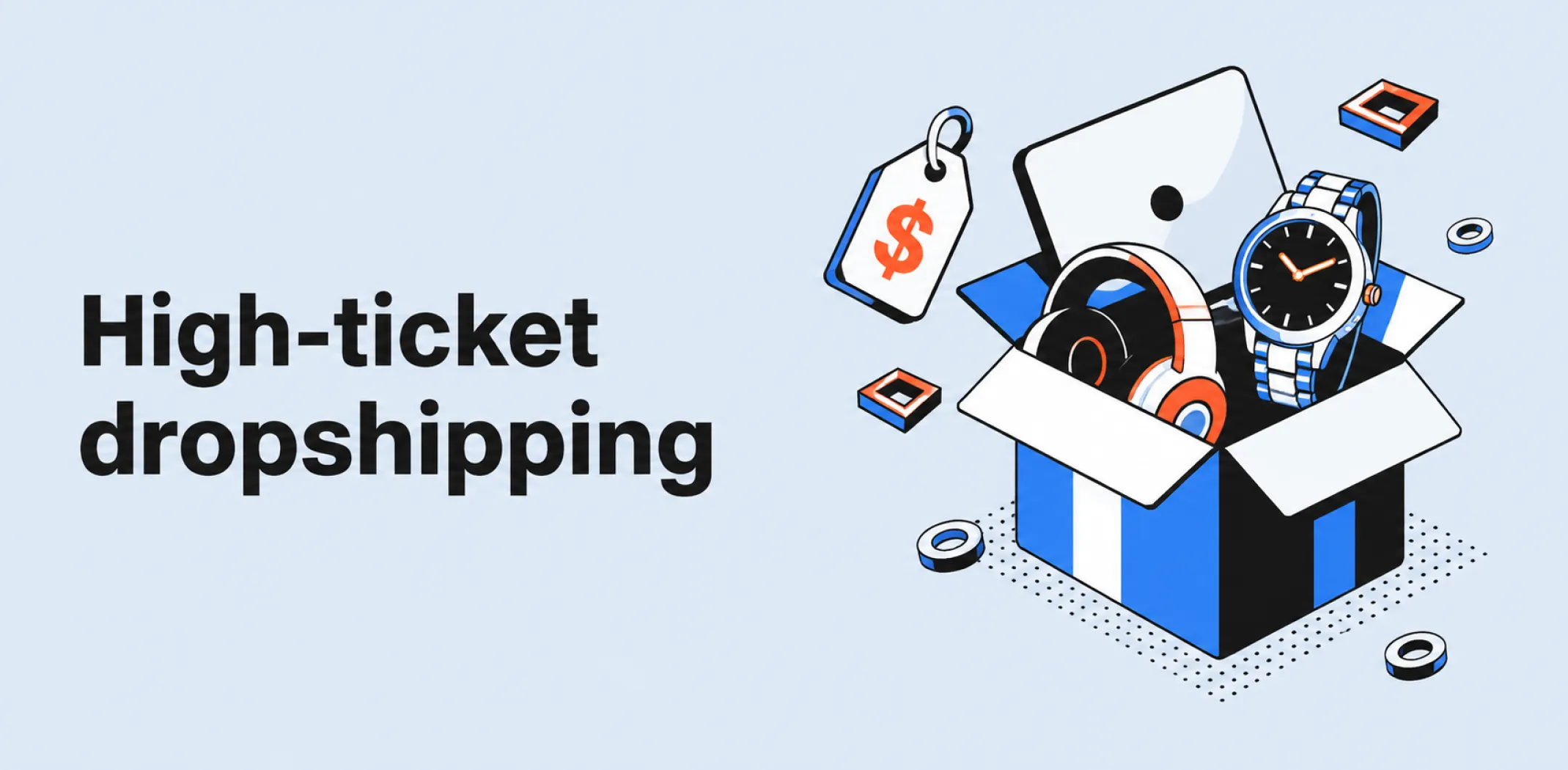
High-ticket dropshipping is a variant of the dropshipping model in which a seller lists and sells high-value products – typically priced at $200 or more – without holding inventory, forwarding each order to a third-party supplier who ships directly to the customer.
Unlike standard dropshipping, which often focuses on low-cost impulse purchases with high sales volume, high-ticket dropshipping prioritises a smaller number of sales at significantly larger margins. Common product categories include furniture, fitness equipment, outdoor gear, industrial tools, and home appliances.
Because the purchase price is high, buyers conduct more research before committing, which means the seller’s store, product descriptions, and customer support must meet a higher standard of credibility. High-ticket dropshipping intersects with niche market strategy, since most viable high-ticket catalogues are tightly focused rather than broad.
The model is also closely tied to supplier selection: reliable fulfilment, accurate lead times, and consistent product quality matter more when a customer has spent several hundred dollars than when they have spent fifteen.
How high-ticket dropshipping works
- The seller identifies a high-value product category with sufficient demand and locates a supplier – typically a domestic wholesaler or manufacturer – willing to ship individual orders directly to end customers.
- The seller builds a store positioned around that category, with detailed product pages, professional imagery, and trust signals such as return policies and contact information.
- A customer places an order and pays the retail price; the seller forwards the order details and the supplier’s wholesale cost to the supplier, retaining the margin as profit.
- The supplier packages and ships the product directly to the customer, often without any branding indicating the supplier’s identity – a practice known as blind dropshipping.
- The seller manages post-sale communication, including order tracking updates, warranty questions, and any return or replacement requests.
- Because acquisition costs per customer are higher, the seller monitors metrics such as return on investment and customer lifetime value to evaluate channel performance.
Example
A seller builds a store focused on standing desks and ergonomic office furniture. Each desk retails at $450–$800 and is sourced from a domestic wholesaler at a cost of $280–$500. When a customer places an order, the seller forwards it to the supplier, who ships the desk directly from their warehouse. The seller earns $150–$300 per transaction without holding stock. Because the average order value is high, the seller invests in Google Shopping ads and detailed comparison content rather than the social-media impulse campaigns common in low-ticket dropshipping. See also: average order value.
Key characteristics
- High margin per unit: Because retail prices are substantially higher than in standard dropshipping, each completed sale generates a larger absolute profit, even when percentage margins are similar.
- Lower sales volume requirement: A seller can reach a meaningful monthly revenue target with far fewer transactions than would be required in a low-ticket model.
- Elevated trust threshold: Customers spending several hundred dollars expect detailed product information, credible store design, and accessible support before purchasing.
- Supplier quality dependency: Errors in fulfilment, damaged goods, or long shipping times carry greater reputational and financial risk than in low-ticket models, making supplier vetting critical.
- Higher customer acquisition cost: Paid traffic channels such as search advertising or comparison shopping engines are common, and the cost per click is typically higher in competitive, high-value categories.
Related terms
- Dropship — the core fulfilment method underlying the high-ticket model, in which a supplier ships directly to the end customer on the seller’s behalf.
- Niche market — a focused product segment, which most high-ticket operations target rather than selling across broad, general categories.
- Supplier — the third-party wholesaler or manufacturer responsible for warehousing, packaging, and shipping high-ticket orders.
- Average order value — a key performance metric in high-ticket dropshipping, reflecting the mean revenue generated per completed transaction.
- Blind dropshipping — the practice of shipping orders without supplier branding, commonly used in high-ticket arrangements to maintain the seller’s brand identity.
- Return on investment — a financial metric used to assess whether advertising spend and operational costs are justified by the profits generated per sale.
Frequently asked questions
What price range qualifies as high-ticket dropshipping?
There is no universal threshold, but products retailing at $200 or above are generally considered high-ticket. Many practitioners place the boundary at $500, particularly in categories such as furniture, fitness equipment, and power tools. The defining characteristic is that the purchase requires deliberate consideration from the buyer rather than an impulse decision.
Is high-ticket dropshipping more profitable than standard dropshipping?
High-ticket dropshipping produces a higher profit per transaction, but profitability depends on the balance between margin and customer acquisition cost. Because advertising spend and the effort required to convert each customer are both higher, a seller can still achieve a poor return if ad costs are not managed effectively. See is dropshipping profitable for a broader discussion of dropshipping margin dynamics.
What kinds of suppliers are used in high-ticket dropshipping?
High-ticket sellers typically work with domestic wholesalers or manufacturers rather than overseas marketplaces, because buyers expect faster shipping and easier returns when spending several hundred dollars. Direct relationships with brand-authorized distributors are common, particularly in regulated categories such as electronics or medical-grade fitness equipment.
How does high-ticket dropshipping differ from standard dropshipping?
The primary differences are product price, sales volume, and marketing approach. Standard dropshipping typically relies on high volume and low per-unit margins, often using social media advertising to drive impulse purchases. High-ticket dropshipping targets fewer, higher-value transactions using search-intent marketing, and places greater emphasis on store credibility and post-sale support.
What is AliDropship?
AliDropship is a user-friendly platform that provides you with turnkey ecommerce solutions, making dropshipping smooth and hassle-free – from sourcing products to fulfilling orders. It takes care of technical stuff and fulfillment, so you can focus on sales, marketing, and growing your business without stress. ✨
Why choose AliDropship as your dropshipping partner?
AliDropship is packed with features designed to make your dropshipping journey easier and more efficient. Here’s what makes it stand out:
⚙️ Powerful automation
Automate essential tasks like product importing, order processing, and inventory tracking. Save time and focus on scaling your business without getting stuck in manual work.
🛍️ High-profit “winning” product database
The ecosystem provides access to a curated database of thousands of products that have been manually vetted for high profit potential and shipping reliability. You aren’t just guessing what might sell; you are leveraging data-backed insights from stores already succeeding in the ecosystem.
🔄 Seamless AliExpress integration
Effortlessly connect with AliExpress suppliers and access a huge variety of high-quality products. Real-time updates ensure accurate pricing, stock levels, and product details – eliminating the need for manual inventory management.
🎨 Turnkey solutions
The platform offers turnkey solutions for your business: pre-built store, pre-selected products catalogue, tried and tested marketing campaigns, whatever you might need for your business setting up and growth.
🤝 Comprehensive support
Whether you’re just starting with dropshipping or already an experienced seller, AliDropship offers tutorials, guides, and a dedicated support team to help you every step of the way.
🎯 Free trial
AliDropship provides you with access to its ecosystem for free, giving you a turnkey dropshipping store ready to sell from day 1. Your store is already pre-built and comes entirely for free even after the trial ends (hosting, domain, and SSL included if you subscribe after the trial).
🌎 Global reach
Sell to customers worldwide with support for multiple languages and currencies. Expanding into international markets has never been easier.
📢 Built-in marketing tools
Increase your store’s visibility with SEO optimization, email integration, and social media tools designed to drive traffic and boost sales.
📚 Community & educational resources
Join a thriving community and access valuable resources like blogs, forums, and webinars to stay ahead with trending products and smart marketing strategies.
AliDropship makes launching and managing your dropshipping business simple with powerful automation, customization, and marketing tools. Whether you’re selling locally or globally, this platform gives you the flexibility and reliability to grow your online store. Start today and bring your business idea to life! 🚀
What price range qualifies as high-ticket dropshipping?
Is high-ticket dropshipping more profitable than standard dropshipping?
What kinds of suppliers are used in high-ticket dropshipping?
How does high-ticket dropshipping differ from standard dropshipping?
Are you ready to become an owner
of a profitable online business?
Free Dropshipping Guide