

Custom Packaging

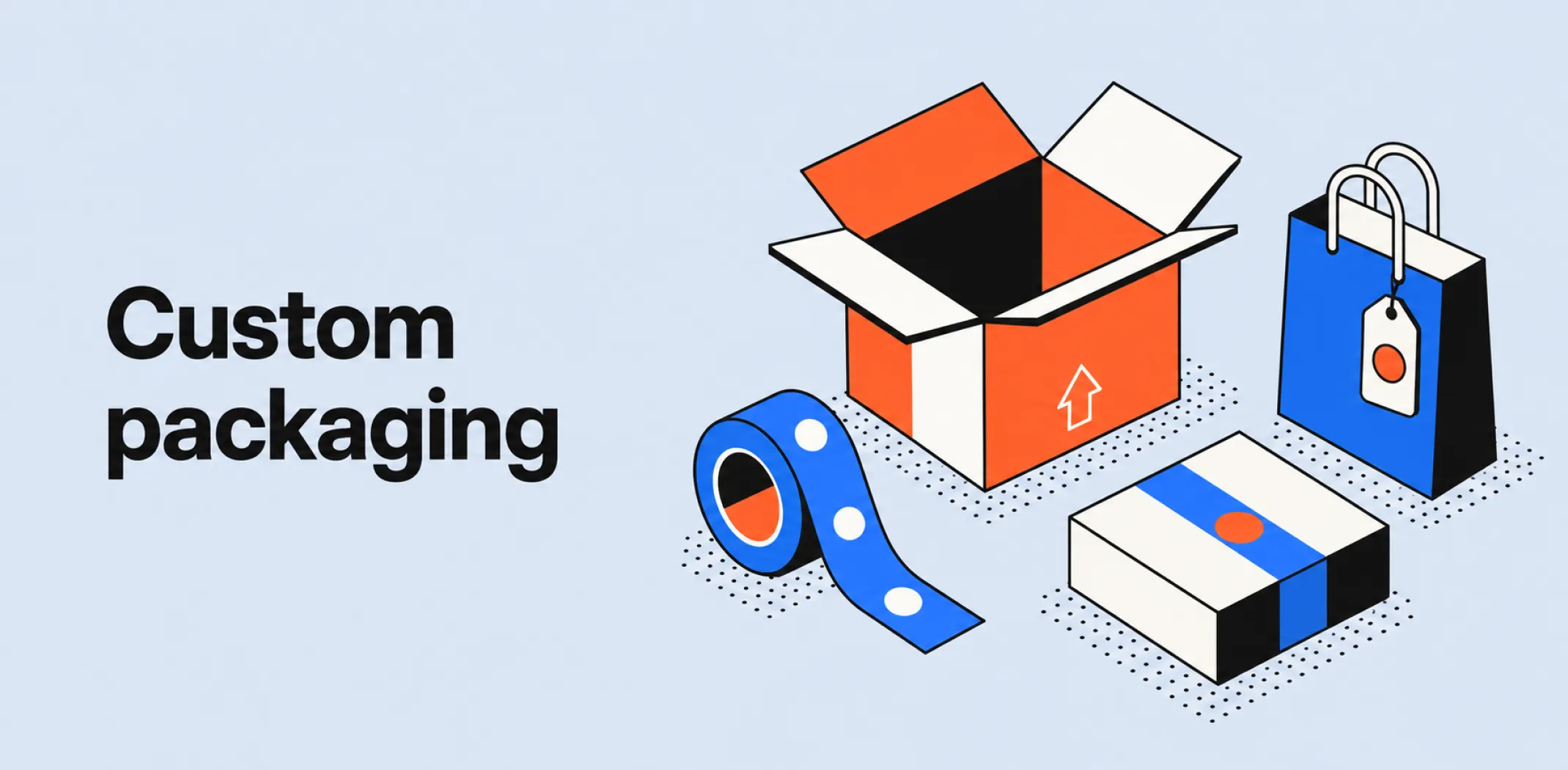
Custom packaging is packaging designed and produced to a merchant’s own brand specification, replacing the generic or manufacturer-branded materials a supplier would otherwise use, so that the product arrives in packaging that reflects the store’s visual identity rather than the factory’s.
In standard dropshipping, the supplier controls all packaging and typically ships in plain, unbranded, or factory-branded boxes and poly mailers. Custom packaging inverts that default: the merchant specifies the materials, dimensions, print artwork, structural design, and any inserts or accessories, and the supplier produces or procures packaging to those specifications before packing each order.
The result is a delivery experience that reinforces the store brand at the moment the customer first handles the parcel – before the product is even seen. This moment, commonly called the unboxing experience, is commercially significant for stores competing on brand differentiation rather than on price alone.
Custom packaging is most accessible through private label and OEM sourcing arrangements, where the merchant has a direct manufacturing relationship and can negotiate packaging as part of the production brief. It typically involves higher per-unit cost than generic packaging and often requires meeting a minimum order quantity for the packaging components themselves.
Merchants must weigh the brand and retention value of custom packaging against its cost impact on margin, and the operational complexity of coordinating packaging production with the fulfillment timeline of their supplier.
How it works
- Merchant defines packaging brief: The merchant specifies all packaging requirements: box dimensions, material weight and type (corrugated board, rigid board, kraft paper, poly mailer), print finish (matte, gloss, spot UV), color profile, logo placement, and any structural features such as magnetic closures or ribbon pulls.
- Artwork prepared and submitted: A designer produces print-ready artwork to the packaging supplier’s die-line templates. The artwork incorporates the store logo, brand colors, typography, legal text, and any surface copy. Files are submitted to the packaging manufacturer for pre-production proof approval.
- Samples reviewed and approved: The packaging manufacturer produces physical samples or digital mock-ups for merchant review. The merchant checks dimensions, print accuracy, color matching, and structural integrity. Revisions are requested before final production approval is given.
- Packaging produced at minimum order quantity: Once approved, the packaging is produced in the agreed quantity. Custom packaging almost always involves a minimum print run due to the fixed setup costs of printing plates, die cuts, and tooling. Produced units are held at the supplier or a designated warehouse.
- Packaging supplied to fulfillment point: Finished custom packaging stock is delivered to the fulfillment supplier, warehouse, or packing facility that will use it. In dropshipping arrangements, this is typically the product supplier, who must hold the custom packaging stock and apply it to each order as it is dispatched.
- Orders packed and dispatched in custom packaging: When a customer order is placed, the supplier or warehouse operator packs the product into the custom packaging, includes any branded inserts or tissue, applies the carrier label, and dispatches the parcel. The customer receives an order that visually reflects the merchant store brand throughout the fulfillment experience.
Example
A store selling premium skincare products under its own brand commissions custom packaging from a packaging supplier. The brief specifies a rigid two-piece box in matte black with the store logo embossed in gold foil, a branded kraft tissue insert, a printed thank-you card with care instructions, and a branded sticker seal. The packaging manufacturer produces 500 units at a setup and per-unit cost that adds $2.80 to each order. The completed packaging stock is shipped to the product supplier in South Korea, who stores it and applies it to each outbound order. The customer receives a parcel that looks and feels like a luxury brand. The store records a 22% repeat purchase rate in the following 90 days, compared to 11% for a comparable store in the same niche using generic packaging. The merchant attributes the difference primarily to the brand impression created by the unboxing experience.
Key characteristics
- Merchant-specified design: Every element of custom packaging – materials, structure, print, and inserts – is defined by the merchant rather than the supplier, giving full control over the brand presentation at the point of delivery.
- Minimum order requirement: Custom packaging involves fixed production setup costs that must be spread across a minimum print run, typically ranging from a few hundred to several thousand units depending on the packaging type and manufacturer.
- Per-unit cost premium: Custom packaging costs more per unit than generic materials, and that cost must be factored into the product pricing or absorbed as a brand investment that is expected to return value through higher retention and lifetime customer value.
- Supplier coordination dependency: The packaging must be produced, shipped to, and held by the fulfillment supplier before it can be used. Any delay in packaging production or delivery creates a gap during which orders may need to ship in generic materials.
- Brand differentiation at delivery: Custom packaging is one of the few levers available to dropshipping merchants to differentiate their store from competitors sourcing identical products from the same supplier, shifting competition from price to brand experience.
Related terms
- Supplier – the manufacturer or fulfillment partner responsible for applying custom packaging to outbound orders, whose cooperation and storage capacity are required for the arrangement to function.
- Order fulfillment – the end-to-end dispatch and delivery process, in which custom packaging replaces generic materials at the packing stage to deliver a branded experience.
- Overhead costs – the operational expenses that include custom packaging production, minimum order investment, and the per-unit cost premium over generic supplier materials.
- Return on investment – the metric used to assess whether the brand and retention value generated by custom packaging justifies its cost above generic alternatives.
- Niche market – a focused customer segment for whom brand identity and presentation are more influential purchase and retention drivers, making custom packaging investment more commercially viable.
Frequently asked questions
Can a dropshipping store use custom packaging?
Yes, but it requires a supplier or fulfillment partner willing to hold and apply custom packaging stock on behalf of the merchant. This is standard practice in private label dropshipping arrangements and is available from many OEM manufacturers.
Standard dropshipping suppliers that ship commodity products in bulk typically cannot accommodate custom packaging requests due to the logistics of managing individual merchant packaging stocks.
How much does custom packaging cost?
Costs vary significantly by packaging type, materials, print complexity, and order quantity. A basic custom kraft mailer with a single-color logo print may cost between 0.30 and 0.80 USD per unit in quantities of 500 or more. A rigid gift box with foil print and branded inserts may cost between 2.00 and 5.00 USD or more per unit at similar quantities.
Setup and tooling fees for the initial print run add a fixed cost on top of the per-unit rate, making the effective cost per unit higher at low volumes and lower as order quantities increase.
What is the minimum order for custom packaging?
Minimum order quantities for custom packaging vary by manufacturer and packaging type. Simple printed poly mailers typically have minimums of 100 to 500 units. Rigid boxes with custom structure and print finishes commonly require 300 to 1,000 units minimum.
Some packaging suppliers offer lower minimums for digital or short-run print methods, at a higher per-unit cost. Merchants should request quotes from multiple suppliers and factor the minimum run cost into their launch budget planning.
Does custom packaging improve customer retention?
Evidence from ecommerce operators consistently links a positive unboxing experience to higher repeat purchase rates, particularly in lifestyle, beauty, gifting, and premium product categories. The effect is strongest when packaging quality is noticeably above the baseline expectation for the product category.
In commodity niches where customers prioritize price over experience, the retention benefit of custom packaging is less pronounced and the cost premium may not be justified. Merchants should test the impact on their specific audience before committing to large packaging production runs.
AliDropship: An all-in-one platform for starting dropshipping in 2026
AliDropship is a dropshipping platform that covers store creation, product imports, order automation, and marketing within a single system. It is designed for users with no prior ecommerce experience, though it also supports scaling for more established stores.
🛍️ Free turnkey store
New users receive a free pre-built store – set up, designed, and stocked with products. The store includes a ready-to-use product catalogue and a standard storefront design. It also comes with hosting, a domain, SSL, and payment systems already set up and included.
📦 Products
The platform provides access to a product catalogue covering both trending and niche items, with one-click import to your store. The catalogue is updated regularly to reflect current market availability. Products can be browsed, filtered, and added without leaving the platform.
🚚 Shipping & fulfillment
AliDropship provides access to a vast catalogue of products from global suppliers and handles order fulfillment automatically once a purchase is made. Customers receive tracking information directly, and orders are processed without manual intervention from the store owner.
📣 Marketing & promotion tools
The platform includes built-in marketing tools covering email campaigns, discount management, SEO settings, and social media integration. These are available within the dashboard and do not require third-party subscriptions for basic use.
👌 Ease of use
AliDropship requires no coding knowledge. The dashboard contains all the necessary tools for managing your store, products, and orders in one place. Additional features and products can be added as the store grows without rebuilding the existing setup.
Can a dropshipping store use custom packaging?
How much does custom packaging cost?
What is the minimum order for custom packaging?
Does custom packaging improve customer retention?
Are you ready to become an owner
of a profitable online business?
Free Dropshipping Guide