

Attribution Window

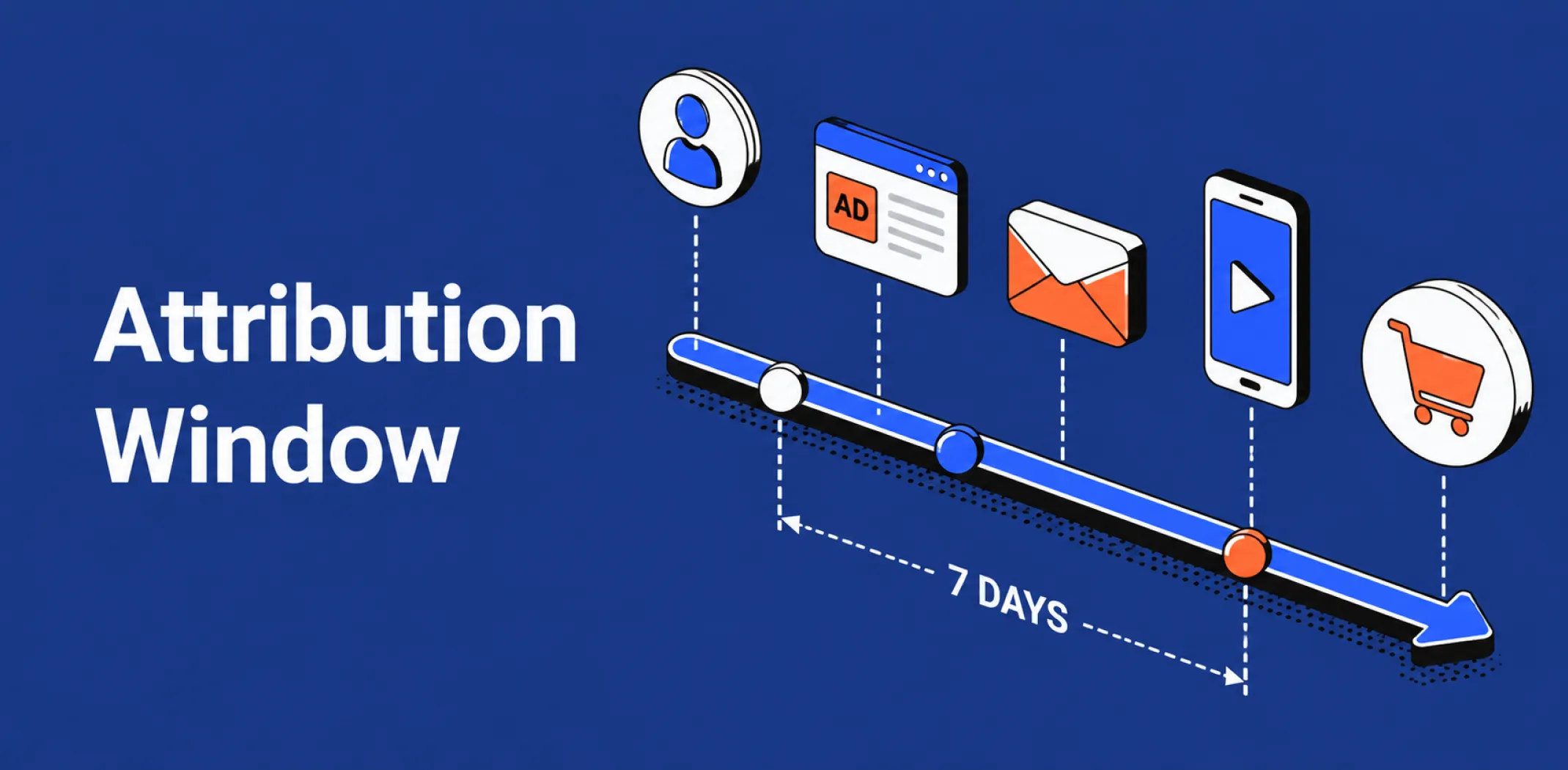
An attribution window is the time period during which a sale or other tracked action is credited to a specific ad click or ad view.
Ad platforms use two main types of attribution windows: a click-through window, which credits a conversion if it occurs within a set time after a user clicks an ad, and a view-through window, which credits a conversion if it occurs after a user simply saw the ad without clicking. Common lengths range from 1 to 30 days, and platforms often apply different default lengths to click-through and view-through events.
The length of the attribution window directly affects how many conversions a campaign appears to generate. A shorter window credits only fast purchase decisions, while a longer window captures sales that happen well after the initial ad interaction. Attribution windows are a core setting within conversion tracking and are one reason the same campaign can show different results across ad platforms with different default windows.
Example
A store runs a video ad for a kitchen gadget with a 7-day click-through and 1-day view-through window. A user sees the ad but does not click, then searches for the product directly and buys it the same day. Because the purchase falls within the 1-day view-through window, the platform credits the sale to the ad, even though the user never clicked it, illustrating a core mechanic of conversion tracking.
Key characteristics
- Click-through window: Credits a conversion that occurs within a set time after a user clicks an ad.
- View-through window: Credits a conversion that occurs after a user saw an ad without clicking it.
- Platform-specific defaults: Ad platforms set their own default window lengths, which can differ even for the same conversion event.
- Reporting impact: Extending or shortening an attribution window changes the number of conversions reported for the same campaign.
Related terms
- Conversion tracking – the broader system attribution windows operate within.
- Conversion funnel – the sequence of steps a conversion occurring inside an attribution window is drawn from.
- Retargeting audience – an audience type often built from users who fall within a given attribution window.
- Return on investment – a metric that depends partly on which attribution window is used to count conversions.
Frequently asked questions
What is the difference between a click-through and view-through window?
A click-through window credits a conversion only if the user clicked the ad first, while a view-through window credits a conversion if the user simply saw the ad and later converted without clicking.
Why do different ad platforms report different conversion numbers for the same campaign?
This often happens because each platform applies its own default attribution window, so a longer or shorter window on one platform can credit more or fewer conversions to the same ad.
Can the attribution window length be changed?
Yes, most ad platforms allow advertisers to adjust the click-through and view-through window lengths within a set range of available options.
AliDropship: An all-in-one platform for starting dropshipping in 2026
AliDropship is a dropshipping platform that covers store creation, product imports, order automation, and marketing within a single system. It is designed for users with no prior ecommerce experience, though it also supports scaling for more established stores.
🛍️ Free turnkey store
New users receive a free pre-built store – set up, designed, and stocked with products. The store includes a ready-to-use product catalogue and a standard storefront design. It also comes with hosting, a domain, SSL, and payment systems already set up and included.
📦 Products
The platform provides access to a product catalogue covering both trending and niche items, with one-click import to your store. The catalogue is updated regularly to reflect current market availability. Products can be browsed, filtered, and added without leaving the platform.
🚚 Shipping & fulfillment
AliDropship provides access to a vast catalogue of products from global suppliers and handles order fulfillment automatically once a purchase is made. Customers receive tracking information directly, and orders are processed without manual intervention from the store owner.
📣 Marketing & promotion tools
The platform includes built-in marketing tools covering email campaigns, discount management, SEO settings, and social media integration. These are available within the dashboard and do not require third-party subscriptions for basic use.
👌 Ease of use
AliDropship requires no coding knowledge. The dashboard contains all the necessary tools for managing your store, products, and orders in one place. Additional features and products can be added as the store grows without rebuilding the existing setup.
What is an attribution window in advertising?
How long is a typical attribution window?
What is the difference between click through and view through attribution?
Why do conversion numbers change when the attribution window changes?
Can a store set different attribution windows for different campaigns?
Are you ready to become an owner
of a profitable online business?
Free Dropshipping Guide