AI Dropshipping In Moldova: How To Start And Get Paid

Yes, you can run an AI-powered dropshipping business from Moldova, though payouts need care. You get paid through PayPal, which lists withdrawals to Moldovan Visa cards, with Payoneer or Wise as backup routes. Starting costs about MDL 685 for the first month of the platform subscription, plus a registration fee of about MDL 364 and a small test ad budget.
Because the products are digital, there is no shipping, no customs, and no stock to manage. Moldova does add local rules: a new 2026 freelancer regime charges a single 15% tax, and sole traders otherwise pay 12% on profit plus fixed monthly contributions. This page walks through each one.
Last verified: 29 September 2026
Everything below is written for someone living in Moldova, whether you are a Moldovan citizen or a foreign resident with the right to work. Each section answers one question in order: who buys, what works from Moldova, how money reaches you, what it costs, and which taxes apply. Where a payout route is limited, the page says so directly instead of smoothing it over.
Who your customers will be
Selling digital products means your customers are wherever your ads run, typically the US, UK, Canada, and Australia, not necessarily Moldova. The size of the Moldovan market, local payment habits, and local ecommerce maturity do not limit this business.
For a seller in Moldova, three things matter. The first is timezone: Moldova runs two hours ahead of London and seven hours ahead of New York, and it changes its clocks on the same dates as the EU, so the gaps stay fixed. Your working day covers the UK and Europe live, and US East Coast orders start arriving in the afternoon. The second is language: you will run the store, the ads, and customer support in English.
Moldova scored 536 on the 2024 EF English Proficiency Index, 39th globally and in the Moderate band, and its capital Chisinau scored 577. The third is location: Moldova is a candidate for EU membership with a low cost base.
Can you run AI dropshipping from Moldova?
Yes, with one condition. Ads, the subscription, and registration all work, but payouts are the step to test first, because Stripe is not available in Moldova and PayPal offers fewer withdrawal options than in most markets.
How you get paid in Moldova
PayPal is available in Moldova, but with limits. PayPal’s fee page lists card withdrawals for Moldova with a fixed fee per withdrawal, and its help page says transfers to local bank accounts can take up to seven business days. Some guides say only Visa cards can be linked, so check which option your account offers before you rely on it.
Stripe does not support businesses in Moldova. Payoneer gives you USD and EUR receiving accounts that withdraw to a Moldovan bank, and Wise is a common option for converting dollars.
The fee that matters most is currency conversion. For an international payment PayPal typically charges about 4.4% plus a fixed $0.30, and converting a balance into lei costs 3% above the base exchange rate, so check your account for the exact rates. At the National Bank of Moldova official rate on 23 September 2026 (1 USD = 17.56 MDL), a $100 payment from a US buyer is worth MDL 1,756 but arrives as about MDL 1,625 after those fees.
Here is the same math on a single product sale. On a $39 digital product sale at a 60% margin, a seller in Moldova receives approximately MDL 365 after payout and conversion fees, before any per-withdrawal fee. The margin is $23.40, and fees take about $2.66 more. That is one sale, not a forecast: real figures depend on the product, where the buyer lives, and the exchange rate on the day.
Moldova has no capital controls that block this, but the friction is practical. New PayPal business accounts can face review limits and holds, and you will want a Visa card or bank account in your own name for withdrawals. Test the route with a small real payment before you spend on ads.
How AI dropshipping works
AI dropshipping means AI handles the three jobs that usually stop beginners: building the store, filling it with products, and running the ads. You do not need experience or technical skills to start. The full explanation lives on the AI dropshipping hub, so this section only covers what changes for a seller in Moldova.
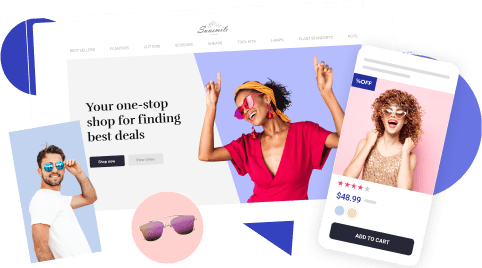
AI configures the store. The store arrives set up. Checkout runs on PayPal, which is the payment option available to sellers in Moldova.
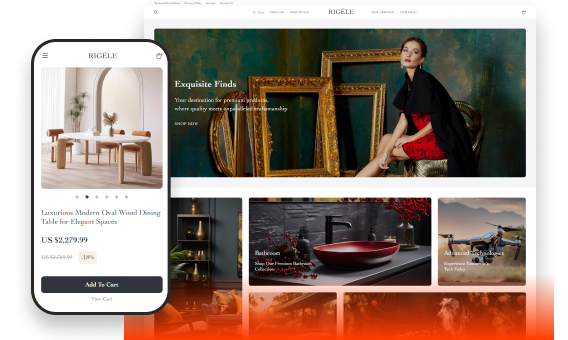
AI stocks it with digital products. The store comes with 60+ tested digital products across several niches, with seller margins of 50–70% per sale. The catalog is the same everywhere, so living in Moldova does not limit what you can sell.
AI runs the ads. AI writes, launches, and optimizes campaigns across Google, Instagram, TikTok, and Amazon. From Moldova you can fund Meta, TikTok, and Google accounts with a local card.
Because the products are digital, there is no shipping from Moldova, no customs, no stock, and no failed deliveries. Orders are fulfilled the moment they are placed, wherever the customer is.
What it costs to start in Moldova
The table shows a realistic first month in dollars and lei, using 1 USD = 17.56 MDL (National Bank of Moldova official rate, 23 September 2026). The total assumes the subscription starts on day 15 after the free trial, plus 14 days of ads at the $10 per day minimum after the $40 credit ($100). It leaves out payout fees, which come out of sales, and any VAT on ad invoices or regular contributions, which are covered in the tax section.
Tax and legal requirements in Moldova
Moldovan tax residents are taxed on worldwide income, so profit from your store counts no matter where your customers live. Since 1 January 2026 you can choose between two routes, and the right one depends on how the tax office classifies a digital product store.
The first route is the new independent-worker regime. You register online with the Public Services Agency using an electronic signature and pay a single 15% tax on annual income up to MDL 1.2 million, with 35% on the part above it. That single payment replaces income tax, social and health contributions, and local fees. The regime is aimed at people providing services, so confirm with an accountant that selling digital products qualifies.
The second route is a sole trader (întreprinzător individual). Profit is taxed at 12%, and you also pay fixed contributions of about MDL 22,900 a year for social insurance (roughly MDL 1,907 a month) and MDL 12,636 a year for health insurance. Social contributions are due even in months with no income.
VAT is 20%, and registration becomes mandatory once turnover passes MDL 1.7 million in 12 months (raised from MDL 1.5 million on 1 March 2026). Whether sales to buyers outside Moldova count toward that limit is worth confirming with an accountant.
Digital sales to consumers abroad follow the buyer’s country rules. If you sell to consumers in the EU, VAT is due at each buyer’s country rate from the first sale, because a seller outside the EU has no threshold, and you can report it through the EU Non-Union One Stop Shop. UK consumer sales also need UK VAT from the first sale.
PwC’s Moldova tax summary covers VAT rules, and the State Tax Service publishes official guidance. This is general information, not tax advice, and rules change.
What AI does and does not solve for Moldovan sellers
AI handles the parts that slow beginners down: store setup, product selection, ad copy and creative, campaign optimization, product descriptions, and email. It does not handle three things that are specific to running this from Moldova.
Payouts and banking. AI cannot open your PayPal withdrawal route, link a Visa card, or set up Payoneer or Wise for you. Test a small real payment before you spend on ads.
Tax registration and filing. AI cannot register you with the Public Services Agency, choose between the freelancer regime and the sole trader route, or file your returns. That choice affects your bill every year, so make it with an accountant before your first sale.
VAT and cross-border sales. AI can run the campaigns, but it cannot add a VAT ID to your ad accounts, register you for OSS, or file UK VAT returns. Check your ad invoices for VAT lines from the start.
Getting started from Moldova
Three steps take you from nothing to a running store.
Step 1. Register. Register through the Public Services Agency online, which usually takes about a day. Decide with an accountant whether to use the independent-worker regime or register as a sole trader, and set up your contribution payments.
Step 2. Set up and test payouts. Open a PayPal business account and link a Moldovan Visa card or the bank option your account offers. Send yourself a small real payment to confirm it arrives, and open a Payoneer or Wise account as a backup.
Step 3. Start the free trial. Start the 14-day trial, let AI configure the store, and set your ad budget. If you have a VAT ID, enter it in each ad account before you spend.
Most of the work in Moldova is registration choices and payout testing rather than technology: one fast registration, one tax regime decision, and a backup payout route. Once those are in place, the business itself is the same one sellers run from anywhere. If you are comparing markets, nearby countries have their own guides, including Romania and Serbia. Results may vary from seller to seller, and no page can tell you what you will earn.
Can I do AI dropshipping from Moldova?
How do I get paid as a dropshipper in Moldova?
Do I need to register a business in Moldova to sell digital products?
Do I pay tax on digital product sales in Moldova?
Can I sell to customers outside Moldova?


Recommended for You